English
- Afrikaans
- Albanian
- Amharic
- Arabic
- Armenian
- Azerbaijani
- Basque
- Belarusian
- Bengali
- Bosnian
- Bulgarian
- Catalan
- Cebuano
- Corsican
- Croatian
- Czech
- Danish
- Dutch
- English
- Esperanto
- Estonian
- Finnish
- French
- Frisian
- Galician
- Georgian
- German
- Greek
- Gujarati
- Haitian Creole
- hausa
- hawaiian
- Hebrew
- Hindi
- Miao
- Hungarian
- Icelandic
- igbo
- Indonesian
- irish
- Italian
- Japanese
- Javanese
- Kannada
- kazakh
- Khmer
- Rwandese
- Korean
- Kurdish
- Kyrgyz
- Lao
- Latin
- Latvian
- Lithuanian
- Luxembourgish
- Macedonian
- Malgashi
- Malay
- Malayalam
- Maltese
- Maori
- Marathi
- Mongolian
- Myanmar
- Nepali
- Norwegian
- Norwegian
- Occitan
- Pashto
- Persian
- Polish
- Portuguese
- Punjabi
- Romanian
- Russian
- Samoan
- Scottish Gaelic
- Serbian
- Sesotho
- Shona
- Sindhi
- Sinhala
- Slovak
- Slovenian
- Somali
- Spanish
- Sundanese
- Swahili
- Swedish
- Tagalog
- Tajik
- Tamil
- Tatar
- Telugu
- Thai
- Turkish
- Turkmen
- Ukrainian
- Urdu
- Uighur
- Uzbek
- Vietnamese
- Welsh
- Bantu
- Yiddish
- Yoruba
- Zulu

Telephone: +86 13120555503
Email: frank@cypump.com


Apr . 01, 2024 17:55 Back to list
china buy slurry pump Manufacturing Specification and Performance Analysis
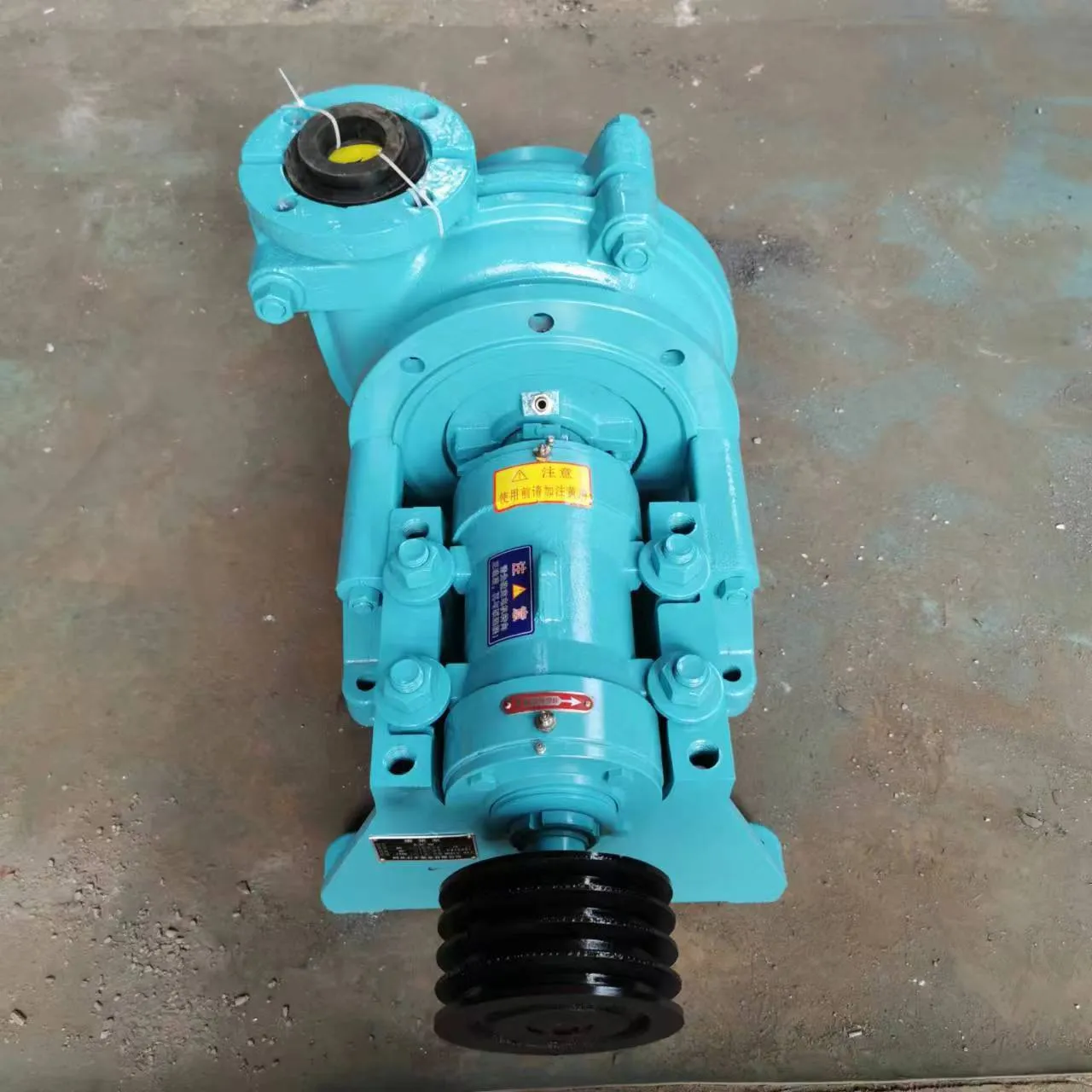
Slurry Pump Manufacturing Specification and Performance Analysis
Slurry pumps are specialized centrifugal pumps engineered to transport abrasive fluids—mixtures of liquids and suspended solid particles—common in mining, dredging, and chemical processing. Within the industrial supply chain, these machines occupy a critical position between raw extraction and processing. When evaluating a china buy slurry pump, the technical focus must shift from simple flow rates to the complex interaction between fluid dynamics and material erosion. The core performance of these systems is defined by their ability to maintain volumetric efficiency and structural integrity while subjected to constant high-velocity impingement of abrasive particles, requiring a precise balance of hydraulic design and metallurgical hardness.
Material Science & Manufacturing
The operational longevity of a slurry pump is primarily determined by the tribological properties of its wetted parts. Manufacturing begins with the selection of high-chromium white irons (e.g., ASTM A532) or natural rubber linings, depending on the particle size and chemical aggressiveness of the medium. High-chrome alloys utilize a complex microstructure of hard M7C3 carbides embedded in a martensitic matrix, providing a Vickers hardness typically exceeding 600 HV. This structure prevents the "plowing" effect caused by silica or metallic ores.
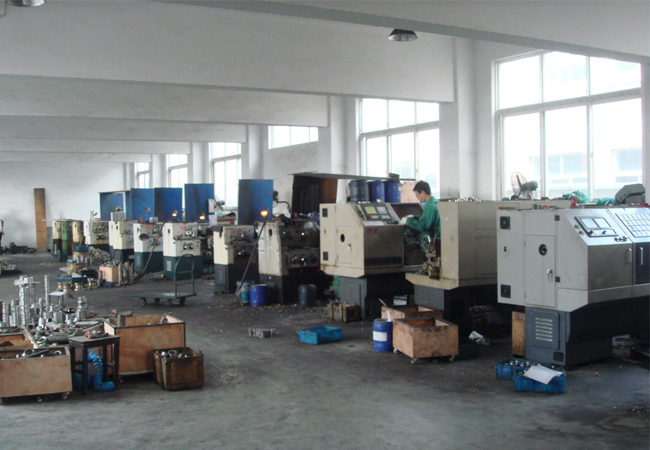
The manufacturing process involves precision casting followed by heat treatment to relieve internal stresses and optimize carbide distribution. For rubber-lined pumps, the bonding process is critical; the rubber is vulcanized to the cast iron shell to ensure a seamless, leak-proof interface that absorbs the energy of small-particle impacts, thereby preventing the erosion of the base metal. Key parameter control during production focuses on the impeller's dynamic balance and the precision of the volute casing's internal geometry, as any turbulence or stagnation zones can lead to localized "eddy-current" erosion, rapidly compromising the pump's efficiency.
Performance & Engineering
Engineering a slurry pump requires a rigorous force analysis of the fluid-solid interaction. The primary challenge is the "critical solids concentration," where the fluid transitions from a Newtonian to a non-Newtonian behavior, significantly increasing the viscosity and the required Net Positive Suction Head (NPSH). To mitigate cavitation and premature failure, engineers implement variable speed drives (VSD) to maintain the flow velocity above the settling velocity of the solids, preventing sedimentation within the pump casing.
Environmental resistance is managed through the integration of advanced sealing systems. Mechanical seals with tungsten carbide faces or specialized gland packing with water-flush systems are employed to prevent the abrasive slurry from migrating into the bearing housing. Compliance requirements demand that the pump's structural frame be capable of absorbing the vibration induced by the non-uniform density of the slurry, often necessitating reinforced cast-iron bases and precision-aligned coupling systems to minimize radial load on the shaft.
Technical Specifications
| Parameter Dimension | High-Chrome Alloy Series | Natural Rubber Series | Duplex Stainless Series | Evaluation Metric |
|---|---|---|---|---|
| Abrasive Resistance | Extreme (Hard particles) | High (Fine particles) | Moderate/High | ASTM G65 Wear Test |
| Chemical Compatibility | Moderate (Alkaline) | High (Acidic/Basic) | Excellent (Chlorides) | pH Range 2-12 |
| Max Slurry Density | 1.5 - 1.8 t/m³ | 1.2 - 1.4 t/m³ | 1.3 - 1.6 t/m³ | Specific Gravity (SG) |
| Operational Temperature | Up to 150°C | Up to 70°C | Up to 120°C | Thermal Stability |
| Maximum Head (H) | 120 Meters | 60 Meters | 100 Meters | Hydraulic Lift |
| Maintenance Interval | 4,000 - 8,000 Hours | 3,000 - 6,000 Hours | 5,000 - 10,000 Hours | Mean Time Between Failure |
Failure Mode & Maintenance
Failure analysis of slurry pumps typically identifies four primary modes: erosive wear, cavitational pitting, fatigue cracking, and chemical degradation. Erosive wear occurs predominantly at the impeller vanes and the volute tongue, where high-velocity impingement strips the protective oxide layer of the metal. Cavitational pitting occurs when the NPSH available is lower than the NPSH required, causing vapor bubbles to collapse violently against the metal surface, creating micro-craters that accelerate erosion.
Maintenance protocols must prioritize a "predictive" rather than "reactive" approach. This includes the use of ultrasonic thickness gauging to monitor the wear of the liner and casing without dismantling the unit. For rubber-lined components, inspection for delamination or "blistering" is essential, as any separation between the rubber and the shell allows the slurry to enter the interface, causing rapid catastrophic failure of the outer shell. Lubrication schedules for bearings must be strictly adhered to, utilizing high-viscosity synthetic lubricants to repel any moisture or particulates that penetrate the seal.
Industry FAQ
Q: How do I determine the optimal liner material for a specific slurry application?
A: The selection depends on the particle size and impact energy. For particles larger than 0.1mm with high impact velocity, high-chromium alloys are required for their hardness. For smaller, finer particles that cause "scouring" rather than impact, natural rubber is superior due to its resilience and energy-absorbing properties.
Q: What is the impact of slurry viscosity on the pump's efficiency?
A: Increased viscosity leads to higher friction losses within the pump and piping, resulting in a reduction of the total dynamic head (TDH) and a decrease in volumetric efficiency. This necessitates a derating of the pump's performance curve based on the slurry's rheological properties.
Q: How can we prevent premature impeller failure in high-concentration tailings?
A: Implement a Variable Frequency Drive (VFD) to avoid operating the pump too far from its Best Efficiency Point (BEP). Running a pump at low flow rates increases internal recirculation and turbulence, which accelerates wear on the impeller vanes.
Q: What is the significance of the "Critical Solids Concentration" in engineering?
A: The critical solids concentration is the threshold beyond which the slurry behaves as a non-Newtonian fluid. Exceeding this limit without proper pump sizing leads to extreme pressure drops and an increased risk of plugging or "sanding in" during shutdown.
Q: Why is the NPSH requirement higher for slurry pumps than for water pumps?
A: The presence of solids alters the vapor pressure and increases the fluid's resistance to flow. To prevent cavitation, a higher suction head is required to ensure that the fluid remains in a liquid state as it enters the eye of the impeller.
Conclusion
The technical viability of a slurry pump is not determined by its initial flow capacity, but by its material resilience and hydraulic optimization. By integrating high-chromium alloys and precision-engineered linings, these systems can withstand the extreme tribological stresses of abrasive transport. The synergy between metallurgy, fluid dynamics, and rigorous maintenance protocols ensures that operational downtime is minimized and volumetric efficiency is maximized over the equipment's lifecycle.
Looking forward, the industry is shifting toward "smart" slurry pumping, incorporating real-time wear sensors and AI-driven flow optimization to further extend component life. For procurement managers and engineers, the focus must remain on the total cost of ownership (TCO), where the initial investment in superior materials and engineering precision yields significant dividends in reduced maintenance costs and increased systemic reliability.
-
sewer pump for basement Material Science Manufacturing
News2026-05-29
-
sewage sump pumps Performance and Engineering
News2026-05-29
-
sewage pumps for septic tanks Material Science and Manufacturing
News2026-05-29
-
Sewage Pumping Companies Performance Analysis
News2026-05-29
-
Sewage Pump Manufacturers Performance Engineering
News2026-05-29
-
sewage pump for basement Performance and Engineering
News2026-05-28
-
Sewage Pump Companies Performance Analysis
News2026-05-28
-
Sewage Pit and Pump Performance Analysis
News2026-05-28
-
Sewage Lift Pumps Material Science
News2026-05-28
-
Sewage Ejector Tank Material Science and Manufacturing
News2026-05-28
-
sewage effluent pumps Material Science Manufacturing
News2026-05-27
-
septic tank effluent pump Performance Analysis
News2026-05-27
-
Septic Sewer Pump Performance Analysis
News2026-05-27
-
septic sewage pumps Performance Analysis
News2026-05-27
-
septic sewage pump Material Science and Manufacturing
News2026-05-27




