English
- Afrikaans
- Albanian
- Amharic
- Arabic
- Armenian
- Azerbaijani
- Basque
- Belarusian
- Bengali
- Bosnian
- Bulgarian
- Catalan
- Cebuano
- Corsican
- Croatian
- Czech
- Danish
- Dutch
- English
- Esperanto
- Estonian
- Finnish
- French
- Frisian
- Galician
- Georgian
- German
- Greek
- Gujarati
- Haitian Creole
- hausa
- hawaiian
- Hebrew
- Hindi
- Miao
- Hungarian
- Icelandic
- igbo
- Indonesian
- irish
- Italian
- Japanese
- Javanese
- Kannada
- kazakh
- Khmer
- Rwandese
- Korean
- Kurdish
- Kyrgyz
- Lao
- Latin
- Latvian
- Lithuanian
- Luxembourgish
- Macedonian
- Malgashi
- Malay
- Malayalam
- Maltese
- Maori
- Marathi
- Mongolian
- Myanmar
- Nepali
- Norwegian
- Norwegian
- Occitan
- Pashto
- Persian
- Polish
- Portuguese
- Punjabi
- Romanian
- Russian
- Samoan
- Scottish Gaelic
- Serbian
- Sesotho
- Shona
- Sindhi
- Sinhala
- Slovak
- Slovenian
- Somali
- Spanish
- Sundanese
- Swahili
- Swedish
- Tagalog
- Tajik
- Tamil
- Tatar
- Telugu
- Thai
- Turkish
- Turkmen
- Ukrainian
- Urdu
- Uighur
- Uzbek
- Vietnamese
- Welsh
- Bantu
- Yiddish
- Yoruba
- Zulu

Telephone: +86 13120555503
Email: frank@cypump.com


Apr . 01, 2024 17:55 Back to list
china best pump for slurry Performance Analysis and Manufacturing Specifications
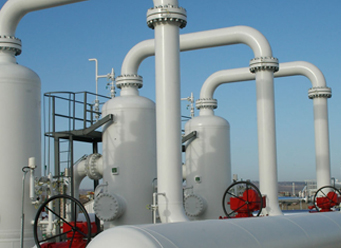
Slurry Pump Performance Analysis and Manufacturing Specifications
Slurry pumps are specialized centrifugal pumping systems engineered to transport fluids containing high concentrations of suspended abrasive solids. In the industrial chain, these pumps occupy a critical position in mining, mineral processing, dredging, and chemical manufacturing, serving as the primary mechanism for moving tailings, ores, and sludge. The technical core of a high-performance slurry pump lies in its ability to maintain hydraulic efficiency while resisting extreme erosive wear and corrosive chemical attack. Unlike standard water pumps, these units must manage non-Newtonian fluid behavior, where viscosity changes based on shear rates and solids concentration. The engineering objective is to optimize the velocity profile within the volute and impeller to minimize turbulence and high-impact zones, thereby extending the Mean Time Between Failures (MTBF) in harsh operational environments.
Material Science & Manufacturing
The longevity of a slurry pump is fundamentally determined by the metallurgical properties of its wetted parts. High-chrome white irons (ASTM A532) are the industry standard for extreme abrasion, typically utilizing a microstructure of hard primary chromium carbides embedded in a martensitic matrix. The chromium content (typically 25% to 28%) ensures a hardness range of 60-65 HRC, providing a sacrificial barrier against the kinetic energy of abrasive particles. For applications involving acidic or alkaline slurries, duplex stainless steels or high-nickel alloys are employed to prevent pitting and stress corrosion cracking.
Manufacturing processes prioritize structural integrity and precision tolerances. The casting process involves vacuum-assisted molding to eliminate porosity and slag inclusions that could act as initiation points for erosive pitting. Following casting, heat treatment—specifically quenching and tempering—is critical to transform the austenite into tempered martensite, optimizing the balance between hardness and fracture toughness. The impeller is typically dynamically balanced to ISO 1940-1 standards to minimize vibration-induced fatigue on the shaft and bearings. Furthermore, the volute is often designed with replaceable liners, allowing for the replacement of wear zones without decommissioning the entire pump casing, thus reducing operational downtime.
Performance & Engineering
Engineering a slurry pump requires a rigorous analysis of fluid dynamics and force distribution. The primary engineering challenge is the management of the "critical velocity"—the minimum speed required to keep solids in suspension and prevent sedimentation within the pump casing. If the flow velocity drops below this threshold, solids accumulate, leading to localized turbulence and accelerated wear (slugging). To combat this, the hydraulic design employs a wide-channel impeller and a streamlined volute to ensure a uniform velocity gradient.
Force analysis focuses on the radial thrust exerted on the shaft, which increases significantly as the pump operates away from its Best Efficiency Point (BEP). High-stiffness shafts, often manufactured from 42CrMo alloy steel, are used to prevent deflection and premature seal failure. Environmental resistance is managed through advanced sealing technologies; mechanical seals with tungsten carbide faces or specialized expeller seals (which create a centrifugal barrier to push slurry away from the bearing housing) are implemented to prevent contaminate ingress. Compliance with international safety and performance standards ensures that the pump can handle the specific gravity of the slurry—often ranging from 1.1 to 1.6—without overloading the motor or causing cavitation.
Technical Specifications
| Performance Parameter | High-Chrome Alloy Series | Duplex Steel Series | Rubber-Lined Series | Polyurethane Series |
|---|---|---|---|---|
| Max. Particle Size (mm) | Up to 100 mm | Up to 50 mm | Up to 30 mm | Up to 20 mm |
| Max. Flow Rate (m³/h) | 1200 | 800 | 600 | 400 |
| Max. Head (m) | 150 | 120 | 80 | 60 |
| Hardness (HRC/Shore) | 60 - 65 HRC | 25 - 35 HRC | 70 - 80 Shore A | 90 - 95 Shore A |
| Corrosion Resistance | Moderate | Excellent | High (Acids) | Moderate |
| Wear Mechanism | High-Impact Abrasion | Chemical Erosion | Fine Particle Abrasion | Low-Pressure Slurry |
Failure Mode & Maintenance
Failure analysis of slurry pumps typically reveals three primary modes: abrasive wear, cavitation erosion, and fatigue cracking. Abrasive wear occurs when the kinetic energy of solids strips the protective oxide layer from the metal, leading to rapid material loss in the impeller vanes and volute tongue. Cavitation occurs when the Net Positive Suction Head Available (NPSHa) falls below the Net Positive Suction Head Required (NPSHr), creating vapor bubbles that collapse with extreme force, pitting the metal surface. Fatigue cracking is often a result of shaft misalignment or operating at an unstable flow rate, leading to cyclic stress loading.
Professional maintenance protocols necessitate a predictive approach. Vibration analysis (FFT) should be performed monthly to detect bearing degradation or impeller imbalance. Wear liner thickness must be measured using ultrasonic gauges to determine the precise moment of replacement before the pressure casing is compromised. To mitigate failure, the use of Variable Frequency Drives (VFDs) is recommended to keep the pump operating near its BEP. Lubrication systems must be monitored for moisture or particle contamination, as slurry ingress into the bearing housing can lead to catastrophic seizure within hours.
Industry FAQ
Q: How do we determine the optimal material between High-Chrome and Rubber lining?
A: The choice depends on the particle size and hardness. High-Chrome alloys are superior for large, sharp, and hard particles (impact abrasion), whereas rubber lining is more effective for fine, sandy particles (sliding abrasion) due to its elasticity, which allows the material to "bounce back" rather than be gouged.
Q: What is the impact of slurry viscosity on the pump's NPSH requirements?
A: Increased viscosity raises the frictional losses in the suction piping, which significantly reduces the NPSHa. To prevent cavitation, the pump must be installed at a lower elevation relative to the source, or the suction pipe diameter must be increased to reduce velocity and friction.
Q: Why is the pump experiencing premature impeller wear despite using high-grade materials?
A: This is often caused by operating the pump too far to the left or right of the BEP, which creates internal recirculation and turbulence. This turbulence increases the localized impact velocity of the solids, accelerating erosion even in hardened materials.
Q: How does the solids concentration (wt%) affect the power consumption?
A: As the weight percentage of solids increases, the apparent viscosity and density of the fluid increase. This directly raises the brake horsepower (BHP) required to maintain the same flow rate, potentially overloading the motor if not accounted for in the initial engineering phase.
Q: Can a slurry pump be run dry for short periods during startup?
A: No. Slurry pumps rely on the pumped fluid for cooling and lubrication of the internal seals and wear rings. Running dry can lead to rapid heat buildup, causing the mechanical seals to fail or the wear rings to gall and seize.
Conclusion
The engineering of a high-performance slurry pump is a complex equilibrium between material hardness, hydraulic efficiency, and structural resilience. By integrating advanced metallurgy, such as High-Chrome white irons, with precise fluid dynamic modeling, it is possible to significantly mitigate the effects of abrasive wear and cavitation. The technical superiority of these systems is not found in a single component, but in the synergy between the impeller geometry, the seal integrity, and the rigorous adherence to operational parameters.
Looking forward, the industry is shifting toward "smart" slurry pumping, incorporating IoT-based wear sensors and real-time viscosity monitoring to transition from scheduled maintenance to condition-based maintenance. For procurement and engineering teams, the focus must remain on the total cost of ownership (TCO) rather than initial capital expenditure, ensuring that material specifications are precisely aligned with the chemical and physical properties of the medium being transported.
-
sewer pump for basement Material Science Manufacturing
News2026-05-29
-
sewage sump pumps Performance and Engineering
News2026-05-29
-
sewage pumps for septic tanks Material Science and Manufacturing
News2026-05-29
-
Sewage Pumping Companies Performance Analysis
News2026-05-29
-
Sewage Pump Manufacturers Performance Engineering
News2026-05-29
-
sewage pump for basement Performance and Engineering
News2026-05-28
-
Sewage Pump Companies Performance Analysis
News2026-05-28
-
Sewage Pit and Pump Performance Analysis
News2026-05-28
-
Sewage Lift Pumps Material Science
News2026-05-28
-
Sewage Ejector Tank Material Science and Manufacturing
News2026-05-28
-
sewage effluent pumps Material Science Manufacturing
News2026-05-27
-
septic tank effluent pump Performance Analysis
News2026-05-27
-
Septic Sewer Pump Performance Analysis
News2026-05-27
-
septic sewage pumps Performance Analysis
News2026-05-27
-
septic sewage pump Material Science and Manufacturing
News2026-05-27




