English
- Afrikaans
- Albanian
- Amharic
- Arabic
- Armenian
- Azerbaijani
- Basque
- Belarusian
- Bengali
- Bosnian
- Bulgarian
- Catalan
- Cebuano
- Corsican
- Croatian
- Czech
- Danish
- Dutch
- English
- Esperanto
- Estonian
- Finnish
- French
- Frisian
- Galician
- Georgian
- German
- Greek
- Gujarati
- Haitian Creole
- hausa
- hawaiian
- Hebrew
- Hindi
- Miao
- Hungarian
- Icelandic
- igbo
- Indonesian
- irish
- Italian
- Japanese
- Javanese
- Kannada
- kazakh
- Khmer
- Rwandese
- Korean
- Kurdish
- Kyrgyz
- Lao
- Latin
- Latvian
- Lithuanian
- Luxembourgish
- Macedonian
- Malgashi
- Malay
- Malayalam
- Maltese
- Maori
- Marathi
- Mongolian
- Myanmar
- Nepali
- Norwegian
- Norwegian
- Occitan
- Pashto
- Persian
- Polish
- Portuguese
- Punjabi
- Romanian
- Russian
- Samoan
- Scottish Gaelic
- Serbian
- Sesotho
- Shona
- Sindhi
- Sinhala
- Slovak
- Slovenian
- Somali
- Spanish
- Sundanese
- Swahili
- Swedish
- Tagalog
- Tajik
- Tamil
- Tatar
- Telugu
- Thai
- Turkish
- Turkmen
- Ukrainian
- Urdu
- Uighur
- Uzbek
- Vietnamese
- Welsh
- Bantu
- Yiddish
- Yoruba
- Zulu

Telephone: +86 13120555503
Email: frank@cypump.com


Apr . 01, 2024 17:55 Back to list
china ash slurry pumps Performance Analysis and Manufacturing Specifications
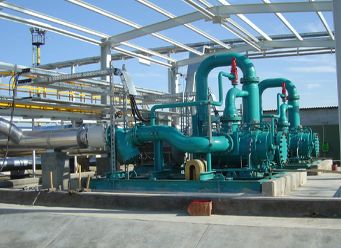
China Ash Slurry Pumps Performance Analysis and Manufacturing Specifications
China ash slurry pumps are specialized heavy-duty centrifugal pumping systems engineered to transport high-density suspensions of fly ash, bottom ash, and combined ash residues from thermal power plants to disposal sites or recycling facilities. In the industrial chain, these pumps serve as the critical nexus between ash collection systems and wastewater treatment or landfill operations. The primary technical challenge lies in managing the abrasive nature of volcanic and mineral particles contained within the ash, which can cause rapid erosive wear on internal components. To maintain operational efficiency, these pumps must balance high volumetric flow rates with the ability to handle non-Newtonian fluid behavior and high solid-to-liquid concentration ratios. The core performance metrics center on the Net Positive Suction Head (NPSH) requirements, the erosion rate of the impeller, and the pump's ability to prevent sedimentation within the casing during low-flow conditions.
Material Science & Manufacturing
The manufacturing of china ash slurry pumps necessitates a deep integration of metallurgy and fluid dynamics to combat extreme abrasion and corrosion. The primary material science focus is on the wear-resistant liners and impellers. High-chromium cast irons (such as ASTM A532) are typically employed, utilizing a microstructure consisting of hard chromium carbides embedded in a martensitic matrix. This provides the necessary hardness (typically 55-65 HRC) to resist the scouring action of ash particles. For highly corrosive environments, duplex stainless steels or specialized rubber linings are used to prevent chemical degradation from sulfurous compounds found in coal ash.
The manufacturing process involves high-precision casting followed by rigorous heat treatment (quenching and tempering) to ensure structural homogeneity. The impeller design focuses on the "closed" or "semi-open" geometry to minimize turbulence and secondary flow patterns that accelerate localized wear. Key parameter control during production includes the strict regulation of the cooling rate during the casting of the volute casing to avoid internal stresses that could lead to stress-corrosion cracking. Furthermore, the shafting is typically manufactured from alloy steels with induction-hardened surfaces or chrome plating to prevent grooving at the seal interfaces. Precision machining of the wear plate clearances is critical; an excessive gap leads to recirculation and internal erosion, while an insufficient gap risks mechanical seizure during particulate buildup.
Performance & Engineering
Engineering a china ash slurry pump requires a rigorous force analysis of the fluid-solid interaction. The primary engineering hurdle is the "critical carrying velocity," the minimum velocity required to keep ash particles in suspension. If the flow velocity drops below this threshold, sedimentation occurs, leading to pipeline blockage and pump cavitation. Engineers must calculate the Reynolds number for slurry flow, accounting for the increased apparent viscosity caused by the solid fraction. The pump's hydraulic design is optimized to maintain a laminar-to-turbulent transition that minimizes the impact angle of particles against the pump walls, thereby reducing the erosion rate proportional to the cube of the velocity.
Environmental resistance is achieved through the implementation of advanced sealing systems. Mechanical seals are often augmented with an external flushing system (API Plan 32 or 54) to prevent abrasive particles from entering the seal faces. In terms of compliance, the pumps are designed to meet stringent vibration and noise standards to ensure long-term structural integrity. The integration of Variable Frequency Drives (VFDs) allows for the adjustment of flow rates based on the ash concentration, ensuring that the pump operates near its Best Efficiency Point (BEP) and avoiding the radial thrust imbalances that lead to premature bearing failure.
Technical Specifications
| Parameter Dimension | Standard Duty Spec | Heavy Duty Spec | High-Chrome Spec | Unit of Measure |
|---|---|---|---|---|
| Max Flow Rate | 200 | 500 | 800 | m³/h |
| Maximum Head | 40 | 80 | 120 | meters |
| Max Solid Particle Size | 15 | 25 | 40 | mm |
| Material Hardness | 45-50 | 55-60 | 62-68 | HRC |
| Max Slurry Density | 1.3 | 1.5 | 1.7 | t/m³ |
| Efficiency Range | 65% - 72% | 68% - 75% | 70% - 78% | % |
Failure Mode & Maintenance
The failure modes of china ash slurry pumps are primarily categorized by abrasive wear and mechanical fatigue. The most common failure is "impeller vane thinning," where the high-velocity impact of ash particles removes the protective chromium carbide layer, leading to a rapid loss of hydraulic head. Another critical failure mode is "casing washout," which occurs typically at the volute tongue where turbulence is highest. This leads to internal recirculation and a significant drop in volumetric efficiency.
Mechanical failure often manifests as "shaft deflection" caused by unbalanced slurry distribution or the buildup of solids in the impeller eye. This deflection leads to the failure of mechanical seals and subsequent leakage of slurry into the bearing housing, resulting in catastrophic bearing seizure. Maintenance protocols must include a scheduled "wear-monitoring program" using ultrasonic thickness gauges to track liner degradation. Professional maintenance solutions include the use of ceramic inserts in high-wear zones and the implementation of a "sacrificial liner" strategy, where replaceable wear plates are installed to protect the main pump casing. Lubrication schedules must be strictly adhered to, utilizing high-viscosity synthetic lubricants to handle the radial loads inherent in slurry transport.
Industry FAQ
Q: How is the critical carrying velocity determined for a specific ash slurry concentration?
A: The critical carrying velocity is determined using the Durand equation or modified empirical models that account for particle size distribution, slurry density, and pipe diameter. It ensures that the upward fluid force overcomes the settling velocity of the largest ash particles to prevent blockage.
Q: Why is high-chromium iron preferred over standard stainless steel for ash pumps?
A: While stainless steel offers superior corrosion resistance, it lacks the surface hardness required to resist the mechanical scouring of ash particles. High-chromium iron creates a hard carbide matrix that prevents the material from being "ploughed" by abrasive solids.
Q: What are the indicators of cavitation in a slurry pump compared to a clear water pump?
A: In slurry pumps, cavitation is often masked by the noise of the solids. However, indicators include erratic discharge pressure fluctuations, an increase in vibration levels in the 1x-2x RPM range, and localized pitting on the impeller suction side.
Q: How does the solid-to-liquid ratio impact the Net Positive Suction Head (NPSH) requirement?
A: An increase in the solid-to-liquid ratio increases the effective viscosity and density of the fluid, which in turn increases the friction losses in the suction piping. This raises the required NPSH, increasing the risk of cavitation if the suction lift is not properly engineered.
Q: Which sealing arrangement is most effective for high-concentration ash slurry?
A: An expeller seal (mechanical seal with a flushing pump) is most effective. It creates a centrifugal barrier that pushes slurry away from the seal faces, while an external clean-water flush ensures that any leaked particles are washed away before they can score the seal faces.
Conclusion
The operational viability of china ash slurry pumps depends on the precise alignment of material hardness and hydraulic engineering. By utilizing high-chromium alloys and optimizing the flow dynamics to maintain critical carrying velocities, these systems can effectively mitigate the inherent challenges of abrasive wear and sedimentation. The integration of rigorous material science and failure analysis ensures that the pump remains a reliable component within the power plant's waste management infrastructure.
Looking forward, the industry is shifting toward the use of smart monitoring systems and advanced ceramic coatings to further extend the mean time between failures (MTBF). Implementing a predictive maintenance framework based on real-time vibration and thickness data will allow operators to transition from reactive to proactive maintenance, maximizing the lifecycle of the equipment and reducing the total cost of ownership in demanding industrial environments.
-
sewage pump for basement Performance and Engineering
News2026-05-28
-
Sewage Pump Companies Performance Analysis
News2026-05-28
-
Sewage Pit and Pump Performance Analysis
News2026-05-28
-
Sewage Lift Pumps Material Science
News2026-05-28
-
Sewage Ejector Tank Material Science and Manufacturing
News2026-05-28
-
sewage effluent pumps Material Science Manufacturing
News2026-05-27
-
septic tank effluent pump Performance Analysis
News2026-05-27
-
Septic Sewer Pump Performance Analysis
News2026-05-27
-
septic sewage pumps Performance Analysis
News2026-05-27
-
septic sewage pump Material Science and Manufacturing
News2026-05-27
-
residential sewage pumps Material Science and Manufacturing
News2026-05-26
-
residential sewage lift pump Performance Analysis
News2026-05-26
-
high head sump pump Performance and Engineering
News2026-05-26
-
effluent pump for septic tank Material Science Manufacturing
News2026-05-26
-
effluent and sewage pumps Material Science Manufacturing
News2026-05-26




