English
- Afrikaans
- Albanian
- Amharic
- Arabic
- Armenian
- Azerbaijani
- Basque
- Belarusian
- Bengali
- Bosnian
- Bulgarian
- Catalan
- Cebuano
- Corsican
- Croatian
- Czech
- Danish
- Dutch
- English
- Esperanto
- Estonian
- Finnish
- French
- Frisian
- Galician
- Georgian
- German
- Greek
- Gujarati
- Haitian Creole
- hausa
- hawaiian
- Hebrew
- Hindi
- Miao
- Hungarian
- Icelandic
- igbo
- Indonesian
- irish
- Italian
- Japanese
- Javanese
- Kannada
- kazakh
- Khmer
- Rwandese
- Korean
- Kurdish
- Kyrgyz
- Lao
- Latin
- Latvian
- Lithuanian
- Luxembourgish
- Macedonian
- Malgashi
- Malay
- Malayalam
- Maltese
- Maori
- Marathi
- Mongolian
- Myanmar
- Nepali
- Norwegian
- Norwegian
- Occitan
- Pashto
- Persian
- Polish
- Portuguese
- Punjabi
- Romanian
- Russian
- Samoan
- Scottish Gaelic
- Serbian
- Sesotho
- Shona
- Sindhi
- Sinhala
- Slovak
- Slovenian
- Somali
- Spanish
- Sundanese
- Swahili
- Swedish
- Tagalog
- Tajik
- Tamil
- Tatar
- Telugu
- Thai
- Turkish
- Turkmen
- Ukrainian
- Urdu
- Uighur
- Uzbek
- Vietnamese
- Welsh
- Bantu
- Yiddish
- Yoruba
- Zulu

Telephone: +86 13120555503
Email: frank@cypump.com


Apr . 01, 2024 17:55 Back to list
china ahr rubber slurry pump Manufacturing Specification and Performance Analysis
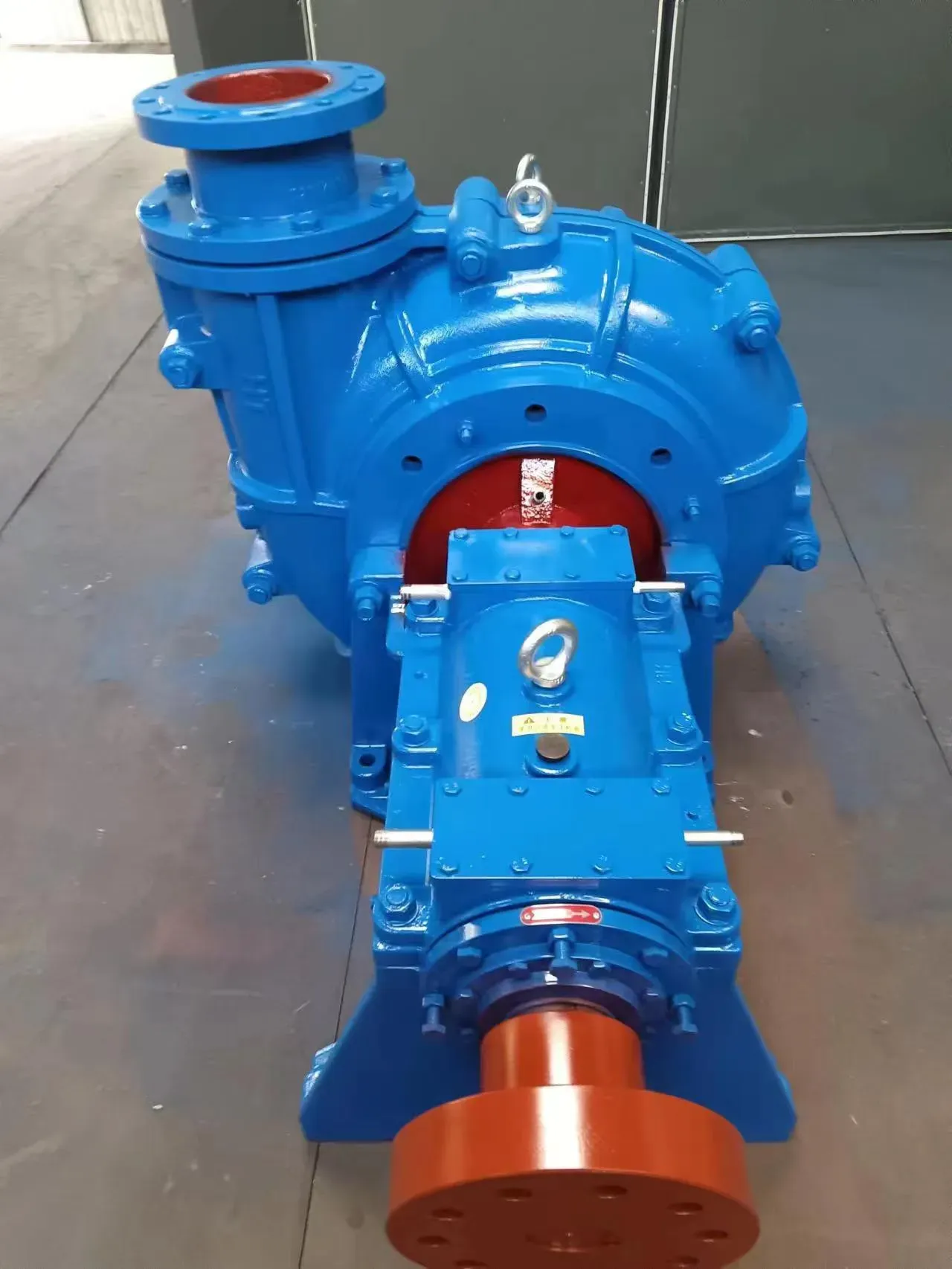
China AHR Rubber Slurry Pump Manufacturing Specification and Performance Analysis
Introduction
The China AHR rubber slurry pump is a heavy-duty industrial centrifugal pump engineered specifically for the conveyance of highly abrasive, non-lubricating solids suspended in liquid media. Positioned as a critical component in the mid-stream processing of mining, mineral processing, and chemical dredging, these pumps bridge the gap between raw material extraction and refining. The technical essence of the AHR series lies in its capacity to maintain volumetric efficiency while resisting the extreme erosive wear characterized by high-velocity particle impingement. By utilizing advanced elastomer linings and precision-engineered hydraulic pathways, the pump ensures consistent head pressure and flow rates under conditions that would cause rapid catastrophic failure in standard cast-iron or stainless steel pumps. Its technical position is defined by the optimization of the Net Positive Suction Head required (NPSHr) to prevent cavitation in high-density slurries, ensuring operational stability in the most demanding industrial environments.
Material Science & Manufacturing
The operational longevity of the China AHR rubber slurry pump is predicated on the synergistic application of material science and precision manufacturing. The primary wear-facing components are constructed from high-performance Natural Rubber (NR) or synthetic elastomers, specifically formulated for abrasion resistance. These materials are selected based on their high resilience and elasticity, which allow the pump liner to "absorb" the kinetic energy of impacting slurry particles and rebound, rather than suffering the micro-fracturing common in brittle alloys.
Elastomer Vulcanization Process: The rubber lining is not merely applied but is chemically bonded to the cast-iron shell through a rigorous vulcanization process. This involves high-pressure steam curing, ensuring that the rubber adheres to the metallic substrate without delamination under vacuum or high-pressure surges. The shore hardness of the rubber is precisely controlled (typically between 40-60 Shore A) to balance the trade-off between impact absorption and surface erosion.
Casting and Metallurgy: The external casing is typically fabricated from heavy-walled ductile iron or cast steel to provide the necessary structural rigidity to withstand the internal pressures and external mechanical stresses. The impeller—the heart of the pump—is often available in high-chrome alloys (27% Cr) for extreme hardness or natural rubber for high-volume, lower-density slurries. Manufacturing tolerances for the impeller balance are maintained within microns to minimize radial vibration, which is a primary catalyst for bearing failure and seal leakage in slurry applications.
Performance & Engineering
Engineering a slurry pump requires a deep analysis of fluid dynamics involving non-Newtonian fluids. The China AHR rubber slurry pump utilizes a wide-channel impeller design to minimize the risk of plugging and to reduce the velocity of the slurry at the impeller eye, thereby decreasing the rate of wear. The hydraulic profile is optimized to ensure a smooth transition from the suction nozzle to the discharge, reducing turbulence-induced erosion.
Force Analysis and Vibration Control: Given the inconsistent density of slurry, the pump is subject to erratic hydraulic loads. Engineering countermeasures include the use of reinforced shafting—typically made of 42CrMo alloy steel—which is heat-treated to achieve a high yield strength. The shaft is designed with a specific stiffness-to-mass ratio to shift the natural frequency away from the operational RPM, preventing resonance that could lead to premature fatigue failure.
Environmental Resistance and Compliance: The pump is engineered to operate in chemically aggressive environments. The rubber compounds are tested for compatibility with various pH levels, ensuring that the lining does not swell or degrade when exposed to acidic or alkaline tailings. Furthermore, the sealing system typically employs a mechanical seal or specialized gland packing with a water-flush system to prevent the abrasive slurry from penetrating the bearing housing, ensuring compliance with industrial leakage and safety standards.
Technical Specifications
| Model Series | Maximum Flow Rate (m³/h) | Max Discharge Head (m) | Liner Material | Max Particle Size (mm) | Operating Temp (°C) |
|---|---|---|---|---|---|
| AHR-050 | 50 - 120 | 15 - 35 | Natural Rubber / HRC | 10 - 15 | -10 to 60 |
| AHR-100 | 100 - 250 | 20 - 45 | Natural Rubber / HRC | 15 - 20 | -10 to 60 |
| AHR-150 | 150 - 400 | 25 - 55 | Natural Rubber / HRC | 20 - 25 | -10 to 60 |
| AHR-200 | 200 - 600 | 30 - 65 | Natural Rubber / HRC | 25 - 30 | -10 to 60 |
| AHR-250 | 250 - 850 | 35 - 75 | Natural Rubber / HRC | 30 - 40 | -10 to 60 |
| AHR-300 | 300 - 1100 | 40 - 85 | Natural Rubber / HRC | 40 - 50 | -10 to 60 |
Failure Mode & Maintenance
In high-abrasion environments, the China AHR rubber slurry pump is subject to specific failure modes that require systematic monitoring and professional intervention.
1. Abrasive Wear and Cavitation: The most common failure is the thinning of the rubber liner. This is often accelerated by cavitation, which occurs when the NPSH available is lower than the NPSH required. Cavitation creates vapor bubbles that collapse with extreme force, pitting the rubber surface and creating "channels" that accelerate erosion. Maintenance requires the installation of a pressure gauge at the suction inlet to ensure optimal feed pressure.
2. Delamination and Thermal Degradation: Exposure to temperatures exceeding 60°C or incompatibility with chemical solvents can lead to the rubber lining peeling away from the cast-iron shell (delamination). Once the liner is breached, the abrasive slurry attacks the metallic casing directly, leading to rapid perforation. Regular ultrasonic thickness testing of the liner is recommended.
3. Bearing Fatigue and Seal Leakage: Excessive vibration due to impeller imbalance or misalignment leads to bearing race fatigue. Furthermore, if the gland water seal fails, slurry particles enter the bearing housing, acting as an abrasive paste that destroys the lubricant film. Maintenance protocols must include a weekly check of the seal flush water pressure and vibration analysis using an accelerometer.
Maintenance Solution: Implement a "Predictive Maintenance" schedule. This involves replacing the impeller and liner as soon as they reach 70% wear to avoid damaging the pump casing, and performing quarterly laser alignment of the motor and pump shaft.
Industry FAQ
Q: How do I determine whether to use a rubber-lined impeller or a high-chrome alloy impeller?
A: The choice depends on the particle size and hardness of the slurry. Rubber impellers are superior for fine, sharp particles (like sand or tailings) due to their elasticity. High-chrome alloys are required for larger, coarser particles or high-pressure applications where the rubber would be sliced or torn by the impact of heavy solids.
Q: What is the primary cause of premature liner failure in AHR pumps?
A: The most frequent cause is running the pump "dry" or at very low flow rates. Without the slurry to act as a heat sink, the friction between the fluid and the rubber generates localized heat, leading to thermal degradation and hardening of the elastomer, which then cracks under mechanical stress.
Q: How does the AHR pump handle changes in slurry density?
A: Changes in density affect the pump's head and power consumption. As density increases, the required Brake Horsepower (BHP) increases. It is critical to ensure the motor has a sufficient service factor to handle the peak torque requirements associated with high-density surges.
Q: Can the AHR rubber slurry pump be used for acidic chemical waste?
A: Yes, provided the rubber compound is compatible with the specific chemical. While natural rubber is excellent for abrasion, synthetic elastomers like Nitrile or Neoprene may be required for oil-based or highly acidic slurries to prevent chemical swelling and degradation.
Q: What are the signs that the pump is operating in a cavitation state?
A: The primary indicators are an increase in high-frequency noise (sounding like "pumping gravel"), erratic discharge pressure, and increased vibration levels. If detected, the suction valve should be fully opened or the slurry concentration reduced to improve flow.
Conclusion
The China AHR rubber slurry pump represents a sophisticated convergence of elastomer chemistry and hydraulic engineering. By prioritizing the mitigation of abrasive wear through specialized rubber vulcanization and optimizing the fluid dynamics of the impeller, these pumps provide a robust solution for the most aggressive industrial transport tasks. The technical success of the pump is not merely in its initial performance but in its ability to maintain operational integrity through a calculated balance of resilience and rigidity.
For operators and procurement managers, the focus must remain on the rigorous application of predictive maintenance and the precise selection of liner materials based on the specific mineralogy of the slurry. As industrial standards move toward higher efficiency and lower downtime, the integration of vibration monitoring and thermal sensing will further enhance the lifecycle and reliability of the AHR series in global mining and processing infrastructures.
-
sewage pump for basement Performance and Engineering
News2026-05-28
-
Sewage Pump Companies Performance Analysis
News2026-05-28
-
Sewage Pit and Pump Performance Analysis
News2026-05-28
-
Sewage Lift Pumps Material Science
News2026-05-28
-
Sewage Ejector Tank Material Science and Manufacturing
News2026-05-28
-
sewage effluent pumps Material Science Manufacturing
News2026-05-27
-
septic tank effluent pump Performance Analysis
News2026-05-27
-
Septic Sewer Pump Performance Analysis
News2026-05-27
-
septic sewage pumps Performance Analysis
News2026-05-27
-
septic sewage pump Material Science and Manufacturing
News2026-05-27
-
residential sewage pumps Material Science and Manufacturing
News2026-05-26
-
residential sewage lift pump Performance Analysis
News2026-05-26
-
high head sump pump Performance and Engineering
News2026-05-26
-
effluent pump for septic tank Material Science Manufacturing
News2026-05-26
-
effluent and sewage pumps Material Science Manufacturing
News2026-05-26




