English
- Afrikaans
- Albanian
- Amharic
- Arabic
- Armenian
- Azerbaijani
- Basque
- Belarusian
- Bengali
- Bosnian
- Bulgarian
- Catalan
- Cebuano
- Corsican
- Croatian
- Czech
- Danish
- Dutch
- English
- Esperanto
- Estonian
- Finnish
- French
- Frisian
- Galician
- Georgian
- German
- Greek
- Gujarati
- Haitian Creole
- hausa
- hawaiian
- Hebrew
- Hindi
- Miao
- Hungarian
- Icelandic
- igbo
- Indonesian
- irish
- Italian
- Japanese
- Javanese
- Kannada
- kazakh
- Khmer
- Rwandese
- Korean
- Kurdish
- Kyrgyz
- Lao
- Latin
- Latvian
- Lithuanian
- Luxembourgish
- Macedonian
- Malgashi
- Malay
- Malayalam
- Maltese
- Maori
- Marathi
- Mongolian
- Myanmar
- Nepali
- Norwegian
- Norwegian
- Occitan
- Pashto
- Persian
- Polish
- Portuguese
- Punjabi
- Romanian
- Russian
- Samoan
- Scottish Gaelic
- Serbian
- Sesotho
- Shona
- Sindhi
- Sinhala
- Slovak
- Slovenian
- Somali
- Spanish
- Sundanese
- Swahili
- Swedish
- Tagalog
- Tajik
- Tamil
- Tatar
- Telugu
- Thai
- Turkish
- Turkmen
- Ukrainian
- Urdu
- Uighur
- Uzbek
- Vietnamese
- Welsh
- Bantu
- Yiddish
- Yoruba
- Zulu

Telephone: +86 13120555503
Email: frank@cypump.com


Apr . 01, 2024 17:55 Back to list
china 12 inch slurry pump Technical Analysis and Manufacturing Specifications
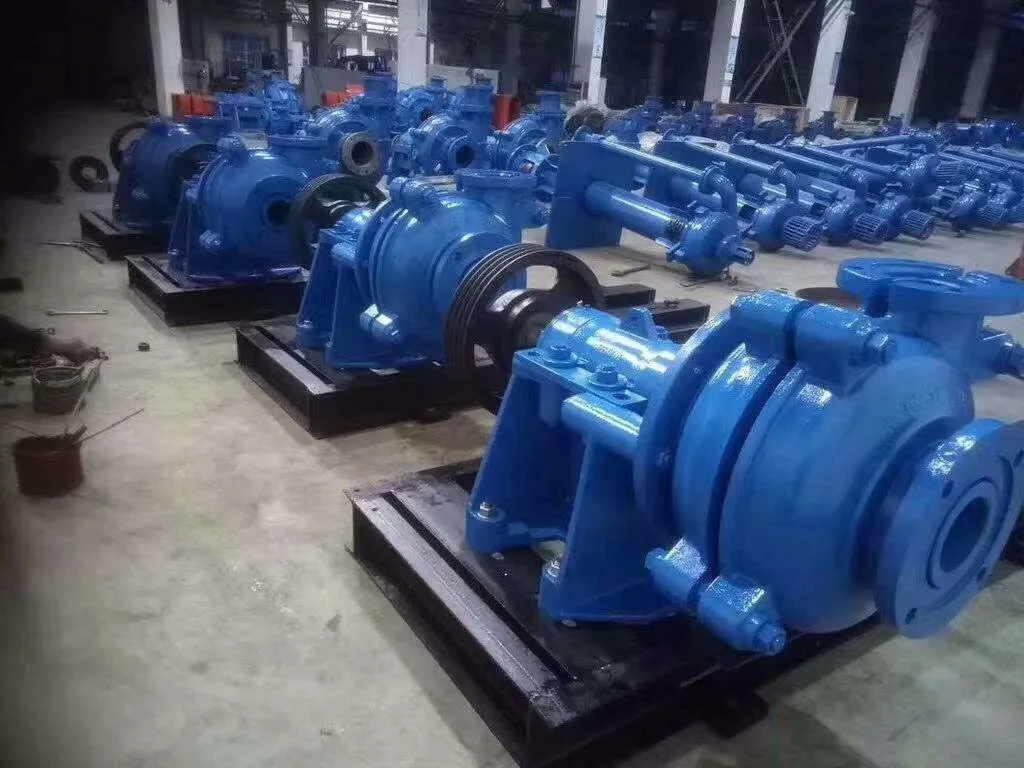
China 12 Inch Slurry Pump: Technical Analysis and Manufacturing Specifications
The 12-inch slurry pump represents a critical heavy-duty industrial asset designed for the transport of high-density, abrasive, and corrosive fluids. Within the industrial chain, these pumps serve as the primary kinetic driver for tailings management in mining, dredging in maritime engineering, and waste disposal in chemical processing. A 12-inch designation refers to the nominal discharge diameter, signifying a high-volume capacity engineered to handle large solid particles without clogging. The core performance of these units is defined by their ability to maintain a constant volumetric flow rate while resisting the intense erosive wear caused by the impingement of suspended solids. Achieving the balance between hydraulic efficiency and structural longevity requires a precise intersection of fluid dynamics and advanced metallurgy.
Material Science & Manufacturing
The operational environment of a 12-inch slurry pump is characterized by extreme abrasion and chemical aggression. To mitigate rapid material loss, the manufacturing process focuses on High-Chrome (Hi-Cr) alloys and natural rubber linings. High-chromium cast iron (typically 27% Cr) is utilized for the impeller and volute liners, where a martensitic matrix embedded with primary M7C3 carbides provides a hardness level exceeding 60 HRC. This metallurgical structure is essential for resisting the scouring action of quartz, pyrite, and other mineral ores.
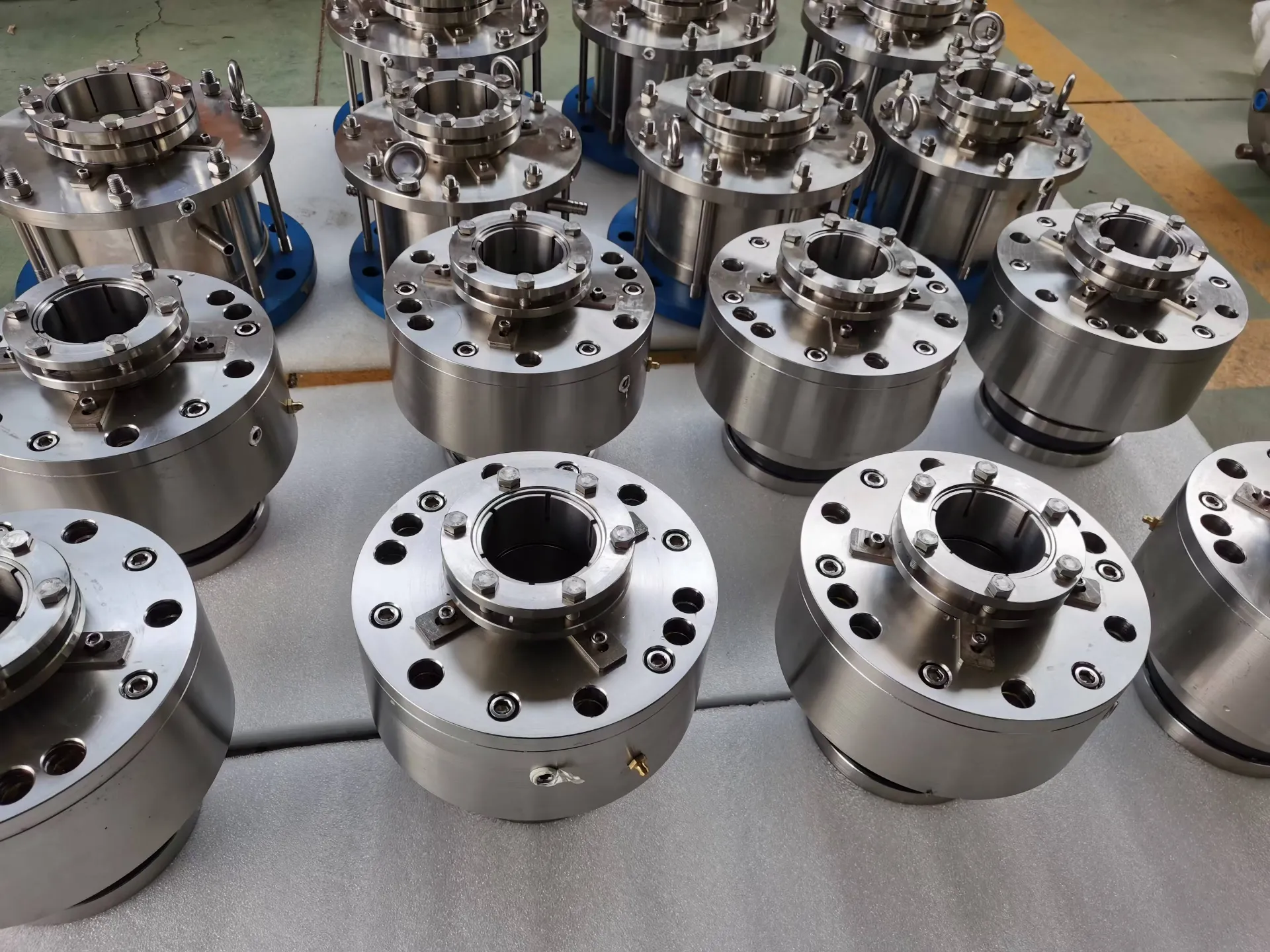
For corrosive slurries, the pump incorporates thermoplastic or vulcanized rubber linings. The manufacturing process involves a complex bonding cycle where the rubber is chemically fused to the cast steel shell to prevent delamination under high-pressure fluctuations. The casting process itself employs precision sand casting with controlled cooling rates to eliminate internal porosity and segregation, ensuring that the wall thickness is uniform across the 12-inch diameter. Key parameter control during production includes the precise machining of the impeller eye and the strict tolerance management of the shaft sleeve to prevent premature seal failure.
Performance & Engineering
Engineering a 12-inch slurry pump requires a comprehensive force analysis of the fluid-structure interaction. The primary engineering challenge is managing the "critical velocity"—the minimum velocity required to keep solids in suspension and prevent sedimentation within the pump casing. If the flow velocity drops below this threshold, the resulting deposition leads to catastrophic blockages and uneven wear patterns.
From an environmental resistance perspective, the pump is engineered to handle varying slurry densities, often measured in specific gravity (SG). The hydraulic design utilizes a wide-channel impeller to reduce friction loss and minimize the turbulence that accelerates wear. Compliance requirements mandate that the pump's mechanical seals or gland packing systems can withstand high-pressure leakage without contaminating the surrounding environment. Furthermore, the structural frame is reinforced to absorb the vibration harmonics generated by the passage of large solids, preventing fatigue failure in the bearing housings and coupling assemblies.
Technical Specifications
| Technical Parameter | Standard Specification | High-Performance Variant | Heavy-Duty Variant | Operational Range |
|---|---|---|---|---|
| Discharge Diameter | 300 mm (12 Inch) | 300 mm (12 Inch) | 300 mm (12 Inch) | Fixed |
| Maximum Flow Rate | 6,000 m³/h | 8,500 m³/h | 10,000 m³/h | 2,000 - 10,000 m³/h |
| Maximum Head (Lift) | 45 Meters | 60 Meters | 80 Meters | 10 - 80 Meters |
| Lining Material | High Chrome Alloy | Natural Rubber | Duplex Stainless Steel | Customizable |
| Impeller Type | Open/Semi-Open | Closed High-Efficiency | Vortex/Heavy Duty | Application-based |
| Motor Power (kW) | 250 kW | 315 kW | 400 kW | 200 - 500 kW |
Failure Mode & Maintenance
Failure analysis of 12-inch slurry pumps typically reveals three primary degradation modes: abrasive erosion, cavitation, and mechanical fatigue. Abrasive erosion occurs predominantly at the impeller vanes and the volute tongue, where high-velocity fluid impacts the surface. This is evidenced by "thinning" of the walls, which eventually leads to a loss of hydraulic pressure. Cavitation occurs when the Net Positive Suction Head available (NPSHa) falls below the required level (NPSHr), creating vapor bubbles that implode and pit the metal surface, often mistaken for corrosion.
Maintenance protocols must be rigorous. Proactive maintenance includes the implementation of vibration analysis to detect bearing wear and ultrasonic thickness testing to monitor liner degradation without dismantling the pump. When delamination of rubber linings occurs, it is usually a result of improper bonding or exposure to chemicals exceeding the rubber's compatibility range. Professional maintenance solutions include the use of hard-facing weld overlays on worn surfaces and the installation of variable frequency drives (VFDs) to optimize flow velocity and reduce the energy-induced wear rate.
Industry FAQ
Q: How do we determine the optimal liner material for a 12-inch slurry pump?
A: Selection depends on the particle size and hardness. For fine, abrasive particles (e.g., sand), high-chrome alloys are superior. For larger, softer particles or highly corrosive fluids, natural rubber or polyurethane provides better resilience and longer service life.
Q: What is the impact of slurry density on the pump's power consumption?
A: As the specific gravity (SG) of the slurry increases, the fluid's viscosity and mass increase, directly raising the brake horsepower (BHP) required by the motor. Engineers must size the motor based on the maximum expected SG to avoid overloading.
Q: How can we mitigate the risk of cavitation in high-volume 12-inch systems?
A: Cavitation is mitigated by increasing the suction head, reducing the suction lift, or decreasing the fluid temperature. Ensuring the suction piping is streamlined and the intake is not restricted is critical for maintaining NPSH.
Q: What is the expected lifespan of a high-chrome impeller in a mining application?
A: Lifespan varies wildly based on the ore's hardness and flow velocity, but typically ranges from 3,000 to 8,000 operating hours. Regular thickness measurements are required to predict the exact replacement window.
Q: Is a 12-inch pump suitable for transporting solids larger than 50mm?
A: While the discharge is 12 inches, the impeller eye diameter determines the maximum allowable solid size. For solids larger than 50mm, a semi-open impeller design is required to prevent clogging and mechanical blockage.
Conclusion
The technical integrity of a 12-inch slurry pump is contingent upon the synergy between its metallurgical composition and its hydraulic engineering. By prioritizing high-chromium alloys and rubber composites, and by strictly adhering to critical velocity calculations, industrial operators can maximize volumetric efficiency while minimizing the total cost of ownership through reduced downtime and extended component longevity.
Looking forward, the integration of smart monitoring sensors and AI-driven predictive maintenance will likely redefine slurry transport. Transitioning from scheduled maintenance to condition-based maintenance will allow for the optimization of liner replacements, ensuring that these heavy-duty assets operate at peak performance within the most demanding industrial environments.
-
sewage effluent pumps Material Science Manufacturing
News2026-05-27
-
septic tank effluent pump Performance Analysis
News2026-05-27
-
Septic Sewer Pump Performance Analysis
News2026-05-27
-
septic sewage pumps Performance Analysis
News2026-05-27
-
septic sewage pump Material Science and Manufacturing
News2026-05-27
-
residential sewage pumps Material Science and Manufacturing
News2026-05-26
-
residential sewage lift pump Performance Analysis
News2026-05-26
-
high head sump pump Performance and Engineering
News2026-05-26
-
effluent pump for septic tank Material Science Manufacturing
News2026-05-26
-
effluent and sewage pumps Material Science Manufacturing
News2026-05-26
-
1 2 hp sewage ejector pump Performance Engineering
News2026-05-25
-
Zoeller 1/2 hp sewage pump Performance Analysis
News2026-05-25
-
Effluent Pump Performance Analysis
News2026-05-25
-
sump pump vs effluent pump Performance Analysis
News2026-05-25
-
sewer pumps residential Performance Analysis
News2026-05-25




