English
- Afrikaans
- Albanian
- Amharic
- Arabic
- Armenian
- Azerbaijani
- Basque
- Belarusian
- Bengali
- Bosnian
- Bulgarian
- Catalan
- Cebuano
- Corsican
- Croatian
- Czech
- Danish
- Dutch
- English
- Esperanto
- Estonian
- Finnish
- French
- Frisian
- Galician
- Georgian
- German
- Greek
- Gujarati
- Haitian Creole
- hausa
- hawaiian
- Hebrew
- Hindi
- Miao
- Hungarian
- Icelandic
- igbo
- Indonesian
- irish
- Italian
- Japanese
- Javanese
- Kannada
- kazakh
- Khmer
- Rwandese
- Korean
- Kurdish
- Kyrgyz
- Lao
- Latin
- Latvian
- Lithuanian
- Luxembourgish
- Macedonian
- Malgashi
- Malay
- Malayalam
- Maltese
- Maori
- Marathi
- Mongolian
- Myanmar
- Nepali
- Norwegian
- Norwegian
- Occitan
- Pashto
- Persian
- Polish
- Portuguese
- Punjabi
- Romanian
- Russian
- Samoan
- Scottish Gaelic
- Serbian
- Sesotho
- Shona
- Sindhi
- Sinhala
- Slovak
- Slovenian
- Somali
- Spanish
- Sundanese
- Swahili
- Swedish
- Tagalog
- Tajik
- Tamil
- Tatar
- Telugu
- Thai
- Turkish
- Turkmen
- Ukrainian
- Urdu
- Uighur
- Uzbek
- Vietnamese
- Welsh
- Bantu
- Yiddish
- Yoruba
- Zulu

Telephone: +86 13120555503
Email: frank@cypump.com


Apr . 01, 2024 17:55 Back to list
chemical pumps for sale Performance Engineering
Introduction
Chemical pumps are specialized industrial pumps designed for the handling of corrosive, abrasive, and hazardous chemicals. Unlike general-purpose pumps, chemical pumps are engineered with materials and construction features to withstand the aggressive nature of these fluids, ensuring process integrity and safety. Positioned as critical components within the broader chemical processing industry – encompassing sectors such as petrochemicals, pharmaceuticals, water treatment, and agriculture – these pumps play a vital role in fluid transfer, dosing, mixing, and reaction processes. Core performance characteristics include flow rate, head pressure, materials compatibility, sealing efficiency, and operational reliability under challenging chemical conditions. Selecting the appropriate chemical pump necessitates a detailed understanding of the fluid’s properties, operational parameters, and relevant safety regulations. The ongoing trend in the industry is towards increased demand for pumps offering higher efficiency, reduced lifecycle costs, and enhanced environmental protection through leak-free designs and reduced energy consumption.
Material Science & Manufacturing
The selection of materials is paramount in chemical pump construction. Common wetted parts materials include polypropylene (PP), polyvinylidene fluoride (PVDF), polytetrafluoroethylene (PTFE), stainless steel (316, 304), Hastelloy alloys (C-276, B-3), and ceramic materials like silicon carbide (SiC). PP and PVDF offer excellent chemical resistance to a broad range of acids and bases but have limitations in temperature and mechanical strength. PTFE is exceptionally resistant but exhibits creep characteristics. Stainless steels provide robust mechanical properties and corrosion resistance in many applications, though susceptible to chloride stress corrosion cracking. Hastelloy alloys represent premium materials offering superior resistance to highly corrosive environments. Manufacturing processes vary depending on the pump type and materials. Centrifugal pumps often utilize investment casting or sand casting for stainless steel and alloy components, followed by precision machining and polishing. Plastic pumps commonly employ injection molding for complex shapes. For magnetically driven pumps, precise alignment and encapsulation of magnets are crucial, requiring specialized manufacturing techniques. Welding processes, when employed (e.g., for stainless steel housings), must adhere to stringent quality control standards (AWS D1.1) to ensure weld integrity and prevent corrosion initiation points. Critical parameter control includes material traceability, dimensional accuracy, surface finish, and weld quality verification through non-destructive testing (NDT) methods such as radiographic inspection and liquid penetrant testing.
Performance & Engineering
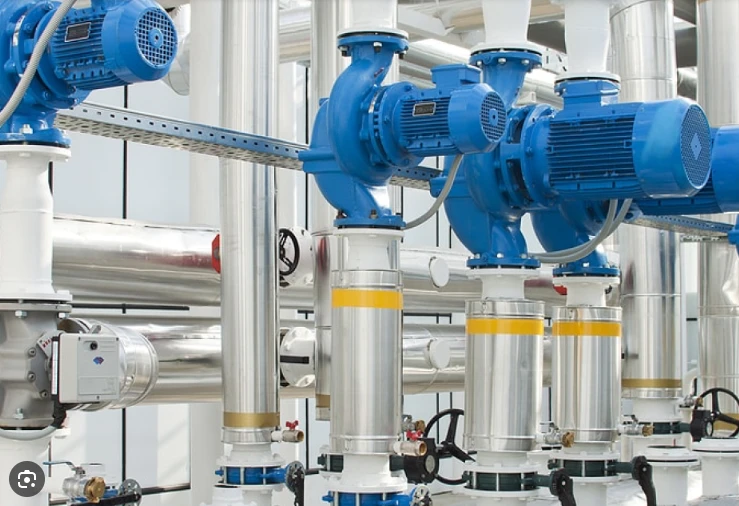
Chemical pump performance is governed by fluid dynamics principles and material behavior. Centrifugal pumps rely on impeller rotation to generate centrifugal force, converting mechanical energy into hydraulic energy. Positive displacement pumps (diaphragm, peristaltic, gear pumps) deliver a fixed volume of fluid per revolution, offering precise flow control and self-priming capabilities. Force analysis is critical in pump design to ensure structural integrity under operating pressures and loads. Finite element analysis (FEA) is often employed to optimize pump housing geometry and minimize stress concentrations. Environmental resistance is a key consideration, particularly in outdoor installations or corrosive atmospheres. Pump materials must be selected to withstand temperature fluctuations, UV exposure, and chemical attack. Compliance requirements dictate adherence to industry standards such as API 610 (centrifugal pumps), ANSI B73.1 (dimensional standards), and relevant safety regulations (ATEX for explosive environments, IECEx). Leak-free pump designs, such as sealless magnetic drive pumps and double mechanical seal systems, are essential to prevent fugitive emissions and protect personnel and the environment. Proper pump sizing and system design, including pipe diameter selection and minimizing pressure drop, are crucial for optimal performance and efficiency.
Technical Specifications
| Parameter | Centrifugal Pump (PP) | Diaphragm Pump (PVDF) | Magnetic Drive Pump (Hastelloy C-276) | Gear Pump (316 SS) |
|---|---|---|---|---|
| Maximum Flow Rate (GPM) | 200 | 60 | 150 | 10 |
| Maximum Head (ft) | 150 | 80 | 200 | 200 |
| Temperature Range (°F) | 0-180 | 0-250 | -40-392 | -20-250 |
| Viscosity Range (cP) | 1-100 | 1-500 | 1-1000 | 1-500 |
| Solids Handling (mm) | 0-5 | 0-8 | 0-3 | 0-1 |
| Chemical Compatibility | Acids, Bases | Wide Range | Highly Corrosive Chemicals | Neutral Liquids |
Failure Mode & Maintenance
Common failure modes in chemical pumps include mechanical seal failure (leading to leakage), impeller erosion/corrosion (reducing performance), bearing failure (resulting in noise and vibration), diaphragm rupture (in diaphragm pumps), and material degradation due to chemical attack. Fatigue cracking can occur in pump housings or impellers under cyclic loading. Cavitation, caused by low inlet pressure, can erode impeller surfaces. Failure analysis involves inspecting failed components for signs of corrosion, wear, cracking, or deformation. Root cause analysis (RCA) is crucial for identifying the underlying cause of failure and implementing corrective actions. Preventive maintenance practices are essential for extending pump lifespan. These include regular inspection of seals, bearings, and diaphragms; lubrication of moving parts; monitoring vibration levels; and periodic performance testing. Proper filtration of pumped fluids is critical to remove abrasive particles and prevent erosion. For magnetically driven pumps, monitoring the magnetic coupling for wear or demagnetization is essential. Routine cleaning of pump components and housings is recommended to prevent buildup of corrosive deposits. Replacement of worn parts should be performed according to manufacturer's recommendations and using compatible materials.
Industry FAQ
Q: What is the primary difference between a magnetically driven chemical pump and a mechanically sealed centrifugal pump?
A: The key difference lies in the sealing mechanism. Mechanically sealed pumps utilize rotating seals that rely on a contact surface between two materials to prevent leakage. These seals are prone to wear and require regular maintenance. Magnetically driven pumps, conversely, are sealless, utilizing magnetic coupling to transmit torque. This eliminates the need for a dynamic seal, preventing leakage and reducing maintenance requirements, especially advantageous for hazardous or highly corrosive fluids. However, magnetic drive pumps generally have lower torque capacity than mechanically sealed pumps.
Q: How do I determine the correct material of construction for a chemical pump given a specific fluid?
A: Material selection requires a thorough understanding of the fluid's chemical composition, concentration, temperature, and pressure. Chemical compatibility charts are a useful starting point, but it's essential to consult with material specialists or the pump manufacturer. Consider factors like corrosion rate, erosion resistance, and the presence of any dissolved solids. It's also prudent to perform small-scale material testing to verify compatibility under specific operating conditions.
Q: What are the typical causes of cavitation in chemical pumps and how can it be prevented?
A: Cavitation occurs when the absolute pressure at the pump inlet falls below the vapor pressure of the fluid, forming vapor bubbles that collapse violently, damaging the impeller. Causes include insufficient inlet pressure (low NPSHa), high fluid viscosity, and excessive flow rates. Prevention strategies include ensuring adequate inlet pressure, reducing fluid viscosity (if possible), optimizing pump speed, and properly sizing the suction piping.
Q: What is the role of Net Positive Suction Head (NPSH) in chemical pump operation?
A: Net Positive Suction Head (NPSH) is a critical parameter that defines the absolute pressure at the pump inlet required to prevent cavitation. There are two NPSH values: NPSHa (available) and NPSHr (required). NPSHa represents the actual pressure at the pump inlet, while NPSHr is a characteristic of the pump design. To avoid cavitation, NPSHa must always be greater than NPSHr with a sufficient safety margin.
Q: What safety certifications are typically required for chemical pumps used in hazardous environments?
A: For hazardous environments, chemical pumps require certifications such as ATEX (Europe) and IECEx (International) for electrical safety in potentially explosive atmospheres. These certifications ensure the pump’s construction and operation minimize the risk of ignition. Depending on the application and region, other certifications such as UL or CSA may also be required.
Conclusion
Chemical pumps represent a highly specialized segment of the industrial pump market, demanding careful consideration of material science, engineering principles, and operational requirements. The selection process hinges upon a detailed analysis of the chemical fluid's properties, process parameters, and relevant safety regulations. Proper material selection, coupled with meticulous manufacturing and preventative maintenance, is crucial for ensuring long-term reliability, minimizing downtime, and protecting personnel and the environment.
The future of chemical pump technology will likely focus on advancements in materials (e.g., ceramic composites and enhanced alloys), pump design (e.g., optimized impeller geometries and sealless technologies), and monitoring capabilities (e.g., predictive maintenance through sensor integration and data analytics). These innovations will contribute to increased efficiency, reduced lifecycle costs, and enhanced sustainability within the chemical processing industry.
-
Comprehensive Guide to Waterproof ORings for Optimal Sealing Solutions
News2026-06-09
-
Septic Pump System Performance Analysis
News2026-06-08
-
pump for septic Material Science
News2026-06-08
-
basement sewer pump Performance Analysis
News2026-06-08
-
submerged pump Performance Engineering
News2026-06-08
-
Septic System Pumps Performance Analysis
News2026-06-08
-
septic system pump Material Science and Manufacturing
News2026-06-07
-
pump for septic tank Material Science Manufacturing
News2026-06-07
-
submersible sewage pump Material Science
News2026-06-07
-
Sewage Ejector Material Science and Manufacturing
News2026-06-07
-
Ejection Pump Material Science
News2026-06-07
-
pump submersible Performance Analysis
News2026-06-06
-
ejector pumps Performance Engineering
News2026-06-06
-
basement ejector pump Material Science Manufacturing
News2026-06-06
-
Septic Tanks Pumping Performance Analysis
News2026-06-06




