English
- Afrikaans
- Albanian
- Amharic
- Arabic
- Armenian
- Azerbaijani
- Basque
- Belarusian
- Bengali
- Bosnian
- Bulgarian
- Catalan
- Cebuano
- Corsican
- Croatian
- Czech
- Danish
- Dutch
- English
- Esperanto
- Estonian
- Finnish
- French
- Frisian
- Galician
- Georgian
- German
- Greek
- Gujarati
- Haitian Creole
- hausa
- hawaiian
- Hebrew
- Hindi
- Miao
- Hungarian
- Icelandic
- igbo
- Indonesian
- irish
- Italian
- Japanese
- Javanese
- Kannada
- kazakh
- Khmer
- Rwandese
- Korean
- Kurdish
- Kyrgyz
- Lao
- Latin
- Latvian
- Lithuanian
- Luxembourgish
- Macedonian
- Malgashi
- Malay
- Malayalam
- Maltese
- Maori
- Marathi
- Mongolian
- Myanmar
- Nepali
- Norwegian
- Norwegian
- Occitan
- Pashto
- Persian
- Polish
- Portuguese
- Punjabi
- Romanian
- Russian
- Samoan
- Scottish Gaelic
- Serbian
- Sesotho
- Shona
- Sindhi
- Sinhala
- Slovak
- Slovenian
- Somali
- Spanish
- Sundanese
- Swahili
- Swedish
- Tagalog
- Tajik
- Tamil
- Tatar
- Telugu
- Thai
- Turkish
- Turkmen
- Ukrainian
- Urdu
- Uighur
- Uzbek
- Vietnamese
- Welsh
- Bantu
- Yiddish
- Yoruba
- Zulu

Telephone: +86 13120555503
Email: frank@cypump.com


Apr . 01, 2024 17:55 Back to list
carbon slurry pump Performance Engineering

Introduction
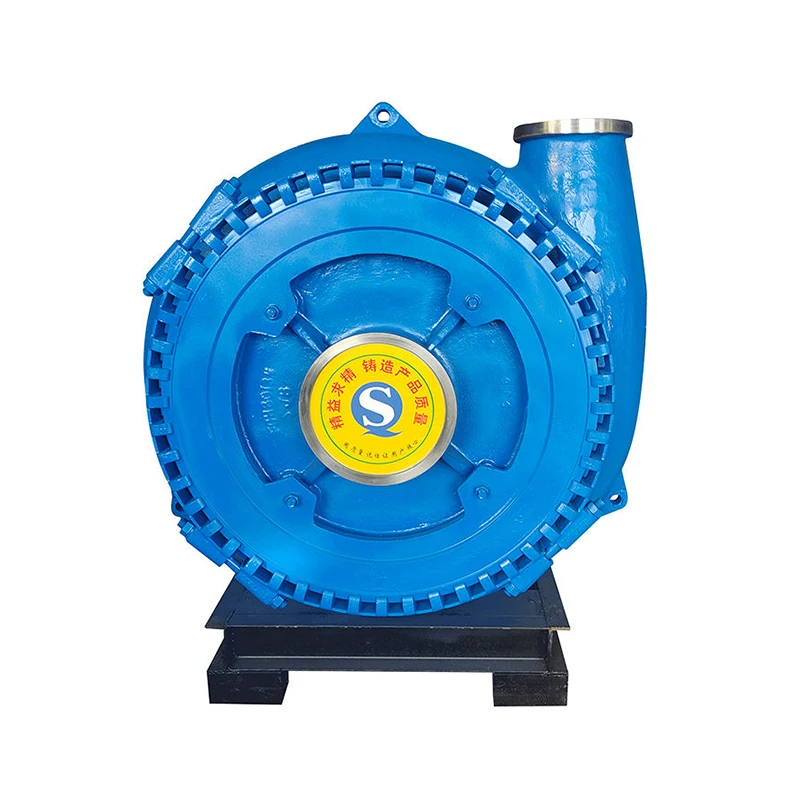
Carbon slurry pumps are heavy-duty centrifugal pumps specifically engineered for the transportation of abrasive and corrosive slurries containing carbon particles. These pumps find primary application in coal preparation plants, mineral processing facilities (particularly those handling carbon-in-pulp (CIP) and carbon-in-leach (CIL) processes for gold extraction), and wastewater treatment involving carbon-based materials. Their technical position within the industry chain is critical; they represent a key element in process fluid handling, directly impacting efficiency, operational costs, and overall plant reliability. Core performance characteristics revolve around high solids handling capacity, resistance to abrasion from carbon particles (often possessing sharp, irregular shapes), and chemical compatibility with the slurry's specific composition, including pH levels and potential reactive compounds. Unlike standard centrifugal pumps, carbon slurry pumps incorporate specialized design features, such as hardened impellers and casings, to mitigate wear and ensure prolonged service life in harsh operating environments. The core pain point addressed by these pumps is preventing premature failure and costly downtime associated with abrasive wear and corrosion in carbon-rich slurry applications.
Material Science & Manufacturing
The construction of a carbon slurry pump necessitates careful material selection to withstand the severe service conditions. Pump casings are typically manufactured from high-chrome iron alloys (e.g., 27% Cr-Mo iron) due to their exceptional abrasion resistance. Impellers, the most vulnerable component, often utilize similar high-chrome alloys or, for highly abrasive slurries, advanced ceramic materials like silicon carbide or tungsten carbide. Shafts are frequently constructed from alloy steels, such as 4140 or 4340, hardened and tempered to provide high tensile strength and torsional rigidity. Seals are a critical consideration; mechanical seals employing silicon carbide faces and Viton or EPDM elastomers are commonly used to ensure compatibility with various slurry chemistries and prevent leakage. Manufacturing processes involve casting (for casings and impellers), precision machining, and welding. Casting requires precise control of solidification rates and cooling to minimize defects and ensure optimal microstructure. Welding procedures, particularly for casing repairs or component fabrication, must adhere to stringent quality control standards (e.g., ASME Section IX) to guarantee weld integrity and prevent stress corrosion cracking. Key parameter control during impeller manufacturing includes impeller balancing to minimize vibration and ensure smooth operation, and non-destructive testing (NDT) – radiography and ultrasonic testing – to detect internal flaws. The physical properties of the alloys (hardness, tensile strength, impact toughness) are meticulously monitored throughout the manufacturing process. Chemical compatibility testing is also paramount, verifying the resistance of elastomers and other non-metallic components to the specific slurry composition.
Performance & Engineering
Performance engineering of carbon slurry pumps centers around hydraulic design to maximize efficiency while minimizing wear. The impeller geometry is critical; designs often incorporate open or semi-open impellers to reduce the risk of clogging by large carbon particles. Volute casing design also impacts performance, influencing flow patterns and minimizing turbulence, which can exacerbate abrasion. Force analysis is crucial, considering not only the hydrodynamic forces exerted by the slurry but also the forces resulting from solids impact. The pump’s Net Positive Suction Head Required (NPSHr) must be carefully calculated to prevent cavitation, which can significantly accelerate impeller erosion. Environmental resistance is paramount; pumps operating in outdoor environments require protective coatings to prevent corrosion from atmospheric elements. Compliance requirements include adherence to industry standards for pump performance (e.g., Hydraulic Institute standards) and safety (e.g., OSHA regulations). Functional implementation often involves variable frequency drives (VFDs) to control pump speed and flow rate, optimizing energy consumption and extending pump life. The pump’s hydraulic power is calculated using the formula: P = (Q H ρ g) / η, where Q is flow rate, H is head, ρ is slurry density, g is gravitational acceleration, and η is pump efficiency. Understanding these parameters is critical for proper pump selection and system design. Furthermore, slurry rheology (flow behavior) significantly influences pump performance; non-Newtonian slurries require specific impeller and casing designs to maintain stable operation.
Technical Specifications
| Parameter | Unit | Typical Value (Range) | Notes |
|---|---|---|---|
| Flow Rate | m³/h | 50 - 800 | Dependent on impeller diameter and pump speed |
| Head | m | 10 - 100 | Dependent on impeller design and pump speed |
| Solids Handling Capacity | % by weight | Up to 60 | Dependent on particle size and slurry density |
| Slurry Density | kg/m³ | 1000 - 1800 | Typical range for carbon slurries |
| Maximum Particle Size | mm | Up to 75 | Larger particles may require specific impeller designs |
| Pump Material (Casing) | - | High-Chrome Iron (27% Cr-Mo) | Alternative materials available based on slurry chemistry |
Failure Mode & Maintenance
Failure modes in carbon slurry pumps are primarily associated with abrasive wear, corrosion, and erosion. Fatigue cracking can occur in the impeller and shaft due to cyclical loading. Delamination of the protective coating on the impeller and casing is common, exposing the underlying metal to corrosive attack. Erosion, particularly at the impeller inlet and volute tongue, results from high-velocity slurry impact. Oxidation of metallic components can occur in the presence of oxygen and corrosive agents. To mitigate these failures, regular maintenance is essential. This includes visual inspections for wear and corrosion, monitoring bearing temperatures and vibration levels, and periodic replacement of wear parts (impeller, casing liners, seals). Preventive maintenance schedules should be based on operating hours and slurry characteristics. Non-destructive testing (NDT), such as ultrasonic thickness testing, can be used to assess casing wall thickness and detect corrosion. Impeller balancing should be performed after each repair or replacement to minimize vibration. In the event of a pump failure, a thorough root cause analysis should be conducted to identify the underlying issue and prevent recurrence. Proper lubrication of bearings and seals is critical for extending component life. Furthermore, optimized slurry management practices (e.g., particle size control, pH adjustment) can significantly reduce wear rates.
Industry FAQ
Q: What is the optimal impeller material for a carbon slurry pump handling a highly abrasive carbon-in-pulp (CIP) circuit?
A: For highly abrasive CIP circuits, a tungsten carbide impeller offers the best combination of wear resistance and performance. While more expensive than high-chrome iron, the significantly extended service life of a tungsten carbide impeller often results in lower total cost of ownership. Silicon carbide is another viable option, particularly where higher corrosion resistance is required in addition to abrasion resistance.
Q: How does slurry density affect the pump’s power consumption and performance?
A: Increasing slurry density directly increases the pump’s power consumption because the pump must exert more force to move the heavier fluid. Furthermore, higher density can reduce pump efficiency and head. Proper pump selection and potentially utilizing a VFD to adjust pump speed are crucial for optimizing performance with varying slurry densities.
Q: What are the key considerations when selecting a mechanical seal for a carbon slurry pump?
A: The key considerations are chemical compatibility with the slurry, abrasion resistance, and the ability to handle solids. Silicon carbide seal faces are preferred for their superior hardness and corrosion resistance. The elastomer (e.g., Viton, EPDM) must be compatible with the slurry's pH and chemical composition. Double mechanical seals with a barrier fluid are recommended for particularly abrasive or corrosive applications.
Q: How can cavitation be prevented in a carbon slurry pump?
A: Cavitation is primarily prevented by ensuring adequate NPSH available (NPSHa) is greater than the NPSHr. This involves optimizing suction piping design (reducing restrictions and minimizing pipe length), maintaining sufficient suction tank liquid level, and controlling slurry temperature. Regular monitoring of pump performance and vibration levels can also help detect early signs of cavitation.
Q: What is the typical lifespan of a high-chrome iron impeller in a carbon slurry application?
A: The lifespan of a high-chrome iron impeller varies significantly depending on the slurry’s abrasiveness, particle size distribution, and operating conditions. Typically, a lifespan of 6-18 months can be expected, but in particularly severe applications, it may be as short as 3-6 months. Regular inspections and monitoring of wear rates are essential for proactive replacement.
Conclusion
Carbon slurry pumps are vital components in industries dealing with abrasive carbon-containing slurries. Their specialized design, material selection, and manufacturing processes are geared towards maximizing operational reliability and minimizing downtime in challenging applications. Understanding the interplay between slurry characteristics, pump performance parameters, and potential failure modes is paramount for effective pump selection, operation, and maintenance.
Future advancements in carbon slurry pump technology will likely focus on developing even more abrasion-resistant materials, improving hydraulic designs to further reduce wear, and incorporating advanced monitoring systems for predictive maintenance. Optimizing slurry management practices – such as classifying carbon particles to reduce abrasion – will also play a critical role in extending pump life and reducing overall operating costs. Ultimately, a holistic approach that integrates pump technology with process control and maintenance strategies is essential for achieving optimal performance and cost-effectiveness.
-
Comprehensive Guide to Waterproof ORings for Optimal Sealing Solutions
News2026-06-09
-
Septic Pump System Performance Analysis
News2026-06-08
-
pump for septic Material Science
News2026-06-08
-
basement sewer pump Performance Analysis
News2026-06-08
-
submerged pump Performance Engineering
News2026-06-08
-
Septic System Pumps Performance Analysis
News2026-06-08
-
septic system pump Material Science and Manufacturing
News2026-06-07
-
pump for septic tank Material Science Manufacturing
News2026-06-07
-
submersible sewage pump Material Science
News2026-06-07
-
Sewage Ejector Material Science and Manufacturing
News2026-06-07
-
Ejection Pump Material Science
News2026-06-07
-
pump submersible Performance Analysis
News2026-06-06
-
ejector pumps Performance Engineering
News2026-06-06
-
basement ejector pump Material Science Manufacturing
News2026-06-06
-
Septic Tanks Pumping Performance Analysis
News2026-06-06




