English
- Afrikaans
- Albanian
- Amharic
- Arabic
- Armenian
- Azerbaijani
- Basque
- Belarusian
- Bengali
- Bosnian
- Bulgarian
- Catalan
- Cebuano
- Corsican
- Croatian
- Czech
- Danish
- Dutch
- English
- Esperanto
- Estonian
- Finnish
- French
- Frisian
- Galician
- Georgian
- German
- Greek
- Gujarati
- Haitian Creole
- hausa
- hawaiian
- Hebrew
- Hindi
- Miao
- Hungarian
- Icelandic
- igbo
- Indonesian
- irish
- Italian
- Japanese
- Javanese
- Kannada
- kazakh
- Khmer
- Rwandese
- Korean
- Kurdish
- Kyrgyz
- Lao
- Latin
- Latvian
- Lithuanian
- Luxembourgish
- Macedonian
- Malgashi
- Malay
- Malayalam
- Maltese
- Maori
- Marathi
- Mongolian
- Myanmar
- Nepali
- Norwegian
- Norwegian
- Occitan
- Pashto
- Persian
- Polish
- Portuguese
- Punjabi
- Romanian
- Russian
- Samoan
- Scottish Gaelic
- Serbian
- Sesotho
- Shona
- Sindhi
- Sinhala
- Slovak
- Slovenian
- Somali
- Spanish
- Sundanese
- Swahili
- Swedish
- Tagalog
- Tajik
- Tamil
- Tatar
- Telugu
- Thai
- Turkish
- Turkmen
- Ukrainian
- Urdu
- Uighur
- Uzbek
- Vietnamese
- Welsh
- Bantu
- Yiddish
- Yoruba
- Zulu

Telephone: +86 13120555503
Email: frank@cypump.com


Apr . 01, 2024 17:55 Back to list
Auxiliary Slurry Pump Suppliers Manufacturing Specifications and Performance Analysis
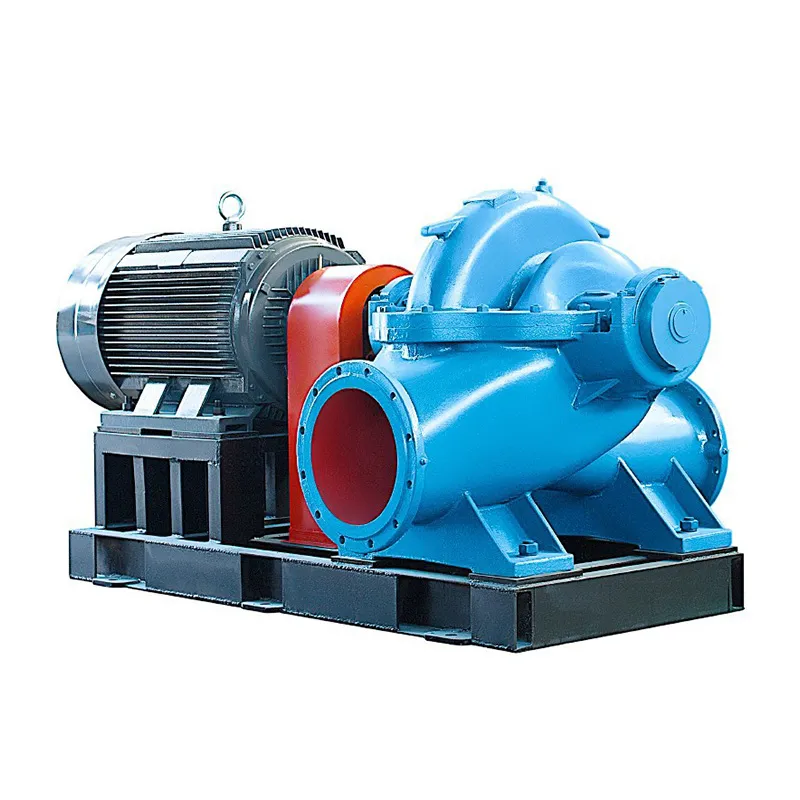
Auxiliary Slurry Pump Manufacturing Specifications and Performance Analysis
Auxiliary slurry pumps serve as critical secondary components within the industrial fluid transport chain, specifically designed to handle the transfer, recirculation, or priming of abrasive fluids and high-viscosity slurries that would otherwise compromise the primary pumping system. In the context of the industrial supply chain, auxiliary slurry pump suppliers must provide equipment capable of managing non-Newtonian fluid behaviors, where shear thinning or thickening properties significantly impact hydraulic efficiency. These pumps are strategically positioned to facilitate system startup, maintain steady-state flow during primary pump maintenance, or manage tailings and waste streams in mining, chemical processing, and dredging operations. The core performance of these units is defined by their ability to balance volumetric efficiency with extreme erosion resistance, ensuring that the Mean Time Between Failures (MTBF) is maximized despite the continuous bombardment of suspended solids.
Material Science & Manufacturing
The engineering of auxiliary slurry pumps begins with advanced material science to counteract the dual threats of abrasive wear and corrosive chemical attack. High-performance suppliers typically utilize high-chromium white irons (ASTM A532) for impeller and liner construction. These materials are characterized by a matrix of hard primary carbides (M7C3) embedded in a martensitic matrix, providing a hardness typically exceeding 60 HRC. For more aggressive chemical environments, duplex stainless steels or nickel-based alloys are employed to prevent pitting and crevice corrosion.
The manufacturing process involves precision investment casting to ensure the hydrodynamic profiles of the impeller are maintained, followed by CNC grinding to achieve strict tolerances on the wear rings and shaft interfaces. A critical manufacturing parameter is the control of the heat treatment cycle—specifically the quenching and tempering stages—to eliminate internal stresses and prevent premature fatigue cracking under cyclic loading. Furthermore, the application of ceramic coatings or tungsten carbide cladding via High-Velocity Oxygen Fuel (HVOF) spraying is often implemented on critical wetting parts to increase the surface hardness and reduce the coefficient of friction, thereby decreasing the energy required for slurry transport.
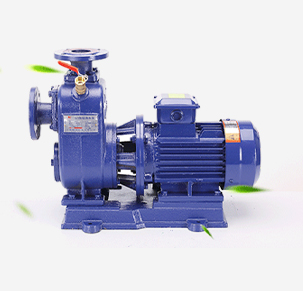
Performance & Engineering
Engineering a slurry pump requires a rigorous force analysis centered on the fluid-structure interaction (FSI). The primary engineering challenge is managing the "critical solids concentration," where the transition from dilute to hindered settling occurs. Auxiliary slurry pump suppliers must optimize the Net Positive Suction Head required (NPSHr) to prevent cavitation, which is exacerbated by the presence of air bubbles and solid particles in the slurry. To combat this, engineers implement oversized suction nozzles and optimize the impeller eye geometry to minimize turbulence and pressure drops.
Environmental resistance is another pivotal factor. For pumps operating in open-pit mines or coastal dredging, the casing must be designed for high structural rigidity to resist external mechanical shocks and vibration. Mechanical sealing systems are engineered using double-cartridge seals with external flush plans (API Plan 53 or 54) to prevent slurry ingress into the bearing housing, which would otherwise lead to catastrophic seizure. Compliance with hydraulic efficiency standards requires the use of Computational Fluid Dynamics (CFD) to minimize eddies and stagnant zones within the volute, which are primary sites for sediment accumulation and localized erosion.
Technical Specifications
| Technical Parameter | Standard Duty Specification | Heavy-Duty Specification | Extreme Abrasion Specification | Testing Methodology |
|---|---|---|---|---|
| Casing Material | ASTM A48 Class 30 Cast Iron | High-Cr White Iron (27% Cr) | Chrome-Carbide Lined Alloy | ASTM E112 Grain Size |
| Max Operating Pressure | 10 Bar | 16 Bar | 25 Bar | Hydrostatic Pressure Test |
| Max Particle Size | 5 mm | 12 mm | 25 mm | Sieve Analysis (ASTM E11) |
| Max Slurry Density | 1.2 g/cm³ | 1.5 g/cm³ | 1.8 g/cm³ | Pycnometer Measurement |
| Impeller Hardness | 35-45 HRC | 58-62 HRC | 65+ HRC (Carbide) | Rockwell C Scale |
| Seal Type | Single Mechanical Seal | Double Cartridge Seal | Expeller Seal (Seal-less) | API 682 Compliance |
Failure Mode & Maintenance
The failure modes of auxiliary slurry pumps are primarily driven by the abrasive nature of the medium. The most common failure is erosive wear of the impeller vanes, typically occurring at the leading edge where the relative velocity of particles is highest. This results in a gradual decrease in head and flow rate, eventually leading to a complete loss of system pressure. Another critical failure mode is "plugging" or "sanding," where the pump is shut down while filled with slurry, causing particles to settle and solidify, which may lead to motor burnout upon attempted restart.
Failure analysis often reveals fatigue cracking in the pump shaft due to unbalanced radial loads caused by uneven wear of the impeller. To mitigate these issues, a professional maintenance regimen must include vibration analysis (FFT) to detect early signs of bearing wear or shaft misalignment. Preventive maintenance should prioritize the replacement of wear liners before the casing wall thickness reaches a critical threshold. For pumps handling corrosive slurries, ultrasonic thickness gauging is recommended every quarter to monitor wall thinning. Lubrication systems must be monitored for contamination, as the ingress of slurry into the oil bath leads to accelerated bearing degradation through abrasive scoring.
Industry FAQ
Q: How do you determine the appropriate material selection between High-Chrome and Duplex Stainless Steel for an auxiliary pump?
A: The decision is based on the ratio of abrasion to corrosion. If the primary wear mechanism is mechanical erosion by hard particles (e.g., silica), High-Chrome White Iron is superior due to its hardness. However, if the slurry contains high concentrations of chlorides or acids, Duplex Stainless Steel is required to prevent chemical dissolution of the matrix, even if it offers lower abrasion resistance.
Q: What is the impact of slurry viscosity on the NPSH requirements of the pump?
A: Increased viscosity increases the frictional losses in the suction piping, which effectively lowers the Net Positive Suction Head Available (NPSHa). To prevent cavitation, the pump must be operated at a lower speed or the suction line diameter must be increased to ensure that the NPSHa remains at least 0.5 to 1.0 meters above the NPSHr specified by the supplier.
Q: Why is the "expeller seal" often preferred over mechanical seals in heavy-duty slurry applications?
A: Mechanical seals are susceptible to failure if abrasive particles penetrate the seal faces, causing rapid scoring. An expeller seal uses a centrifugal pump-like mechanism to create a pressure barrier that pushes the slurry away from the shaft end, eliminating the need for a physical contact seal and significantly reducing maintenance intervals in high-solid environments.
Q: How does "hindered settling" affect the operational efficiency of the pump?
A: When solids concentration reaches the hindered settling zone, particles interact with one another, increasing the apparent viscosity of the fluid. This requires higher torque from the motor and increases the internal friction within the pump, which can lead to a drop in hydraulic efficiency and an increase in power consumption per cubic meter of fluid moved.
Q: What are the signs that a slurry pump impeller requires immediate replacement?
A: The primary indicators are a noticeable drop in discharge pressure for a constant RPM, an increase in motor amperage (due to turbulence and flow instability), and an increase in vibration levels in the 1x or 2x shaft frequency range, indicating an unbalanced impeller due to uneven erosive wear.
Conclusion
The selection and implementation of auxiliary slurry pumps require a deep integration of material science, hydraulic engineering, and failure analysis. By focusing on the metallurgical properties of high-chromium alloys and the optimization of fluid dynamics through CFD, suppliers can deliver equipment that withstands the extreme conditions of industrial slurry transport. The synergy between precision manufacturing and rigorous adherence to international standards ensures that these pumps maintain operational stability and volumetric efficiency over extended life cycles.
Looking forward, the industry is shifting toward "smart" slurry pumping systems, integrating real-time wear sensors and AI-driven predictive maintenance to anticipate failure before it occurs. For procurement managers and engineers, the priority must remain on the total cost of ownership (TCO) rather than initial acquisition cost, emphasizing the importance of material longevity and the reduction of unplanned downtime in critical industrial processes.
-
1 2 hp sewage ejector pump Performance Engineering
News2026-05-25
-
Zoeller 1/2 hp sewage pump Performance Analysis
News2026-05-25
-
Effluent Pump Performance Analysis
News2026-05-25
-
sump pump vs effluent pump Performance Analysis
News2026-05-25
-
sewer pumps residential Performance Analysis
News2026-05-25
-
Sewage Pump Company Performance and Engineering
News2026-05-24
-
sewage pump 1/2 hp Performance Analysis
News2026-05-24
-
Sewage Ejector Systems Performance Analysis
News2026-05-24
-
Sewage Ejection System Material Science and Manufacturing
News2026-05-24
-
sewage and effluent pumps Performance Engineering
News2026-05-24
-
pump for sewage water Performance Analysis
News2026-05-23
-
plumbing sewage ejector pump Performance Engineering
News2026-05-23
-
home sewer pump station Performance and Engineering
News2026-05-23
-
high pressure sump pump Performance Analysis
News2026-05-23
-
high head effluent pump Performance Analysis
News2026-05-23




