English
- Afrikaans
- Albanian
- Amharic
- Arabic
- Armenian
- Azerbaijani
- Basque
- Belarusian
- Bengali
- Bosnian
- Bulgarian
- Catalan
- Cebuano
- Corsican
- Croatian
- Czech
- Danish
- Dutch
- English
- Esperanto
- Estonian
- Finnish
- French
- Frisian
- Galician
- Georgian
- German
- Greek
- Gujarati
- Haitian Creole
- hausa
- hawaiian
- Hebrew
- Hindi
- Miao
- Hungarian
- Icelandic
- igbo
- Indonesian
- irish
- Italian
- Japanese
- Javanese
- Kannada
- kazakh
- Khmer
- Rwandese
- Korean
- Kurdish
- Kyrgyz
- Lao
- Latin
- Latvian
- Lithuanian
- Luxembourgish
- Macedonian
- Malgashi
- Malay
- Malayalam
- Maltese
- Maori
- Marathi
- Mongolian
- Myanmar
- Nepali
- Norwegian
- Norwegian
- Occitan
- Pashto
- Persian
- Polish
- Portuguese
- Punjabi
- Romanian
- Russian
- Samoan
- Scottish Gaelic
- Serbian
- Sesotho
- Shona
- Sindhi
- Sinhala
- Slovak
- Slovenian
- Somali
- Spanish
- Sundanese
- Swahili
- Swedish
- Tagalog
- Tajik
- Tamil
- Tatar
- Telugu
- Thai
- Turkish
- Turkmen
- Ukrainian
- Urdu
- Uighur
- Uzbek
- Vietnamese
- Welsh
- Bantu
- Yiddish
- Yoruba
- Zulu

Telephone: +86 13120555503
Email: frank@cypump.com


Apr . 01, 2024 17:55 Back to list
Auxiliary Slurry Pump Manufacturers Manufacturing Specification and Performance Analysis
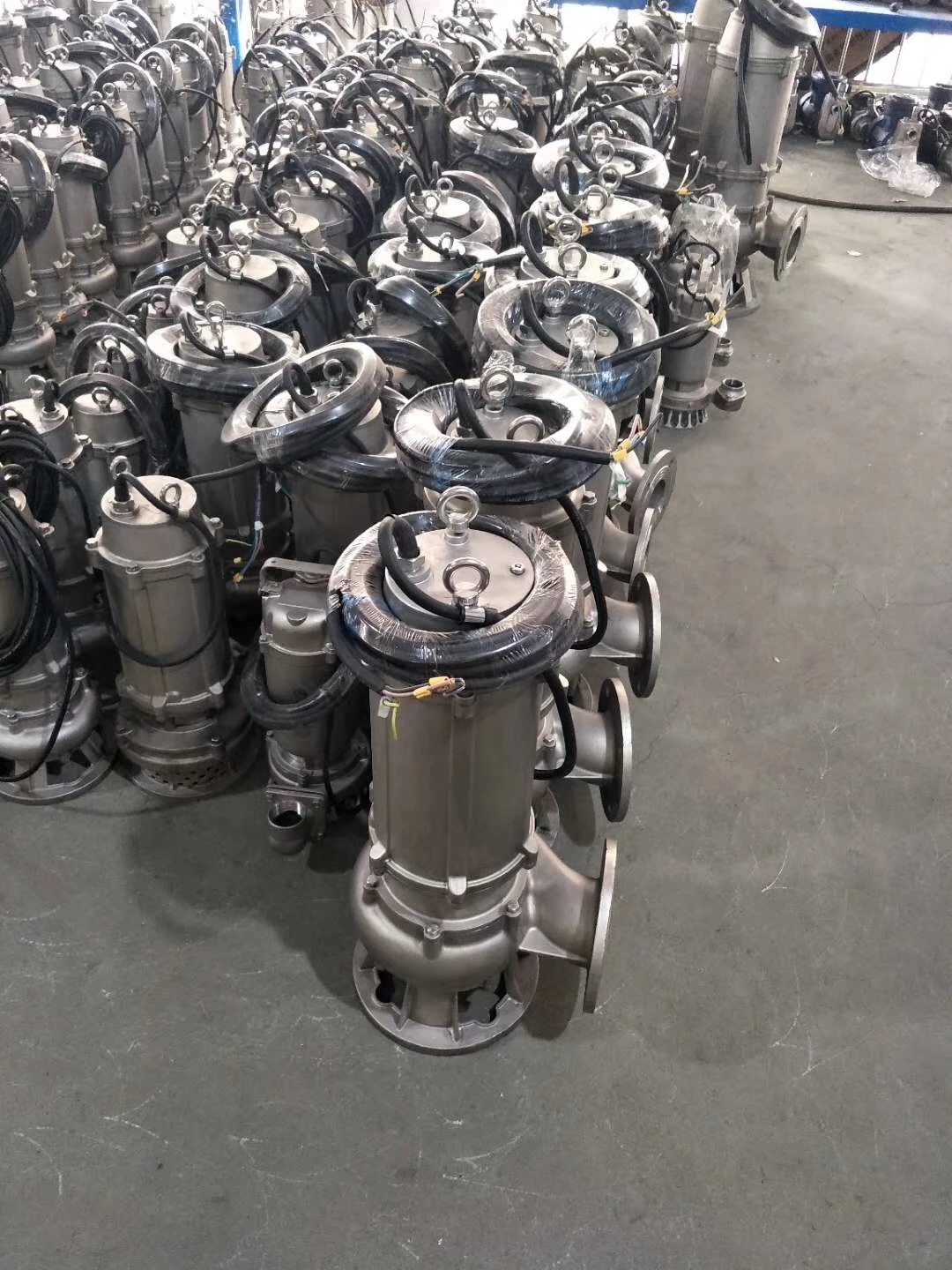
Auxiliary Slurry Pump Manufacturing Specification and Performance Analysis
Auxiliary slurry pumps occupy a critical technical position within the industrial fluid transport chain, specifically designed to handle the transfer of abrasive, viscous, and non-Newtonian fluids that serve as precursors or by-products in mining, chemical processing, and wastewater treatment. Unlike primary slurry pumps, auxiliary units are engineered for precision dosing, recirculation, and system priming, requiring a sophisticated balance between volumetric efficiency and erosion resistance. From an industry perspective, the core technical challenge lies in managing the high shear stress at the impeller tips and the subsequent turbulent flow regimes that accelerate material degradation. For auxiliary slurry pump manufacturers, the engineering focus must extend beyond simple fluid displacement to the mitigation of particle impingement and the optimization of the Net Positive Suction Head (NPSH) to prevent cavitation in high-solids-content media.
Material Science & Manufacturing
The longevity of an auxiliary slurry pump is fundamentally governed by the metallurgical properties of its wetted parts. Manufacturers prioritize materials that exhibit a synergistic combination of hardness and toughness. High-chrome white irons (ASTM A532) are standard for high-abrasion environments, where chromium carbides provide a hard matrix that resists micro-cutting by mineral particles. For chemically aggressive slurries, duplex stainless steels or nickel-based alloys (Hastelloy) are employed to prevent pitting and stress-corrosion cracking. In specialized applications, elastomeric liners such as Natural Rubber or Polyurethane are utilized for finer particles, leveraging the material's ability to absorb the kinetic energy of particle impact through elastic deformation.
The manufacturing process begins with precision casting, often utilizing investment casting or sand casting with advanced cooling controls to prevent segregation of alloying elements. Following casting, the impeller and volute undergo rigorous CNC machining to ensure tight tolerances, which is critical for maintaining the designed clearance between the impeller and the wear plate—a key variable in preventing internal recirculation and energy loss. Heat treatment processes, including quenching and tempering, are strictly controlled to optimize the martensitic structure of the alloy, ensuring that the hardness profile remains consistent from the surface to the core. Final assembly involves the integration of mechanical seals—typically silicon carbide or tungsten carbide—designed to withstand the abrasive nature of the slurry while maintaining a leak-proof interface.
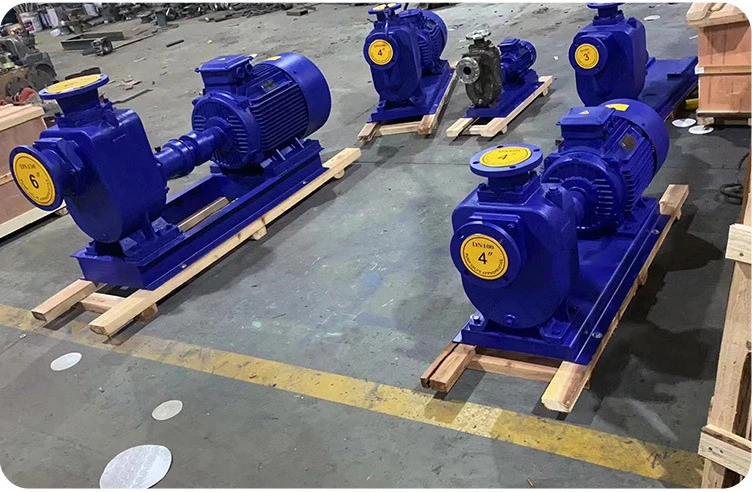
Performance & Engineering
Engineering an auxiliary slurry pump requires a comprehensive analysis of fluid dynamics and force distribution. The primary engineering objective is the optimization of the velocity profile within the pump casing to minimize localized turbulence, which is the primary driver of erosion. Computational Fluid Dynamics (CFD) is employed to analyze the flow trajectory, ensuring that the slurry velocity remains below the critical threshold where erosion rates increase exponentially. Furthermore, force analysis focuses on the radial and axial loads exerted on the shaft; unbalanced hydraulic forces can lead to premature bearing failure and shaft deflection, which in turn compromises the mechanical seal integrity.
Environmental resistance is another critical engineering pillar. Pumps operating in outdoor mining environments must account for thermal expansion and contraction, requiring materials with stable coefficients of thermal expansion. Compliance with international safety standards ensures that the pump can operate under maximum allowable working pressures (MAWP) without risk of catastrophic casing failure. The implementation of Variable Frequency Drives (VFDs) allows for the precise adjustment of flow rates, which is essential when dealing with varying slurry densities, thereby optimizing energy consumption and reducing the wear rate associated with excessive pump speeds.
Technical Specifications
| Parameter Dimension | High-Chrome Alloy Series | Duplex Steel Series | Rubber-Lined Series | Evaluation Metric |
|---|---|---|---|---|
| Hardness (HRC/Shore A) | 60 - 65 HRC | 25 - 35 HRC | 65 - 80 Shore A | Abrasion Resistance |
| Max Solids Content (wt%) | Up to 70% | Up to 40% | Up to 50% | Transport Capacity |
| Corrosion Rate (mm/year) | Moderate | Very Low | Negligible | Chemical Stability |
| Operating Temp Range | -20°C to 250°C | -40°C to 150°C | -20°C to 70°C | Thermal Tolerance |
| Max Particle Size (mm) | 12 - 25 mm | 5 - 15 mm | 2 - 10 mm | Particle Handling |
| MTBF (Operating Hours) | 8,000 - 12,000 | 15,000 - 20,000 | 5,000 - 8,000 | Reliability Index |
Failure Mode & Maintenance
Failure analysis of auxiliary slurry pumps typically reveals several dominant modes of degradation. The most prevalent is erosive wear, characterized by the gradual thinning of the impeller vanes and volute walls. This occurs primarily due to particle impingement at high velocities, leading to "scalloping" or pitting of the metal surface. Another critical failure mode is cavitation, which manifests as pitting on the suction side of the impeller. Cavitation occurs when the local pressure drops below the vapor pressure of the liquid, creating bubbles that collapse violently, sending shockwaves into the material matrix and causing rapid fatigue cracking.
Chemical degradation, specifically oxidation and galvanic corrosion, often occurs in the presence of acidic or alkaline slurries, leading to delamination of liners or intergranular corrosion of the alloy. To mitigate these failures, a professional maintenance regimen is mandatory. This includes the implementation of vibration monitoring to detect bearing wear and misalignment before catastrophic failure occurs. Maintenance schedules should prioritize the inspection of wear plates and the replacement of mechanical seal faces. For rubber-lined pumps, checking for "debonding" or liner detachment is critical, as a detached liner can obstruct flow and cause immediate pump seizure. The use of ultrasonic thickness testing is recommended for metallic casings to monitor wear rates and predict the remaining useful life (RUL) of the equipment.
Industry FAQ
Q: How do we determine the optimal material selection between High-Chrome alloy and Rubber lining for an auxiliary pump?
A: The selection depends on the particle size and the nature of the abrasion. High-Chrome alloys are superior for large, sharp, and hard particles that cause micro-cutting. Rubber linings are more effective for smaller, rounded particles that cause abrasive wear through indentation and rubbing; rubber absorbs the impact and "springs back," whereas hard alloys may chip under extreme impact.
Q: What is the primary cause of premature mechanical seal failure in auxiliary slurry pumps?
A: The primary cause is the infiltration of abrasive solids between the seal faces. When particles penetrate the seal interface, they act as grinding agents, rapidly wearing down the polished surfaces of the silicon carbide or tungsten carbide. This is often mitigated by implementing a flushed seal system (Plan 11 or Plan 32) to maintain a clean barrier.
Q: How does slurry density affect the NPSH requirements and the risk of cavitation?
A: Increasing slurry density increases the viscosity and changes the vapor pressure characteristics of the fluid. This typically increases the required NPSH (Net Positive Suction Head). If the available NPSH falls below the required threshold, the fluid will flash into vapor, leading to cavitation, which significantly reduces pump efficiency and accelerates impeller erosion.
Q: Why is the "clearance" between the impeller and the wear plate so critical in these pumps?
A: Excessive clearance allows the slurry to leak from the discharge side back to the suction side (internal recirculation). This not only reduces the volumetric efficiency and head of the pump but also creates high-velocity turbulence in the gap, which accelerates the wear of both the impeller and the wear plate.
Q: In what scenarios would Duplex Stainless Steel be preferred over High-Chrome White Iron?
A: Duplex Stainless Steel is preferred in environments where corrosion is the dominant failure mechanism rather than pure abrasion. For example, in chemical slurries containing chlorides or acids, High-Chrome iron may suffer from rapid chemical oxidation, whereas Duplex steel provides the necessary passivity to resist corrosion while maintaining reasonable hardness.
Conclusion
The engineering of auxiliary slurry pumps is a complex intersection of material science and fluid dynamics. The ability of auxiliary slurry pump manufacturers to synthesize high-hardness alloys with precision hydraulic design determines the operational efficiency and lifespan of the entire industrial processing line. By rigorously addressing the challenges of particle impingement, cavitation, and chemical degradation through advanced CFD modeling and metallurgical control, the industry can significantly reduce downtime and operational expenditure.
Looking forward, the integration of smart sensing and predictive maintenance—such as real-time erosion monitoring and AI-driven flow optimization—will redefine the standards of slurry transport. Manufacturers who transition from providing hardware to providing "reliability-as-a-service" by leveraging data-driven failure analysis will lead the next generation of industrial fluid handling technology.
-
1 2 hp sewage ejector pump Performance Engineering
News2026-05-25
-
Zoeller 1/2 hp sewage pump Performance Analysis
News2026-05-25
-
Effluent Pump Performance Analysis
News2026-05-25
-
sump pump vs effluent pump Performance Analysis
News2026-05-25
-
sewer pumps residential Performance Analysis
News2026-05-25
-
Sewage Pump Company Performance and Engineering
News2026-05-24
-
sewage pump 1/2 hp Performance Analysis
News2026-05-24
-
Sewage Ejector Systems Performance Analysis
News2026-05-24
-
Sewage Ejection System Material Science and Manufacturing
News2026-05-24
-
sewage and effluent pumps Performance Engineering
News2026-05-24
-
pump for sewage water Performance Analysis
News2026-05-23
-
plumbing sewage ejector pump Performance Engineering
News2026-05-23
-
home sewer pump station Performance and Engineering
News2026-05-23
-
high pressure sump pump Performance Analysis
News2026-05-23
-
high head effluent pump Performance Analysis
News2026-05-23




