English
- Afrikaans
- Albanian
- Amharic
- Arabic
- Armenian
- Azerbaijani
- Basque
- Belarusian
- Bengali
- Bosnian
- Bulgarian
- Catalan
- Cebuano
- Corsican
- Croatian
- Czech
- Danish
- Dutch
- English
- Esperanto
- Estonian
- Finnish
- French
- Frisian
- Galician
- Georgian
- German
- Greek
- Gujarati
- Haitian Creole
- hausa
- hawaiian
- Hebrew
- Hindi
- Miao
- Hungarian
- Icelandic
- igbo
- Indonesian
- irish
- Italian
- Japanese
- Javanese
- Kannada
- kazakh
- Khmer
- Rwandese
- Korean
- Kurdish
- Kyrgyz
- Lao
- Latin
- Latvian
- Lithuanian
- Luxembourgish
- Macedonian
- Malgashi
- Malay
- Malayalam
- Maltese
- Maori
- Marathi
- Mongolian
- Myanmar
- Nepali
- Norwegian
- Norwegian
- Occitan
- Pashto
- Persian
- Polish
- Portuguese
- Punjabi
- Romanian
- Russian
- Samoan
- Scottish Gaelic
- Serbian
- Sesotho
- Shona
- Sindhi
- Sinhala
- Slovak
- Slovenian
- Somali
- Spanish
- Sundanese
- Swahili
- Swedish
- Tagalog
- Tajik
- Tamil
- Tatar
- Telugu
- Thai
- Turkish
- Turkmen
- Ukrainian
- Urdu
- Uighur
- Uzbek
- Vietnamese
- Welsh
- Bantu
- Yiddish
- Yoruba
- Zulu

Telephone: +86 13120555503
Email: frank@cypump.com


Apr . 01, 2024 17:55 Back to list
anti abrasive sand slurry pump Performance Analysis
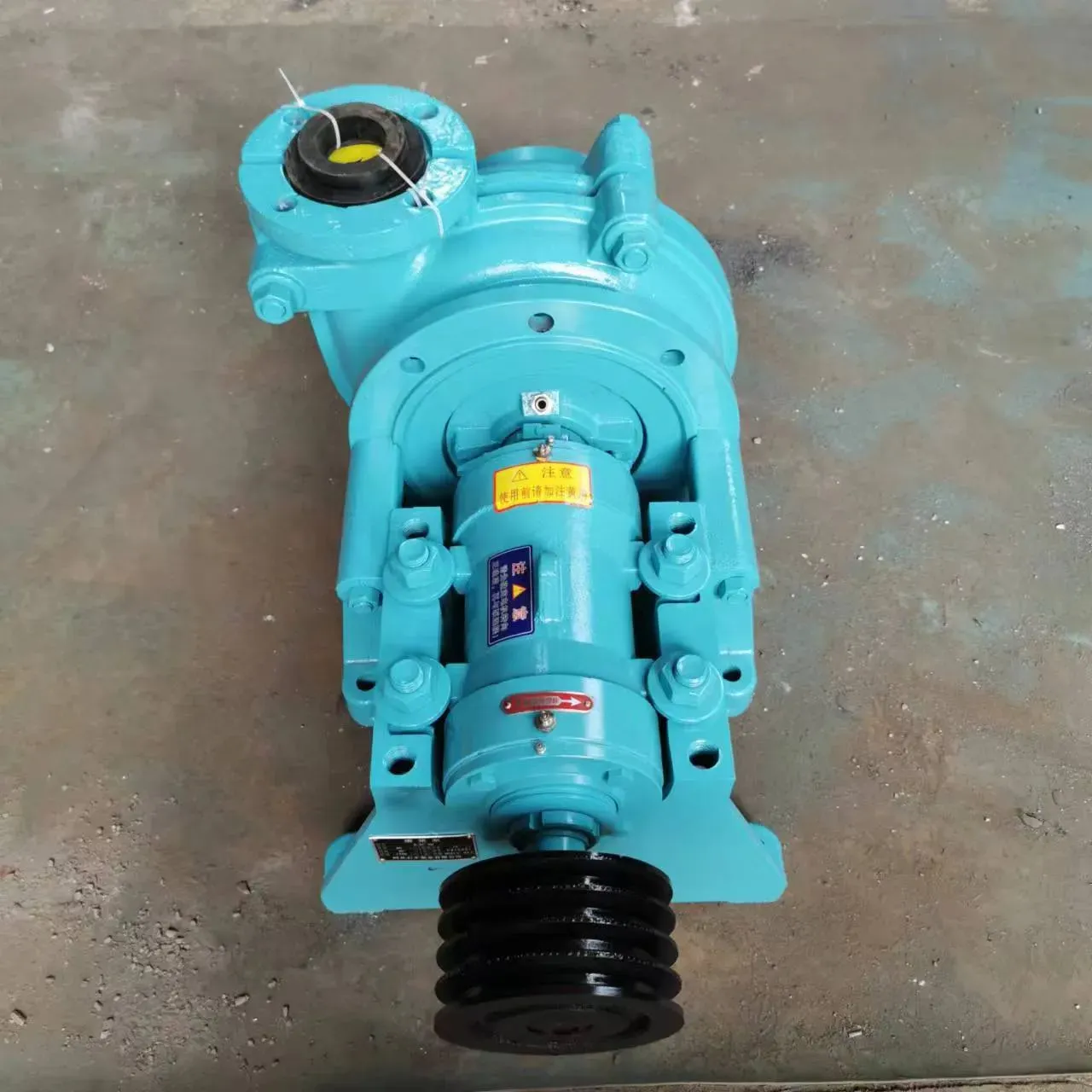
Anti Abrasive Sand Slurry Pump Performance Analysis
The anti abrasive sand slurry pump is a specialized heavy-duty centrifugal machine engineered to transport highly abrasive fluids containing suspended solid particles, such as mineral tailings, sand, and chemical slurries. Positioned as a critical component in the midstream of mining, dredging, and metallurgical processing, these pumps must resolve the fundamental paradox of fluid dynamics: maintaining high volumetric flow rates while resisting the catastrophic erosive wear caused by high-velocity particulate impact. The core technical objective is to minimize the degradation of the internal wetted parts—specifically the impeller and volute—through the application of advanced material science and hydraulic optimization. By balancing the critical solids concentration (CSC) and managing the Reynolds number of the slurry flow, these pumps ensure operational continuity in environments where standard centrifugal pumps would suffer complete structural failure within hours.
Material Science & Manufacturing
The longevity of an anti abrasive sand slurry pump is primarily determined by the hardness and fracture toughness of its internal components. The industry standard focuses on High-Chrome White Irons (ASTM A532) and natural rubber liners, depending on the particle size and velocity of the medium.
1. High-Chrome Alloys: For coarse, large-particle slurries, alloys with a chromium content between 25% and 28% are utilized. The manufacturing process involves precision casting followed by a controlled heat treatment to produce a microstructure of primary M7C3 carbides embedded in a martensitic matrix. This structure provides a hardness typically exceeding 60 HRC, offering extreme resistance to abrasive wear. The key control parameter during casting is the cooling rate, which prevents the formation of brittle eutectic networks that could lead to catastrophic fracture under hydraulic shock.
2. Elastomeric Liners: When dealing with fine particles at high velocities, natural rubber or polyurethane liners are preferred. These materials utilize "resilience-based" wear resistance, where the material absorbs the kinetic energy of the particle and rebounds, rather than being gouged. The manufacturing involves vulcanization processes that optimize the cross-link density to prevent delamination under high pressure.
3. Precision Manufacturing: The pump housing is typically constructed from ductile iron or cast steel for structural integrity, while the internal wear plates are replaceable. CNC machining is employed to ensure the tightest possible clearances between the impeller and the wear plate to prevent "recirculation wear," where slurry leaks back to the suction side and accelerates erosion in the throat area.
Performance & Engineering
Engineering an anti abrasive sand slurry pump requires a deep understanding of the interaction between fluid velocity and particle impingement angles. The primary engineering challenge is the management of the "critical velocity"—the minimum speed required to keep solids in suspension to prevent sedimentation and plugging.
Hydraulic Force Analysis: The impeller is designed with a wide flow passage and a semi-open or closed geometry to reduce the probability of particle entrapment. The velocity profile is optimized to ensure that the flow remains laminar near the walls of the volute, shifting the highest velocity zones away from the critical wear surfaces. Force analysis focuses on the radial thrust exerted on the shaft, which is mitigated through the use of heavy-duty double-row angular contact bearings and reinforced shafting (often made of 42CrMo alloy steel).
Environmental Resistance: To combat corrosion-erosion synergy—where chemical oxidation removes the protective oxide layer of the metal, leaving it vulnerable to physical abrasion—specialized coatings such as tungsten carbide or ceramic inserts are applied to the impeller tips. Compliance with leakage standards is managed through the implementation of mechanical seals with external flushing systems or gland packing with water-injection lanterns to prevent abrasive particles from entering the bearing housing.
Technical Specifications
| Parameter Dimension | High-Chrome Alloy Model | Rubber Lined Model | Special Alloy Model | Performance Unit |
|---|---|---|---|---|
| Max Particle Size | 12.0 mm | 4.0 mm | 15.0 mm | mm |
| Hardness Value | 62-68 HRC | 65-80 Shore A | 70-75 HRC | HRC/Shore A |
| Max Flow Rate | 450 m³/h | 600 m³/h | 300 m³/h | m³/h |
| Maximum Head | 80 m | 50 m | 110 m | meters |
| Wear Life Expectancy | 8,000 - 12,000 hrs | 10,000 - 15,000 hrs | 15,000+ hrs | operating hours |
| Max Slurry Density | 1.45 g/cm³ | 1.30 g/cm³ | 1.60 g/cm³ | g/cm³ |
Failure Mode & Maintenance
Failure in anti abrasive sand slurry pumps is rarely sudden; it is typically a progression of material degradation. The following are the primary failure modes and their professional remediation strategies:
1. Abrasive Erosion (Wall Thinning): This is the most common failure mode, characterized by the gradual removal of material from the volute and impeller. It occurs most aggressively in areas of high turbulence and impingement. Maintenance: Implementation of a scheduled ultrasonic thickness testing (UT) protocol to monitor wall thinning. When thickness reaches 30% of the original dimension, the wear liner must be replaced.
2. Cavitation Pitting: Occurs when the Net Positive Suction Head Available (NPSHa) falls below the NPSH Required (NPSHr), creating vapor bubbles that collapse violently against the metal surface. This creates microscopic pits that act as initiation sites for abrasion. Maintenance: Adjusting suction piping to reduce friction loss and ensuring the pump is primed correctly. In severe cases, the impeller may require hard-facing welding.
3. Fatigue Cracking of the Impeller: Resulting from cyclical loading and hydraulic shocks, especially in pumps handling large, irregular solids. Maintenance: Utilizing non-destructive testing (NDT) such as dye penetrant inspection during quarterly shutdowns to identify micro-cracks before they lead to structural failure.
4. Shaft Deflection and Seal Failure: Excessive vibration caused by unbalanced wear on the impeller leads to premature seal failure and bearing seizure. Maintenance: Dynamic balancing of the impeller to ISO 1940 G2.5 standards and regular lubrication analysis to detect metal shavings in the oil.
Industry FAQ
Q: How do we determine whether to choose a high-chrome alloy or a rubber liner for a specific application?
A: The selection depends on the particle size and the nature of the abrasion. High-chrome alloys are superior for large, sharp particles (e.g., crushed rock) that would tear rubber. Rubber liners are far more effective for fine, sandy particles at high velocities, as they absorb the energy of the impact rather than resisting it with hardness.
Q: What is the impact of slurry viscosity on the pump's efficiency and wear rate?
A: Increased viscosity increases the fluid friction and the power requirement (BHP). More importantly, highly viscous slurries can change the flow regime from turbulent to laminar, which may cause solids to settle (sanding) if the velocity drops below the critical threshold, leading to localized high-wear zones.
Q: Can the pump be operated in a dry-run condition for short periods?
A: Absolutely not. Dry-running an anti abrasive pump leads to rapid overheating of the mechanical seals and gland packing. Furthermore, without the slurry to act as a heat sink, thermal expansion of the impeller can lead to catastrophic rubbing against the wear plates.
Q: How does the "critical solids concentration" affect the pump's operational lifespan?
A: If the solids concentration exceeds the critical limit, the slurry behaves more like a non-Newtonian fluid, significantly increasing the pressure drop and the impact force of particles against the impeller vanes, which accelerates the wear rate exponentially.
Q: What is the recommended method for replacing the wear liner without dismantling the entire pump?
A: Professional engineering designs now incorporate "cartridge-style" liners or split-case volutes. This allows technicians to access the internal liners by removing only the top half of the casing, significantly reducing downtime from days to hours.
Conclusion
The operational efficiency of an anti abrasive sand slurry pump is the result of a precise synergy between metallurgical hardness, hydraulic design, and rigorous mechanical maintenance. By transitioning from generic centrifugal designs to application-specific material selections—such as the strategic use of M7C3 carbides for coarse media and resilient elastomers for fine sands—operators can significantly extend the Mean Time Between Failures (MTBF) and reduce total cost of ownership.
Moving forward, the integration of real-time wear monitoring sensors and Computational Fluid Dynamics (CFD) for custom impeller profiling will further optimize these systems. For industrial procurement and engineering teams, the focus must remain on the total lifecycle analysis, prioritizing high-grade materials and strict adherence to international hydraulic standards to ensure stability in the most demanding extractive environments.
-
1 2 hp sewage ejector pump Performance Engineering
News2026-05-25
-
Zoeller 1/2 hp sewage pump Performance Analysis
News2026-05-25
-
Effluent Pump Performance Analysis
News2026-05-25
-
sump pump vs effluent pump Performance Analysis
News2026-05-25
-
sewer pumps residential Performance Analysis
News2026-05-25
-
Sewage Pump Company Performance and Engineering
News2026-05-24
-
sewage pump 1/2 hp Performance Analysis
News2026-05-24
-
Sewage Ejector Systems Performance Analysis
News2026-05-24
-
Sewage Ejection System Material Science and Manufacturing
News2026-05-24
-
sewage and effluent pumps Performance Engineering
News2026-05-24
-
pump for sewage water Performance Analysis
News2026-05-23
-
plumbing sewage ejector pump Performance Engineering
News2026-05-23
-
home sewer pump station Performance and Engineering
News2026-05-23
-
high pressure sump pump Performance Analysis
News2026-05-23
-
high head effluent pump Performance Analysis
News2026-05-23




