English
- Afrikaans
- Albanian
- Amharic
- Arabic
- Armenian
- Azerbaijani
- Basque
- Belarusian
- Bengali
- Bosnian
- Bulgarian
- Catalan
- Cebuano
- Corsican
- Croatian
- Czech
- Danish
- Dutch
- English
- Esperanto
- Estonian
- Finnish
- French
- Frisian
- Galician
- Georgian
- German
- Greek
- Gujarati
- Haitian Creole
- hausa
- hawaiian
- Hebrew
- Hindi
- Miao
- Hungarian
- Icelandic
- igbo
- Indonesian
- irish
- Italian
- Japanese
- Javanese
- Kannada
- kazakh
- Khmer
- Rwandese
- Korean
- Kurdish
- Kyrgyz
- Lao
- Latin
- Latvian
- Lithuanian
- Luxembourgish
- Macedonian
- Malgashi
- Malay
- Malayalam
- Maltese
- Maori
- Marathi
- Mongolian
- Myanmar
- Nepali
- Norwegian
- Norwegian
- Occitan
- Pashto
- Persian
- Polish
- Portuguese
- Punjabi
- Romanian
- Russian
- Samoan
- Scottish Gaelic
- Serbian
- Sesotho
- Shona
- Sindhi
- Sinhala
- Slovak
- Slovenian
- Somali
- Spanish
- Sundanese
- Swahili
- Swedish
- Tagalog
- Tajik
- Tamil
- Tatar
- Telugu
- Thai
- Turkish
- Turkmen
- Ukrainian
- Urdu
- Uighur
- Uzbek
- Vietnamese
- Welsh
- Bantu
- Yiddish
- Yoruba
- Zulu

Telephone: +86 13120555503
Email: frank@cypump.com


Apr . 01, 2024 17:55 Back to list
ah slurry pump suppliers Manufacturing Specifications and Performance Analysis
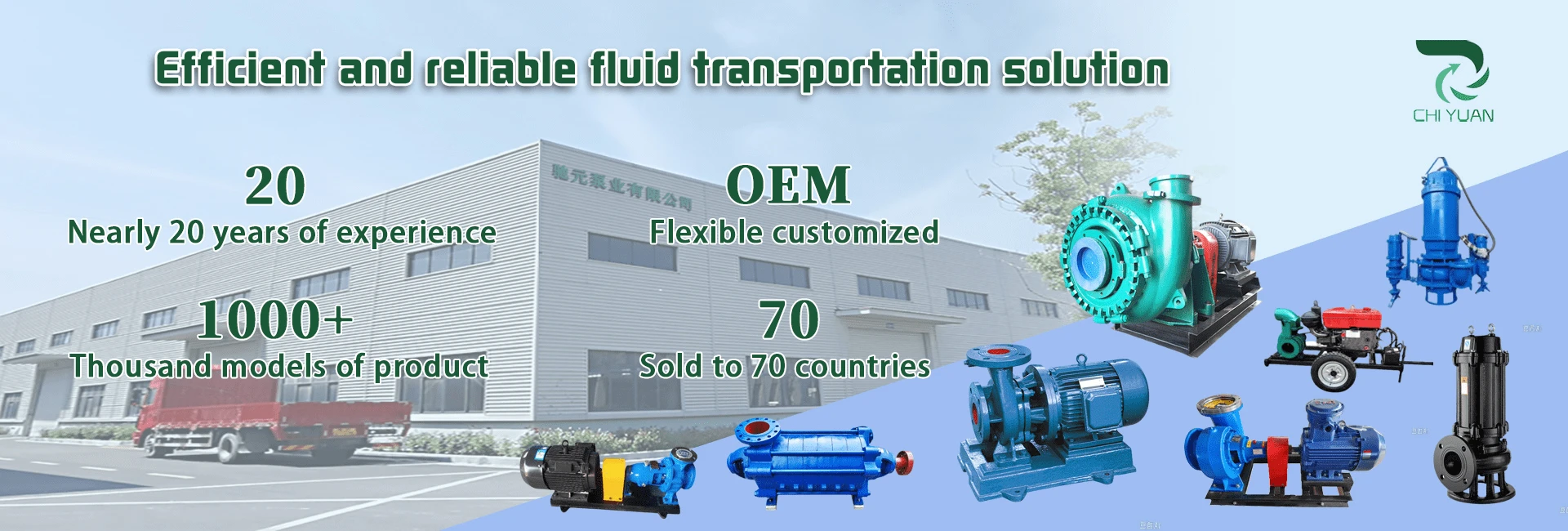
AH Slurry Pump Manufacturing Specifications and Performance Analysis
The AH slurry pump represents a critical engineering component in the transport of abrasive solids suspended in liquid, serving as the industrial backbone for mining, mineral processing, and power generation sectors. Positioned at the intersection of fluid dynamics and tribology, the AH series—characterized by its heavy-duty horizontal design—is engineered to handle high-density slurries while minimizing internal erosion. From an industry chain perspective, these pumps act as the primary conduit for material movement, where failure directly correlates to catastrophic downtime in production lines. The core performance of these units is defined by their ability to maintain volumetric efficiency under extreme abrasive loads, utilizing precise impeller geometry and advanced metallurgy to balance the trade-off between hydraulic efficiency and component longevity.
Material Science & Manufacturing
The manufacturing of AH slurry pumps begins with the selection of materials capable of resisting both erosive wear and corrosive attack. The primary challenge in slurry transport is the synergistic effect of abrasion and corrosion. To combat this, ah slurry pump suppliers employ high-chromium white irons (e.g., ASTM A532) and natural rubber liners. High-chromium alloys, typically containing 25% to 30% Cr, form a hard eutectic structure of M7C3 carbides within a martensitic matrix, providing the necessary hardness (typically 600-650 HB) to resist the impact of large particles. Conversely, for finer, more abrasive slurries, natural rubber liners are utilized due to their high elasticity, which allows the material to absorb the energy of particle impact rather than eroding the substrate.
The manufacturing process involves precision investment casting for impellers to ensure optimal hydrodynamic profiles. After casting, components undergo rigorous heat treatment—including quenching and tempering—to relieve internal stresses and stabilize the metallurgical structure. The machining phase focuses on the tight tolerances of the wear plate and impeller clearance; excessive clearance leads to internal recirculation and rapid wear, while insufficient clearance can lead to mechanical seizure. Furthermore, the pump casing is typically reinforced with heavy-wall construction to accommodate the high pressure generated by dense slurry columns, ensuring structural integrity under cyclic loading conditions.
Performance & Engineering
Engineering an AH slurry pump requires a deep analysis of the fluid-solid interaction. The primary engineering objective is to maintain a flow velocity that exceeds the critical settling velocity of the solids to prevent sedimentation and pipeline plugging, while simultaneously keeping the velocity low enough to avoid exponential increases in erosion rates (as wear is typically proportional to the cube of the velocity). This necessitates the precise calculation of the Net Positive Suction Head (NPSH) to prevent cavitation, which, when combined with abrasive particles, can lead to "cavitation-erosion" synergy, rapidly destroying the impeller vanes.
Force analysis focuses on the radial and axial thrusts exerted on the shaft. Because slurry density can vary significantly (from 1.1 to 1.5 sg), the pump must be engineered with heavy-duty bearings and a robust shaft assembly to prevent deflection. Seal engineering is another critical focal point; ah slurry pump suppliers typically implement expeller seals or gland packing with water-flushing systems to prevent abrasive particles from entering the bearing housing. Compliance with international hydraulic standards ensures that the pump delivers a consistent head and flow rate across its operational curve, even as the internal liners wear down and the internal clearances increase over time.
Technical Specifications
| Model Parameter | Material Composition | Operating Range | Wear Resistance (HB/Shore) |
|---|---|---|---|
| Impeller (High Cr) | ASTM A532 Class III | Up to 15% Solids | 600 - 650 HB |
| Liner (Rubber) | Natural Rubber / Polyurethane | Fine Particle Slurries | 65 - 75 Shore A |
| Pump Shaft | 42CrMo / Stainless Steel | Max RPM: 1450 | N/A (Toughness Optimized) |
| Casing (Shell) | Cast Steel / Ductile Iron | Pressure: 10-16 Bar | 200 - 250 HB |
| Seal System | Tungsten Carbide / Ceramic | Flush Rate: 5-10 L/min | 2000+ HV |
| Bearing Housing | Cast Iron / Steel | Temp: -20°C to +80°C | N/A (Structural) |
Failure Mode & Maintenance
Failure analysis of AH slurry pumps typically identifies four primary modes: erosive wear, cavitation, fatigue cracking, and seal failure. Erosive wear is the most common, appearing as localized thinning of the liner or "washing" of the impeller vanes. This is often caused by operating the pump too far from its Best Efficiency Point (BEP), leading to turbulence and high-velocity eddies. Cavitation occurs when the suction pressure drops below the vapor pressure, creating bubbles that collapse violently; in slurry applications, this removes the protective oxide layer of the metal, accelerating chemical corrosion.
Fatigue cracking usually manifests in the pump shaft or bearing housings due to unbalanced loads caused by uneven wear of the impeller. Maintenance protocols must transition from reactive to predictive models. This includes the implementation of vibration analysis to detect bearing degradation and the use of ultrasonic thickness gauging to monitor liner wear without dismantling the pump. Professional maintenance requires the precise adjustment of the impeller clearance during liner replacement to restore hydraulic efficiency. For pumps operating in corrosive environments, an inspection of the pH levels of the slurry is essential to determine if a shift from high-chrome to duplex stainless steel alloys is required to prevent pitting and stress corrosion cracking.
Industry FAQ
Q: How do I determine whether to use a high-chrome alloy or a rubber liner for my AH pump?
A: The selection depends on the particle size and hardness. High-chrome alloys are superior for large, coarse particles and high-impact environments. Rubber liners are more effective for fine, abrasive particles that "sandblast" the surface, as the rubber absorbs the impact energy.
Q: Why is my pump experiencing premature impeller failure despite using high-hardness materials?
A: This is often due to operating the pump at a flow rate significantly lower than the BEP, which creates internal recirculation and localized high-velocity zones, or it could be the result of cavitation causing surface pitting that accelerates erosion.
Q: What is the impact of slurry density on the motor power requirements?
A: Slurry density increases the fluid's specific gravity, which linearly increases the brake horsepower (BHP) required to move the fluid. Failure to account for the maximum possible slurry density can lead to motor overload and electrical failure.
Q: How often should the impeller clearance be adjusted in an AH series pump?
A: Clearance should be checked during every liner replacement. As the liner wears, the gap between the impeller and the suction liner increases, reducing head and efficiency. Re-adjusting this gap restores the pump's performance characteristics.
Q: Can AH slurry pumps handle acidic or alkaline slurries?
A: Standard high-chrome alloys have limited resistance to strong acids. For pH levels below 4 or above 10, we recommend utilizing duplex stainless steels or specialized polymer coatings to prevent rapid chemical degradation of the pump internals.
Conclusion
The operational efficiency of AH slurry pumps is fundamentally dependent on the synergy between material selection and hydraulic engineering. By balancing the hardness of high-chromium alloys with the resilience of elastomeric liners and maintaining strict adherence to the Best Efficiency Point, operators can significantly extend the Mean Time Between Failures (MTBF). The technical density of these machines necessitates a rigorous approach to both manufacturing tolerances and ongoing maintenance to ensure stable throughput in abrasive environments.
Looking forward, the integration of smart sensing and real-time wear monitoring will likely redefine the maintenance paradigms for ah slurry pump suppliers. Moving toward a data-driven approach to component replacement will minimize unplanned downtime and optimize the total cost of ownership. For industrial procurement, prioritizing metallurgical certifications and hydraulic validation over initial cost is the only sustainable strategy for high-abrasion applications.
-
Sewage Pump Company Performance and Engineering
News2026-05-24
-
sewage pump 1/2 hp Performance Analysis
News2026-05-24
-
Sewage Ejector Systems Performance Analysis
News2026-05-24
-
Sewage Ejection System Material Science and Manufacturing
News2026-05-24
-
sewage and effluent pumps Performance Engineering
News2026-05-24
-
pump for sewage water Performance Analysis
News2026-05-23
-
plumbing sewage ejector pump Performance Engineering
News2026-05-23
-
home sewer pump station Performance and Engineering
News2026-05-23
-
high pressure sump pump Performance Analysis
News2026-05-23
-
high head effluent pump Performance Analysis
News2026-05-23
-
Effluent vs Sump Pump Performance Analysis
News2026-05-22
-
effluent septic pump Performance Engineering
News2026-05-22
-
best sewer pumps Performance Engineering
News2026-05-22
-
best sewer pump Performance Analysis
News2026-05-22
-
best sewage pumps Performance Engineering
News2026-05-22




