English
- Afrikaans
- Albanian
- Amharic
- Arabic
- Armenian
- Azerbaijani
- Basque
- Belarusian
- Bengali
- Bosnian
- Bulgarian
- Catalan
- Cebuano
- Corsican
- Croatian
- Czech
- Danish
- Dutch
- English
- Esperanto
- Estonian
- Finnish
- French
- Frisian
- Galician
- Georgian
- German
- Greek
- Gujarati
- Haitian Creole
- hausa
- hawaiian
- Hebrew
- Hindi
- Miao
- Hungarian
- Icelandic
- igbo
- Indonesian
- irish
- Italian
- Japanese
- Javanese
- Kannada
- kazakh
- Khmer
- Rwandese
- Korean
- Kurdish
- Kyrgyz
- Lao
- Latin
- Latvian
- Lithuanian
- Luxembourgish
- Macedonian
- Malgashi
- Malay
- Malayalam
- Maltese
- Maori
- Marathi
- Mongolian
- Myanmar
- Nepali
- Norwegian
- Norwegian
- Occitan
- Pashto
- Persian
- Polish
- Portuguese
- Punjabi
- Romanian
- Russian
- Samoan
- Scottish Gaelic
- Serbian
- Sesotho
- Shona
- Sindhi
- Sinhala
- Slovak
- Slovenian
- Somali
- Spanish
- Sundanese
- Swahili
- Swedish
- Tagalog
- Tajik
- Tamil
- Tatar
- Telugu
- Thai
- Turkish
- Turkmen
- Ukrainian
- Urdu
- Uighur
- Uzbek
- Vietnamese
- Welsh
- Bantu
- Yiddish
- Yoruba
- Zulu

Telephone: +86 13120555503
Email: frank@cypump.com


Apr . 01, 2024 17:55 Back to list
AH Slurry Pump Supplier Performance Analysis and Manufacturing Specifications
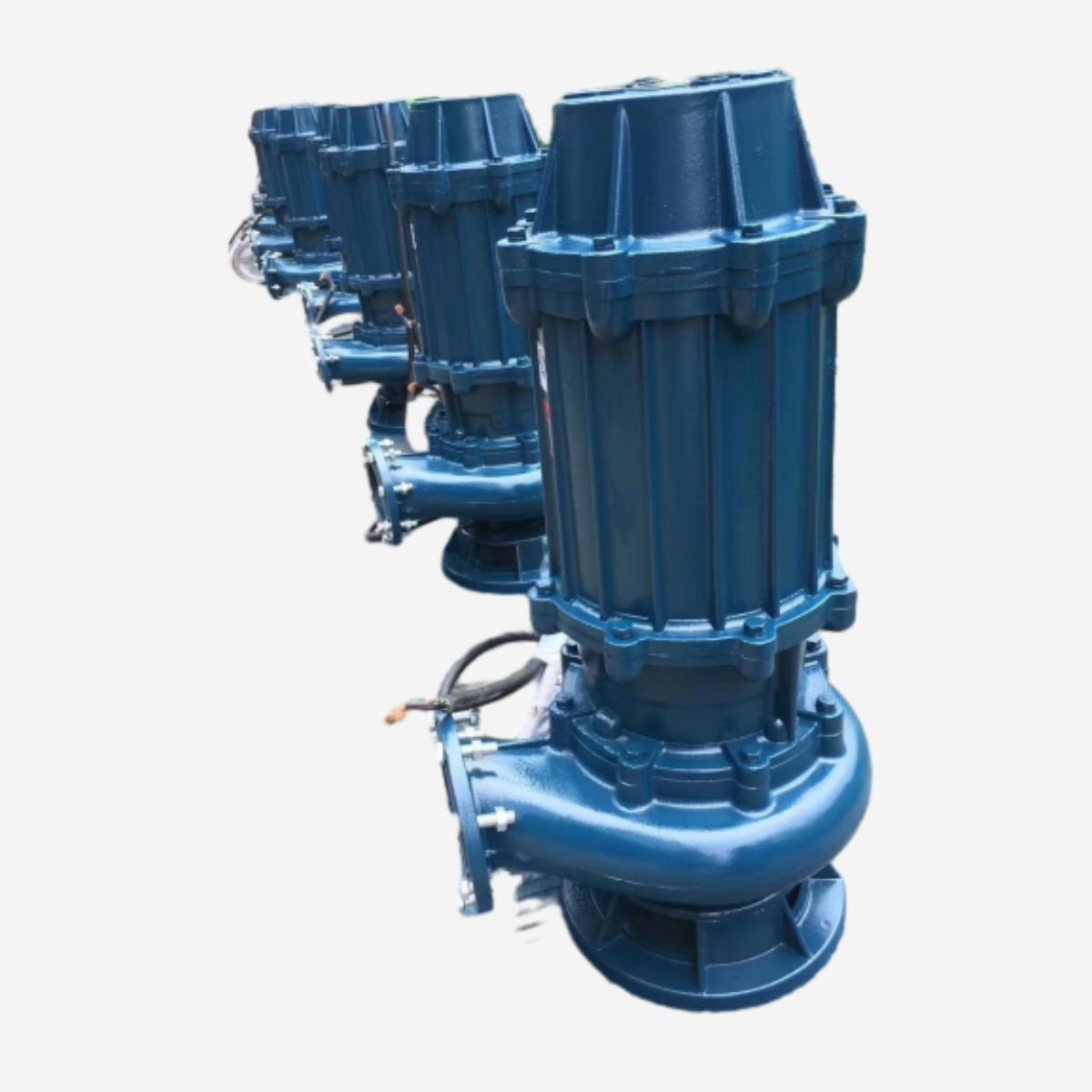
AH Slurry Pump Performance Analysis and Manufacturing Specifications
The AH slurry pump represents a critical engineering solution for the transport of abrasive solids suspended in liquids, serving as a cornerstone in the industrial chain for mining, mineral processing, and dredging. Technically, the AH series is categorized as a heavy-duty centrifugal pump designed specifically for high-density slurries. Unlike standard water pumps, these machines must balance the contradictory requirements of high hydraulic efficiency and extreme wear resistance. From a technical positioning perspective, the AH slurry pump operates as the primary mover in tailings management and ore transport, where the fluid medium often contains high concentrations of silica, alumina, or iron ores. The core performance of these pumps is measured by their ability to maintain a constant flow rate while resisting the erosive force of particle impingement, necessitating a precise alignment of impeller geometry and metallurgical selection to minimize energy loss and maximize the Mean Time Between Failures (MTBF).
Material Science & Manufacturing
The operational lifespan of an AH slurry pump is fundamentally determined by the synergistic relationship between its metallurgical structure and its manufacturing precision. The primary challenge in slurry transport is abrasive wear, which occurs through micro-cutting and plastic deformation of the pump surface. To counteract this, senior manufacturers employ high-chromium cast irons (e.g., ASTM A532) and natural rubber linings. High-chromium alloys (typically 27% Cr) are utilized for the impeller and volute liners, where the formation of hard M7C3 carbides within a martensitic matrix provides a hardness typically exceeding 600 HB, ensuring resistance to high-velocity particle impact.
Manufacturing processes involve complex investment casting and precision machining. The casting process must be strictly controlled to prevent porosity and segregation, as internal voids can lead to catastrophic failure under the high pressures typical of slurry transport. Following casting, heat treatment—specifically quenching and tempering—is performed to optimize the balance between hardness and toughness, preventing the components from becoming overly brittle. For the rubber-lined variants, the bonding process is critical; the rubber must be chemically vulcanized to the metal shell to prevent delamination under vacuum or high-pressure conditions. Furthermore, the machining of the wear plate and impeller clearance is conducted to tolerances of ±0.1mm to maintain volumetric efficiency and reduce internal recirculation, which would otherwise accelerate wear at the impeller eye.
Performance & Engineering
Engineering an AH slurry pump requires a deep dive into fluid dynamics and force analysis. The primary engineering concern is the "Critical Settling Velocity," which is the minimum flow rate required to keep solids in suspension. If the velocity drops below this threshold, sedimentation occurs, leading to pipe blockage and pump cavitation. Engineers utilize the Durand equation to calculate these thresholds, ensuring the pump is sized not just for volume, but for the specific gravity and particle size distribution of the slurry.
Environmental resistance is another critical dimension. In many mining applications, the slurry is not only abrasive but chemically aggressive (acidic or alkaline). This necessitates the use of duplex stainless steels or specialized polymers for the shaft and sealing components. The sealing system typically employs a mechanical seal or an expeller seal (static seal) to prevent the leakage of abrasive particles into the bearing housing. Force analysis on the shaft must account for the radial thrust generated by non-symmetrical flow in the volute, requiring heavy-duty bearings and reinforced shafting to prevent deflection and premature seal failure. Compliance with international hydraulic standards ensures that the pump delivers the rated head and flow while maintaining a Net Positive Suction Head required (NPSHr) that avoids vapor bubbles, which would otherwise cause pitting erosion on the impeller vanes.
Technical Specifications
| Pump Model Series | Max Discharge Capacity (m³/h) | Max Total Head (m) | Liner Material Options | Shaft Material | Max Particle Size (mm) |
|---|---|---|---|---|---|
| AH3/45 | 120 - 450 | 15 - 50 | High Chrome / Natural Rubber | AISI 410 / Duplex 2205 | 12 - 25 |
| AH6/65 | 400 - 1200 | 20 - 70 | High Chrome / Natural Rubber | AISI 410 / Duplex 2205 | 20 - 40 |
| AH10/80 | 800 - 2500 | 25 - 85 | High Chrome / Natural Rubber | AISI 410 / Duplex 2205 | 30 - 60 |
| AH15/100 | 1500 - 4000 | 30 - 110 | High Chrome / Natural Rubber | AISI 410 / Duplex 2205 | 40 - 80 |
| AH20/125 | 2500 - 6000 | 35 - 130 | High Chrome / Natural Rubber | AISI 410 / Duplex 2205 | 50 - 100 |
| AH25/150 | 4000 - 8000 | 40 - 150 | High Chrome / Natural Rubber | AISI 410 / Duplex 2205 | 60 - 120 |
Failure Mode & Maintenance
The failure analysis of AH slurry pumps typically reveals three dominant modes: erosive wear, cavitation pitting, and fatigue cracking. Erosive wear is an inevitable process, but accelerated wear occurs when the pump operates far from its Best Efficiency Point (BEP), causing turbulence and increased particle impingement angles. Cavitation occurs when the suction pressure drops below the vapor pressure of the liquid, creating bubbles that collapse violently against the impeller surface, leading to a "honeycomb" pitting pattern that rapidly destroys the hydraulic profile.
Fatigue cracking often manifests in the pump shaft or bearing housing, usually triggered by excessive vibration or misalignment. This is frequently caused by the uneven wear of the impeller, which creates an unbalanced radial load. Maintenance protocols must therefore include regular vibration analysis and ultrasound thickness testing of the liners. Professional maintenance involves the systematic replacement of the throat bushing and impeller liners before they reach the "critical thinness" threshold, as once the base metal is exposed, the rate of degradation increases exponentially. Lubrication systems for the bearings must be monitored for contamination; the presence of slurry particles in the bearing oil indicates a failure of the sealing system and requires immediate replacement of the mechanical seals.
Industry FAQ
Q: How do we determine whether to use a high-chrome alloy or a rubber liner for our specific slurry?
A: The selection depends on the particle size and chemistry. High-chrome alloys are superior for larger, sharper, and harder particles (e.g., quartz, iron ore) that would cut through rubber. Rubber liners are preferred for finer particles and highly corrosive chemicals where the elastomer's resilience absorbs the energy of the impact and provides superior chemical resistance.
Q: Why is the pump experiencing a sudden drop in discharge pressure despite constant RPM?
A: This is typically a symptom of increased internal clearances due to wear. As the gap between the impeller and the wear plate widens, internal recirculation increases, reducing the effective head. Alternatively, it may indicate a partial blockage in the suction line or the onset of cavitation.
Q: What is the technical impact of operating the pump at 110% of its rated speed?
A: Increasing the speed increases the flow and head, but the wear rate of the liners increases proportionally to the cube of the velocity. Furthermore, the NPSHr increases, significantly raising the risk of cavitation and reducing the overall lifespan of the impeller by up to 40%.
Q: How often should the impeller clearance be adjusted?
A: In high-abrasion environments, clearances should be checked every 500 to 1,000 operational hours. Adjusting the impeller position to maintain a tight seal against the wear plate is essential to prevent efficiency loss and protect the pump casing from direct slurry impingement.
Q: Can these pumps handle slurries with a concentration exceeding 50% by weight?
A: Yes, provided the slurry remains in a Newtonian or pseudo-plastic state. However, at very high concentrations, the viscosity increases significantly, requiring a derating of the pump's head and flow capacity and potentially necessitating a higher torque motor to overcome the increased fluid friction.
Conclusion
The AH slurry pump is a sophisticated piece of industrial machinery where the intersection of material science and fluid dynamics determines operational viability. By optimizing the metallurgical composition of the wear components and maintaining strict adherence to hydraulic operating windows, operators can significantly reduce the total cost of ownership and minimize unplanned downtime in abrasive transport applications.
Moving forward, the integration of IoT-based condition monitoring—specifically real-time vibration and wear sensors—will allow for predictive maintenance strategies that replace scheduled intervals with actual condition-based replacements. This technical evolution will further enhance the reliability of slurry transport systems in the most demanding industrial environments globally.
-
Sewage Pump Company Performance and Engineering
News2026-05-24
-
sewage pump 1/2 hp Performance Analysis
News2026-05-24
-
Sewage Ejector Systems Performance Analysis
News2026-05-24
-
Sewage Ejection System Material Science and Manufacturing
News2026-05-24
-
sewage and effluent pumps Performance Engineering
News2026-05-24
-
pump for sewage water Performance Analysis
News2026-05-23
-
plumbing sewage ejector pump Performance Engineering
News2026-05-23
-
home sewer pump station Performance and Engineering
News2026-05-23
-
high pressure sump pump Performance Analysis
News2026-05-23
-
high head effluent pump Performance Analysis
News2026-05-23
-
Effluent vs Sump Pump Performance Analysis
News2026-05-22
-
effluent septic pump Performance Engineering
News2026-05-22
-
best sewer pumps Performance Engineering
News2026-05-22
-
best sewer pump Performance Analysis
News2026-05-22
-
best sewage pumps Performance Engineering
News2026-05-22




