English
- Afrikaans
- Albanian
- Amharic
- Arabic
- Armenian
- Azerbaijani
- Basque
- Belarusian
- Bengali
- Bosnian
- Bulgarian
- Catalan
- Cebuano
- Corsican
- Croatian
- Czech
- Danish
- Dutch
- English
- Esperanto
- Estonian
- Finnish
- French
- Frisian
- Galician
- Georgian
- German
- Greek
- Gujarati
- Haitian Creole
- hausa
- hawaiian
- Hebrew
- Hindi
- Miao
- Hungarian
- Icelandic
- igbo
- Indonesian
- irish
- Italian
- Japanese
- Javanese
- Kannada
- kazakh
- Khmer
- Rwandese
- Korean
- Kurdish
- Kyrgyz
- Lao
- Latin
- Latvian
- Lithuanian
- Luxembourgish
- Macedonian
- Malgashi
- Malay
- Malayalam
- Maltese
- Maori
- Marathi
- Mongolian
- Myanmar
- Nepali
- Norwegian
- Norwegian
- Occitan
- Pashto
- Persian
- Polish
- Portuguese
- Punjabi
- Romanian
- Russian
- Samoan
- Scottish Gaelic
- Serbian
- Sesotho
- Shona
- Sindhi
- Sinhala
- Slovak
- Slovenian
- Somali
- Spanish
- Sundanese
- Swahili
- Swedish
- Tagalog
- Tajik
- Tamil
- Tatar
- Telugu
- Thai
- Turkish
- Turkmen
- Ukrainian
- Urdu
- Uighur
- Uzbek
- Vietnamese
- Welsh
- Bantu
- Yiddish
- Yoruba
- Zulu

Telephone: +86 13120555503
Email: frank@cypump.com


Apr . 01, 2024 17:55 Back to list
a49 slurry pump Manufacturing Specifications and Performance Analysis
A49 Slurry Pump Manufacturing Specifications and Performance Analysis
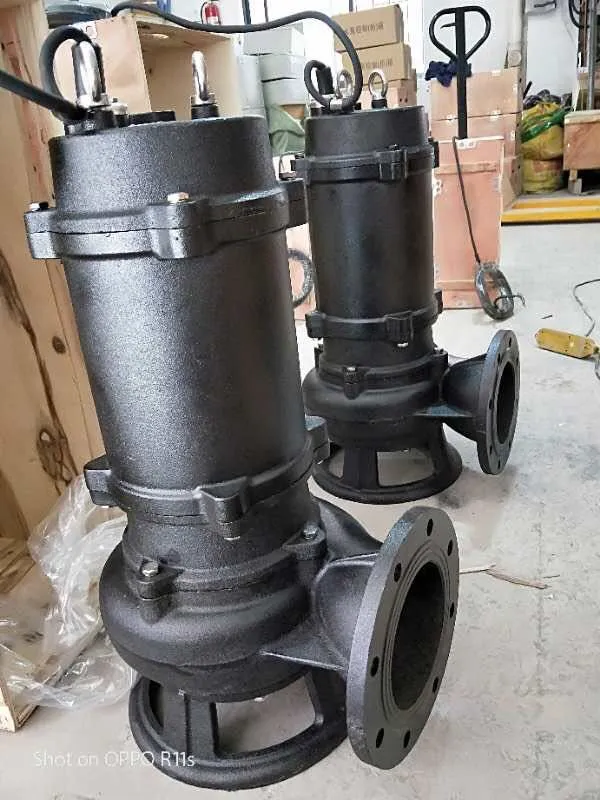
The A49 slurry pump is a heavy-duty centrifugal pumping system engineered specifically for the transport of high-density, abrasive solids suspended in liquid media. Positioned as a critical asset in the mineral processing and metallurgical industry chain, the A49 is designed to bridge the gap between primary crushing/grinding and subsequent chemical leaching or flotation processes. Its technical architecture focuses on maximizing the Mean Time Between Failure (MTBF) while maintaining high volumetric efficiency under extreme particulate loading. The core performance of the A49 is defined by its ability to handle high-percentage solids by weight without inducing premature impeller erosion or catastrophic casing failure, utilizing a reinforced hydraulic flow path to minimize turbulence and stagnant zones where abrasive sedimentation typically occurs.
Material Science & Manufacturing
The structural integrity of the A49 slurry pump is predicated on advanced material science, specifically the application of high-chromium white irons (HCWI) and duplex stainless steels. The impeller and liner materials are typically formulated from ASTM A532 Class III type A chromium iron, which achieves hardness levels exceeding 60 HRC. This metallurgical structure consists of a tempered martensitic matrix embedded with primary M7C3 carbides, providing the necessary hardness to resist micro-plowing and abrasive wear from silica and alumina particles.
Manufacturing begins with precision investment casting to ensure the hydrodynamic profile of the impeller is maintained within a tight tolerance of ±0.5mm. Following casting, the components undergo a rigorous heat treatment process involving austenitizing and quenching to homogenize the carbide distribution. The casing is manufactured using heavy-wall casting techniques to accommodate the installation of replaceable wear liners. Key parameter control during the machining phase focuses on the concentricity of the shaft and the clearance between the impeller and the suction liner; excessive clearance leads to internal recirculation and increased turbulence, which accelerates erosive wear. Welding of non-wearing structural components employs Low-Hydrogen electrodes to prevent hydrogen-induced cracking (HIC) in the thick-walled sections of the pump frame.
Performance & Engineering
Engineering the A49 involves complex fluid dynamics analysis to mitigate the effects of slurry viscosity and particle settling. The pump utilizes a semi-open impeller design to reduce the probability of clogging while optimizing the Net Positive Suction Head required (NPSHr) to prevent cavitation in high-viscosity applications. Force analysis indicates that the radial thrust exerted on the shaft increases proportionally with the slurry density; consequently, the A49 employs heavy-duty spherical roller bearings and a reinforced shaft assembly to distribute these loads and prevent shaft deflection.
Environmental resistance is managed through the application of epoxy-based anti-corrosion coatings on the exterior surfaces and the use of chemically compatible elastomers for the sealing systems. The pump's functional implementation relies heavily on the sealing arrangement—typically a combination of a mechanical seal and a gland packing system—which prevents the ingress of abrasive particles into the bearing housing. Compliance with hydraulic efficiency standards is achieved by optimizing the volute geometry, ensuring a gradual increase in the flow area to convert kinetic energy into static pressure with minimal energy loss via friction.
Technical Specifications
| Technical Parameter | Standard Specification | High-Chrome Variant | Duplex Steel Variant | Tolerance Range |
|---|---|---|---|---|
| Maximum Flow Rate (m³/h) | 450 | 450 | 420 | ±5% |
| Maximum Head (m) | 65 | 65 | 62 | ±2m |
| Impeller Hardness (HRC) | 55-60 | 62-68 | 45-52 | ±2 HRC |
| Max Particle Size (mm) | 35 | 35 | 30 | +0/-2mm |
| Operating Temperature (°C) | -10 to 90 | -10 to 110 | -20 to 150 | ±5°C |
| Shaft Power Requirement (kW) | 110 - 160 | 110 - 160 | 115 - 165 | ±10kW |
Failure Mode & Maintenance
Failure analysis of the A49 slurry pump typically reveals three primary degradation modes: abrasive erosion, cavitation-induced pitting, and fatigue cracking. Abrasive erosion is most prevalent at the impeller vanes and the volute tongue, where fluid velocity is highest. This is identified by a gradual decrease in pump head and flow rate. Cavitation occurs when the NPSH available drops below the NPSH required, leading to the formation and collapse of vapor bubbles that erode the metal surface, creating a "sponge-like" texture on the impeller eye.
Fatigue cracking often originates from the shaft-coupling interface due to misalignment or excessive vibration from solids slugs. Professional maintenance requires a predictive approach: monthly vibration analysis using accelerometers and ultrasonic thickness gauging of the liners to determine the exact wear rate. When liners reach 70% of their wear limit, they must be replaced to prevent the slurry from eroding the outer casing. Lubrication schedules must prioritize the use of high-viscosity synthetic oils to maintain a hydrodynamic film between the bearings under high radial loads.
Industry FAQ
Q: How do we determine the optimal impeller diameter for a specific slurry density in the A49?
A: The selection is based on the specific gravity of the slurry and the required total dynamic head (TDH). As density increases, the power demand rises linearly. We utilize a performance curve shift analysis to determine the diameter that balances volumetric efficiency with the motor's rated kW to avoid overloading.
Q: What is the recommended strategy for managing high-frequency vibration in A49 installations?
A: High-frequency vibration is typically a symptom of impeller imbalance due to uneven wear or misalignment. We recommend performing a laser alignment of the pump and motor shafts and installing flexible couplings to dampen transient oscillations caused by slurry surges.
Q: Which material is superior for handling acidic slurries: High-Chrome Iron or Duplex Stainless Steel?
A: For purely abrasive applications, High-Chrome Iron is superior. However, in the presence of chlorides or acidic pH levels, High-Chrome Iron is susceptible to chemical corrosion. Duplex Stainless Steel is the professional choice for corrosive-abrasive environments due to its superior pitting resistance equivalent number (PREN).
Q: How can we distinguish between abrasive wear and cavitation damage during inspection?
A: Abrasive wear manifests as smooth, directional grooves or "scalloping" following the flow path. Cavitation damage is characterized by localized, deep, irregular pits and a frosted appearance, typically concentrated at the impeller eye or the low-pressure side of the vanes.
Q: What is the impact of operating the A49 pump below its Minimum Continuous Stable Flow (MCSF)?
A: Operating below the MCSF leads to internal recirculation and excessive turbulence. This not only reduces hydraulic efficiency but significantly accelerates the erosion of the casing liners and increases the risk of solids settling in the volute, leading to potential pump seizure.
Conclusion
The A49 slurry pump represents a sophisticated integration of metallurgical engineering and hydraulic design, specifically optimized for the rigors of abrasive material transport. By leveraging high-chromium white irons and precision-cast geometries, the system effectively manages the trade-off between wear resistance and hydraulic efficiency. The technical logic dictates that the longevity of the equipment is not merely a function of material hardness, but a result of rigorous parameter control during manufacturing and the implementation of a predictive maintenance regime centered on vibration and thickness monitoring.
Looking forward, the integration of smart sensors for real-time wear tracking and the adoption of additive manufacturing for complex impeller geometries may further enhance the performance of the A49 series. For industrial operators, the key to maximizing ROI lies in the precise matching of material selection to the chemical composition of the slurry and the strict adherence to alignment and lubrication standards to mitigate mechanical fatigue.
-
Effluent vs Sump Pump Performance Analysis
News2026-05-22
-
effluent septic pump Performance Engineering
News2026-05-22
-
best sewer pumps Performance Engineering
News2026-05-22
-
best sewer pump Performance Analysis
News2026-05-22
-
best sewage pumps Performance Engineering
News2026-05-22
-
basement bathroom sewage pump Material Science Manufacturing
News2026-05-21
-
wastewater treatment plant pumps Material Science Manufacturing
News2026-05-21
-
waste water pump for basement Material Science Manufacturing
News2026-05-21
-
sump pump sewage Performance Analysis
News2026-05-21
-
sump pump for sewage Material Science and Manufacturing
News2026-05-21
-
sump pump for septic systems Material Science Manufacturing
News2026-05-20
-
sump pump and ejector pump Material Science Manufacturing
News2026-05-20
-
sewage treatment plant pumps Performance Analysis
News2026-05-20
-
sewage tank pump Material Science and Manufacturing
News2026-05-20
-
sewage pump for septic tank Performance Analysis
News2026-05-20




