


Connector Pre-assembly Machine setups are increasingly recognized as a foundational element in pump system reliability, directly affecting leakage rates, pressure consistency, and maintenance intervals across industrial operations.
In pumping applications, every component in the hydraulic chain influences overall performance. While pumps, motors, and valves receive considerable attention, the hose assemblies that connect them are often treated as commodity items. This oversight can undermine system efficiency and shorten equipment life. Modern pump engineers are reexamining how hose ends are prepared and crimped, recognizing that assembly precision is a lever for achieving higher uptime and lower total cost of ownership.
The Critical Link Between Hose Assembly Quality and Pump Efficiency
Hydraulic pumps operate under demanding pressure and flow conditions. Any restriction or leakage at connection points forces the pump to work harder, increasing energy consumption and generating excess heat. Poorly crimped hose assemblies introduce variable resistance, create turbulence, and accelerate wear on pump seals and bearings. Field data from industrial pump installations indicate that more than 40% of hydraulic system failures originate at hose or fitting connections, not within the pump itself. This places hose assembly quality at the center of system reliability strategies.
Consistent crimp diameter, concentric alignment, and proper insert depth are measurable parameters that directly correlate with connection integrity. When each assembly meets tight tolerances, the entire hydraulic circuit behaves predictably. Pump manufacturers increasingly specify crimp qualification protocols to ensure that replacement hoses match original equipment performance. This shift reflects a broader understanding that the pump is only as reliable as the connections feeding it.
Common Failure Points in Pump-Hydraulic Connections
Three failure modes dominate hydraulic connections in pump systems: leakage at the fitting interface, hose burst near the crimp collar, and gradual pressure loss due to fitting pull-off. All three trace back to assembly process variables. Inconsistent crimp force leaves gaps that allow fluid seepage. Off-center crimping introduces bending stress that concentrates at the hose-to-fitting transition. Insufficient skive depth reduces the mechanical grip between hose and fitting, leading to separation under impulse loading.
Regular inspection of crimp dimensions using calibrated gauges is standard practice in high-reliability pump environments. Operators measure crimp diameter, hex size, and concentricity on every assembly. When these parameters drift outside specification, the root cause is almost always variability in the crimping machine or die set. Standardizing on well-maintained equipment with digital control reduces human error and delivers repeatable results across shifts and operators. For organizations managing hundreds of pump stations, this consistency translates into predictable maintenance schedules and fewer emergency callouts.
Matching Assembly Methods to Application Demands
Not all pump applications impose the same demands on hose assemblies. High-pressure hydraulic systems in construction and mining require crimp forces that maintain seal integrity at 400 bar or more. Water and wastewater pumps, while lower in pressure, introduce corrosion concerns and demand fittings that resist galvanic action. HVAC circulation pumps operate in constrained spaces where flexibility and bend radius become critical. Each application benefits from a tailored approach to hose preparation and crimping.
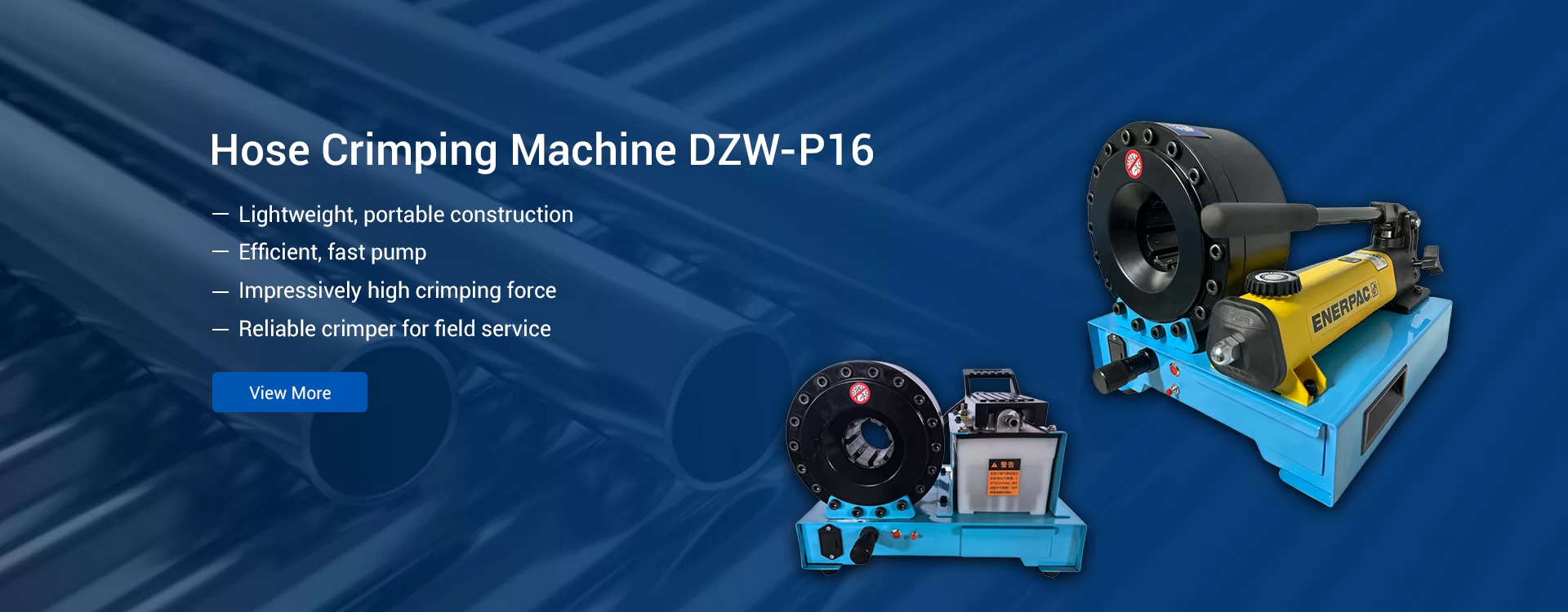
The choice of crimping equipment influences whether a facility can economically produce assemblies that match these varying requirements. Machines with interchangeable die sets and programmable pressure profiles allow a single station to handle multiple hose sizes and fitting types. This flexibility reduces the need for dedicated assembly lines and enables maintenance teams to produce custom-length assemblies on demand. When sourcing such equipment, engineering teams typically evaluate stroke length, clamping force, and control precision. A comprehensive Product Center that includes both standard and large-diameter crimping machines, along with skiving and cutting units, supports a wide range of pump connection requirements without compromising quality.
Future Trends in Pump-Hydraulic Integration
The pump industry is moving toward condition-based monitoring and predictive maintenance. Vibration sensors, flow meters, and pressure transducers now feed real-time data into control systems that adjust pump speed and valve position to optimize efficiency. These intelligent systems depend on stable hydraulic circuits. Any variability in connection quality introduces noise into the data stream, making it harder to distinguish normal operation from developing faults. Precision-crimped assemblies provide the consistent baseline that smart monitoring requires.
Digital control in crimping equipment is also advancing. Machines with programmable logic controllers store crimp recipes for different hose-and-fitting combinations, reducing setup time and eliminating guesswork. Data logging features track every assembly produced, creating a traceability chain that supports quality audits and warranty claims. For pump manufacturers and service providers, this integration of digital tools into the assembly process aligns with broader Industry 4.0 initiatives and strengthens the link between component quality and system performance.
Practical Steps for Improving Assembly Consistency
Organizations that treat hose assembly as a critical process rather than a peripheral task see measurable gains in pump system uptime. Establishing standard operating procedures for skive depth, lubrication application, and crimp force verification removes variability. Regular calibration of crimping machines and gauges ensures that measurements remain accurate. Training operators to recognize visual indicators of proper crimp formation adds a layer of quality assurance beyond dimensional checks.
Auditing the supply chain for fitting and hose material traceability further reduces risk. When every component in the assembly carries documented specifications and test results, the probability of field failure drops. Pump system designers increasingly specify preferred suppliers for connectors and crimping services, treating the assembly process as an extension of their own quality system. This approach recognizes that in a hydraulic circuit, the weakest link determines overall reliability — and that link is often a connection made in the field or repair shop.
Conclusion
Pump system reliability is not solely determined by the pump itself. The hose assemblies that transmit fluid power play an equally decisive role. Investing in precision crimping equipment, standardized procedures, and operator training yields direct returns in reduced leakage, longer component life, and lower maintenance costs. As pump applications become more demanding and monitoring systems more sophisticated, the importance of consistent, high-quality hose connections will only grow. Organizations that elevate assembly quality from an afterthought to a strategic priority position themselves for better operational performance and lower total cost of ownership across their pump fleets.




