English
- Afrikaans
- Albanian
- Amharic
- Arabic
- Armenian
- Azerbaijani
- Basque
- Belarusian
- Bengali
- Bosnian
- Bulgarian
- Catalan
- Cebuano
- Corsican
- Croatian
- Czech
- Danish
- Dutch
- English
- Esperanto
- Estonian
- Finnish
- French
- Frisian
- Galician
- Georgian
- German
- Greek
- Gujarati
- Haitian Creole
- hausa
- hawaiian
- Hebrew
- Hindi
- Miao
- Hungarian
- Icelandic
- igbo
- Indonesian
- irish
- Italian
- Japanese
- Javanese
- Kannada
- kazakh
- Khmer
- Rwandese
- Korean
- Kurdish
- Kyrgyz
- Lao
- Latin
- Latvian
- Lithuanian
- Luxembourgish
- Macedonian
- Malgashi
- Malay
- Malayalam
- Maltese
- Maori
- Marathi
- Mongolian
- Myanmar
- Nepali
- Norwegian
- Norwegian
- Occitan
- Pashto
- Persian
- Polish
- Portuguese
- Punjabi
- Romanian
- Russian
- Samoan
- Scottish Gaelic
- Serbian
- Sesotho
- Shona
- Sindhi
- Sinhala
- Slovak
- Slovenian
- Somali
- Spanish
- Sundanese
- Swahili
- Swedish
- Tagalog
- Tajik
- Tamil
- Tatar
- Telugu
- Thai
- Turkish
- Turkmen
- Ukrainian
- Urdu
- Uighur
- Uzbek
- Vietnamese
- Welsh
- Bantu
- Yiddish
- Yoruba
- Zulu

Telephone: +86 13120555503
Email: frank@cypump.com


Apr . 01, 2024 17:55 Back to list
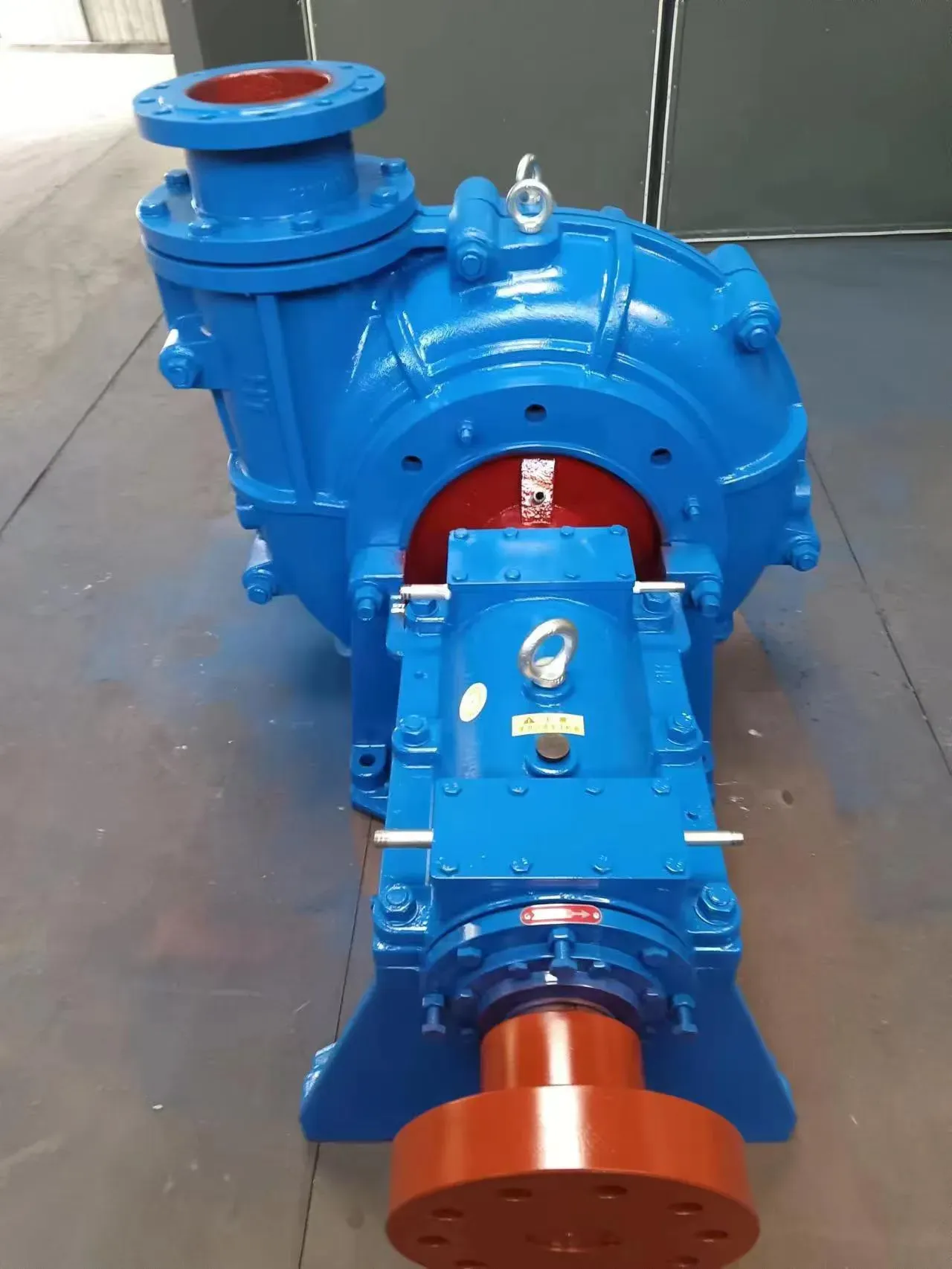
wholesale highhead slurry pump suppliers finding the Performance Analysis
Introduction
High-head slurry pumps are critical components in numerous industrial processes, particularly those involving the transportation of abrasive or corrosive materials over significant vertical distances. These pumps, distinguished by their ability to generate substantial head (pressure) alongside considerable flow rates, are essential in mining, dredging, wastewater treatment, and heavy industrial applications. The selection of a suitable high-head slurry pump is a complex undertaking, demanding a thorough understanding of slurry characteristics, operational requirements, and material compatibility. This guide provides an in-depth technical overview for wholesale purchasers, outlining material science considerations, manufacturing processes, performance characteristics, potential failure modes, and relevant industry standards. The current supply landscape faces challenges related to material sourcing, increased demand driven by infrastructure projects, and the need for pumps capable of handling increasingly challenging slurries – materials with high solids content, large particle sizes, and aggressive chemical compositions. This document aims to empower procurement managers and engineers with the knowledge required to make informed decisions when sourcing high-head slurry pumps from wholesale suppliers.
Material Science & Manufacturing
The performance and longevity of a high-head slurry pump are intrinsically linked to the materials used in its construction. Pump components are exposed to severe abrasion, corrosion, and impact forces. Common materials include high-chrome cast iron (typically 27-30% chromium) for impeller and liner applications, offering exceptional wear resistance. For highly corrosive environments, duplex stainless steels (such as 2205) or super-austenitic stainless steels are employed, providing superior resistance to pitting and crevice corrosion. Pump casings are often constructed from carbon steel with a rubber or epoxy coating to protect against chemical attack, or are manufactured entirely from corrosion-resistant alloys. Manufacturing processes vary depending on the component and material. Impellers and volute liners are frequently produced using sand casting, followed by heat treatment to optimize hardness and toughness. Pump casings are typically manufactured using centrifugal casting or welding processes. Key parameter control during manufacturing includes accurate alloy composition verification using spectroscopic analysis, precise heat treatment cycles to achieve desired mechanical properties (hardness, tensile strength, impact resistance), and rigorous quality control checks for casting defects (porosity, inclusions). Welding procedures require careful control of welding parameters (current, voltage, travel speed) and post-weld heat treatment to minimize distortion and maintain material integrity. Surface hardening techniques like induction hardening can further enhance wear resistance in critical areas.
Performance & Engineering
High-head slurry pump performance is governed by a complex interplay of hydraulic forces, fluid mechanics, and material properties. Key performance indicators include head (expressed in meters or feet), flow rate (expressed in cubic meters per hour or gallons per minute), and pump efficiency. The head generated is directly related to the impeller diameter, rotational speed, and the slurry density. Force analysis reveals that the impeller is subjected to centrifugal forces, hydraulic pressure, and impact forces from solid particles. Cavitation, a phenomenon caused by localized pressure drops, is a significant concern, particularly in high-head applications. Cavitation can lead to impeller erosion and reduced pump efficiency. Pump design must mitigate cavitation risk through careful impeller geometry optimization and adequate net positive suction head (NPSH) requirements. Environmental resistance is also crucial. Pumps operating in outdoor environments must be protected against temperature fluctuations, rain, and dust. Compliance requirements vary depending on the application and geographic location. For example, pumps used in mining applications may need to comply with MSHA (Mine Safety and Health Administration) standards. Pumps used in the food and beverage industry must meet FDA (Food and Drug Administration) guidelines. Functional implementation requires careful consideration of the piping system, including pipe diameter, length, and elevation changes. Proper pipe support is essential to minimize vibration and stress on the pump. Variable frequency drives (VFDs) can be used to control pump speed and flow rate, optimizing energy consumption and process control.
Technical Specifications
| Parameter | Unit | Typical Range (Small Pump) | Typical Range (Large Pump) |
|---|---|---|---|
| Head | m | 50-100 | 200-500 |
| Flow Rate | m³/h | 10-50 | 100-500 |
| Maximum Solid Particle Size | mm | 10-25 | 50-150 |
| Pump Speed | RPM | 500-1500 | 500-2000 |
| Power | kW | 2.2-7.5 | 37-150 |
| Impeller Material | - | High-Chrome Iron | High-Chrome Iron/Duplex Stainless Steel |
Failure Mode & Maintenance
High-head slurry pumps are susceptible to several failure modes. Abrasion is a primary cause of component wear, particularly in the impeller and liner. Erosion, caused by the impact of solid particles, can also lead to material loss. Corrosion, particularly in aggressive chemical environments, can weaken pump components. Fatigue cracking can occur in pump casings and impellers due to cyclic loading. Mechanical seal failure is a common issue, leading to leakage and reduced pump efficiency. Delamination of rubber linings can occur due to inadequate bonding or exposure to harsh chemicals. Oxidation and scaling can affect pump performance over time. Regular maintenance is crucial to prevent failures and extend pump life. Preventative maintenance tasks include visual inspections for wear and corrosion, lubrication of bearings, monitoring of vibration levels, and periodic replacement of wear parts (impellers, liners, seals). Failure analysis should be conducted whenever a pump fails to identify the root cause and implement corrective actions. Techniques such as metallographic examination, fracture surface analysis, and chemical composition analysis can be used to determine the failure mechanism. Routine monitoring of pump performance parameters (head, flow rate, power consumption) can provide early warning signs of potential problems. Consider implementing condition-based maintenance (CBM) strategies utilizing vibration analysis and oil analysis to predict and prevent failures.
Industry FAQ
Q: What is the impact of slurry solids concentration on pump selection?
A: Increasing solids concentration significantly increases the abrasive wear rate and the power requirements of the pump. Higher concentrations necessitate pumps with larger impeller passages and more robust construction materials, potentially requiring a larger pump frame size and increasing maintenance frequency. Suppliers will typically request a detailed slurry analysis, including particle size distribution and solids loading, to recommend the appropriate pump.
Q: How does the specific gravity of the slurry affect pump performance?
A: Higher slurry specific gravity directly increases the head required to pump the slurry. The pump must be sized to deliver the required head at the specified flow rate, considering the increased density. This typically translates to a more powerful motor and a larger impeller.
Q: What are the key considerations for selecting a pump for a highly abrasive slurry?
A: Material selection is paramount. High-chrome cast iron is generally preferred, but for extremely abrasive slurries, ceramic or tungsten carbide liners may be necessary. Impeller design should minimize flow velocities and avoid sharp corners, reducing erosion. Consider using pumps with replaceable wear plates and liners to extend component life.
Q: What are the benefits of using a variable frequency drive (VFD) with a high-head slurry pump?
A: VFDs allow for precise control of pump speed and flow rate, optimizing energy consumption and process control. They can also reduce mechanical stress on the pump by minimizing hydraulic shocks. VFDs are particularly beneficial in applications with varying flow rate requirements.
Q: What are the typical lead times for custom-engineered high-head slurry pumps?
A: Lead times for custom-engineered pumps can vary significantly depending on the complexity of the design, material availability, and supplier workload. Typically, lead times range from 12 to 24 weeks, but can be longer for pumps requiring specialized materials or complex manufacturing processes. Early engagement with suppliers and detailed specification documentation are crucial to minimizing lead times.
Conclusion
The successful implementation of high-head slurry pumping systems hinges on a deep understanding of the interplay between material science, engineering principles, and operational demands. Wholesale purchasers must prioritize thorough slurry characterization, robust material selection, and meticulous attention to manufacturing quality. Selecting a pump solely based on initial cost can lead to premature failure and increased lifecycle costs.
The future of high-head slurry pump technology will likely focus on advancements in materials science (development of more wear-resistant and corrosion-resistant alloys), hydraulic design optimization (minimizing energy consumption and cavitation risk), and the integration of advanced monitoring and control systems (predictive maintenance and remote diagnostics). Collaboration between pump manufacturers, end-users, and research institutions will be crucial to addressing the evolving challenges of slurry pumping applications and ensuring reliable, efficient, and sustainable operation.
-
Precision at the Pump: How Better Machining Protects Flow and Uptime
News2026-11-20
-
Why Pump Reliability Begins Before the First Drop of Fluid
News2026-11-20
-
Beyond the Pump: Designing Safer Access Around Critical Water Infrastructure
News2026-11-20
-
Why Pumping Stations Depend on the Infrastructure Beneath the Pumps
News2026-11-20
-
Beyond the Pump Room: How Smarter Loading Protects Industrial Equipment
News2026-11-19
-
When Pumps Stop: Designing More Resilient Power for Critical Pumping Systems
News2026-11-19
-
The Hidden Role of Dust and Gas Monitoring in Reliable Pump Operations
News2026-11-19
-
The Hidden Role of Mineral Compounds in Extending Industrial Pump Lifespan
News2026-10-12
-
Why Pump System Reliability Depends on Precision Hose Assembly Methods
News2026-09-15
-
How Advanced Imaging Films Are Transforming Pump Component Quality Control
News2026-08-25
-
How Advanced Filtration Protects Pump Systems from Premature Wear and Costly Downtime
News2026-08-25
-
How Steel Material Selection Drives Pump Reliability in Heavy-Duty Systems
News2026-08-25
-
Ensuring Pump System Efficiency: The Role of High-Quality Pipe Fittings and Tubing
News2026-08-24
-
Optimizing Fluid Dynamics and Material Consistency in Industrial Processing
News2026-08-18
-
Innovations and Challenges in Hydraulic Systems for Heavy Machinery
News2026-08-13




