English
- Afrikaans
- Albanian
- Amharic
- Arabic
- Armenian
- Azerbaijani
- Basque
- Belarusian
- Bengali
- Bosnian
- Bulgarian
- Catalan
- Cebuano
- Corsican
- Croatian
- Czech
- Danish
- Dutch
- English
- Esperanto
- Estonian
- Finnish
- French
- Frisian
- Galician
- Georgian
- German
- Greek
- Gujarati
- Haitian Creole
- hausa
- hawaiian
- Hebrew
- Hindi
- Miao
- Hungarian
- Icelandic
- igbo
- Indonesian
- irish
- Italian
- Japanese
- Javanese
- Kannada
- kazakh
- Khmer
- Rwandese
- Korean
- Kurdish
- Kyrgyz
- Lao
- Latin
- Latvian
- Lithuanian
- Luxembourgish
- Macedonian
- Malgashi
- Malay
- Malayalam
- Maltese
- Maori
- Marathi
- Mongolian
- Myanmar
- Nepali
- Norwegian
- Norwegian
- Occitan
- Pashto
- Persian
- Polish
- Portuguese
- Punjabi
- Romanian
- Russian
- Samoan
- Scottish Gaelic
- Serbian
- Sesotho
- Shona
- Sindhi
- Sinhala
- Slovak
- Slovenian
- Somali
- Spanish
- Sundanese
- Swahili
- Swedish
- Tagalog
- Tajik
- Tamil
- Tatar
- Telugu
- Thai
- Turkish
- Turkmen
- Ukrainian
- Urdu
- Uighur
- Uzbek
- Vietnamese
- Welsh
- Bantu
- Yiddish
- Yoruba
- Zulu

Telephone: +86 13120555503
Email: frank@cypump.com


Apr . 01, 2024 17:55 Back to list
vertical mixed flow pump Performance Analysis
Introduction
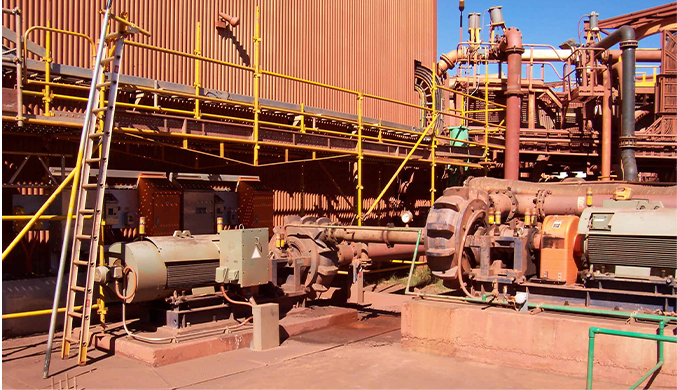
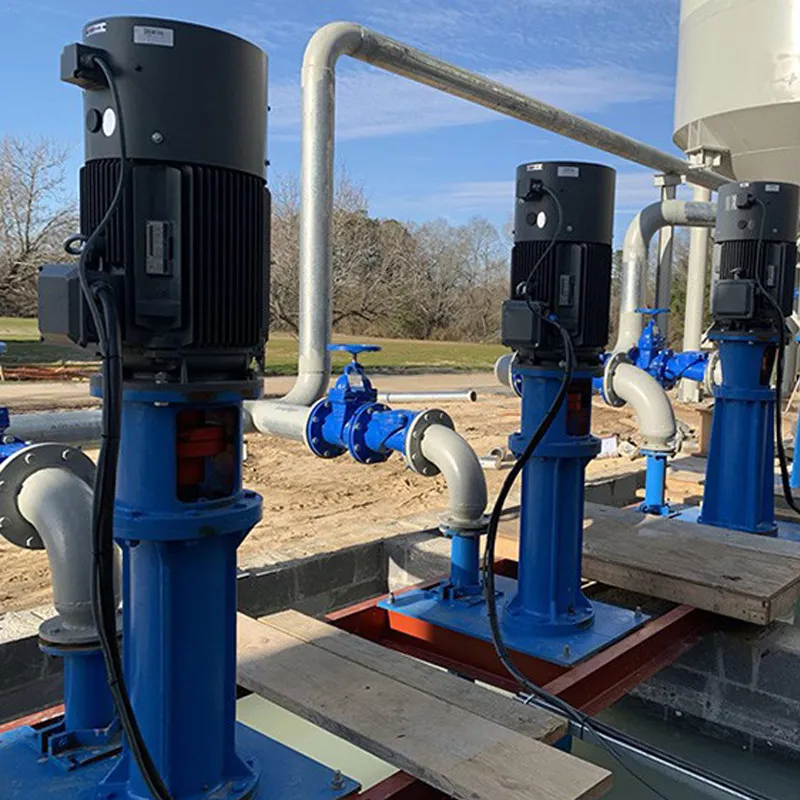
Vertical mixed flow pumps are a class of dynamic pumps utilized extensively in applications requiring the movement of large volumes of water or other relatively low-viscosity fluids. Positioned between radial flow and axial flow pumps, they combine characteristics of both, offering efficient performance across a wider range of head and flow conditions. These pumps are distinguished by their vertically oriented design, which simplifies installation and maintenance, particularly in applications where space is limited, such as municipal wastewater treatment, agricultural irrigation, and industrial water circulation. The core performance of a vertical mixed flow pump is defined by its specific speed, which dictates the impeller geometry and optimal operating point. Key industry pain points center around impeller erosion due to abrasive particles, bearing failures in submerged applications, and ensuring efficient operation across varying flow rates, necessitating robust materials selection and advanced hydraulic designs.
Material Science & Manufacturing
The primary materials of construction for vertical mixed flow pumps are cast iron, stainless steel (typically 304, 316, and duplex stainless steels), and, in some specialized applications, fiberglass reinforced polymer (FRP). Cast iron (ASTM A48 Class 30) provides cost-effectiveness and good machinability for pump casings and impellers handling clean water. However, its susceptibility to corrosion necessitates protective coatings (epoxy, polyurethane) in aggressive environments. Stainless steel offers superior corrosion resistance, making it ideal for wastewater and chemical processing applications. The specific stainless steel grade is chosen based on the chloride content and pH of the fluid being pumped. Duplex stainless steels (e.g., UNS S31803) provide enhanced strength and corrosion resistance compared to standard austenitic grades. FRP is utilized in highly corrosive environments where metallic materials are unsuitable.
Manufacturing processes vary depending on the component. Pump casings are typically manufactured using sand casting or investment casting, followed by machining to precise tolerances. Impellers are often produced using centrifugal casting or forging, demanding meticulous balancing to minimize vibration. Shafts are typically machined from high-strength alloy steel (e.g., 4140) and subjected to heat treatment for enhanced durability. Welding processes (SMAW, GTAW, GMAW) are critical in joining components, requiring qualified welders and stringent quality control to ensure structural integrity. Key parameter control during manufacturing includes dimensional accuracy of impeller blades, surface finish of flow passages to minimize friction losses, and proper heat treatment to achieve desired material properties. Bearing housings require precision machining to ensure proper alignment and lubrication.
Performance & Engineering
The performance of a vertical mixed flow pump is fundamentally governed by the principles of fluid mechanics, specifically the energy equation and continuity equation. Force analysis involves evaluating the hydraulic forces acting on the impeller, shaft, and casing, as well as the radial and axial thrusts generated by the fluid flow. Axial thrust is a significant concern, particularly in pumps with high specific speeds, and requires careful design of the impeller and diffuser to minimize its magnitude. Environmental resistance is critical, especially in outdoor installations where pumps are exposed to temperature fluctuations, humidity, and UV radiation. Proper sealing materials (e.g., Viton, EPDM) and protective coatings are essential to prevent degradation.
Compliance requirements vary by region and application. For potable water applications, pumps must meet NSF/ANSI 61 standards for lead content and material safety. For wastewater applications, pumps must comply with local environmental regulations regarding discharge limits. Electrical components must adhere to NEMA standards for motor efficiency and safety. Hydraulic design considerations include optimizing impeller blade geometry for maximum efficiency, minimizing cavitation risk through proper net positive suction head (NPSH) calculations, and ensuring adequate flow velocity distribution to prevent flow separation. The pump’s performance curve (head vs. flow rate) is a critical engineering parameter used to select the appropriate pump for a specific application.
Technical Specifications
| Parameter | Unit | Typical Range | Industry Standard |
|---|---|---|---|
| Flow Rate | m³/h | 50 - 5000 | ISO 9906 |
| Total Dynamic Head | m | 2 - 50 | ANSI/HI 1.1 |
| Specific Speed (Ns) | rpm | 80-150 | Calculated per ANSI/HI |
| Pump Efficiency | % | 65 - 85 | ISO 9906 |
| Motor Power | kW | 0.75 - 300 | IEC 60034 |
| Maximum Solids Handling | mm | Up to 50 (depending on impeller design) | N/A - Application Specific |
Failure Mode & Maintenance
Common failure modes in vertical mixed flow pumps include impeller erosion due to abrasive particles in the fluid, bearing failures caused by inadequate lubrication or water ingress, shaft misalignment leading to vibration and seal failure, and corrosion of pump components. Fatigue cracking can occur in the shaft or impeller due to cyclical loading. Delamination of protective coatings can expose the underlying metal to corrosion. Oxidation can lead to the degradation of metallic components over time. Failure analysis should involve visual inspection, non-destructive testing (NDT) such as ultrasonic testing or radiography, and metallurgical analysis of failed components.
Preventive maintenance is crucial for maximizing pump lifespan and minimizing downtime. Regular lubrication of bearings, inspection of seals for leaks, alignment checks of the pump and motor, and cleaning of impeller and casing to remove debris are essential. Vibration analysis can detect early signs of bearing wear or misalignment. Periodic inspection for corrosion and application of protective coatings can prevent premature failure. Impellers should be inspected for erosion and replaced as needed. The pump’s performance should be monitored regularly to detect any deviations from baseline values, which may indicate a developing problem. Following the manufacturer’s recommended maintenance schedule is paramount.
Industry FAQ
Q: What is the primary advantage of a vertical mixed flow pump over a horizontal centrifugal pump in wastewater treatment?
A: The primary advantage is space saving. Vertical pumps require a smaller footprint, as the motor is positioned above the pump casing. This is particularly beneficial in wastewater treatment plants where space is often limited. Furthermore, the submerged motor design simplifies installation and eliminates the need for separate alignment procedures.
Q: How do you mitigate cavitation in a vertical mixed flow pump?
A: Cavitation is mitigated by ensuring adequate Net Positive Suction Head Available (NPSHa) exceeds the Net Positive Suction Head Required (NPSHr) by a sufficient margin. This can be achieved by increasing the suction pressure, lowering the pump’s elevation, or reducing the fluid temperature. Impeller design also plays a crucial role in minimizing cavitation.
Q: What materials are best suited for handling highly corrosive fluids in a vertical mixed flow pump?
A: For highly corrosive fluids, materials like duplex stainless steel (e.g., S31803), super duplex stainless steel, or specialized alloys such as Hastelloy are recommended. FRP construction is also an option for extremely aggressive environments, though it may have limitations in terms of mechanical strength.
Q: What are the key considerations when selecting a vertical mixed flow pump for irrigation?
A: Key considerations include flow rate, total dynamic head (taking into account elevation changes and friction losses), the presence of solids in the water source, and the required efficiency to minimize energy consumption. The pump’s ability to handle variable flow rates is also important, as irrigation demands fluctuate.
Q: How often should the bearings in a submerged vertical mixed flow pump be inspected and replaced?
A: Bearing inspection frequency depends on the operating conditions and fluid being pumped. Generally, bearings should be inspected annually, with replacement recommended every 3-5 years, or sooner if vibration analysis indicates excessive wear. Regular lubrication is critical to extending bearing life.
Conclusion
Vertical mixed flow pumps represent a crucial technology in fluid handling, offering a balance of efficiency, adaptability, and space-saving design. Their suitability stems from a nuanced interplay of material science, precise manufacturing, and careful engineering considerations. Understanding the core principles governing their performance, along with potential failure modes and proactive maintenance strategies, is paramount for ensuring reliable and cost-effective operation across diverse industrial applications.
Future developments in vertical mixed flow pump technology will likely focus on enhancing efficiency through advanced impeller designs, incorporating smart sensors for real-time performance monitoring and predictive maintenance, and exploring the use of new materials to further improve corrosion resistance and durability. Optimizing pump control systems to adapt to variable flow demands will also be a key area of innovation, contributing to energy savings and reduced operating costs.
-
Precision at the Pump: How Better Machining Protects Flow and Uptime
News2026-11-20
-
Why Pump Reliability Begins Before the First Drop of Fluid
News2026-11-20
-
Beyond the Pump: Designing Safer Access Around Critical Water Infrastructure
News2026-11-20
-
Why Pumping Stations Depend on the Infrastructure Beneath the Pumps
News2026-11-20
-
Beyond the Pump Room: How Smarter Loading Protects Industrial Equipment
News2026-11-19
-
When Pumps Stop: Designing More Resilient Power for Critical Pumping Systems
News2026-11-19
-
The Hidden Role of Dust and Gas Monitoring in Reliable Pump Operations
News2026-11-19
-
The Hidden Role of Mineral Compounds in Extending Industrial Pump Lifespan
News2026-10-12
-
Why Pump System Reliability Depends on Precision Hose Assembly Methods
News2026-09-15
-
How Advanced Imaging Films Are Transforming Pump Component Quality Control
News2026-08-25
-
How Advanced Filtration Protects Pump Systems from Premature Wear and Costly Downtime
News2026-08-25
-
How Steel Material Selection Drives Pump Reliability in Heavy-Duty Systems
News2026-08-25
-
Ensuring Pump System Efficiency: The Role of High-Quality Pipe Fittings and Tubing
News2026-08-24
-
Optimizing Fluid Dynamics and Material Consistency in Industrial Processing
News2026-08-18
-
Innovations and Challenges in Hydraulic Systems for Heavy Machinery
News2026-08-13




