English
- Afrikaans
- Albanian
- Amharic
- Arabic
- Armenian
- Azerbaijani
- Basque
- Belarusian
- Bengali
- Bosnian
- Bulgarian
- Catalan
- Cebuano
- Corsican
- Croatian
- Czech
- Danish
- Dutch
- English
- Esperanto
- Estonian
- Finnish
- French
- Frisian
- Galician
- Georgian
- German
- Greek
- Gujarati
- Haitian Creole
- hausa
- hawaiian
- Hebrew
- Hindi
- Miao
- Hungarian
- Icelandic
- igbo
- Indonesian
- irish
- Italian
- Japanese
- Javanese
- Kannada
- kazakh
- Khmer
- Rwandese
- Korean
- Kurdish
- Kyrgyz
- Lao
- Latin
- Latvian
- Lithuanian
- Luxembourgish
- Macedonian
- Malgashi
- Malay
- Malayalam
- Maltese
- Maori
- Marathi
- Mongolian
- Myanmar
- Nepali
- Norwegian
- Norwegian
- Occitan
- Pashto
- Persian
- Polish
- Portuguese
- Punjabi
- Romanian
- Russian
- Samoan
- Scottish Gaelic
- Serbian
- Sesotho
- Shona
- Sindhi
- Sinhala
- Slovak
- Slovenian
- Somali
- Spanish
- Sundanese
- Swahili
- Swedish
- Tagalog
- Tajik
- Tamil
- Tatar
- Telugu
- Thai
- Turkish
- Turkmen
- Ukrainian
- Urdu
- Uighur
- Uzbek
- Vietnamese
- Welsh
- Bantu
- Yiddish
- Yoruba
- Zulu

Telephone: +86 13120555503
Email: frank@cypump.com


Apr . 01, 2024 17:55 Back to list
vertical double suction pump Performance Analysis
Introduction
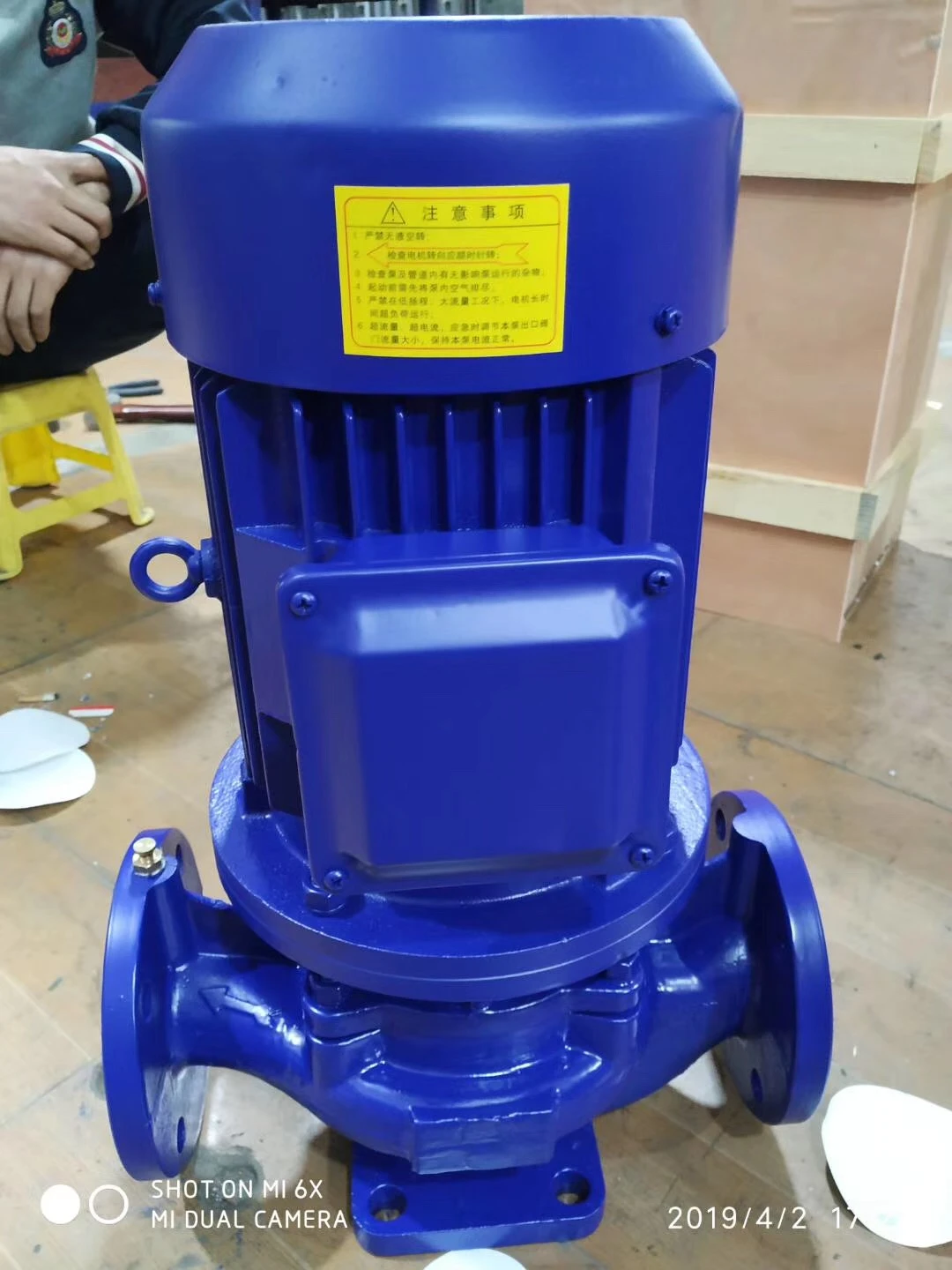
Vertical double suction pumps are a class of centrifugal pumps designed for handling large volumes of fluid with moderate head requirements. Positioned within the fluid conveyance segment of various industrial chains – including water treatment, power generation, district heating, and large-scale agricultural irrigation – these pumps are characterized by their double-suction impeller configuration. This design minimizes axial thrust, enhancing stability and enabling the use of lower-cost bearings. Unlike horizontally mounted centrifugal pumps, vertical configurations reduce footprint requirements and simplify installation in applications where space is constrained, or submerged pump operation is necessary. Core performance indicators include flow rate (typically expressed in m³/h or GPM), head (meters or feet), power consumption (kW or HP), and Net Positive Suction Head Required (NPSHr), all of which are critical for ensuring reliable operation and preventing cavitation. The selection of a vertical double suction pump involves a careful analysis of system requirements, fluid properties, and long-term operational costs.
Material Science & Manufacturing
The primary material for vertical double suction pump casings is typically cast iron (ASTM A48 Class 30 or equivalent) due to its cost-effectiveness and machinability. However, for aggressive fluids, stainless steel (304, 316, or duplex grades conforming to ASTM A743) or Alloy 20 are commonly employed to resist corrosion and erosion. Impellers are often manufactured from ductile iron (ASTM A536 Grade 65-45-12) for strength and toughness, or bronze (ASTM B148) for enhanced corrosion resistance in seawater or brackish water applications. Shafts are generally made from high-strength carbon steel (AISI 1045 or equivalent) and undergo hardening and tempering to achieve appropriate mechanical properties. Manufacturing processes begin with patternmaking and sand casting for the casing and impeller components. Critical dimensions are machined to tight tolerances using CNC machining centers. Welding processes, such as shielded metal arc welding (SMAW) or submerged arc welding (SAW) adhering to AWS D1.1 standards, are used for joining components. Impeller balancing is performed to minimize vibration and ensure smooth operation, following ISO 1940-1 guidelines. Parameter control during manufacturing focuses on maintaining dimensional accuracy, surface finish, and material composition through rigorous quality control procedures, including non-destructive testing (NDT) like radiography and ultrasonic testing.
Performance & Engineering
Performance analysis of vertical double suction pumps centers around hydraulic design and system head curves. The double-suction impeller reduces the NPSHr, mitigating cavitation risk, particularly crucial in applications with varying suction conditions. Force analysis involves evaluating radial and axial thrust loads imposed on the shaft and bearings. Axial thrust is minimized by the symmetrical impeller design, but balancing devices (e.g., balance drums or discs) are often incorporated to further reduce loads. Environmental resistance is a key consideration, with pump materials selected based on the fluid’s temperature, pH, and chemical composition. Compliance with API 610 standards (Centrifugal Pumps – Refinery Service) dictates specific requirements for pump design, materials, testing, and documentation. These standards address issues such as mechanical seal selection, bearing lubrication, and vibration monitoring. Engineering also involves proper selection of the driver (electric motor or turbine) and coupling to ensure efficient power transmission and prevent torsional vibrations. Furthermore, consideration must be given to piping system design to minimize head losses and ensure adequate flow distribution. Proper alignment of the pump and driver is essential for extending bearing life and preventing premature failure. Hydraulic Institute standards (ANSI/HI) provide guidelines for pump performance testing and evaluation.
Technical Specifications
| Parameter | Unit | Typical Range | Compliance Standard |
|---|---|---|---|
| Flow Rate | m³/h | 50 - 5000 | ANSI/HI 1.1 |
| Head | m | 10 - 150 | ISO 9906 |
| Power | kW | 5.5 - 500 | IEC 60034-1 |
| NPSHr | m | 2 - 8 | API 610 |
| Casing Material | - | Cast Iron, Stainless Steel | ASTM A48, ASTM A743 |
| Impeller Material | - | Ductile Iron, Bronze | ASTM A536, ASTM B148 |
Failure Mode & Maintenance
Common failure modes in vertical double suction pumps include bearing failure (due to misalignment, improper lubrication, or overload), impeller cavitation (caused by insufficient NPSH), seal failure (resulting from abrasion, chemical attack, or improper installation), and casing cracking (induced by thermal stress or excessive pressure). Fatigue cracking in the impeller or shaft can occur due to cyclic loading. Corrosion and erosion of pump components are also prevalent, particularly when handling abrasive or corrosive fluids. Failure analysis often involves visual inspection, non-destructive testing (e.g., dye penetrant testing, ultrasonic testing), and metallurgical analysis to identify the root cause. Maintenance procedures should include regular vibration monitoring, oil analysis, and seal inspection. Bearing lubrication should be performed according to manufacturer's recommendations. Impellers should be inspected for wear and erosion and replaced as needed. Casing cracks can be repaired using welding techniques conforming to AWS D1.1 standards, but complete replacement may be necessary for severe damage. Proper alignment of the pump and driver is crucial for preventing bearing failure and shaft misalignment. Periodic flushing of the pump casing can remove sediment and debris. Following a preventative maintenance schedule, aligned with ISO 2811, is essential for maximizing pump life and minimizing downtime.
Industry FAQ
Q: What is the primary advantage of a double-suction impeller over a single-suction design?
A: The double-suction impeller significantly reduces axial thrust, leading to improved shaft stability, lower bearing loads, and extended pump life. It also lowers the NPSHr, reducing the risk of cavitation, especially in systems with fluctuating suction conditions.
Q: How do I determine the appropriate NPSH available (NPSHa) for my system?
A: NPSHa is calculated based on the system's static head, suction lift, vapor pressure of the fluid, and friction losses in the suction piping. It's crucial to ensure NPSHa exceeds the pump's NPSHr by a sufficient margin (typically 0.5-1 meter) to prevent cavitation.
Q: What material selection considerations are important when pumping abrasive fluids?
A: For abrasive fluids, materials with high hardness and wear resistance are essential. Hard iron alloys, ceramic liners, or hardened stainless steels are commonly used for the impeller and casing. Proper seal selection is also critical to prevent abrasive particles from damaging the seal faces.
Q: What are the implications of operating a pump outside of its BEP (Best Efficiency Point)?
A: Operating outside the BEP leads to reduced efficiency, increased vibration, and potentially cavitation. This can result in higher energy consumption, increased wear, and premature pump failure. The system's operating point should be matched to the pump's BEP as closely as possible.
Q: What is the role of mechanical seals in vertical double suction pumps?
A: Mechanical seals prevent leakage of the pumped fluid along the rotating shaft. They consist of a stationary seal face and a rotating seal face that are held together by spring pressure. Proper seal selection, installation, and maintenance are critical for ensuring reliable operation and preventing fluid loss.
Conclusion
Vertical double suction pumps represent a robust and efficient solution for large-volume fluid transfer in diverse industrial applications. Their design minimizes axial thrust and offers advantages in space-constrained environments. Proper material selection, adhering to relevant industry standards (API 610, ISO 9906, ANSI/HI), and diligent maintenance are paramount to ensuring long-term reliability and minimizing lifecycle costs.
Future advancements in vertical double suction pump technology will likely focus on optimized impeller designs utilizing computational fluid dynamics (CFD) to enhance efficiency, and the integration of condition monitoring systems with predictive maintenance capabilities. Improved sealing technologies and the development of more corrosion-resistant materials will further extend pump life and reduce operating expenses.
-
Comprehensive Guide to Waterproof ORings for Optimal Sealing Solutions
News2026-06-09
-
Septic Pump System Performance Analysis
News2026-06-08
-
pump for septic Material Science
News2026-06-08
-
basement sewer pump Performance Analysis
News2026-06-08
-
submerged pump Performance Engineering
News2026-06-08
-
Septic System Pumps Performance Analysis
News2026-06-08
-
septic system pump Material Science and Manufacturing
News2026-06-07
-
pump for septic tank Material Science Manufacturing
News2026-06-07
-
submersible sewage pump Material Science
News2026-06-07
-
Sewage Ejector Material Science and Manufacturing
News2026-06-07
-
Ejection Pump Material Science
News2026-06-07
-
pump submersible Performance Analysis
News2026-06-06
-
ejector pumps Performance Engineering
News2026-06-06
-
basement ejector pump Material Science Manufacturing
News2026-06-06
-
Septic Tanks Pumping Performance Analysis
News2026-06-06




