English
- Afrikaans
- Albanian
- Amharic
- Arabic
- Armenian
- Azerbaijani
- Basque
- Belarusian
- Bengali
- Bosnian
- Bulgarian
- Catalan
- Cebuano
- Corsican
- Croatian
- Czech
- Danish
- Dutch
- English
- Esperanto
- Estonian
- Finnish
- French
- Frisian
- Galician
- Georgian
- German
- Greek
- Gujarati
- Haitian Creole
- hausa
- hawaiian
- Hebrew
- Hindi
- Miao
- Hungarian
- Icelandic
- igbo
- Indonesian
- irish
- Italian
- Japanese
- Javanese
- Kannada
- kazakh
- Khmer
- Rwandese
- Korean
- Kurdish
- Kyrgyz
- Lao
- Latin
- Latvian
- Lithuanian
- Luxembourgish
- Macedonian
- Malgashi
- Malay
- Malayalam
- Maltese
- Maori
- Marathi
- Mongolian
- Myanmar
- Nepali
- Norwegian
- Norwegian
- Occitan
- Pashto
- Persian
- Polish
- Portuguese
- Punjabi
- Romanian
- Russian
- Samoan
- Scottish Gaelic
- Serbian
- Sesotho
- Shona
- Sindhi
- Sinhala
- Slovak
- Slovenian
- Somali
- Spanish
- Sundanese
- Swahili
- Swedish
- Tagalog
- Tajik
- Tamil
- Tatar
- Telugu
- Thai
- Turkish
- Turkmen
- Ukrainian
- Urdu
- Uighur
- Uzbek
- Vietnamese
- Welsh
- Bantu
- Yiddish
- Yoruba
- Zulu

Telephone: +86 13120555503
Email: frank@cypump.com


Apr . 01, 2024 17:55 Back to list
topnotch oem rubber lined slurry pump for superior abrasion resistance
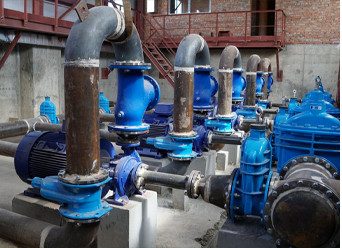
Introduction
Rubber lined slurry pumps are critical components in industries dealing with abrasive or corrosive fluids, including mining, wastewater treatment, chemical processing, and dredging. These pumps, characterized by a metallic pump casing protected by a rubber lining, offer a robust solution for handling challenging slurry applications. The core function is to efficiently and reliably transport slurries – mixtures of liquids and solid particles – over varying distances and elevations. The “top-notch oem rubber lined slurry pump for superior...” designation implies a focus on optimized design, premium materials, and adherence to stringent quality control measures resulting in extended service life, minimized downtime, and reduced total cost of ownership. A key performance indicator for these pumps is their ability to maintain efficiency and structural integrity despite continuous exposure to abrasive wear and chemical attack. This guide details the material science, manufacturing processes, performance characteristics, potential failure modes, and maintenance requirements associated with high-performance rubber lined slurry pumps. The OEM (Original Equipment Manufacturer) designation highlights bespoke engineering for specific application demands.
Material Science & Manufacturing
The performance of a rubber lined slurry pump is fundamentally dependent on the synergistic properties of its constituent materials. The pump casing is typically constructed from high-strength cast iron or ductile iron, providing the structural backbone. However, the interior surfaces exposed to the slurry are lined with a specialized rubber compound. Common rubber materials include natural rubber (NR), styrene-butadiene rubber (SBR), chloroprene rubber (CR - Neoprene), ethylene propylene diene monomer (EPDM), and polyurethane (PU). Natural rubber offers excellent abrasion resistance but limited chemical resistance. SBR provides a balance of properties at a lower cost. Chloroprene rubber demonstrates good resistance to oils, chemicals, and weathering. EPDM excels in resistance to heat, ozone, and weathering, while polyurethane offers superior abrasion and cut resistance but can be susceptible to hydrolysis. The selection of the rubber lining is dictated by the slurry’s chemical composition, particle size distribution, impact velocity, and operating temperature.
Manufacturing involves several key processes. The pump casing is typically produced via sand casting, followed by meticulous surface preparation to ensure optimal rubber adhesion. Rubber lining is usually applied using a vulcanization process. This involves applying a layer of uncured rubber onto the prepared casing surface, then curing it under heat and pressure. The vulcanization process cross-links the rubber polymers, creating a durable, chemically resistant barrier. Precise control of temperature, pressure, and curing time is critical to achieving optimal bond strength and lining integrity. Quality control includes rigorous inspection for voids, delamination, and uneven lining thickness. The impeller, often made of high-chrome iron, undergoes a separate casting and machining process, followed by balancing to minimize vibration and maximize hydraulic efficiency. Shaft materials are generally alloy steels, chosen for their high tensile strength and resistance to torsional stress.
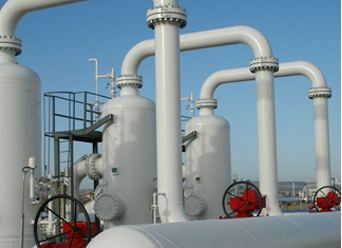
Performance & Engineering
The performance of a rubber lined slurry pump is governed by principles of fluid mechanics and material science. Key performance parameters include flow rate (capacity), head (pressure), efficiency, and Net Positive Suction Head Required (NPSHr). Flow rate is dependent on impeller diameter, rotational speed, and slurry characteristics. Head is influenced by impeller design, casing geometry, and slurry density. Efficiency represents the ratio of hydraulic power output to mechanical power input and is affected by internal losses due to friction and turbulence. NPSHr is the minimum absolute pressure required at the pump suction to prevent cavitation, a phenomenon that can cause significant erosion and damage.
Engineering considerations are paramount in pump design. Force analysis is crucial to ensure the structural integrity of the pump casing and impeller under operating loads. Finite Element Analysis (FEA) is often employed to simulate stress distributions and identify potential weak points. Environmental resistance, particularly corrosion and erosion, is addressed through careful material selection and lining thickness. Compliance with industry standards, such as those set by Hydraulic Institute (HI) and API (American Petroleum Institute), is essential for ensuring pump reliability and safety. Pump selection requires a thorough understanding of the slurry’s properties, including solids concentration, particle size, specific gravity, and chemical composition. Correct pump sizing is critical for optimizing performance and minimizing wear.
Technical Specifications
| Parameter | Unit | Typical Range | Material |
|---|---|---|---|
| Flow Rate | m³/hr | 10 - 1000 | Variable based on impeller |
| Head | m | 10 - 120 | Impeller design & speed |
| Maximum Solids Concentration | % by weight | Up to 70 | Rubber Lining |
| Maximum Particle Size | mm | Up to 100 | Impeller passage |
| Operating Temperature | °C | -40 to 150 | Rubber Compound |
| Casing Material | - | Cast Iron, Ductile Iron | ASTM A48 |
Failure Mode & Maintenance
Rubber lined slurry pumps are susceptible to several failure modes. Abrasion is a primary concern, particularly in applications involving high solids concentration and large particle sizes. This leads to gradual wear of the rubber lining and impeller. Corrosion occurs when the slurry contains corrosive chemicals, resulting in degradation of the rubber lining and pump casing. Fatigue cracking can develop in the pump casing due to cyclic loading and stress concentration. Delamination of the rubber lining occurs when the bond between the rubber and metal weakens, often due to improper surface preparation or curing. Cavitation, caused by insufficient NPSH, leads to erosion of the impeller and casing.
Preventative maintenance is crucial for extending pump life. Regular inspection of the rubber lining for wear and damage is essential. Monitoring pump vibration and bearing temperature can detect early signs of mechanical problems. Periodic cleaning of the pump casing and impeller removes abrasive deposits. Lubrication of bearings and seals prevents wear and corrosion. Repair procedures include patching or replacing worn rubber lining sections, repairing or replacing damaged impellers, and replacing worn bearings and seals. Proper storage of spare parts and adherence to a scheduled maintenance program are vital for minimizing downtime and maximizing pump reliability. Detailed failure analysis should be conducted to identify root causes and implement corrective actions.
Industry FAQ
Q: What rubber lining is best for handling highly abrasive silica slurries?
A: For highly abrasive silica slurries, a high-natural rubber (NR) lining with a hardness durometer between 60-70 Shore A is generally recommended. NR exhibits excellent abrasion resistance, which is critical when handling hard particles like silica. However, consider adding a chemical resistance enhancer if the slurry also contains corrosive components.
Q: How does impeller design affect pump efficiency when handling slurries with large particle sizes?
A: Impeller design significantly impacts efficiency. For slurries with large particles, an open or semi-open impeller is preferred. These designs minimize clogging and allow solids to pass through more easily. A larger impeller passage is also crucial to prevent excessive wear and maintain flow rate. However, these designs generally have lower efficiencies compared to closed impellers in clean fluid applications.
Q: What are the key indicators of cavitation in a rubber lined slurry pump?
A: Key indicators include a rattling or knocking noise originating from the pump, reduced flow rate, increased vibration, and visible pitting or erosion on the impeller and casing. Regularly monitoring NPSHa (Net Positive Suction Head Available) and comparing it to NPSHr (Net Positive Suction Head Required) is also crucial for preventing cavitation.
Q: How often should the rubber lining be inspected for wear?
A: The frequency of inspection depends on the abrasiveness of the slurry. For highly abrasive slurries, inspections should be conducted monthly or even weekly. For less abrasive slurries, quarterly or semi-annual inspections may be sufficient. Documenting inspection findings and tracking wear rates is essential for predictive maintenance planning.
Q: What is the impact of slurry velocity on rubber lining wear?
A: Higher slurry velocities generally lead to increased wear rates. Excessive velocity causes greater impact forces between the solid particles and the rubber lining. Optimizing pump speed and pipe diameter to maintain a moderate slurry velocity is crucial for minimizing wear. Velocity control can also be achieved through the use of wear-resistant coatings or liners in piping systems.
Conclusion
The “top-notch oem rubber lined slurry pump for superior...” represents a critical engineering solution for industries confronting the challenges of abrasive and corrosive slurry handling. Successful operation relies on a thorough understanding of material properties, meticulous manufacturing processes, and diligent maintenance practices. Optimizing pump selection based on specific slurry characteristics is paramount for maximizing efficiency, minimizing downtime, and achieving a low total cost of ownership. The selection of the appropriate rubber compound and a robust lining application process are non-negotiable for long-term reliability.
Future advancements in rubber lining technology will likely focus on developing new materials with enhanced abrasion and chemical resistance, as well as improved bonding techniques to prevent delamination. The integration of smart sensors and predictive maintenance algorithms will further optimize pump performance and extend service life. Continued adherence to industry standards and best practices will remain crucial for ensuring the safe and reliable operation of these vital pieces of industrial equipment.
-
Precision at the Pump: How Better Machining Protects Flow and Uptime
News2026-11-20
-
Why Pump Reliability Begins Before the First Drop of Fluid
News2026-11-20
-
Beyond the Pump: Designing Safer Access Around Critical Water Infrastructure
News2026-11-20
-
Why Pumping Stations Depend on the Infrastructure Beneath the Pumps
News2026-11-20
-
Beyond the Pump Room: How Smarter Loading Protects Industrial Equipment
News2026-11-19
-
When Pumps Stop: Designing More Resilient Power for Critical Pumping Systems
News2026-11-19
-
The Hidden Role of Dust and Gas Monitoring in Reliable Pump Operations
News2026-11-19
-
The Hidden Role of Mineral Compounds in Extending Industrial Pump Lifespan
News2026-10-12
-
Why Pump System Reliability Depends on Precision Hose Assembly Methods
News2026-09-15
-
How Advanced Imaging Films Are Transforming Pump Component Quality Control
News2026-08-25
-
How Advanced Filtration Protects Pump Systems from Premature Wear and Costly Downtime
News2026-08-25
-
How Steel Material Selection Drives Pump Reliability in Heavy-Duty Systems
News2026-08-25
-
Ensuring Pump System Efficiency: The Role of High-Quality Pipe Fittings and Tubing
News2026-08-24
-
Optimizing Fluid Dynamics and Material Consistency in Industrial Processing
News2026-08-18
-
Innovations and Challenges in Hydraulic Systems for Heavy Machinery
News2026-08-13




