


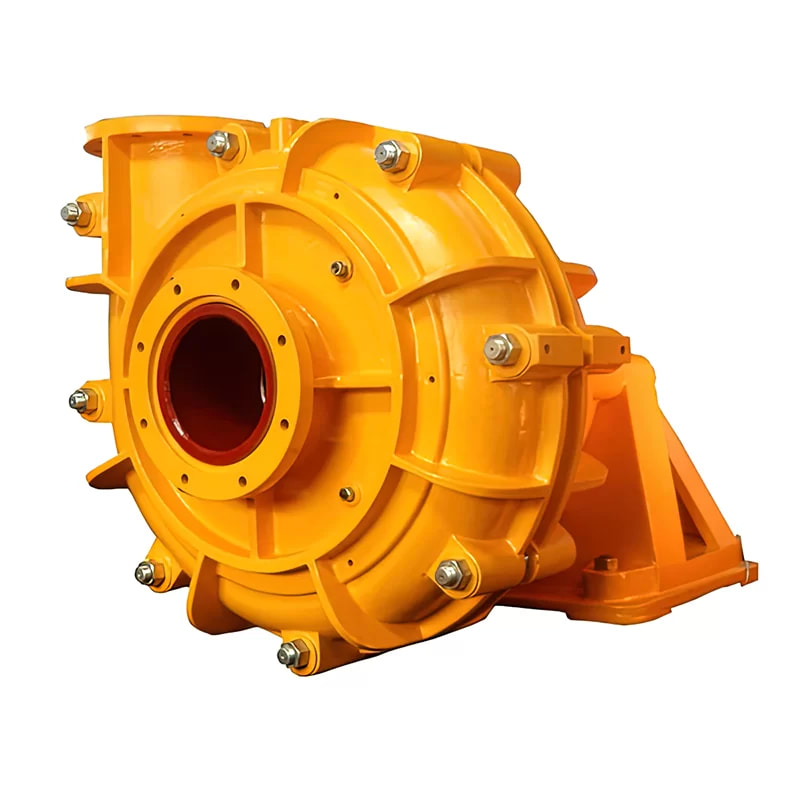
The china dredge pump price for sale reveals a rapidly maturing market focused on high-end industrial engineering. In the broad and complex realm of fluid dynamics, conventional liquid transport systems are heavily optimized for clear-water and low-viscosity applications. However, as global infrastructural demands grow, modern industrial sectors—ranging from municipal wastewater treatment to complex marine engineering and heavy-duty mineral processing—require fluid management systems capable of withstanding extreme mechanical stress. The evolution of this pumping infrastructure is no longer simply about moving basic liquids from point A to point B; rather, it is a highly sophisticated engineering discipline focused on managing dense, highly abrasive slurries with maximum efficiency, superior cavitation resistance, and absolute minimal operational downtime.
The Critical Flaws of Conventional Pumping Systems in Abrasive Environments
In standard industrial setups, centrifugal pumps are engineered with the assumption that the medium being transported contains negligible particulate matter. When these conventional units are abruptly introduced to harsh environments containing coarse sand, jagged gravel, or dense industrial mud, they face immediate and catastrophic wear. The over-current parts, particularly the impellers, volute liners, and throat bushes, degrade at an accelerated rate. This rapid degradation leads to a severe loss of suction capacity, an increase in internal recirculation, and ultimately, a plummeting overall efficiency. For sectors dealing with continuous sediment management, this translates to unacceptable operational bottlenecks and astronomical maintenance expenditures. The industry has therefore been forced to pivot towards specialized, heavy-duty solutions that fundamentally rethink the architectural basics of fluid transport under extreme conditions.
Advanced Structural Engineering: The Dynamics of Single vs. Double Casing
To adequately handle varying scales of demanding dredging and slurry transport operations, uncompromising structural integrity is paramount. Advanced engineering in this specialized field often begins with a meticulously planned single-stage, single-suction cantilever horizontal structure for mid-range applications. This foundational design offers incredible versatility, allowing for the seamless integration of both built-in bracket types and advanced integrated gearbox options, providing operators with necessary flexibility. However, as the scale of the operation increases—requiring the continuous transportation of massive volumes of heavy slurries—premium manufacturers must transition to a double pump casing architecture. This dual-layer structural stability is essential to maintain mechanical integrity under extreme high-pressure scenarios. It ensures that operations in aggressive environments proceed without any risk of structural deformation, thereby safeguarding the entire fluid processing pipeline against catastrophic pressure failures.
Material Science Integration: The 50HRC Alloy Standard
Longevity in high-abrasion fluid transport is dictated almost entirely by the relentless advancements in material science. The continuous, high-velocity impact of solid particles creates a punishing internal environment that standard commercial cast iron simply cannot survive. Today’s high-efficiency fluid delivery solutions rely on robust anti-wear alloy cast iron for all critical over-current components, including the impeller, sheath, and liner. By strictly utilizing materials that achieve a hardness rating of not less than 50HRC, these internal components strike an optimal and necessary balance between sheer impact resistance and prolonged abrasion endurance. This metallurgical breakthrough significantly extends the operational lifespan of the equipment, providing a stable, reliable backbone for continuous industrial processes that operate twenty-four hours a day, seven days a week.
Optimizing Hydraulic Performance and Cavitation Resilience
A persistent and highly destructive challenge in handling thick, heavy slurries is the risk of cavitation, a phenomenon that can rapidly destroy even the strongest pump internals. To aggressively combat this, premium developers of china heavy duty slurry pumps Suppliers focus a massive amount of research and development on superior cavitation performance. By engineering significantly wider impeller flow channels, these advanced systems can facilitate incredibly powerful flow capacities—sometimes ranging from 600 to 9000 cubic meters per hour—while maintaining the strong suction force necessary for deep digging and high-concentration material extraction. Furthermore, a sharply dropping performance curve allows these sophisticated systems to be highly adaptable to sudden changes in displacement. This hydraulic flexibility gives operators on the ground the ability to adjust rotational speeds or modify impeller diameters to precisely suit fluctuating site requirements without sacrificing overall system efficiency.
The Economic Imperative of "Service Life Matching"
Beyond raw hydraulic performance and structural robustness, modern industrial facility managers are increasingly focused on the total cost of ownership over the lifespan of their capital equipment. A critical design philosophy emerging among top-tier, high-quality providers is the concept of "service life matching." In traditional pumping setups, different internal components wear out at vastly different rates, requiring constant, fragmented maintenance interventions that disrupt production. By meticulously engineering and synchronizing the replacement cycles of all major wear parts, modern abrasive fluid systems allow for singular, comprehensive maintenance windows. This strategic alignment effectively slashes expensive manual labor costs, dramatically reduces unexpected operational downtime, and ensures that the entire fluid delivery solution operates at peak efficiency throughout its lifecycle. Ultimately, the integration of these advanced dredging technologies represents a paradigm shift in how heavy industries manage their most challenging fluid handling requirements.




