English
- Afrikaans
- Albanian
- Amharic
- Arabic
- Armenian
- Azerbaijani
- Basque
- Belarusian
- Bengali
- Bosnian
- Bulgarian
- Catalan
- Cebuano
- Corsican
- Croatian
- Czech
- Danish
- Dutch
- English
- Esperanto
- Estonian
- Finnish
- French
- Frisian
- Galician
- Georgian
- German
- Greek
- Gujarati
- Haitian Creole
- hausa
- hawaiian
- Hebrew
- Hindi
- Miao
- Hungarian
- Icelandic
- igbo
- Indonesian
- irish
- Italian
- Japanese
- Javanese
- Kannada
- kazakh
- Khmer
- Rwandese
- Korean
- Kurdish
- Kyrgyz
- Lao
- Latin
- Latvian
- Lithuanian
- Luxembourgish
- Macedonian
- Malgashi
- Malay
- Malayalam
- Maltese
- Maori
- Marathi
- Mongolian
- Myanmar
- Nepali
- Norwegian
- Norwegian
- Occitan
- Pashto
- Persian
- Polish
- Portuguese
- Punjabi
- Romanian
- Russian
- Samoan
- Scottish Gaelic
- Serbian
- Sesotho
- Shona
- Sindhi
- Sinhala
- Slovak
- Slovenian
- Somali
- Spanish
- Sundanese
- Swahili
- Swedish
- Tagalog
- Tajik
- Tamil
- Tatar
- Telugu
- Thai
- Turkish
- Turkmen
- Ukrainian
- Urdu
- Uighur
- Uzbek
- Vietnamese
- Welsh
- Bantu
- Yiddish
- Yoruba
- Zulu

Telephone: +86 13120555503
Email: frank@cypump.com


Apr . 01, 2024 17:55 Back to list
supply submersible mixed flow pump Performance Analysis
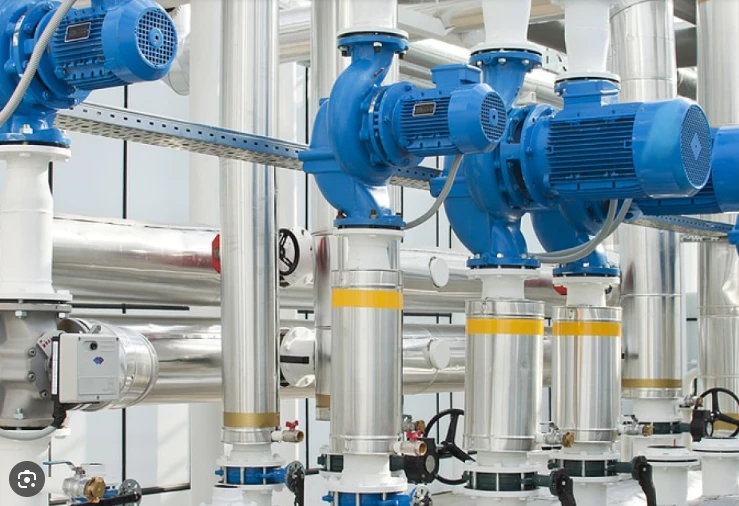
Introduction
Submersible mixed flow pumps are centrifugal pumps designed for efficient fluid transfer in submerged applications, primarily utilized in wastewater treatment, drainage, irrigation, and industrial processes. Positioned within the pumping industry as a versatile alternative to traditional centrifugal and positive displacement pumps, they bridge the gap between axial and radial flow designs. These pumps excel at handling fluids with varying solids content and are characterized by their compact design, ease of installation, and relatively high head generation compared to axial flow pumps. Core performance metrics revolve around flow rate (m³/hr), head (meters), pump efficiency (%), and the maximum solids handling capability (%). The increasing demand for efficient wastewater management and flood control systems is driving significant growth in this segment, coupled with a need for pumps capable of reliable, long-term operation in harsh environmental conditions. A primary industry pain point centers around abrasion resistance of pump components, particularly impellers and casings, when handling abrasive solids, and maintaining acceptable efficiency levels over the pump’s lifecycle.
Material Science & Manufacturing
The construction of submersible mixed flow pumps relies heavily on specific material selections to ensure corrosion resistance, mechanical strength, and longevity. Pump casings are commonly manufactured from cast iron (ASTM A48 Class 30), ductile iron (ASTM A536 65-45-12), or stainless steel (304/316 – ASTM A743). The choice depends on the fluid being pumped and the operating environment. Impellers, crucial for fluid acceleration, are typically manufactured from high-grade stainless steel (316L, 17-4PH – ASTM A992) due to its superior resistance to erosion and corrosion. Shafts are generally constructed from alloy steel (4140 – ASTM A578) and subjected to heat treatment for enhanced tensile strength and fatigue resistance. Seals are often composed of silicon carbide (SiC) or tungsten carbide (WC) against ceramic components to provide robust sealing performance. Manufacturing processes involve investment casting for intricate impeller designs, sand casting for casings, and CNC machining for precise component fabrication. Welding processes (SMAW, GTAW – AWS D1.1) are employed for joining casing sections and shaft couplings. Critical parameters during manufacturing include impeller balancing to minimize vibration, precise alignment of rotating components to reduce bearing loads, and thorough non-destructive testing (NDT) – radiographic testing (RT – ASTM E94) and ultrasonic testing (UT – ASTM E797) – to detect internal flaws. Chemical compatibility assessments are performed to verify material suitability based on the fluid’s pH, chloride content, and other corrosive agents.
Performance & Engineering
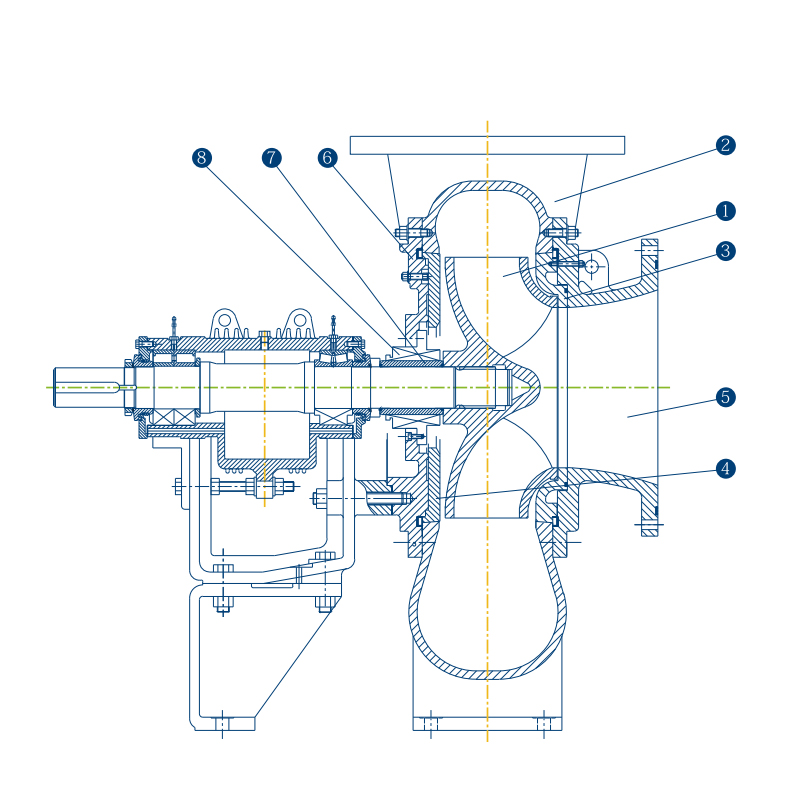
The performance of a submersible mixed flow pump is governed by principles of fluid dynamics, specifically Bernoulli’s equation and the affinity laws for pumps. Force analysis involves calculating radial and axial thrust forces on the impeller, which necessitate robust bearing design and shaft support. Environmental resistance is paramount, with pumps designed to withstand hydrostatic pressure, corrosive environments, and potential impact damage. Compliance requirements are stringent, varying by region. In Europe, the CE marking mandates adherence to the Water Hammer Directive 2009/25/EC and the Machinery Directive 2006/42/EC. North America follows Hydraulic Institute (HI) standards and EPA regulations for wastewater applications. Functional implementation relies on a sealed motor design (typically induction motors – IEC 60034) coupled directly to the pump shaft, encased within a water-tight housing. Cable entry points are critical areas requiring robust sealing (IP68 – IEC 60529) to prevent water ingress. Pump curves (head vs. flow rate, efficiency vs. flow rate) are generated through rigorous hydraulic testing (ISO 9906) to characterize pump performance across the operating range. Finite element analysis (FEA) is commonly used to optimize impeller geometry, casing design, and shaft strength, minimizing stress concentrations and maximizing hydraulic efficiency. Cavitation prevention is achieved through careful net positive suction head (NPSH) calculations and impeller design.
Technical Specifications
| Parameter | Unit | Typical Value (Small Pump) | Typical Value (Large Pump) |
|---|---|---|---|
| Flow Rate | m³/hr | 5 - 50 | 200 - 1000 |
| Total Head | m | 10 - 30 | 50 - 150 |
| Motor Power | kW | 0.75 - 7.5 | 30 - 150 |
| Maximum Solids Handling | mm | 5 - 25 | 50 - 100 |
| Impeller Diameter | mm | 150 - 300 | 500 - 900 |
| Operating Temperature | °C | 0 - 40 | 0 - 60 |
Failure Mode & Maintenance
Submersible mixed flow pumps are susceptible to several failure modes. Fatigue cracking in the impeller, particularly around the blade roots, is common due to cyclic loading and stress concentrations. Erosion-corrosion, caused by abrasive solids in the fluid, leads to material loss in the impeller and casing, reducing pump efficiency. Bearing failure, resulting from inadequate lubrication, misalignment, or excessive loading, causes increased vibration and potential pump seizure. Seal failure, due to wear or damage, results in water ingress into the motor compartment, leading to electrical shorts and motor failure. Oxidation and corrosion of metallic components, particularly in harsh environments, weakens structural integrity. Preventive maintenance involves regular inspection of seals and bearings, lubrication according to manufacturer’s recommendations (ISO 287), vibration analysis (ISO 10816) to detect bearing wear, and periodic impeller inspection for erosion and cracking. Corrective maintenance includes impeller replacement, seal replacement, bearing replacement, and casing repair (welding or patching). Pump performance monitoring (flow rate, head, power consumption) can identify deviations from baseline performance, indicating potential issues. Proper installation practices, including alignment with discharge piping and adequate strainer installation to prevent large solids from entering the pump, are critical for maximizing pump life.
Industry FAQ
Q: What is the primary difference between a mixed flow pump and a centrifugal pump in a submersible application?
A: While both are centrifugal pumps, a mixed flow pump has an impeller that discharges fluid with both radial and axial components, resulting in higher head generation at a given flow rate compared to a purely radial flow centrifugal pump. This makes mixed flow pumps better suited for applications requiring higher lift, such as wastewater discharge where significant elevation gains are involved.
Q: How does the material selection impact the lifespan of a submersible pump handling abrasive fluids?
A: Material selection is critical. Utilizing high-chrome cast iron or hardened stainless steels (like 450 martensitic stainless steel) for the impeller and casing significantly extends lifespan by resisting abrasive wear. Hardfacing techniques can also be applied to critical wear areas. Regular inspection and replacement of worn components are also essential.
Q: What are the key considerations for cable selection and termination in a submersible pump installation?
A: Cable selection must consider the fluid being pumped, operating temperature, and submergence depth. Materials should be oil-resistant and UV-stabilized. Proper cable termination is vital to prevent water ingress; using marine-grade epoxy resin and heat-shrink tubing is recommended, adhering to IEC 60529 standards for watertightness.
Q: What are the advantages of using a submersible pump versus an external pump with a suction lift?
A: Submersible pumps eliminate the need for priming and suction lift, simplifying installation and reducing the risk of cavitation. They also operate more quietly and are less susceptible to damage from flooding. The absence of a long suction pipe reduces frictional losses and improves overall system efficiency.
Q: How do I determine the appropriate pump size for a specific wastewater application?
A: Determining pump size requires analyzing the total dynamic head (TDH), flow rate requirements, and the solids content of the wastewater. TDH includes static head, friction losses in the piping system, and velocity head. Pump curves should be consulted to select a pump that operates near its best efficiency point (BEP) for the given operating conditions. Hydraulic modeling software can also be used for complex systems.
Conclusion
Submersible mixed flow pumps represent a robust and efficient solution for a wide range of fluid transfer applications, particularly in wastewater management and industrial processes. Their inherent design advantages, combined with appropriate material selection and adherence to stringent manufacturing standards, ensure reliable and long-term performance. However, understanding potential failure modes, such as impeller erosion, bearing failure, and seal degradation, is crucial for implementing effective preventative maintenance programs and maximizing pump lifespan.
Future advancements in submersible pump technology will likely focus on optimizing impeller designs using computational fluid dynamics (CFD), incorporating advanced sensor technology for predictive maintenance, and developing more corrosion-resistant materials. Integration with smart control systems and IoT platforms will also enable remote monitoring and optimization of pump performance, further enhancing efficiency and reducing operational costs. The continuing demand for sustainable and efficient water management solutions will continue to drive innovation in this critical sector.
-
Precision at the Pump: How Better Machining Protects Flow and Uptime
News2026-11-20
-
Why Pump Reliability Begins Before the First Drop of Fluid
News2026-11-20
-
Beyond the Pump: Designing Safer Access Around Critical Water Infrastructure
News2026-11-20
-
Why Pumping Stations Depend on the Infrastructure Beneath the Pumps
News2026-11-20
-
Beyond the Pump Room: How Smarter Loading Protects Industrial Equipment
News2026-11-19
-
When Pumps Stop: Designing More Resilient Power for Critical Pumping Systems
News2026-11-19
-
The Hidden Role of Dust and Gas Monitoring in Reliable Pump Operations
News2026-11-19
-
The Hidden Role of Mineral Compounds in Extending Industrial Pump Lifespan
News2026-10-12
-
Why Pump System Reliability Depends on Precision Hose Assembly Methods
News2026-09-15
-
How Advanced Imaging Films Are Transforming Pump Component Quality Control
News2026-08-25
-
How Advanced Filtration Protects Pump Systems from Premature Wear and Costly Downtime
News2026-08-25
-
How Steel Material Selection Drives Pump Reliability in Heavy-Duty Systems
News2026-08-25
-
Ensuring Pump System Efficiency: The Role of High-Quality Pipe Fittings and Tubing
News2026-08-24
-
Optimizing Fluid Dynamics and Material Consistency in Industrial Processing
News2026-08-18
-
Innovations and Challenges in Hydraulic Systems for Heavy Machinery
News2026-08-13




