English
- Afrikaans
- Albanian
- Amharic
- Arabic
- Armenian
- Azerbaijani
- Basque
- Belarusian
- Bengali
- Bosnian
- Bulgarian
- Catalan
- Cebuano
- Corsican
- Croatian
- Czech
- Danish
- Dutch
- English
- Esperanto
- Estonian
- Finnish
- French
- Frisian
- Galician
- Georgian
- German
- Greek
- Gujarati
- Haitian Creole
- hausa
- hawaiian
- Hebrew
- Hindi
- Miao
- Hungarian
- Icelandic
- igbo
- Indonesian
- irish
- Italian
- Japanese
- Javanese
- Kannada
- kazakh
- Khmer
- Rwandese
- Korean
- Kurdish
- Kyrgyz
- Lao
- Latin
- Latvian
- Lithuanian
- Luxembourgish
- Macedonian
- Malgashi
- Malay
- Malayalam
- Maltese
- Maori
- Marathi
- Mongolian
- Myanmar
- Nepali
- Norwegian
- Norwegian
- Occitan
- Pashto
- Persian
- Polish
- Portuguese
- Punjabi
- Romanian
- Russian
- Samoan
- Scottish Gaelic
- Serbian
- Sesotho
- Shona
- Sindhi
- Sinhala
- Slovak
- Slovenian
- Somali
- Spanish
- Sundanese
- Swahili
- Swedish
- Tagalog
- Tajik
- Tamil
- Tatar
- Telugu
- Thai
- Turkish
- Turkmen
- Ukrainian
- Urdu
- Uighur
- Uzbek
- Vietnamese
- Welsh
- Bantu
- Yiddish
- Yoruba
- Zulu

Telephone: +86 13120555503
Email: frank@cypump.com


Apr . 01, 2024 17:55 Back to list
supply double suction water pump Performance Engineering
Introduction
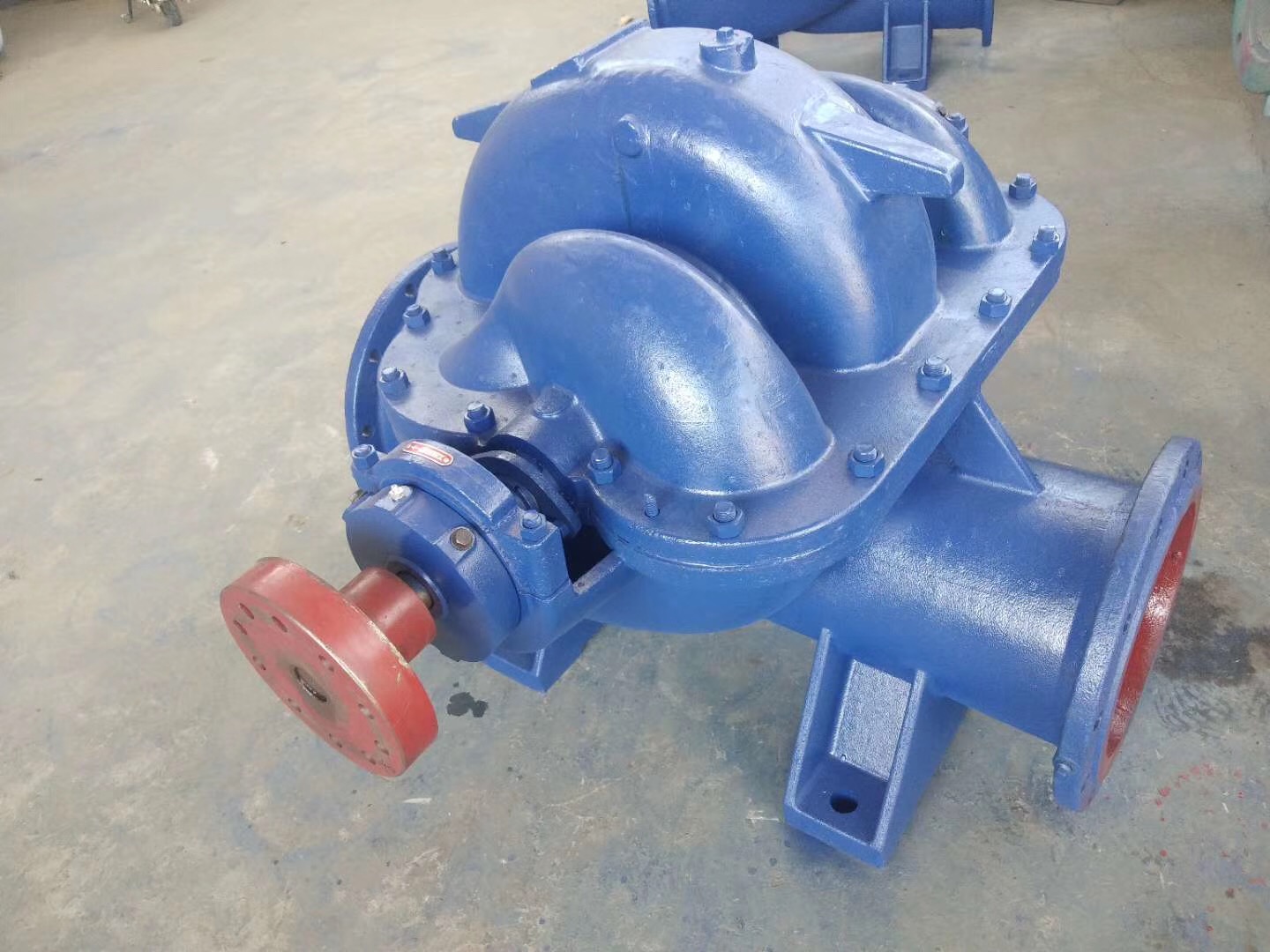
The supply double suction water pump is a centrifugal pump configuration designed for high-volume fluid transfer, commonly employed in water supply systems, irrigation, firefighting, and industrial processes. Its defining characteristic is the intake of fluid from both sides of the impeller, minimizing axial thrust and enabling higher flow rates compared to single-suction pumps of similar size. Positioned within the industry chain, these pumps represent a crucial element between the power source (typically electric motors) and the application requiring fluid delivery. Core performance metrics center around volumetric flow rate (typically measured in m³/hr or GPM), total dynamic head (TDH – measured in meters or feet), and overall pump efficiency. The operational reliability and energy consumption of these pumps directly impact the economic viability of many industrial and municipal applications, making optimized selection and maintenance paramount. The increasing focus on sustainability necessitates attention to pump efficiency and minimizing life-cycle costs.
Material Science & Manufacturing
The construction of a supply double suction water pump relies on materials selected for their corrosion resistance, mechanical strength, and hydraulic properties. Common materials include cast iron (ASTM A126 Class 30 or equivalent), stainless steel (304, 316, or duplex stainless steel for aggressive fluids), and ductile iron (ASTM A536 Grade 65-45-12). The impeller, a critical component, is often manufactured from bronze (e.g., ASTM B148 C92200) or high-grade stainless steel. Shaft materials typically consist of alloy steel (e.g., 4140) and undergo heat treatment to achieve high tensile strength and fatigue resistance. Seals are commonly composed of elastomers like Nitrile (NBR), Viton (FKM), or PTFE, chosen based on fluid compatibility and temperature requirements. Manufacturing processes involve several stages: casting for the pump housing and impeller, machining for precise dimensional accuracy and surface finish, welding for joining structural components, and assembly with careful attention to alignment and sealing. Key parameter control during casting includes sand quality, mold temperature, and pouring rate to minimize porosity and ensure structural integrity. Machining tolerances are critical for maintaining hydraulic efficiency and preventing vibration. Non-destructive testing (NDT) methods, such as ultrasonic testing and radiography, are employed to detect internal flaws in castings and welds. The surface roughness of the impeller is controlled through polishing to reduce friction losses and improve hydraulic performance.
Performance & Engineering
The performance of a supply double suction water pump is fundamentally governed by principles of fluid dynamics, specifically Bernoulli's equation and the affinity laws for centrifugal pumps. Force analysis focuses on hydraulic forces acting on the impeller, radial loads on the shaft bearings, and axial thrust. The double-suction design inherently reduces axial thrust, minimizing bearing loads and extending pump life. Environmental resistance is a critical consideration, particularly in applications involving exposure to corrosive fluids, extreme temperatures, or abrasive particles. Material selection plays a pivotal role in mitigating corrosion and erosion. Pump curves, generated through hydraulic testing (following standards like ISO 9906), delineate the relationship between flow rate, head, efficiency, and power consumption. Compliance requirements vary depending on the application. For potable water systems, pumps must meet NSF/ANSI 61 standards for lead content and material safety. For flammable fluid handling, pumps must comply with ATEX or IECEx directives regarding explosion protection. The Net Positive Suction Head Required (NPSHr) must be carefully considered to prevent cavitation, which can damage the impeller and reduce pump performance. Proper piping design, including suction and discharge pipe diameters and lengths, is essential to minimize head losses and ensure efficient operation.
Technical Specifications
| Parameter | Unit | Typical Range (Small-Medium Pumps) | Typical Range (Large Pumps) |
|---|---|---|---|
| Flow Rate | m³/hr | 10 - 200 | 500 - 5000 |
| Total Dynamic Head | m | 10 - 50 | 80 - 200 |
| Pump Efficiency | % | 65 - 80 | 75 - 88 |
| Motor Power | kW | 1.5 - 30 | 75 - 300 |
| Suction Pipe Diameter | mm | 50 - 200 | 300 - 800 |
| Discharge Pipe Diameter | mm | 40 - 150 | 250 - 600 |
Failure Mode & Maintenance
Supply double suction water pumps are susceptible to several failure modes. Cavitation, caused by insufficient NPSH, leads to impeller erosion and reduced performance. Corrosion, particularly in aggressive fluids, weakens pump components and can cause leaks. Mechanical seal failure results in fluid leakage and potential pump seizure. Bearing failure, often due to improper lubrication or excessive loading, manifests as noise and vibration. Fatigue cracking in the pump housing or impeller can occur under cyclic loading. Delamination of coatings (if applied) can lead to corrosion. Oxidation and scaling can reduce impeller efficiency and flow rate. Preventative maintenance is crucial. This includes regular lubrication of bearings, inspection and replacement of mechanical seals, monitoring vibration levels, and periodic cleaning to remove deposits. Pump performance should be monitored regularly to detect deviations from baseline values. Ultrasonic thickness testing can assess corrosion rates. Alignment checks should be performed after maintenance to ensure proper operation. If cavitation is detected, the NPSH available must be increased by adjusting suction conditions or modifying the piping system. Periodic flushing of the pump and piping system can remove accumulated debris and prevent clogging.
Industry FAQ
Q: What is the primary advantage of a double-suction pump over a single-suction pump for large flow applications?
A: The primary advantage lies in reduced axial thrust. By taking suction from both sides of the impeller, the double-suction design minimizes hydraulic imbalance, leading to lower bearing loads, increased pump life, and the ability to handle significantly higher flow rates without encountering excessive shaft deflection or vibration. This translates to improved reliability and lower maintenance costs.
Q: How do I determine the correct NPSH available in my system to prevent cavitation?
A: NPSH available (NPSHa) is calculated based on the static suction head, vapor pressure of the fluid, and frictional losses in the suction piping. A detailed hydraulic analysis of the suction piping is required, considering pipe diameter, length, fittings, and flow velocity. The calculated NPSHa must exceed the pump's NPSHr (Net Positive Suction Head Required) by a sufficient margin (typically 0.5 - 1 meter) to prevent cavitation.
Q: What material should I specify for a pump handling a corrosive chemical solution?
A: The material selection depends on the specific chemical being handled and its concentration and temperature. Stainless steels (316, duplex) are often suitable for moderate corrosion resistance. For highly corrosive environments, consider more exotic materials like Hastelloy, titanium, or fluoropolymers (e.g., PTFE) for wetted parts. Consulting a corrosion resistance chart and conducting compatibility testing is highly recommended.
Q: What are the key indicators of bearing failure in a double suction pump?
A: Key indicators include increased noise and vibration, elevated bearing temperatures, and the presence of metal particles in the lubricating oil. Regular vibration analysis can detect bearing faults in their early stages. Oil analysis can identify contamination and degradation of the lubricant. A visual inspection during maintenance may reveal signs of bearing wear or damage.
Q: What are the implications of operating a pump outside of its BEP (Best Efficiency Point)?
A: Operating a pump significantly outside of its BEP leads to reduced efficiency, increased energy consumption, and potentially increased vibration and noise. It can also accelerate wear and tear on pump components. Proper system design and pump selection are crucial to ensure operation near the BEP for optimal performance and longevity.
Conclusion
The supply double suction water pump remains a vital component in numerous industrial and municipal applications demanding high-volume fluid transfer. Its performance is inextricably linked to material science, precise manufacturing, and a thorough understanding of fluid dynamics. Effective maintenance, guided by a comprehensive understanding of potential failure modes, is essential for maximizing pump life and minimizing operational costs.
Looking forward, advancements in pump design, such as optimized impeller geometries and variable frequency drives (VFDs), will continue to enhance efficiency and controllability. Increased emphasis on sustainability will drive the adoption of energy-efficient pumps and materials with improved corrosion resistance. Predictive maintenance techniques, leveraging sensor data and machine learning, will further optimize maintenance schedules and prevent unexpected downtime.
-
Comprehensive Guide to Waterproof ORings for Optimal Sealing Solutions
News2026-06-09
-
Septic Pump System Performance Analysis
News2026-06-08
-
pump for septic Material Science
News2026-06-08
-
basement sewer pump Performance Analysis
News2026-06-08
-
submerged pump Performance Engineering
News2026-06-08
-
Septic System Pumps Performance Analysis
News2026-06-08
-
septic system pump Material Science and Manufacturing
News2026-06-07
-
pump for septic tank Material Science Manufacturing
News2026-06-07
-
submersible sewage pump Material Science
News2026-06-07
-
Sewage Ejector Material Science and Manufacturing
News2026-06-07
-
Ejection Pump Material Science
News2026-06-07
-
pump submersible Performance Analysis
News2026-06-06
-
ejector pumps Performance Engineering
News2026-06-06
-
basement ejector pump Material Science Manufacturing
News2026-06-06
-
Septic Tanks Pumping Performance Analysis
News2026-06-06




