English
- Afrikaans
- Albanian
- Amharic
- Arabic
- Armenian
- Azerbaijani
- Basque
- Belarusian
- Bengali
- Bosnian
- Bulgarian
- Catalan
- Cebuano
- Corsican
- Croatian
- Czech
- Danish
- Dutch
- English
- Esperanto
- Estonian
- Finnish
- French
- Frisian
- Galician
- Georgian
- German
- Greek
- Gujarati
- Haitian Creole
- hausa
- hawaiian
- Hebrew
- Hindi
- Miao
- Hungarian
- Icelandic
- igbo
- Indonesian
- irish
- Italian
- Japanese
- Javanese
- Kannada
- kazakh
- Khmer
- Rwandese
- Korean
- Kurdish
- Kyrgyz
- Lao
- Latin
- Latvian
- Lithuanian
- Luxembourgish
- Macedonian
- Malgashi
- Malay
- Malayalam
- Maltese
- Maori
- Marathi
- Mongolian
- Myanmar
- Nepali
- Norwegian
- Norwegian
- Occitan
- Pashto
- Persian
- Polish
- Portuguese
- Punjabi
- Romanian
- Russian
- Samoan
- Scottish Gaelic
- Serbian
- Sesotho
- Shona
- Sindhi
- Sinhala
- Slovak
- Slovenian
- Somali
- Spanish
- Sundanese
- Swahili
- Swedish
- Tagalog
- Tajik
- Tamil
- Tatar
- Telugu
- Thai
- Turkish
- Turkmen
- Ukrainian
- Urdu
- Uighur
- Uzbek
- Vietnamese
- Welsh
- Bantu
- Yiddish
- Yoruba
- Zulu

Telephone: +86 13120555503
Email: frank@cypump.com


Apr . 01, 2024 17:55 Back to list
supply double suction electric water pump Performance Engineering
Introduction
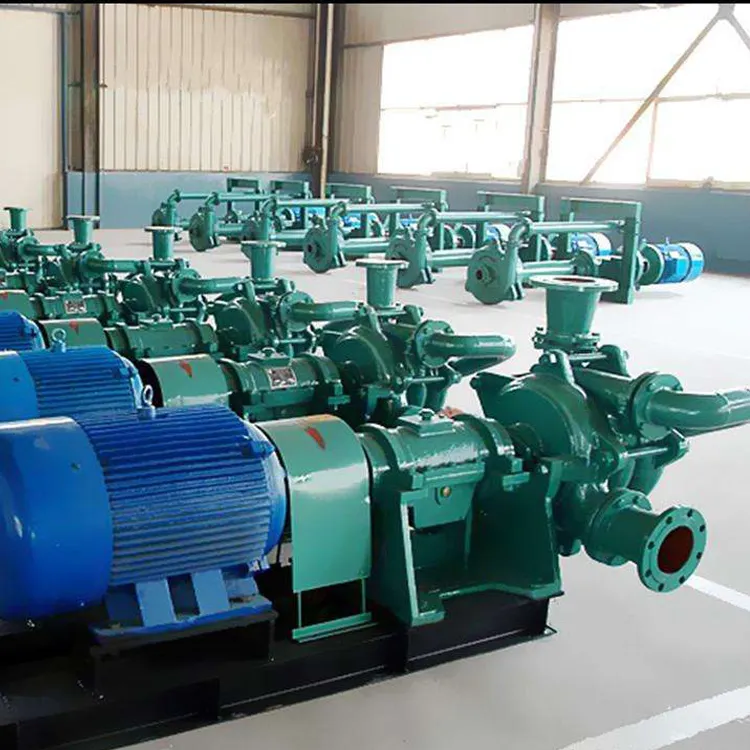
Double suction electric water pumps are centrifugal pumps designed to move fluids by utilizing the rotational energy of an impeller. Characterized by fluid entry on both sides of the impeller, these pumps provide increased flow rates and reduced axial thrust compared to single-suction designs. Within the industrial fluid transfer chain, they represent a crucial component for applications demanding high volumes and moderate head pressures, bridging the gap between raw fluid sources and processing or distribution networks. Core performance indicators include flow rate (m³/h), head (m), power consumption (kW), and Net Positive Suction Head Required (NPSHr). The selection of a double suction pump is often driven by the need to minimize vibration, cavitation risk, and energy losses inherent in high-volume fluid handling systems, making them essential in water treatment plants, power generation facilities, and large-scale irrigation projects. A primary industry pain point revolves around maintaining consistent performance across varying fluid viscosities and preventing premature seal failure due to abrasive particle ingress.
Material Science & Manufacturing
The construction of a double suction pump typically utilizes cast iron (ASTM A126 Class 30 or equivalent), ductile iron (ASTM A536 65-45-12), or stainless steel (304/316 according to ASTM A743). Cast iron offers cost-effectiveness and good machinability but is susceptible to corrosion. Ductile iron provides enhanced strength and impact resistance. Stainless steel offers superior corrosion resistance, crucial for handling aggressive fluids. The impeller is often made of bronze (ASTM B148 Alloy 898) or stainless steel, selected for its resistance to erosion and cavitation. Manufacturing involves several key stages: casting the pump housing, machining critical surfaces (impeller, wear rings, shaft), static balancing of the impeller to minimize vibration, and assembling with mechanical seals (typically silicon carbide vs. carbon, conforming to API 682 standards) and bearings (deep groove ball bearings or cylindrical roller bearings according to ISO 2811). Parameter control during casting is vital to ensure dimensional accuracy and minimize porosity. Precise machining of the impeller vanes and housing volute is critical for optimal hydraulic performance. The welding of pump components, when applicable, must adhere to AWS D1.1 standards to guarantee structural integrity. Non-destructive testing (NDT) such as ultrasonic testing (UT) and magnetic particle inspection (MPI) is employed to detect internal flaws and surface cracks.
Performance & Engineering
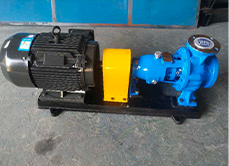
Performance analysis of a double suction pump centers on Bernoulli’s principle and Euler’s pump equation, relating flow rate, head, impeller diameter, and rotational speed. The pump’s hydraulic efficiency is impacted by internal friction losses, recirculation within the impeller, and flow separation in the volute. Force analysis considers radial forces generated by the impeller's pressure distribution and axial thrust, counteracted by balancing discs or opposing impellers in multi-stage designs. Cavitation, a significant failure mode, occurs when the absolute pressure at the impeller inlet falls below the fluid’s vapor pressure, creating vapor bubbles that collapse, causing erosion. NPSHr, a critical parameter, must be lower than the NPSHa (Net Positive Suction Head Available) to prevent cavitation. Environmental resistance is evaluated by considering temperature effects on fluid viscosity and seal material compatibility, as well as the potential for corrosion from exposure to atmospheric conditions or process fluids. Compliance requirements include adherence to ISO 9906 (rotodynamic pumps – hydraulic performance), ISO 5199 (mechanical vibration of rotodynamic pumps), and potentially ATEX certification for pumps operating in explosive atmospheres. Bearing lubrication systems are engineered to provide adequate cooling and reduce friction, extending bearing life and enhancing pump reliability. Proper pump alignment with the motor is crucial to prevent premature seal and bearing failure, typically verified using laser alignment tools conforming to ISO 1940-1.
Technical Specifications
| Parameter | Unit | Typical Value (Range) | Testing Standard |
|---|---|---|---|
| Flow Rate | m³/h | 50 - 1000 (Dependent on Pump Size) | ISO 9906 |
| Head | m | 10 - 80 | ISO 9906 |
| Power | kW | 4 - 200 | IEC 60034-1 |
| NPSHr | m | 2 - 8 | ISO 9906 |
| Maximum Operating Pressure | bar | 10 - 16 | EN 1092-2 |
| Fluid Temperature Range | °C | -20 to +120 (Material Dependent) | DIN EN 13445 |
Failure Mode & Maintenance
Common failure modes in double suction pumps include bearing failure (due to inadequate lubrication, misalignment, or overload), seal failure (caused by abrasion, chemical attack, or thermal expansion), impeller erosion (from handling abrasive fluids or cavitation), and casing cracking (due to fatigue or thermal stress). Fatigue cracking is often initiated at stress concentrators around impeller blades or pump casing welds. Delamination of impeller coatings, if present, can lead to decreased efficiency and increased corrosion. Degradation of seal materials due to chemical incompatibility or high temperatures results in leakage. Oxidation of metallic components, particularly in cast iron pumps, leads to corrosion and reduced structural integrity. Preventive maintenance includes regular lubrication of bearings (following manufacturer's specifications – often utilizing grease conforming to NLGI standards), periodic inspection of seals for wear and leakage, vibration analysis to detect bearing faults or impeller imbalance (ISO 10816), and visual inspection for corrosion and cracking. Corrective maintenance involves replacing worn bearings and seals, repairing or replacing damaged impellers, and addressing casing cracks through welding or replacement. Regular monitoring of pump performance (flow rate, head, power consumption) helps identify deviations from baseline data, indicating potential issues before catastrophic failure occurs.
Industry FAQ
Q: What are the key differences between a double suction and a single suction pump for a given flow rate?
A: For the same flow rate, a double suction pump typically operates at a lower speed and impeller diameter compared to a single suction pump. This reduces the risk of cavitation and minimizes radial thrust on the bearings, leading to longer pump life and reduced vibration. Double suction pumps also generally have higher efficiencies at higher flow rates.
Q: How do I determine the appropriate NPSHr for my application?
A: NPSHr is provided by the pump manufacturer based on the pump's design and operating conditions. You must ensure that the NPSHa (available in your system) is greater than the NPSHr by a sufficient margin (typically 0.5-1 meter) to prevent cavitation. Calculating NPSHa involves considering the atmospheric pressure, fluid vapor pressure, static head, and friction losses in the suction piping.
Q: What material should I specify for the pump if I'm handling a corrosive fluid?
A: The material selection depends on the specific fluid and its concentration. Stainless steel (316 is generally more resistant than 304) is a common choice for many corrosive fluids. However, for highly aggressive chemicals, specialized alloys like Hastelloy or Duplex stainless steel may be required. Consult a chemical compatibility chart and consider performing material testing to ensure long-term resistance.
Q: How often should I replace the mechanical seals?
A: The replacement frequency depends on the fluid being pumped, operating conditions, and seal quality. As a general guideline, seals should be inspected annually and replaced every 2-5 years, or sooner if leakage is observed or vibration analysis indicates seal wear. Maintaining proper lubrication and avoiding dry running are critical for extending seal life.
Q: What are the benefits of using a variable frequency drive (VFD) with a double suction pump?
A: A VFD allows you to adjust the pump's speed to match the actual flow demand, resulting in significant energy savings. It also reduces mechanical stress on the pump and piping system, extending equipment life. VFDs can also improve process control and reduce water hammer effects during pump start-up and shutdown.
Conclusion
The double suction electric water pump remains a foundational technology for large-scale fluid transfer, delivering efficient and reliable operation when properly selected, installed, and maintained. Its performance is inherently linked to meticulous material science, precise manufacturing controls, and a thorough understanding of hydraulic principles. Addressing industry pain points, particularly related to cavitation, corrosion, and seal failure, necessitates a proactive approach to preventive maintenance, rigorous performance monitoring, and the adoption of advanced control systems like VFDs.
Looking ahead, advancements in pump design will likely focus on improved impeller geometries for enhanced efficiency, the incorporation of smart sensors for predictive maintenance, and the development of new materials with superior corrosion resistance. Continued adherence to international standards and best practices in installation and operation will be crucial for maximizing the longevity and minimizing the lifecycle cost of these critical industrial components.
-
Comprehensive Guide to Waterproof ORings for Optimal Sealing Solutions
News2026-06-09
-
drainage pumps Performance and Engineering
News2026-06-09
-
basement bathroom ejector pump Material Science
News2026-06-09
-
Sewer Ejector Pump Cost Performance Analysis
News2026-06-09
-
Septic Tank Pump Replacement Performance Analysis
News2026-06-09
-
septic sump pump Performance and Engineering
News2026-06-09
-
Septic Pump System Performance Analysis
News2026-06-08
-
pump for septic Material Science
News2026-06-08
-
basement sewer pump Performance Analysis
News2026-06-08
-
submerged pump Performance Engineering
News2026-06-08
-
Septic System Pumps Performance Analysis
News2026-06-08
-
septic system pump Material Science and Manufacturing
News2026-06-07
-
pump for septic tank Material Science Manufacturing
News2026-06-07
-
submersible sewage pump Material Science
News2026-06-07
-
Sewage Ejector Material Science and Manufacturing
News2026-06-07




