English
- Afrikaans
- Albanian
- Amharic
- Arabic
- Armenian
- Azerbaijani
- Basque
- Belarusian
- Bengali
- Bosnian
- Bulgarian
- Catalan
- Cebuano
- Corsican
- Croatian
- Czech
- Danish
- Dutch
- English
- Esperanto
- Estonian
- Finnish
- French
- Frisian
- Galician
- Georgian
- German
- Greek
- Gujarati
- Haitian Creole
- hausa
- hawaiian
- Hebrew
- Hindi
- Miao
- Hungarian
- Icelandic
- igbo
- Indonesian
- irish
- Italian
- Japanese
- Javanese
- Kannada
- kazakh
- Khmer
- Rwandese
- Korean
- Kurdish
- Kyrgyz
- Lao
- Latin
- Latvian
- Lithuanian
- Luxembourgish
- Macedonian
- Malgashi
- Malay
- Malayalam
- Maltese
- Maori
- Marathi
- Mongolian
- Myanmar
- Nepali
- Norwegian
- Norwegian
- Occitan
- Pashto
- Persian
- Polish
- Portuguese
- Punjabi
- Romanian
- Russian
- Samoan
- Scottish Gaelic
- Serbian
- Sesotho
- Shona
- Sindhi
- Sinhala
- Slovak
- Slovenian
- Somali
- Spanish
- Sundanese
- Swahili
- Swedish
- Tagalog
- Tajik
- Tamil
- Tatar
- Telugu
- Thai
- Turkish
- Turkmen
- Ukrainian
- Urdu
- Uighur
- Uzbek
- Vietnamese
- Welsh
- Bantu
- Yiddish
- Yoruba
- Zulu

Telephone: +86 13120555503
Email: frank@cypump.com


Apr . 01, 2024 17:55 Back to list
supply big capacity double suction pump Performance Analysis
Introduction
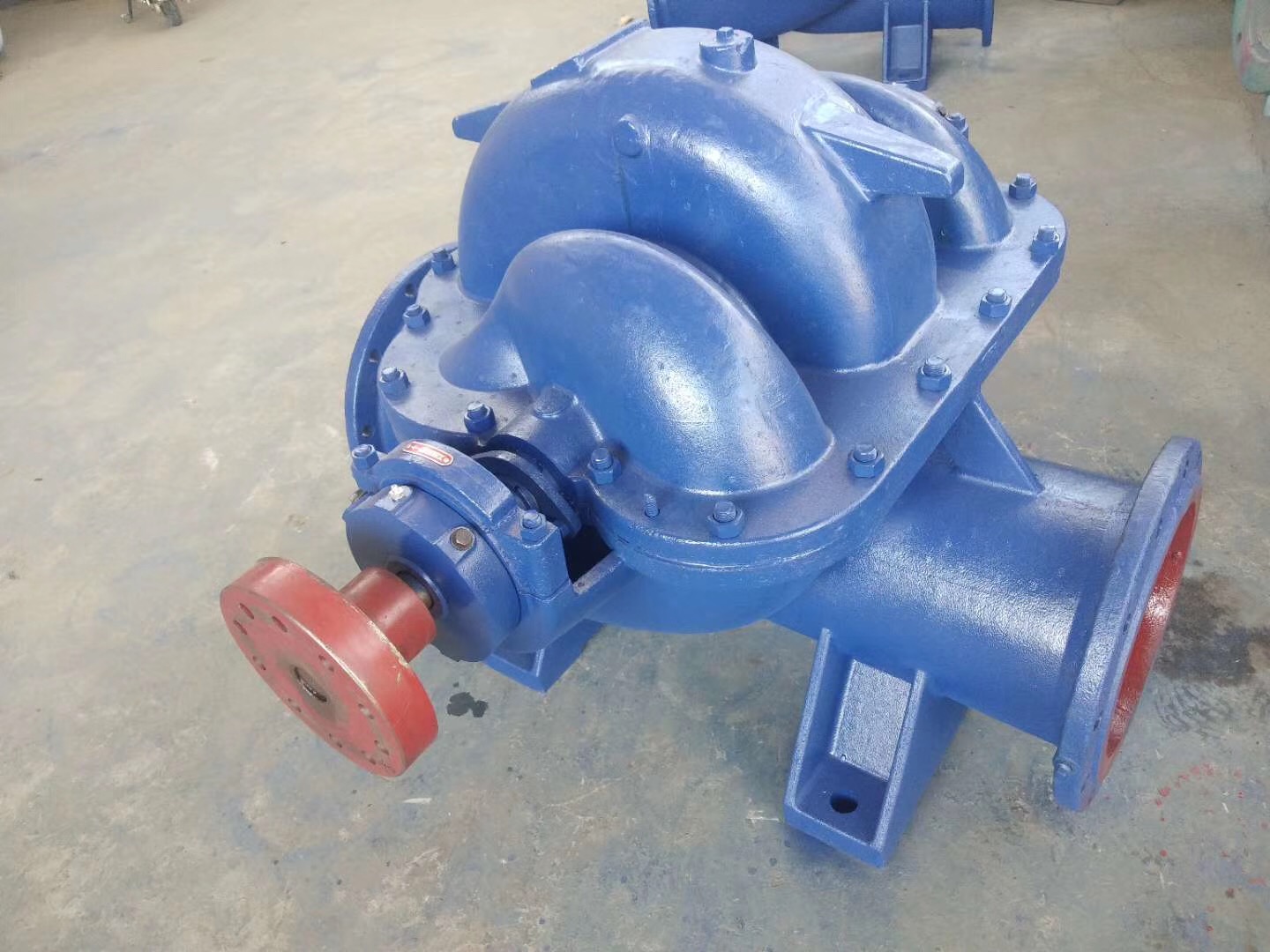
Double suction pumps, particularly those designed for big capacity applications, represent a critical component in numerous industrial processes. These pumps, characterized by their ability to draw fluid from both sides of the impeller, are widely employed in water supply, irrigation, power generation, and wastewater treatment. Their technical position within the fluid handling industry chain falls between the primary fluid source and the downstream process requiring fluid conveyance. Core performance characteristics, including flow rate, head, and efficiency, are directly influenced by impeller design, casing geometry, and rotational speed. These pumps address key industry pain points such as maximizing flow rates with reduced energy consumption and ensuring reliable operation in demanding environments, often dealing with abrasive or corrosive fluids. Understanding the nuances of their design and operation is crucial for optimal system performance and reduced lifecycle costs.
Material Science & Manufacturing
The materials selection for big capacity double suction pumps is dictated by the fluid being pumped, operating pressure, and potential for corrosion or erosion. Pump casings are frequently constructed from cast iron (ASTM A48 Class 30), ductile iron (ASTM A536-89 Grade 65-45-12), or stainless steel (304/316 for corrosive environments – ASTM A240). Impellers are commonly made from bronze (ASTM B584), stainless steel (CF8, CF8M - ASTM A743), or specialized polymer composites for abrasive applications. Shafts utilize alloy steel (4140, 4340 – ASTM A297) for high tensile strength and fatigue resistance. Seals are typically composed of materials like Viton, EPDM, or PTFE depending on fluid compatibility (ASTM D1418). Manufacturing processes involve several key steps. Casing production often employs sand casting, followed by precision machining to ensure dimensional accuracy and surface finish. Impellers are typically investment cast or manufactured using centrifugal casting, again with subsequent machining. Welding (SMAW, GTAW - AWS D1.1) is used for joining casing components. Rigorous quality control, including non-destructive testing (NDT) like ultrasonic testing (UT - ASTM E797) and liquid penetrant inspection (LPI – ASTM E165) is critical to ensure structural integrity. Parameter control during casting (temperature, cooling rates) and machining (tolerance adherence) directly affects performance and longevity.
Performance & Engineering
The performance of a double suction pump is governed by fundamental hydraulic principles. Force analysis considers both static and dynamic loads, including fluid pressure, impeller weight, and rotational forces. Cavitation, a major concern, arises from pressure drop within the pump, leading to vapor bubble formation and subsequent implosion, causing erosion and noise. Net Positive Suction Head Required (NPSHr) must be carefully matched to Net Positive Suction Head Available (NPSHa) to prevent cavitation. Environmental resistance is addressed through material selection and protective coatings. For example, epoxy coatings (ASTM D3359) are used to mitigate corrosion. Compliance requirements vary by region and application. In the US, Hydraulic Institute (HI) standards define performance testing procedures (HI 1.6, HI 1.5). European standards (EN 733) specify pump classification and performance criteria. Functional implementation involves proper pipe sizing, valve selection, and motor-pump coupling alignment. Misalignment introduces vibration, reducing bearing life and increasing energy consumption. Variable Frequency Drives (VFDs) are often employed to control pump speed and optimize energy usage based on system demand (IEEE 519 for harmonic mitigation).
Technical Specifications
| Parameter | Unit | Typical Value (Large Capacity Pump) | Tolerance |
|---|---|---|---|
| Flow Rate | m³/h | 500-5000 | ±5% |
| Head | m | 20-150 | ±10% |
| Impeller Diameter | mm | 400-1200 | ±2% |
| Motor Power | kW | 75-500 | ±5% |
| Operating Speed | RPM | 1450-3600 | ±2% |
| Casing Material | - | Ductile Iron (65-45-12) | ASTM A536-89 |
Failure Mode & Maintenance
Failure modes in big capacity double suction pumps are diverse. Fatigue cracking of the impeller, particularly at the blade root, is common due to cyclical loading. Corrosion, both uniform and pitting, can degrade casing and impeller materials, reducing wall thickness and leading to leakage. Shaft deflection and bearing failure often stem from misalignment or inadequate lubrication. Mechanical seal failure can result from abrasive particles, chemical attack, or excessive temperature. Delamination of coatings can expose underlying metal to corrosion. Oxidation can affect metallic components, reducing their strength and integrity. Preventive maintenance is crucial. Regular vibration analysis (ISO 10816) can detect bearing wear and misalignment. Oil analysis (ASTM D4057) monitors lubricant condition and identifies wear debris. Visual inspections for corrosion and leakage are essential. Seal replacement should be performed proactively based on operating hours or seal performance. Impeller balancing (ISO 1940-1) minimizes vibration and extends bearing life. Proper lubrication schedules, adhering to manufacturer’s recommendations, are paramount. Periodic casing inspections utilizing NDT methods identify potential cracks before they propagate.
Industry FAQ
Q: What are the primary causes of cavitation in large double suction pumps, and how can they be mitigated?
A: Cavitation arises from insufficient NPSHa. Contributing factors include high fluid temperature, low suction pressure, restrictions in the suction piping, and high pump speed. Mitigation strategies involve increasing suction pressure (e.g., raising tank levels), reducing fluid temperature, minimizing piping losses (larger diameter pipes, fewer elbows), and optimizing pump speed. Careful NPSHr/NPSHa calculations are critical during system design.
Q: How does the material of construction impact the lifespan of a pump handling abrasive slurries?
A: Abrasive slurries cause significant wear. Harder materials like high-chrome cast iron or ceramic linings offer superior resistance to erosion compared to standard cast iron. Polymer composite impellers can also provide good wear resistance. Selecting a material based on the slurry’s particle size, concentration, and hardness is crucial. Regular inspections and replacement of worn components are also necessary.
Q: What are the key considerations when selecting a motor for a large capacity double suction pump?
A: Motor selection must account for the pump’s power requirements, operating voltage, and duty cycle. Factors include motor efficiency (NEMA Premium Efficiency), enclosure type (dependent on the environment), and starting torque. Variable Frequency Drives (VFDs) allow for speed control and energy savings. Motor protection features, such as thermal overload protection and phase failure protection, are essential.
Q: How do you diagnose and address excessive vibration in a double suction pump?
A: Excessive vibration can indicate several issues, including misalignment, bearing failure, impeller imbalance, or cavitation. Vibration analysis using accelerometers identifies the frequency and amplitude of vibration, pinpointing the source. Corrective actions include realignment, bearing replacement, impeller balancing, and addressing cavitation issues. Soft foot detection and baseplate rigidity checks are also important.
Q: What are the benefits of utilizing a mechanical seal versus a packing gland in a large capacity pump?
A: Mechanical seals offer superior leakage control compared to packing glands, minimizing environmental contamination and fluid loss. They also reduce shaft wear and require less maintenance. However, mechanical seals are more complex and sensitive to abrasive particles. Packing glands are simpler and more tolerant of solids but require frequent adjustment and are prone to leakage.
Conclusion
Big capacity double suction pumps are vital components in a wide range of industrial applications, requiring careful consideration of material selection, manufacturing processes, and operational parameters. Understanding the hydraulic principles governing their performance, potential failure modes, and applicable industry standards is essential for ensuring reliable and efficient operation. Proactive maintenance, including regular monitoring, inspection, and component replacement, is key to maximizing lifespan and minimizing downtime.
Future trends in pump technology include the development of more energy-efficient designs, advanced materials with enhanced corrosion resistance, and the integration of smart sensors and data analytics for predictive maintenance. Continued advancements in computational fluid dynamics (CFD) will enable optimized impeller designs and improved pump performance. The incorporation of remote monitoring and control systems will further enhance operational efficiency and reduce lifecycle costs.
-
Comprehensive Guide to Waterproof ORings for Optimal Sealing Solutions
News2026-06-09
-
Septic Pump System Performance Analysis
News2026-06-08
-
pump for septic Material Science
News2026-06-08
-
basement sewer pump Performance Analysis
News2026-06-08
-
submerged pump Performance Engineering
News2026-06-08
-
Septic System Pumps Performance Analysis
News2026-06-08
-
septic system pump Material Science and Manufacturing
News2026-06-07
-
pump for septic tank Material Science Manufacturing
News2026-06-07
-
submersible sewage pump Material Science
News2026-06-07
-
Sewage Ejector Material Science and Manufacturing
News2026-06-07
-
Ejection Pump Material Science
News2026-06-07
-
pump submersible Performance Analysis
News2026-06-06
-
ejector pumps Performance Engineering
News2026-06-06
-
basement ejector pump Material Science Manufacturing
News2026-06-06
-
Septic Tanks Pumping Performance Analysis
News2026-06-06




