English
- Afrikaans
- Albanian
- Amharic
- Arabic
- Armenian
- Azerbaijani
- Basque
- Belarusian
- Bengali
- Bosnian
- Bulgarian
- Catalan
- Cebuano
- Corsican
- Croatian
- Czech
- Danish
- Dutch
- English
- Esperanto
- Estonian
- Finnish
- French
- Frisian
- Galician
- Georgian
- German
- Greek
- Gujarati
- Haitian Creole
- hausa
- hawaiian
- Hebrew
- Hindi
- Miao
- Hungarian
- Icelandic
- igbo
- Indonesian
- irish
- Italian
- Japanese
- Javanese
- Kannada
- kazakh
- Khmer
- Rwandese
- Korean
- Kurdish
- Kyrgyz
- Lao
- Latin
- Latvian
- Lithuanian
- Luxembourgish
- Macedonian
- Malgashi
- Malay
- Malayalam
- Maltese
- Maori
- Marathi
- Mongolian
- Myanmar
- Nepali
- Norwegian
- Norwegian
- Occitan
- Pashto
- Persian
- Polish
- Portuguese
- Punjabi
- Romanian
- Russian
- Samoan
- Scottish Gaelic
- Serbian
- Sesotho
- Shona
- Sindhi
- Sinhala
- Slovak
- Slovenian
- Somali
- Spanish
- Sundanese
- Swahili
- Swedish
- Tagalog
- Tajik
- Tamil
- Tatar
- Telugu
- Thai
- Turkish
- Turkmen
- Ukrainian
- Urdu
- Uighur
- Uzbek
- Vietnamese
- Welsh
- Bantu
- Yiddish
- Yoruba
- Zulu

Telephone: +86 13120555503
Email: frank@cypump.com


Apr . 01, 2024 17:55 Back to list
submersible sewage pump manufacturers Performance Engineering
Introduction
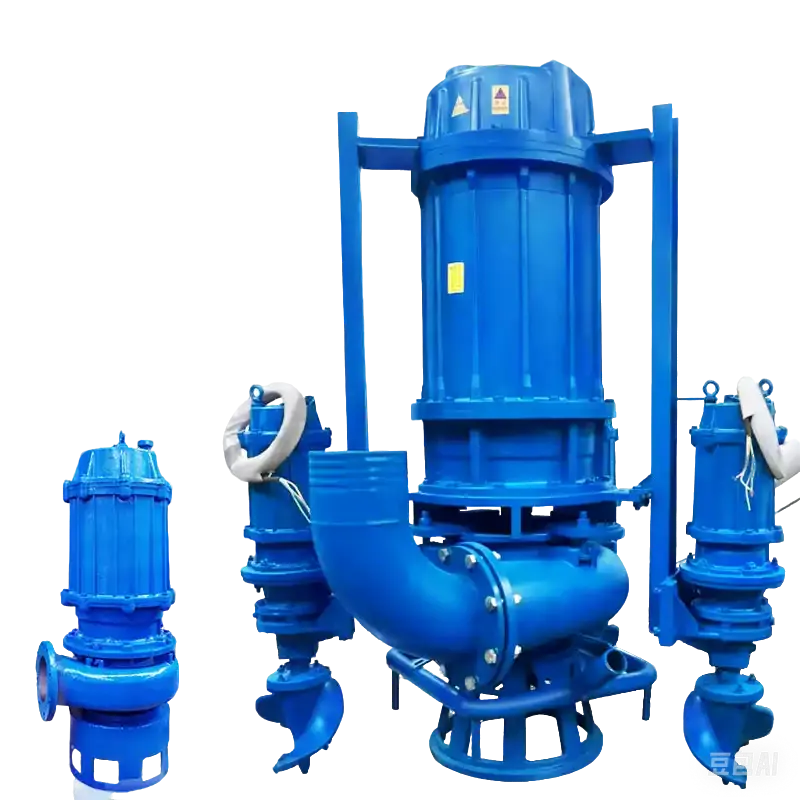
Submersible sewage pumps are critical components in wastewater treatment and conveyance systems, designed for the efficient removal of solids-laden effluent. These pumps operate entirely submerged in the fluid being pumped, eliminating the need for priming and offering significant advantages in challenging applications. Their technical position within the industry chain spans from raw material sourcing (cast iron, stainless steel, polymers) through precision manufacturing, assembly, and ultimately, installation within municipal and industrial wastewater infrastructure. Core performance characteristics are defined by hydraulic efficiency, solids handling capability, motor power output, and overall durability in corrosive and abrasive environments. A key industry pain point revolves around balancing initial cost with long-term reliability and minimizing life-cycle maintenance requirements, particularly concerning impeller wear, motor winding failures, and seal degradation. Understanding the nuances of these performance metrics is vital for informed procurement and optimized system design.
Material Science & Manufacturing
The construction of submersible sewage pumps necessitates careful material selection. Pump housings are commonly manufactured from cast iron (ASTM A48 Class 30) due to its cost-effectiveness and good wear resistance, often with an epoxy coating for enhanced corrosion protection. However, for highly corrosive applications, stainless steel (specifically 316L – ASTM A743 Grade CF-8M) is preferred, offering superior resistance to chloride attack. Impellers, subject to intense abrasion, are typically constructed from high-chrome cast iron or hardened stainless steel. Mechanical seals utilize materials like silicon carbide (SiC) faces and Viton or EPDM elastomers, selected for compatibility with the pumped fluid and providing a robust barrier against leakage. Manufacturing processes include sand casting for housings, investment casting or centrifugal casting for impellers, and precision machining for all critical components. Welding processes, like shielded metal arc welding (SMAW) or gas tungsten arc welding (GTAW), are employed for joining components, adhering to AWS D1.1 standards. Crucial parameter control during manufacturing involves dimensional accuracy of impeller vanes (within ±0.1mm), surface finish of seal faces (Ra < 0.8 µm), and proper heat treatment to achieve desired material hardness and tensile strength. The quality of the epoxy coating (thickness, adhesion) is also paramount in preventing corrosion.
Performance & Engineering
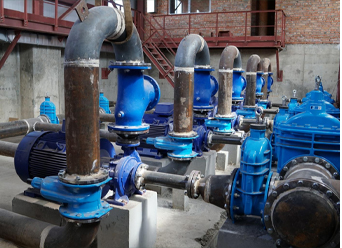
Performance engineering of submersible sewage pumps centers on hydraulic design and motor selection. Force analysis focuses on impeller stresses induced by solids impact and fluid dynamic pressure. Finite Element Analysis (FEA) is frequently used to optimize impeller geometry for maximum hydraulic efficiency and structural integrity. Environmental resistance is a critical consideration, particularly resistance to abrasion from sand and grit, and chemical attack from hydrogen sulfide (H2S) and other corrosive compounds present in sewage. Compliance requirements, such as those outlined in EPA guidelines and local municipal codes, dictate pump performance standards for solids handling capability (typically expressed as maximum sphere size passed), flow rate at a specified head, and energy efficiency. Motor selection involves choosing an appropriately sized submersible motor (typically three-phase induction motors) with adequate horsepower to meet the application's demands, while also considering factors like motor insulation class (Class H is common for submersible applications) and bearing lubrication requirements. Proper cable gland sealing is crucial to prevent water ingress into the motor housing, and cable selection must account for prolonged submersion and potential chemical exposure. Pump curves, detailing head-capacity relationships, are essential for system design and performance prediction.
Technical Specifications
| Pump Capacity (m³/hr) | Total Dynamic Head (m) | Motor Power (kW) | Maximum Solids Handling (mm) |
|---|---|---|---|
| 50-100 | 10-30 | 1.5-3.0 | 50 |
| 100-200 | 20-40 | 3.0-5.5 | 75 |
| 200-400 | 30-60 | 5.5-11.0 | 100 |
| 400-600 | 40-80 | 11.0-18.5 | 150 |
| 600-800 | 60-100 | 18.5-22.0 | 200 |
| 800-1200 | 80-120 | 22.0-37.0 | 250 |
Failure Mode & Maintenance
Submersible sewage pumps are susceptible to several failure modes. Fatigue cracking in the impeller, often initiated by repeated impact from solids, is a common issue. Delamination of the epoxy coating on cast iron housings leads to corrosion and eventual housing failure. Degradation of mechanical seal elastomers due to chemical attack or abrasion results in leakage and motor damage. Oxidation of motor windings due to water ingress or overheating causes electrical shorts and motor failure. Cavitation, caused by insufficient net positive suction head (NPSH), erodes impeller vanes. Maintenance solutions include regular inspection of the impeller for wear and cracks, monitoring seal performance for leakage, and conducting routine motor insulation testing. Scheduled replacement of mechanical seals is crucial, typically every 1-2 years depending on the application. Proper cleaning of the pump intake screen prevents clogging and maintains optimal hydraulic performance. Lubrication of bearings, where applicable, extends bearing life. Monitoring pump vibration levels can detect early signs of bearing failure or impeller imbalance. Periodic inspection of the power cable and cable gland ensures continued watertight integrity.
Industry FAQ
Q: What is the optimal impeller material for handling highly abrasive sewage containing significant grit and sand?
A: For highly abrasive applications, a high-chrome cast iron impeller is generally recommended. Chrome imparts exceptional wear resistance, significantly extending impeller life compared to standard cast iron. Alternatively, hardened stainless steel (e.g., 440C) offers superior abrasion resistance but comes at a higher cost.
Q: How do I mitigate the risk of motor winding failure in a corrosive sewage environment?
A: Employing a submersible motor with Class H insulation is crucial. Ensure the motor is completely sealed and that the cable gland is properly tightened to prevent water ingress. Consider using a motor with epoxy encapsulation of the windings for added protection against corrosion. Regular monitoring of motor insulation resistance is also recommended.
Q: What is the significance of NPSH in submersible pump operation?
A: Net Positive Suction Head (NPSH) is the absolute pressure at the pump suction eye. Insufficient NPSH leads to cavitation, which erodes the impeller and reduces pump performance. Ensure the pump is installed with adequate submergence and that the intake piping is properly sized to minimize head loss.
Q: How often should mechanical seals be replaced as preventative maintenance?
A: Mechanical seal replacement frequency depends on the application's severity. As a general guideline, seals should be inspected annually and replaced every 1-2 years. Applications with highly abrasive fluids or corrosive chemicals may require more frequent replacement.
Q: What are the key considerations when selecting a pump cable for submersible applications?
A: The cable must be specifically designed for continuous submersion, with robust insulation and a watertight jacket. It should be resistant to the chemicals present in the sewage and have sufficient current-carrying capacity for the motor. Consider using a cable with a stranded copper conductor for flexibility and durability.
Conclusion
Submersible sewage pump selection and maintenance demand a thorough understanding of material science, hydraulic principles, and potential failure modes. Optimizing pump performance necessitates careful consideration of solids handling capability, corrosion resistance, and energy efficiency. Addressing common failure points – impeller wear, seal degradation, and motor failure – through proactive maintenance and proper material selection is paramount for minimizing life-cycle costs and ensuring reliable wastewater treatment operations.
Ultimately, the longevity and operational effectiveness of these critical systems depend on a holistic approach that integrates robust engineering design, high-quality manufacturing, and diligent adherence to industry best practices and relevant regulatory standards. Future advancements may focus on incorporating smart sensors for predictive maintenance and developing more durable and corrosion-resistant materials to further enhance pump reliability and sustainability.
-
Precision at the Pump: How Better Machining Protects Flow and Uptime
News2026-11-20
-
Why Pump Reliability Begins Before the First Drop of Fluid
News2026-11-20
-
Beyond the Pump: Designing Safer Access Around Critical Water Infrastructure
News2026-11-20
-
Why Pumping Stations Depend on the Infrastructure Beneath the Pumps
News2026-11-20
-
Beyond the Pump Room: How Smarter Loading Protects Industrial Equipment
News2026-11-19
-
When Pumps Stop: Designing More Resilient Power for Critical Pumping Systems
News2026-11-19
-
The Hidden Role of Dust and Gas Monitoring in Reliable Pump Operations
News2026-11-19
-
The Hidden Role of Mineral Compounds in Extending Industrial Pump Lifespan
News2026-10-12
-
Why Pump System Reliability Depends on Precision Hose Assembly Methods
News2026-09-15
-
How Advanced Imaging Films Are Transforming Pump Component Quality Control
News2026-08-25
-
How Advanced Filtration Protects Pump Systems from Premature Wear and Costly Downtime
News2026-08-25
-
How Steel Material Selection Drives Pump Reliability in Heavy-Duty Systems
News2026-08-25
-
Ensuring Pump System Efficiency: The Role of High-Quality Pipe Fittings and Tubing
News2026-08-24
-
Optimizing Fluid Dynamics and Material Consistency in Industrial Processing
News2026-08-18
-
Innovations and Challenges in Hydraulic Systems for Heavy Machinery
News2026-08-13




