English
- Afrikaans
- Albanian
- Amharic
- Arabic
- Armenian
- Azerbaijani
- Basque
- Belarusian
- Bengali
- Bosnian
- Bulgarian
- Catalan
- Cebuano
- Corsican
- Croatian
- Czech
- Danish
- Dutch
- English
- Esperanto
- Estonian
- Finnish
- French
- Frisian
- Galician
- Georgian
- German
- Greek
- Gujarati
- Haitian Creole
- hausa
- hawaiian
- Hebrew
- Hindi
- Miao
- Hungarian
- Icelandic
- igbo
- Indonesian
- irish
- Italian
- Japanese
- Javanese
- Kannada
- kazakh
- Khmer
- Rwandese
- Korean
- Kurdish
- Kyrgyz
- Lao
- Latin
- Latvian
- Lithuanian
- Luxembourgish
- Macedonian
- Malgashi
- Malay
- Malayalam
- Maltese
- Maori
- Marathi
- Mongolian
- Myanmar
- Nepali
- Norwegian
- Norwegian
- Occitan
- Pashto
- Persian
- Polish
- Portuguese
- Punjabi
- Romanian
- Russian
- Samoan
- Scottish Gaelic
- Serbian
- Sesotho
- Shona
- Sindhi
- Sinhala
- Slovak
- Slovenian
- Somali
- Spanish
- Sundanese
- Swahili
- Swedish
- Tagalog
- Tajik
- Tamil
- Tatar
- Telugu
- Thai
- Turkish
- Turkmen
- Ukrainian
- Urdu
- Uighur
- Uzbek
- Vietnamese
- Welsh
- Bantu
- Yiddish
- Yoruba
- Zulu

Telephone: +86 13120555503
Email: frank@cypump.com


Apr . 01, 2024 17:55 Back to list
submersible sewage pump 20 hp factories Performance Analysis
Introduction
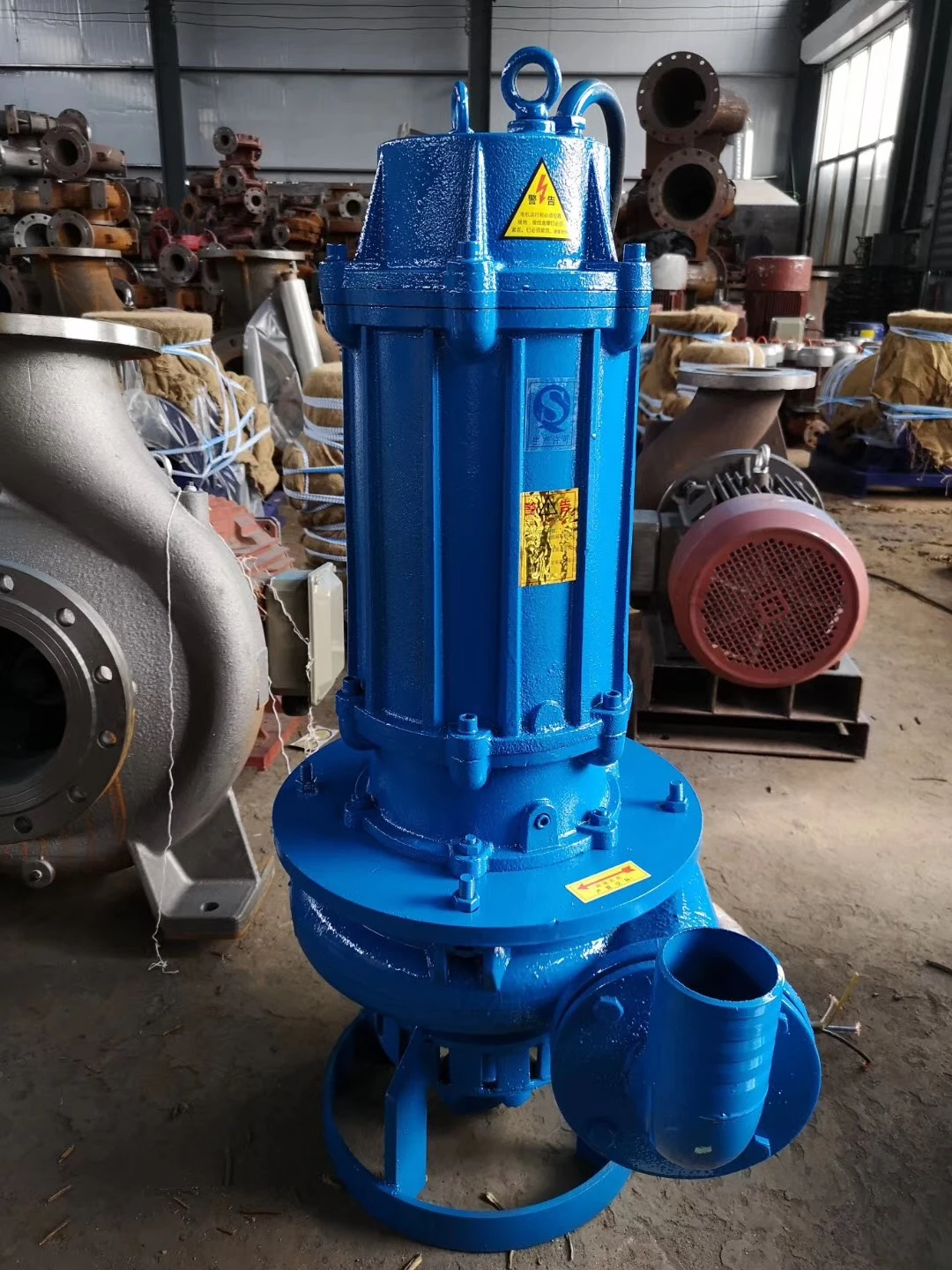
Submersible sewage pumps, particularly those rated at 20 horsepower, represent a critical component in wastewater treatment infrastructure across municipal, industrial, and commercial sectors. These pumps are designed for continuous operation in submerged conditions, handling significant volumes of raw sewage, effluent, and other non-clean water substances. Their technical position within the industry chain lies between upstream motor and impeller manufacturers and downstream installation & maintenance service providers. A 20hp submersible sewage pump indicates a capacity suitable for medium to large-scale applications, typically handling flows ranging from 500 to 1500 gallons per minute, with total dynamic head requirements varying depending on the specific installation. Core performance characteristics include hydraulic efficiency, solids handling capability, motor thermal protection, and overall system reliability, all of which directly impact operational costs and environmental compliance.
Material Science & Manufacturing
The construction of a 20hp submersible sewage pump necessitates careful selection of materials to withstand the corrosive and abrasive nature of wastewater. Pump casings are commonly manufactured from cast iron (ASTM A48 Class 30) due to its cost-effectiveness and durability, often coated with epoxy or other polymers to enhance corrosion resistance. Impellers, responsible for generating hydraulic force, are frequently constructed from high-chrome cast iron or stainless steel (304 or 316 grade) to resist abrasion from solids present in the sewage. Shafts are typically made from 4140 alloy steel, heat-treated to achieve high tensile strength and torsional rigidity. The motor housing utilizes cast iron or stainless steel for structural integrity and protection of internal components. Manufacturing processes include sand casting for the pump casing and impeller, CNC machining for precise component dimensions, and robotic welding for joining critical parts. Key parameter control during manufacturing focuses on impeller balancing to minimize vibration, shaft straightness to prevent bearing failure, and seal integrity to prevent water ingress. Cable glands require rigorous testing to maintain waterproof seals. Motor windings are insulated with Class H insulation materials capable of withstanding high temperatures and humidity.
Performance & Engineering
Performance engineering of a 20hp submersible sewage pump focuses on hydraulic design, motor selection, and mechanical integrity. Force analysis involves calculating the radial and axial loads on the impeller and shaft, ensuring adequate bearing capacity and shaft strength to prevent failure under peak operating conditions. Environmental resistance considerations include corrosion protection (coating selection, material choice), abrasion resistance (impeller material), and resistance to temperature fluctuations. Compliance requirements often involve adherence to EPA standards for wastewater discharge and UL/CSA certification for electrical safety. Functional implementation necessitates a robust seal design (typically double mechanical seals with oil barrier) to prevent leakage and ingress of contaminants. Motor selection considers the required horsepower, voltage, phase, and enclosure type (fully submerged). Pump curves, detailing head-capacity relationships, are crucial for proper system sizing. Hydraulic Institute (HI) standards are often followed for pump performance testing and reporting. Furthermore, bearing lubrication and cooling systems are critical to prolong pump life and reduce maintenance intervals. Analysis of net positive suction head required (NPSHr) is essential to avoid cavitation, a primary cause of impeller damage.
Technical Specifications
| Parameter | Specification | Testing Standard | Typical Value |
|---|---|---|---|
| Motor Power | 20 HP (14.9 kW) | IEEE 450 | 14.9 kW |
| Voltage | 460V, 3 Phase | IEC 60038 | 460 Volts |
| Maximum Flow Rate | 1200 GPM | HI 1.6 | 5453 Liters/min |
| Maximum Head | 80 ft (24.4 m) | HI 1.6 | 24.4 meters |
| Solids Handling Capacity | 3 inches (76 mm) | N/A | 76 mm |
| Impeller Material | High Chrome Cast Iron | ASTM A532 Grade III | HC-NiCrWhite Iron |
Failure Mode & Maintenance
Submersible sewage pumps are susceptible to several failure modes. Fatigue cracking in the impeller, particularly around the vane roots, is common due to cyclic loading and abrasive wear. Delamination of epoxy coatings on the casing leads to corrosion and eventual structural failure. Bearing failure, caused by contamination, insufficient lubrication, or excessive load, results in increased vibration and potential seizure. Seal failure, often stemming from abrasive particles or chemical attack, allows water ingress into the motor, leading to short circuits and motor burnout. Oxidation and corrosion of electrical connections contribute to increased resistance and overheating. Preventive maintenance is crucial. This includes regular inspection of seals and bearings, lubrication schedules, monitoring of motor temperature and current draw, and periodic cleaning to remove debris. Vibration analysis can detect early signs of bearing wear or impeller imbalance. Scheduled replacement of wear components, such as seals and bearings, based on operating hours is recommended. For motor failures, thorough insulation resistance testing is vital prior to re-energization. Proper impeller balancing prevents undue stress on the shaft and bearings, prolonging component life.
Industry FAQ
Q: What is the typical lifespan of a 20hp submersible sewage pump under continuous operation?
A: A well-maintained 20hp submersible sewage pump can reliably operate for 10-15 years under continuous duty. However, lifespan is heavily dependent on the abrasiveness of the wastewater, the frequency of solids surges, and the adherence to a robust preventive maintenance schedule. Regular monitoring and timely replacement of wear parts are crucial for maximizing service life.
Q: How does the pump material affect the total cost of ownership?
A: While stainless steel pumps have a higher initial cost, they offer significantly improved corrosion resistance and extended lifespan in aggressive wastewater environments, leading to lower long-term maintenance and replacement costs. Cast iron pumps, while less expensive upfront, may require more frequent repair or replacement, increasing the total cost of ownership.
Q: What are the key considerations when selecting a pump for a variable flow application?
A: For variable flow applications, a variable frequency drive (VFD) is highly recommended. VFDs allow for precise speed control, optimizing pump performance and energy consumption across a range of flow rates. Selecting a pump with a broad, efficient operating range on its performance curve is also essential.
Q: What are the implications of cavitation, and how can it be prevented?
A: Cavitation occurs when the pressure at the impeller inlet drops below the vapor pressure of the liquid, forming vapor bubbles that collapse violently, causing impeller damage. Preventing cavitation requires ensuring adequate Net Positive Suction Head Available (NPSHa) exceeds the Net Positive Suction Head Required (NPSHr) by a sufficient margin. Proper system design, including minimizing suction pipe losses and maintaining adequate fluid levels, is critical.
Q: What level of electrical protection is required for submersible pumps?
A: Submersible pumps require comprehensive electrical protection, including ground fault protection, short circuit protection, and overload protection. Compliance with UL/CSA standards and the National Electrical Code (NEC) is essential. Proper grounding and bonding are critical to prevent electrical shock hazards. Regular inspection of cables and connections is also vital.
Conclusion
The 20hp submersible sewage pump represents a sophisticated piece of engineering designed to withstand demanding operating conditions. Successful implementation relies not only on appropriate pump selection based on hydraulic requirements and solids handling capacity but also on a comprehensive understanding of material science, manufacturing processes, and potential failure modes. Prioritizing preventative maintenance, adhering to relevant industry standards, and employing robust electrical protection are paramount for ensuring reliable long-term performance and minimizing lifecycle costs.
Future trends in submersible pump technology include advancements in impeller design for improved hydraulic efficiency, the integration of smart sensors for predictive maintenance, and the development of more durable and corrosion-resistant materials. Furthermore, the increasing adoption of energy-efficient motor technologies and variable frequency drives will contribute to reduced energy consumption and lower operating costs.
-
Precision at the Pump: How Better Machining Protects Flow and Uptime
News2026-11-20
-
Why Pump Reliability Begins Before the First Drop of Fluid
News2026-11-20
-
Beyond the Pump: Designing Safer Access Around Critical Water Infrastructure
News2026-11-20
-
Why Pumping Stations Depend on the Infrastructure Beneath the Pumps
News2026-11-20
-
Beyond the Pump Room: How Smarter Loading Protects Industrial Equipment
News2026-11-19
-
When Pumps Stop: Designing More Resilient Power for Critical Pumping Systems
News2026-11-19
-
The Hidden Role of Dust and Gas Monitoring in Reliable Pump Operations
News2026-11-19
-
The Hidden Role of Mineral Compounds in Extending Industrial Pump Lifespan
News2026-10-12
-
Why Pump System Reliability Depends on Precision Hose Assembly Methods
News2026-09-15
-
How Advanced Imaging Films Are Transforming Pump Component Quality Control
News2026-08-25
-
How Advanced Filtration Protects Pump Systems from Premature Wear and Costly Downtime
News2026-08-25
-
How Steel Material Selection Drives Pump Reliability in Heavy-Duty Systems
News2026-08-25
-
Ensuring Pump System Efficiency: The Role of High-Quality Pipe Fittings and Tubing
News2026-08-24
-
Optimizing Fluid Dynamics and Material Consistency in Industrial Processing
News2026-08-18
-
Innovations and Challenges in Hydraulic Systems for Heavy Machinery
News2026-08-13




