English
- Afrikaans
- Albanian
- Amharic
- Arabic
- Armenian
- Azerbaijani
- Basque
- Belarusian
- Bengali
- Bosnian
- Bulgarian
- Catalan
- Cebuano
- Corsican
- Croatian
- Czech
- Danish
- Dutch
- English
- Esperanto
- Estonian
- Finnish
- French
- Frisian
- Galician
- Georgian
- German
- Greek
- Gujarati
- Haitian Creole
- hausa
- hawaiian
- Hebrew
- Hindi
- Miao
- Hungarian
- Icelandic
- igbo
- Indonesian
- irish
- Italian
- Japanese
- Javanese
- Kannada
- kazakh
- Khmer
- Rwandese
- Korean
- Kurdish
- Kyrgyz
- Lao
- Latin
- Latvian
- Lithuanian
- Luxembourgish
- Macedonian
- Malgashi
- Malay
- Malayalam
- Maltese
- Maori
- Marathi
- Mongolian
- Myanmar
- Nepali
- Norwegian
- Norwegian
- Occitan
- Pashto
- Persian
- Polish
- Portuguese
- Punjabi
- Romanian
- Russian
- Samoan
- Scottish Gaelic
- Serbian
- Sesotho
- Shona
- Sindhi
- Sinhala
- Slovak
- Slovenian
- Somali
- Spanish
- Sundanese
- Swahili
- Swedish
- Tagalog
- Tajik
- Tamil
- Tatar
- Telugu
- Thai
- Turkish
- Turkmen
- Ukrainian
- Urdu
- Uighur
- Uzbek
- Vietnamese
- Welsh
- Bantu
- Yiddish
- Yoruba
- Zulu

Telephone: +86 13120555503
Email: frank@cypump.com


Apr . 01, 2024 17:55 Back to list
submersible sewage pump 1 hp price Performance Engineering
Introduction
Submersible sewage pumps, specifically the 1 horsepower (hp) variant, represent a critical component in wastewater management systems across residential, commercial, and industrial sectors. These pumps are designed for complete submersion in the fluid being transferred, offering significant advantages over surface-mounted pumps, primarily in terms of priming issues and noise reduction. The 1 hp classification indicates the motor’s power output, determining its capacity to handle flow rates and head pressures. Within the industry chain, these pumps occupy the final stage of wastewater collection and conveyance, bridging the gap between collection points (sump pits, septic tanks) and discharge locations (treatment facilities, drainage systems). Core performance characteristics center around hydraulic efficiency, solids handling capability, motor longevity, and resistance to corrosive elements present in sewage. A "1 hp price" point often signifies an entry-level commercial or high-end residential offering, demanding careful consideration of material quality and construction for sustained operation and minimizing life-cycle costs. The increasing demand for efficient and reliable wastewater solutions drives continuous improvements in pump design and material science.
Material Science & Manufacturing
The construction of a 1 hp submersible sewage pump involves several key materials, each selected for specific properties. Pump housings are commonly cast from gray iron (ASTM A48 Class 30) or stainless steel (typically 304 or 316). Gray iron provides excellent weight and vibration damping, but requires a protective coating to resist corrosion. Stainless steel offers superior corrosion resistance but is more expensive. Impellers, responsible for fluid acceleration, are frequently manufactured from high-chromium cast iron or reinforced polymeric materials. These materials balance abrasion resistance (from solids in sewage) with corrosion resistance. Shafts are typically made from 4140 alloy steel, heat-treated for high tensile strength and torsional rigidity. Motor housings utilize cast iron or aluminum alloy for structural integrity and heat dissipation. Seals are a critical component, employing materials like Viton or nitrile rubber for compatibility with sewage constituents and to prevent water ingress. Manufacturing processes include sand casting for housings and impellers, CNC machining for shafts and close-tolerance components, and automated winding for the electric motor. Key parameter control focuses on impeller balance (to minimize vibration), bearing fit (ensuring smooth rotation and longevity), and seal integrity (preventing leakage). Welding processes, when used for assembly, must adhere to AWS D1.1 standards for structural welding. The quality of the casting process is paramount, requiring careful control of mold temperature, pouring rate, and solidification to avoid porosity and defects.
Performance & Engineering
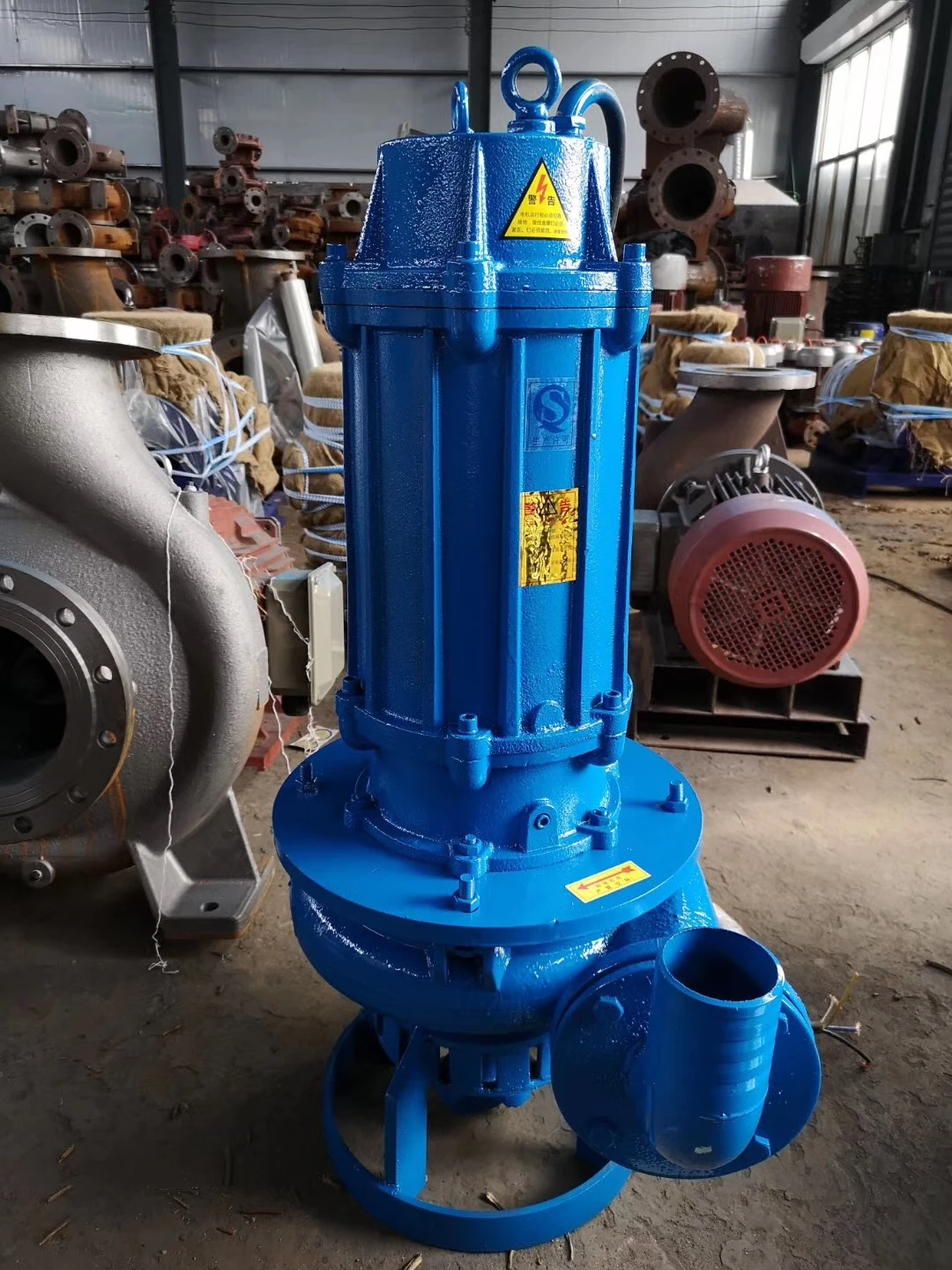
Performance of a 1 hp submersible sewage pump is dictated by a complex interplay of hydraulic and mechanical engineering principles. Force analysis considers centrifugal forces generated by impeller rotation, hydrodynamic forces acting on the impeller vanes, and static pressure exerted by the fluid. Pump curves, generated through rigorous testing (following standards like Hydraulic Institute standards), define the relationship between flow rate, head pressure, and power consumption. Environmental resistance is critical, particularly concerning moisture ingress, corrosion from hydrogen sulfide (H2S) and other sewage gases, and temperature fluctuations. Pump designs incorporate robust seals, corrosion-resistant coatings (epoxy or powder coating), and materials selected for their chemical compatibility. Compliance requirements include CE marking (European conformity), UL listing (Underwriters Laboratories – North America), and adherence to local regulations regarding wastewater discharge. Functional implementation relies on a hermetically sealed motor design to prevent water damage. The motor’s electrical insulation class (typically Class H) is crucial for withstanding high temperatures and humidity. Pump selection must consider the specific gravity of the fluid being pumped, the presence of abrasive solids, and the required discharge head. Mechanical seals must be compatible with the fluid’s pH and chemical composition to prevent premature failure. Proper pump sizing is paramount to avoid cavitation (formation of vapor bubbles that erode the impeller) and overheating.
Technical Specifications
| Parameter | Units | Typical Value (1 hp) | Testing Standard |
|---|---|---|---|
| Motor Power | hp | 1 | NEMA MG 1 |
| Voltage | V | 120/240 (single phase) or 230/460 (three phase) | IEC 60038 |
| Maximum Flow Rate | GPM | 60-80 | ANSI/HI 1.1 |
| Maximum Head | ft | 30-40 | ANSI/HI 1.1 |
| Solids Handling Capability | in | 2-3 | Manufacturer Specification |
| Minimum Submersion Depth | in | 18 | Manufacturer Specification |
| Impeller Material | - | High-Chromium Cast Iron | ASTM A532 |
Failure Mode & Maintenance
Submersible sewage pumps are susceptible to various failure modes. Fatigue cracking in the impeller or housing can occur due to repeated stress cycles from solids impact. Delamination of epoxy coatings can expose the metal housing to corrosion. Bearing failure, often manifested as excessive noise, results from inadequate lubrication or contamination. Seal failure leads to water ingress, causing motor short circuits. Winding insulation breakdown, typically due to overheating or moisture, leads to motor failure. Oxidation of electrical connections increases resistance and reduces efficiency. Common maintenance solutions include regular inspection of seals and bearings, lubrication of bearings (if applicable), cleaning of impeller to remove debris, and voltage/current monitoring to detect winding issues. Preventative maintenance schedules should incorporate periodic resistance-to-ground testing of motor windings (IEEE 43). If corrosion is detected, the affected area should be cleaned, treated with a corrosion inhibitor, and reapplied with a protective coating. In case of frequent failures, a thorough root cause analysis should be conducted to identify underlying issues such as improper pump sizing, corrosive fluid composition, or inadequate filtration. Regular monitoring of pump performance metrics, such as current draw and vibration levels, can provide early warning signs of potential problems.
Industry FAQ
Q: What is the expected lifespan of a 1 hp submersible sewage pump under typical residential use?
A: Under typical residential use, a well-maintained 1 hp submersible sewage pump can be expected to last between 7-10 years. However, this is heavily dependent on the quality of the wastewater, the frequency of use, and the adherence to a preventative maintenance schedule. The presence of abrasive solids significantly reduces lifespan.
Q: What is the impact of pH levels in the sewage on pump component corrosion?
A: Extremely low (acidic) or high (alkaline) pH levels accelerate corrosion. Acidic conditions promote corrosion of iron and steel components, while alkaline conditions can damage rubber seals and polymeric materials. Pumps designed for sewage applications typically utilize corrosion-resistant alloys and materials that are less susceptible to pH variations.
Q: How does the type of impeller (vortex vs. solids-handling) affect pump performance and reliability?
A: Vortex impellers are designed to pass large solids with minimal clogging, but they typically have lower hydraulic efficiency. Solids-handling impellers provide higher efficiency but are more prone to clogging. The choice depends on the characteristics of the wastewater. For primarily solids-laden sewage, a vortex impeller is generally preferred.
Q: What are the key considerations when selecting a replacement pump to ensure compatibility with the existing system?
A: Key considerations include matching the voltage and phase of the existing electrical system, ensuring the pump’s flow rate and head pressure meet the system requirements, verifying the discharge pipe size compatibility, and confirming that the pump’s overall dimensions fit within the sump pit.
Q: What safety precautions should be observed during pump installation and maintenance?
A: Always disconnect power before performing any maintenance. Wear appropriate personal protective equipment (PPE), including gloves, eye protection, and waterproof boots. Ensure the sump pit is adequately ventilated to prevent the buildup of hazardous gases. Follow all local electrical codes and regulations.
Conclusion
The 1 hp submersible sewage pump represents a foundational technology in modern wastewater management, offering a reliable and efficient solution for transferring sewage from collection points to treatment facilities. Selection hinges on a detailed understanding of the application's specific hydraulic requirements, the chemical composition of the wastewater, and the anticipated operating environment. Material science advancements, particularly in corrosion-resistant alloys and seal materials, have significantly extended pump lifespan and reduced maintenance costs.
Future developments will likely focus on increasing pump efficiency through optimized impeller designs and improved motor technology, integrating smart sensors for remote monitoring and predictive maintenance, and developing more sustainable materials to minimize environmental impact. Proper installation, adherence to preventative maintenance schedules, and prompt attention to early warning signs of failure are crucial for maximizing pump performance and ensuring long-term reliability.
-
Precision at the Pump: How Better Machining Protects Flow and Uptime
News2026-11-20
-
Why Pump Reliability Begins Before the First Drop of Fluid
News2026-11-20
-
Beyond the Pump: Designing Safer Access Around Critical Water Infrastructure
News2026-11-20
-
Why Pumping Stations Depend on the Infrastructure Beneath the Pumps
News2026-11-20
-
Beyond the Pump Room: How Smarter Loading Protects Industrial Equipment
News2026-11-19
-
When Pumps Stop: Designing More Resilient Power for Critical Pumping Systems
News2026-11-19
-
The Hidden Role of Dust and Gas Monitoring in Reliable Pump Operations
News2026-11-19
-
The Hidden Role of Mineral Compounds in Extending Industrial Pump Lifespan
News2026-10-12
-
Why Pump System Reliability Depends on Precision Hose Assembly Methods
News2026-09-15
-
How Advanced Imaging Films Are Transforming Pump Component Quality Control
News2026-08-25
-
How Advanced Filtration Protects Pump Systems from Premature Wear and Costly Downtime
News2026-08-25
-
How Steel Material Selection Drives Pump Reliability in Heavy-Duty Systems
News2026-08-25
-
Ensuring Pump System Efficiency: The Role of High-Quality Pipe Fittings and Tubing
News2026-08-24
-
Optimizing Fluid Dynamics and Material Consistency in Industrial Processing
News2026-08-18
-
Innovations and Challenges in Hydraulic Systems for Heavy Machinery
News2026-08-13




