English
- Afrikaans
- Albanian
- Amharic
- Arabic
- Armenian
- Azerbaijani
- Basque
- Belarusian
- Bengali
- Bosnian
- Bulgarian
- Catalan
- Cebuano
- Corsican
- Croatian
- Czech
- Danish
- Dutch
- English
- Esperanto
- Estonian
- Finnish
- French
- Frisian
- Galician
- Georgian
- German
- Greek
- Gujarati
- Haitian Creole
- hausa
- hawaiian
- Hebrew
- Hindi
- Miao
- Hungarian
- Icelandic
- igbo
- Indonesian
- irish
- Italian
- Japanese
- Javanese
- Kannada
- kazakh
- Khmer
- Rwandese
- Korean
- Kurdish
- Kyrgyz
- Lao
- Latin
- Latvian
- Lithuanian
- Luxembourgish
- Macedonian
- Malgashi
- Malay
- Malayalam
- Maltese
- Maori
- Marathi
- Mongolian
- Myanmar
- Nepali
- Norwegian
- Norwegian
- Occitan
- Pashto
- Persian
- Polish
- Portuguese
- Punjabi
- Romanian
- Russian
- Samoan
- Scottish Gaelic
- Serbian
- Sesotho
- Shona
- Sindhi
- Sinhala
- Slovak
- Slovenian
- Somali
- Spanish
- Sundanese
- Swahili
- Swedish
- Tagalog
- Tajik
- Tamil
- Tatar
- Telugu
- Thai
- Turkish
- Turkmen
- Ukrainian
- Urdu
- Uighur
- Uzbek
- Vietnamese
- Welsh
- Bantu
- Yiddish
- Yoruba
- Zulu

Telephone: +86 13120555503
Email: frank@cypump.com


Apr . 01, 2024 17:55 Back to list
submersible mixed flow pump Performance Analysis
Introduction
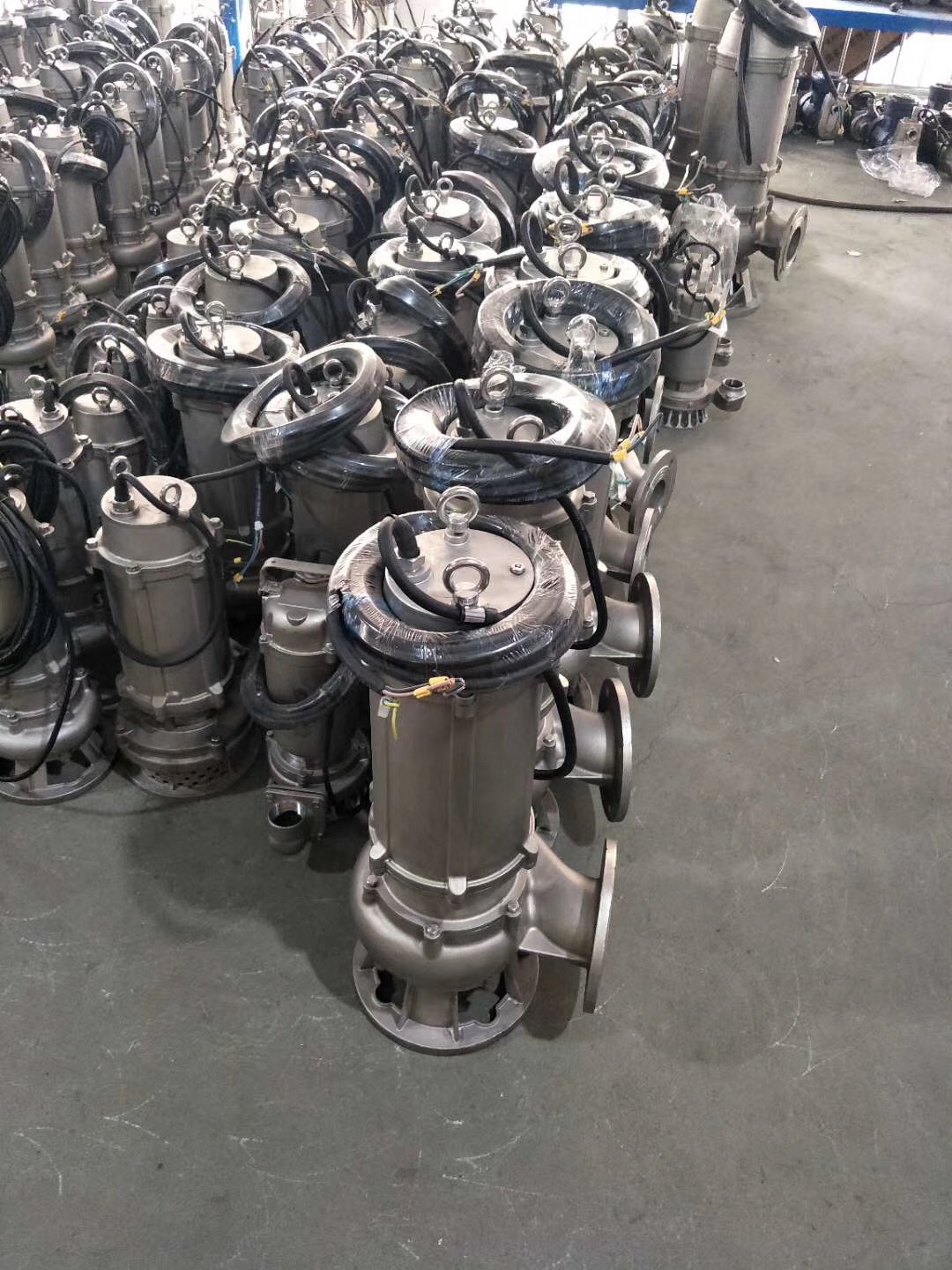
The submersible mixed flow pump is a dynamic hydraulic machine employed for the efficient transfer of fluids, particularly in applications involving water and wastewater management, agriculture, and industrial processes. Positioned within the industry chain as a critical component of fluid handling systems, its function bridges the gap between fluid sources and point-of-use applications. Unlike centrifugal pumps optimized for high flow at low head, or positive displacement pumps prioritizing consistent flow regardless of head, the mixed flow pump offers a compromise, exhibiting characteristics of both. This design allows for higher heads than purely axial flow pumps while maintaining respectable flow rates, making it ideal for situations where moderate head and flow are required. Core performance metrics include flow rate (typically measured in cubic meters per hour or gallons per minute), total dynamic head (expressed in meters or feet), pump efficiency (percentage), and power consumption (kilowatts). A key challenge in the industry is optimizing impeller geometry for varying fluid viscosities and solids content, while ensuring long-term reliability in submerged operating conditions. This guide provides an in-depth technical analysis of the submersible mixed flow pump, covering material science, manufacturing processes, performance characteristics, failure modes, and relevant industry standards.
Material Science & Manufacturing
The performance and longevity of a submersible mixed flow pump are intrinsically linked to the materials used in its construction and the precision of its manufacturing. Key components—the pump housing, impeller, diffuser, and shaft—require specific material properties to withstand corrosive fluids, mechanical stress, and continuous submerged operation. Pump housings are commonly constructed from cast iron (ASTM A48 Class 30), stainless steel (304, 316 – ASTM A240), or polymer composites. Cast iron offers cost-effectiveness and good abrasion resistance, but is susceptible to corrosion in aggressive environments. Stainless steel provides superior corrosion resistance but is more expensive. Polymer composites, such as reinforced polypropylene, are increasingly used for applications with low head and non-abrasive fluids due to their excellent chemical resistance and lightweight characteristics. Impellers, subjected to significant centrifugal forces and fluid impact, are typically manufactured from cast iron, bronze (ASTM B584), or stainless steel. Bronze exhibits good wear resistance and corrosion resistance but is heavier than stainless steel. Manufacturing processes include centrifugal casting for impellers, sand casting or investment casting for housings, and CNC machining for precision components. Critical parameter control during manufacturing involves ensuring dimensional accuracy of impeller blades (within ±0.1mm), maintaining surface finish to minimize friction losses (Ra < 1.6 µm), and achieving proper weld integrity for components like the pump inlet and outlet flanges (meeting AWS D1.1 standards). Post-manufacturing, components undergo rigorous non-destructive testing (NDT), including ultrasonic testing (UT) and magnetic particle inspection (MPI), to identify any internal flaws or surface defects.
Performance & Engineering
The hydraulic performance of a submersible mixed flow pump is governed by a complex interplay of fluid dynamics and impeller geometry. The mixed flow design combines axial and radial flow components, resulting in a pressure head between that of an axial flow pump and a centrifugal pump. Force analysis involves considering centrifugal force acting on the impeller, hydraulic thrust, and bearing loads. Proper bearing selection (typically deep-groove ball bearings or tapered roller bearings – ISO 2811) is crucial for managing radial and axial loads and ensuring long-term pump reliability. Environmental resistance is a paramount concern. The pump must withstand continuous submersion in water, often containing corrosive elements or abrasive solids. Seals, typically mechanical seals (API 682 standards), are critical for preventing water ingress into the motor and ensuring long-term operation. Compliance requirements vary depending on the application. For potable water applications, materials must meet NSF/ANSI 61 standards for lead content and extractable contaminants. For wastewater applications, pumps must be capable of handling solids and resist corrosion from aggressive chemicals. The pump’s electrical motor must comply with IEC 60034-1 standards for rotational electrical machines, with appropriate ingress protection (IP68) to ensure waterproof operation. Pump efficiency is optimized by minimizing hydraulic losses through careful impeller design, smooth flow passages, and optimized diffuser geometry. Computational Fluid Dynamics (CFD) simulations are frequently used to analyze flow patterns and identify areas for improvement. Cavitation, a common failure mode, is prevented by ensuring sufficient Net Positive Suction Head Available (NPSHa) exceeds the Net Positive Suction Head Required (NPSHr) by a sufficient margin.
Technical Specifications
| Parameter | Unit | Typical Value (Small Pump) | Typical Value (Large Pump) |
|---|---|---|---|
| Flow Rate | m³/h | 5 - 30 | 100 - 500 |
| Total Dynamic Head | m | 10 - 20 | 50 - 100 |
| Pump Efficiency | % | 65 - 75 | 70 - 85 |
| Power Consumption | kW | 0.75 - 2.2 | 11 - 37 |
| Maximum Solid Handling Size | mm | 5 - 10 | 25 - 50 |
| Operating Temperature | °C | 0 - 40 | 0 - 60 |
Failure Mode & Maintenance
Submersible mixed flow pumps are susceptible to various failure modes, often stemming from operational stresses and environmental factors. Fatigue cracking in the impeller, particularly around the blade roots, is a common issue caused by cyclic loading and stress concentration. This can be mitigated through careful impeller design, material selection (high-strength alloys), and regular inspection using dye penetrant testing (DPT). Delamination of polymer composite components can occur due to prolonged exposure to moisture and UV radiation, requiring replacement of the affected parts. Degradation of seals (mechanical seals) leads to water ingress into the motor, causing corrosion and eventual failure. Regular seal replacement, following manufacturer's recommendations, is crucial. Oxidation and corrosion of metallic components, especially in aggressive fluids, can reduce component strength and lead to premature failure. Proper material selection (stainless steel, corrosion-resistant alloys) and cathodic protection techniques can minimize corrosion. Bearing failure, manifested as increased noise and vibration, results from inadequate lubrication, excessive loading, or contamination. Regular lubrication with appropriate grease (following ISO 2811 guidelines) and monitoring of bearing temperature are essential preventative measures. Maintenance procedures should include regular visual inspections for leaks, corrosion, and damage. Periodic monitoring of pump performance parameters (flow rate, head, power consumption) can identify deviations from baseline values, indicating potential problems. Scheduled disassembly and inspection of internal components, including impellers, seals, and bearings, are recommended based on operating hours and application severity. Proper storage of spare parts and adherence to manufacturer's maintenance guidelines are vital for minimizing downtime and maximizing pump lifespan.
Industry FAQ
Q: What is the primary difference between a mixed flow pump and a centrifugal pump in terms of head and flow characteristics?
A: Centrifugal pumps excel at high flow rates with relatively low head, while mixed flow pumps provide a balance – higher head than centrifugal pumps for the same flow rate, but lower head compared to positive displacement pumps. The mixed flow impeller design imparts both radial and axial velocity components to the fluid, resulting in this intermediate performance profile.
Q: How do you mitigate the risk of cavitation in a submersible mixed flow pump?
A: Cavitation occurs when the absolute pressure at the pump inlet falls below the vapor pressure of the liquid. To prevent this, ensure sufficient Net Positive Suction Head Available (NPSHa) exceeds the Net Positive Suction Head Required (NPSHr) by a safety margin. This can be achieved by increasing suction line diameter, reducing suction line length, or lowering the pump elevation.
Q: What material selection considerations are most important for pumps handling abrasive fluids?
A: For abrasive fluids, materials with high hardness and abrasion resistance are essential. Hardened cast iron, chrome alloyed cast iron, or ceramic coatings are commonly used for impellers and pump housings. Regular inspection and replacement of worn components are also critical.
Q: What are the key factors to consider when selecting a mechanical seal for a submersible pump?
A: Key factors include the fluid being pumped (corrosiveness, abrasiveness), operating temperature, pressure, and shaft speed. The seal material must be compatible with the fluid and capable of withstanding the operating conditions. Seal type (single vs. double) should be selected based on the application's leakage requirements.
Q: How frequently should a submersible pump's motor be inspected for winding insulation breakdown?
A: Motor winding insulation breakdown is a critical failure mode. Inspection frequency depends on operating conditions, but a minimum of annually is recommended. Insulation resistance testing (using a megohmmeter – IEEE 43 standard) should be performed to assess insulation condition. Trending of insulation resistance values over time can help predict potential failures.
Conclusion
The submersible mixed flow pump represents a versatile and efficient solution for a wide range of fluid handling applications. Its unique design, combining axial and radial flow characteristics, allows it to deliver moderate head and flow rates, making it suitable for water and wastewater management, agriculture, and industrial processes. Careful consideration of material science, manufacturing processes, and performance engineering principles is crucial for ensuring long-term reliability and optimal efficiency.
Future advancements in submersible mixed flow pump technology will likely focus on enhancing hydraulic efficiency through advanced impeller designs optimized using CFD simulations, developing more durable and corrosion-resistant materials, and integrating smart monitoring systems for predictive maintenance. Adherence to relevant industry standards and best practices is essential for ensuring the safe and reliable operation of these critical pumps.
-
Precision at the Pump: How Better Machining Protects Flow and Uptime
News2026-11-20
-
Why Pump Reliability Begins Before the First Drop of Fluid
News2026-11-20
-
Beyond the Pump: Designing Safer Access Around Critical Water Infrastructure
News2026-11-20
-
Why Pumping Stations Depend on the Infrastructure Beneath the Pumps
News2026-11-20
-
Beyond the Pump Room: How Smarter Loading Protects Industrial Equipment
News2026-11-19
-
When Pumps Stop: Designing More Resilient Power for Critical Pumping Systems
News2026-11-19
-
The Hidden Role of Dust and Gas Monitoring in Reliable Pump Operations
News2026-11-19
-
The Hidden Role of Mineral Compounds in Extending Industrial Pump Lifespan
News2026-10-12
-
Why Pump System Reliability Depends on Precision Hose Assembly Methods
News2026-09-15
-
How Advanced Imaging Films Are Transforming Pump Component Quality Control
News2026-08-25
-
How Advanced Filtration Protects Pump Systems from Premature Wear and Costly Downtime
News2026-08-25
-
How Steel Material Selection Drives Pump Reliability in Heavy-Duty Systems
News2026-08-25
-
Ensuring Pump System Efficiency: The Role of High-Quality Pipe Fittings and Tubing
News2026-08-24
-
Optimizing Fluid Dynamics and Material Consistency in Industrial Processing
News2026-08-18
-
Innovations and Challenges in Hydraulic Systems for Heavy Machinery
News2026-08-13




