English
- Afrikaans
- Albanian
- Amharic
- Arabic
- Armenian
- Azerbaijani
- Basque
- Belarusian
- Bengali
- Bosnian
- Bulgarian
- Catalan
- Cebuano
- Corsican
- Croatian
- Czech
- Danish
- Dutch
- English
- Esperanto
- Estonian
- Finnish
- French
- Frisian
- Galician
- Georgian
- German
- Greek
- Gujarati
- Haitian Creole
- hausa
- hawaiian
- Hebrew
- Hindi
- Miao
- Hungarian
- Icelandic
- igbo
- Indonesian
- irish
- Italian
- Japanese
- Javanese
- Kannada
- kazakh
- Khmer
- Rwandese
- Korean
- Kurdish
- Kyrgyz
- Lao
- Latin
- Latvian
- Lithuanian
- Luxembourgish
- Macedonian
- Malgashi
- Malay
- Malayalam
- Maltese
- Maori
- Marathi
- Mongolian
- Myanmar
- Nepali
- Norwegian
- Norwegian
- Occitan
- Pashto
- Persian
- Polish
- Portuguese
- Punjabi
- Romanian
- Russian
- Samoan
- Scottish Gaelic
- Serbian
- Sesotho
- Shona
- Sindhi
- Sinhala
- Slovak
- Slovenian
- Somali
- Spanish
- Sundanese
- Swahili
- Swedish
- Tagalog
- Tajik
- Tamil
- Tatar
- Telugu
- Thai
- Turkish
- Turkmen
- Ukrainian
- Urdu
- Uighur
- Uzbek
- Vietnamese
- Welsh
- Bantu
- Yiddish
- Yoruba
- Zulu

Telephone: +86 13120555503
Email: frank@cypump.com


Apr . 01, 2024 17:55 Back to list
submersible mixed flow propeller pump Performance Analysis
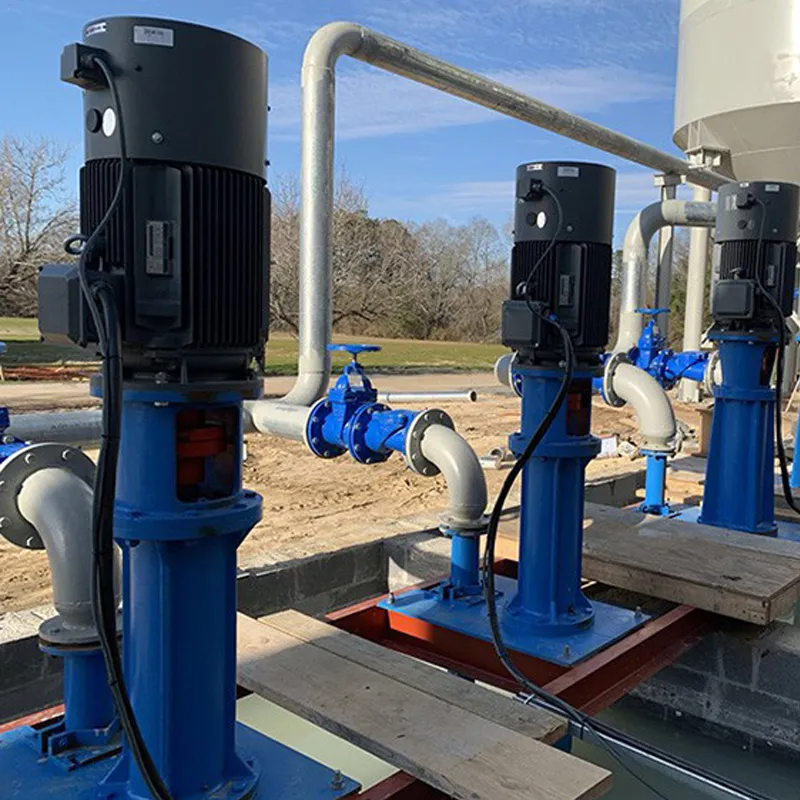
Introduction
Submersible mixed flow propeller pumps are centrifugal pumps specifically designed for submerged operation, commonly utilized in wastewater treatment, drainage, irrigation, and industrial applications requiring fluid transfer from below the liquid surface. Unlike purely centrifugal or axial flow pumps, the mixed flow design combines radial and axial discharge characteristics, offering a balance between high head and high flow rate capabilities. These pumps are characterized by their compact design, efficient operation, and the elimination of the need for priming, as the impeller is always submerged. Their performance is heavily reliant on impeller geometry, rotational speed, and the specific gravity and viscosity of the fluid being pumped. A core industry pain point revolves around abrasive wear from suspended solids in wastewater and the subsequent reduction in pump efficiency and lifespan. Corrosion, particularly in saline environments, also represents a significant challenge requiring careful material selection and protective coatings. Finally, energy consumption and overall life-cycle cost are critical considerations driving innovation in pump design and control systems.
Material Science & Manufacturing
The construction of a submersible mixed flow propeller pump necessitates careful material selection to withstand corrosive environments and abrasive wear. Common materials include cast iron (ASTM A48 Class 30, offering good abrasion resistance for freshwater applications), stainless steel (304, 316, or duplex stainless steel for increased corrosion resistance in saltwater or chemical applications – ASTM A240), and specialized polymer materials for impellers and diffusers in less demanding scenarios. The impeller is typically manufactured via precision casting, followed by machining to achieve the precise blade profile critical for hydraulic performance. The pump housing is often manufactured using sand casting or investment casting, ensuring structural integrity and resistance to hydrostatic pressure. Shafts are typically made from high-strength alloy steel (e.g., 4140 – ASTM A576) and undergo heat treatment to enhance durability and fatigue resistance. Seals are a crucial component, employing materials like silicon carbide or tungsten carbide against hardened stainless steel to minimize wear and leakage. Manufacturing parameter control is paramount; impeller balancing is essential to prevent vibration and bearing failure. Welding procedures for the pump housing must adhere to stringent standards (AWS D1.1) to ensure weld integrity and prevent corrosion initiation. Surface treatments like epoxy coatings or galvanization are frequently applied to cast iron components to extend their service life in corrosive environments. Furthermore, the selection of elastomer materials for O-rings and diaphragms is vital for compatibility with the pumped fluid and maintaining a reliable seal.
Performance & Engineering
The performance of a submersible mixed flow propeller pump is governed by a complex interplay of hydraulic forces, fluid properties, and pump geometry. Force analysis involves evaluating the radial and axial thrust on the impeller, the torque required for rotation, and the stress distribution within the pump housing. Cavitation is a primary concern, occurring when the absolute pressure within the impeller drops below the vapor pressure of the fluid, leading to the formation of vapor bubbles that collapse and damage the impeller. Net Positive Suction Head Required (NPSHr) is a critical parameter, requiring careful calculation to prevent cavitation. Environmental resistance is paramount; the pump must withstand the hydrostatic pressure at its operating depth, as well as temperature fluctuations and potential chemical exposure. Compliance requirements often dictate specific materials and design features. For example, pumps used in potable water applications must meet NSF/ANSI 61 standards for lead content and material safety. Electrical components must adhere to IEC standards for submersible motor safety and water ingress protection (IP68 rating is common). Functional implementation involves optimizing impeller blade angle and number, diffuser design, and volute geometry to maximize hydraulic efficiency and minimize noise. Furthermore, variable frequency drives (VFDs) are increasingly employed to control pump speed and flow rate, optimizing energy consumption and providing precise process control. The hydraulic institute standards (HI) provide performance curves and testing protocols to ensure consistent pump performance.
Technical Specifications
| Parameter | Unit | Typical Value (Range) | Testing Standard |
|---|---|---|---|
| Flow Rate | m³/h | 50-1500 | ISO 9906:2016 |
| Head | m | 10-80 | ISO 9906:2016 |
| Power Input | kW | 1.5-150 | IEC 60034 |
| Impeller Diameter | mm | 150-800 | Manufacturer Specification |
| Maximum Solid Handling Size | mm | Up to 50 (depending on impeller design) | Manufacturer Specification |
| Operating Temperature | °C | -10 to 60 | ISO 9906:2016 |
Failure Mode & Maintenance
Submersible mixed flow propeller pumps are susceptible to several failure modes. Fatigue cracking of the impeller, particularly around the blade roots, can occur due to cyclical loading and stress concentration. Delamination of protective coatings on the pump housing can lead to corrosion and premature failure. Bearing failure is common, often caused by insufficient lubrication, contamination, or excessive loads. Seal failure results in leakage and potential motor damage. Cavitation erosion damages the impeller blades, reducing pump efficiency. Abrasion from suspended solids causes wear on the impeller and volute. Oxidation of metallic components in corrosive environments accelerates degradation. Regular maintenance is crucial to mitigate these risks. This includes periodic inspection of the impeller and volute for wear and corrosion, lubrication of bearings, replacement of seals as needed, and monitoring of motor temperature and vibration. Preventive maintenance schedules should be based on operating hours and the characteristics of the pumped fluid. Oil analysis can detect early signs of bearing wear. Ultrasonic testing can identify cracks in the impeller. Proper alignment of the pump and motor is essential to prevent excessive bearing loads. Routine cleaning to remove debris and solids buildup helps maintain optimal performance. Consideration should also be given to the implementation of condition monitoring systems to detect anomalies and predict potential failures before they occur.
Industry FAQ
Q: What is the primary difference between a mixed flow and a centrifugal pump in this application?
A: Centrifugal pumps excel at high flow rates with relatively low head, while mixed flow pumps offer a better balance between flow and head. For applications requiring moderate head and flow, like typical wastewater lift stations, mixed flow pumps are often more efficient and cost-effective than purely centrifugal designs. The mixed flow impeller imparts both radial and axial velocity components to the fluid, resulting in this performance characteristic.
Q: How do you mitigate the risk of cavitation in these pumps?
A: Cavitation is prevented by ensuring sufficient NPSH available (NPSHa) exceeds the NPSHr. This can be achieved by maintaining adequate submergence depth, minimizing suction pipe losses, and controlling fluid temperature. Regular impeller inspection for signs of cavitation damage is also vital.
Q: What materials are best suited for handling highly abrasive fluids?
A: High-chrome cast iron alloys (ASTM A532) offer excellent abrasion resistance and are commonly used for impellers handling abrasive fluids. Hardened stainless steels and ceramic coatings can also provide enhanced wear protection. Selecting materials based on the specific abrasive characteristics of the fluid is crucial.
Q: What are the typical maintenance intervals for submersible pump motors?
A: Typical maintenance intervals vary, but a general guideline includes annual inspection of motor windings, bearings, and seals. Oil changes for oil-filled motors should be performed every 6-12 months, depending on operating conditions. Regular monitoring of motor current and temperature can also help identify potential issues.
Q: How do you ensure the pump meets relevant environmental regulations regarding leakage and discharge?
A: Pump selection must consider the appropriate shaft seals (e.g., double mechanical seals with barrier fluid) to prevent leakage of the pumped fluid into the environment. Discharge must comply with local and national effluent standards, which may require pre-treatment or filtration to remove pollutants. Compliance documentation and testing reports are essential.
Conclusion
Submersible mixed flow propeller pumps represent a vital technology for a broad range of fluid handling applications. Their efficient design, ability to operate submerged without priming, and adaptability to various fluid types make them a preferred choice in wastewater treatment, drainage, and industrial processes. Successful implementation hinges on meticulous material selection to combat corrosion and abrasion, precise manufacturing to ensure hydraulic performance, and diligent maintenance to prevent premature failure.
Ongoing advancements in pump technology are focused on improving efficiency through optimized impeller designs, incorporating intelligent control systems for variable speed operation, and developing advanced materials for enhanced durability and corrosion resistance. Furthermore, the integration of remote monitoring and diagnostic capabilities will play an increasingly important role in predictive maintenance and maximizing pump lifecycle costs. Ultimately, a comprehensive understanding of the technical aspects detailed herein is essential for engineers and procurement professionals to make informed decisions and ensure the reliable operation of these critical pumping systems.
-
Precision at the Pump: How Better Machining Protects Flow and Uptime
News2026-11-20
-
Why Pump Reliability Begins Before the First Drop of Fluid
News2026-11-20
-
Beyond the Pump: Designing Safer Access Around Critical Water Infrastructure
News2026-11-20
-
Why Pumping Stations Depend on the Infrastructure Beneath the Pumps
News2026-11-20
-
Beyond the Pump Room: How Smarter Loading Protects Industrial Equipment
News2026-11-19
-
When Pumps Stop: Designing More Resilient Power for Critical Pumping Systems
News2026-11-19
-
The Hidden Role of Dust and Gas Monitoring in Reliable Pump Operations
News2026-11-19
-
The Hidden Role of Mineral Compounds in Extending Industrial Pump Lifespan
News2026-10-12
-
Why Pump System Reliability Depends on Precision Hose Assembly Methods
News2026-09-15
-
How Advanced Imaging Films Are Transforming Pump Component Quality Control
News2026-08-25
-
How Advanced Filtration Protects Pump Systems from Premature Wear and Costly Downtime
News2026-08-25
-
How Steel Material Selection Drives Pump Reliability in Heavy-Duty Systems
News2026-08-25
-
Ensuring Pump System Efficiency: The Role of High-Quality Pipe Fittings and Tubing
News2026-08-24
-
Optimizing Fluid Dynamics and Material Consistency in Industrial Processing
News2026-08-18
-
Innovations and Challenges in Hydraulic Systems for Heavy Machinery
News2026-08-13




