English
- Afrikaans
- Albanian
- Amharic
- Arabic
- Armenian
- Azerbaijani
- Basque
- Belarusian
- Bengali
- Bosnian
- Bulgarian
- Catalan
- Cebuano
- Corsican
- Croatian
- Czech
- Danish
- Dutch
- English
- Esperanto
- Estonian
- Finnish
- French
- Frisian
- Galician
- Georgian
- German
- Greek
- Gujarati
- Haitian Creole
- hausa
- hawaiian
- Hebrew
- Hindi
- Miao
- Hungarian
- Icelandic
- igbo
- Indonesian
- irish
- Italian
- Japanese
- Javanese
- Kannada
- kazakh
- Khmer
- Rwandese
- Korean
- Kurdish
- Kyrgyz
- Lao
- Latin
- Latvian
- Lithuanian
- Luxembourgish
- Macedonian
- Malgashi
- Malay
- Malayalam
- Maltese
- Maori
- Marathi
- Mongolian
- Myanmar
- Nepali
- Norwegian
- Norwegian
- Occitan
- Pashto
- Persian
- Polish
- Portuguese
- Punjabi
- Romanian
- Russian
- Samoan
- Scottish Gaelic
- Serbian
- Sesotho
- Shona
- Sindhi
- Sinhala
- Slovak
- Slovenian
- Somali
- Spanish
- Sundanese
- Swahili
- Swedish
- Tagalog
- Tajik
- Tamil
- Tatar
- Telugu
- Thai
- Turkish
- Turkmen
- Ukrainian
- Urdu
- Uighur
- Uzbek
- Vietnamese
- Welsh
- Bantu
- Yiddish
- Yoruba
- Zulu

Telephone: +86 13120555503
Email: frank@cypump.com


Apr . 01, 2024 17:55 Back to list
submarine pumps Material Science Manufacturing
Introduction
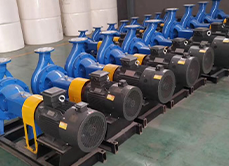
Submarine pumps are centrifugal pumps specifically designed for submerged operation, typically within wellbores in oil & gas production, but increasingly utilized in mining, dewatering, and wastewater management. Positioned within the fluid stream, they eliminate the need for surface suction, significantly reducing suction lift limitations and associated issues like cavitation. These pumps are integral to artificial lift systems, providing the necessary energy to bring fluids to the surface. Their core performance characteristics revolve around volumetric flow rate, head (pressure increase), power consumption, and overall system efficiency. A critical differentiator within the industry is the pump's ability to handle abrasive solids and corrosive fluids without significant degradation, a direct result of material selection and design features. The increasing demand for efficient and reliable fluid extraction drives continuous innovation in submarine pump technology, focusing on enhanced durability, minimized maintenance, and optimized energy usage.
Material Science & Manufacturing
The materials used in submarine pump construction are critical to their longevity and performance in harsh environments. Pump casings are commonly manufactured from ductile iron (ASTM A536) for moderate corrosion resistance and high tensile strength, or alternatively, from stainless steel alloys (316, 17-4 PH) for highly corrosive fluids. Impellers, the rotating components responsible for fluid acceleration, typically employ alloy steels (e.g., 4340) heat-treated for hardness and wear resistance. Diffusers, which convert kinetic energy into pressure energy, often utilize similar materials to the casing. Elastomeric components, such as seals and O-rings, are frequently made from Nitrile Butadiene Rubber (NBR), Fluorocarbon (Viton), or Perfluoroelastomer (FFKM) depending on fluid compatibility and temperature requirements. Manufacturing processes involve precision casting for casings and diffusers, forging and machining for impellers, and rubber molding for seals. Welding processes, particularly Submerged Arc Welding (SAW) and Gas Metal Arc Welding (GMAW), are vital for joining casing sections. Parameter control during welding is paramount to prevent weld defects such as porosity and cracking, which can compromise structural integrity. Non-destructive testing (NDT), including radiography and ultrasonic testing, is routinely employed to verify weld quality. Surface treatments like epoxy coatings and metallic spraying provide additional corrosion protection. The manufacturing tolerances are extremely tight (typically within +/- 0.1mm) to ensure proper impeller-to-casing clearances and prevent hydraulic losses.
Performance & Engineering
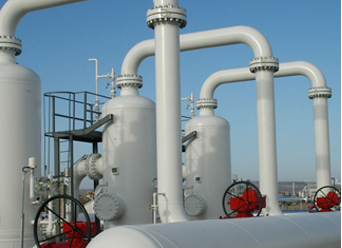
Submarine pump performance is fundamentally governed by the principles of fluid dynamics and mechanical engineering. Force analysis focuses on radial loads exerted by the impeller on the bearings, axial thrust generated by pressure imbalances, and bending moments induced by fluid flow. Bearing selection (typically ball or roller bearings) is critical to withstand these loads and ensure prolonged pump life. Environmental resistance is paramount; pumps must withstand hydrostatic pressure, temperature variations, and the corrosive effects of the pumped fluid. Compliance requirements include adherence to API 610 (Centrifugal Pumps) and ISO 13709 (Petroleum and Natural Gas Industries – Subsurface Safety Valve Ensembles) standards, particularly regarding materials traceability, testing procedures, and documentation. Functional implementation considers the pump's integration into the overall artificial lift system. This includes careful matching of pump curves (head vs. flow rate) to the well's inflow performance relationship (IPR) and tubing characteristics. Variable Frequency Drives (VFDs) are often employed to control pump speed and optimize performance across a range of operating conditions. Cavitation, a destructive phenomenon caused by low pressure at the impeller inlet, must be avoided through careful pump selection and system design. Pump efficiency is optimized through the use of computational fluid dynamics (CFD) modeling to refine impeller and diffuser geometries, minimizing hydraulic losses and maximizing energy transfer.
Technical Specifications
| Parameter | Units | Typical Range | Critical Considerations |
|---|---|---|---|
| Flow Rate | m3/hr | 50 – 2000 | Dependent on well inflow and tubing size. |
| Head | m | 100 – 1000 | Determined by well depth and fluid density. |
| Power | kW | 20 – 300 | Influenced by flow rate, head, and pump efficiency. |
| Maximum Solid Handling Capacity | % by volume | Up to 30 | Affects impeller wear and pump reliability. |
| Maximum Operating Temperature | °C | Up to 150 | Impacts material selection and seal compatibility. |
| Maximum Operating Pressure | MPa | Up to 30 | Dictated by well depth and fluid density; casing must be rated accordingly. |
Failure Mode & Maintenance
Submarine pumps are susceptible to several failure modes. Fatigue cracking in the impeller or casing, induced by cyclic loading and stress concentrations, is a common issue. Delamination of coatings, exposing the underlying metal to corrosion, can occur due to improper surface preparation or coating application. Erosion-corrosion, caused by abrasive solids in the fluid stream, leads to material loss and reduced pump performance. Bearing failure, resulting from excessive loads, insufficient lubrication, or contamination, is a significant concern. Seal failure allows fluid leakage and can lead to motor damage. Oxidation of elastomers degrades their sealing properties. Preventative maintenance is crucial and includes regular vibration analysis to detect bearing wear, oil analysis to monitor lubricant condition, and visual inspections for corrosion and erosion. Scheduled impeller replacement is recommended based on operating hours and fluid characteristics. Proper filtration of the pumped fluid minimizes abrasive wear. Periodic motor inspections and rewinding are necessary to maintain electrical integrity. In the event of a failure, root cause analysis (RCA) is essential to identify the underlying issue and prevent recurrence. Failure analysis techniques include metallography, fracture surface examination, and chemical analysis.
Industry FAQ
Q: What are the key differences between Electric Submersible Pumps (ESPs) and Hydraulic Submersible Pumps?
A: ESPs are powered directly by an electric motor located within the pump assembly, offering high efficiency and precise control. They require electrical power cables extending to the surface. Hydraulic submersible pumps, conversely, are driven by hydraulic fluid supplied from a surface power unit. They are advantageous in situations where electrical power access is limited or hazardous, but generally exhibit lower efficiency due to hydraulic energy conversion losses. Hydraulic pumps are also more complex regarding fluid management and require specialized hydraulic power units.
Q: How does the specific gravity of the pumped fluid impact pump selection?
A: Specific gravity directly affects the hydraulic head required to lift the fluid. Higher specific gravity fluids necessitate pumps capable of generating greater head. Pump curves are typically presented for water (specific gravity of 1.0), and corrections must be applied for fluids with different densities. Furthermore, the pump's motor must be sized to handle the increased torque required to pump heavier fluids.
Q: What considerations are important when selecting materials for handling CO2 rich fluids?
A: CO2 rich fluids are highly corrosive. Standard carbon steel is generally unsuitable. Materials like duplex stainless steel, super duplex stainless steel, and nickel alloys are preferred for their superior corrosion resistance. Elastomers must be specifically formulated for CO2 compatibility, as many common materials degrade rapidly in its presence. Careful consideration of material selection is critical to prevent premature failure and ensure long-term reliability.
Q: What is the role of a sand separator in a submersible pumping system?
A: Sand separators are strategically placed upstream of the pump to remove abrasive sand particles from the fluid stream. This significantly reduces erosion-corrosion of the impeller, diffuser, and other pump components, extending pump life and minimizing maintenance. Proper separator sizing and design are crucial for effective sand removal without creating excessive pressure drop.
Q: How is the pump performance monitored in real-time?
A: Real-time performance monitoring is typically achieved through downhole sensors measuring parameters such as pump intake pressure, discharge pressure, motor current, and fluid temperature. These data are transmitted to the surface for analysis and allow operators to detect anomalies, optimize pump operation, and predict potential failures. Sophisticated software platforms provide trend analysis and diagnostic capabilities, enabling proactive maintenance interventions.
Conclusion
Submarine pumps represent a sophisticated and crucial technology for fluid extraction across diverse industries. Their performance is inextricably linked to meticulous material selection, precise manufacturing processes, and a comprehensive understanding of fluid dynamics. Addressing core industry pain points, such as abrasive wear, corrosion, and operational efficiency, demands a holistic approach encompassing optimized pump design, preventative maintenance programs, and real-time performance monitoring.
Looking ahead, continued innovation will focus on developing pumps capable of handling increasingly challenging environments, including higher temperatures, pressures, and fluid compositions. The integration of advanced materials, intelligent sensors, and data analytics will drive improvements in reliability, efficiency, and overall system performance. The shift towards sustainable practices will also necessitate the development of energy-efficient pump designs and environmentally friendly materials.
-
Comprehensive Guide to Waterproof ORings for Optimal Sealing Solutions
News2026-06-09
-
drainage pumps Performance and Engineering
News2026-06-09
-
basement bathroom ejector pump Material Science
News2026-06-09
-
Sewer Ejector Pump Cost Performance Analysis
News2026-06-09
-
Septic Tank Pump Replacement Performance Analysis
News2026-06-09
-
septic sump pump Performance and Engineering
News2026-06-09
-
Septic Pump System Performance Analysis
News2026-06-08
-
pump for septic Material Science
News2026-06-08
-
basement sewer pump Performance Analysis
News2026-06-08
-
submerged pump Performance Engineering
News2026-06-08
-
Septic System Pumps Performance Analysis
News2026-06-08
-
septic system pump Material Science and Manufacturing
News2026-06-07
-
pump for septic tank Material Science Manufacturing
News2026-06-07
-
submersible sewage pump Material Science
News2026-06-07
-
Sewage Ejector Material Science and Manufacturing
News2026-06-07




