English
- Afrikaans
- Albanian
- Amharic
- Arabic
- Armenian
- Azerbaijani
- Basque
- Belarusian
- Bengali
- Bosnian
- Bulgarian
- Catalan
- Cebuano
- Corsican
- Croatian
- Czech
- Danish
- Dutch
- English
- Esperanto
- Estonian
- Finnish
- French
- Frisian
- Galician
- Georgian
- German
- Greek
- Gujarati
- Haitian Creole
- hausa
- hawaiian
- Hebrew
- Hindi
- Miao
- Hungarian
- Icelandic
- igbo
- Indonesian
- irish
- Italian
- Japanese
- Javanese
- Kannada
- kazakh
- Khmer
- Rwandese
- Korean
- Kurdish
- Kyrgyz
- Lao
- Latin
- Latvian
- Lithuanian
- Luxembourgish
- Macedonian
- Malgashi
- Malay
- Malayalam
- Maltese
- Maori
- Marathi
- Mongolian
- Myanmar
- Nepali
- Norwegian
- Norwegian
- Occitan
- Pashto
- Persian
- Polish
- Portuguese
- Punjabi
- Romanian
- Russian
- Samoan
- Scottish Gaelic
- Serbian
- Sesotho
- Shona
- Sindhi
- Sinhala
- Slovak
- Slovenian
- Somali
- Spanish
- Sundanese
- Swahili
- Swedish
- Tagalog
- Tajik
- Tamil
- Tatar
- Telugu
- Thai
- Turkish
- Turkmen
- Ukrainian
- Urdu
- Uighur
- Uzbek
- Vietnamese
- Welsh
- Bantu
- Yiddish
- Yoruba
- Zulu

Telephone: +86 13120555503
Email: frank@cypump.com


Apr . 01, 2024 17:55 Back to list
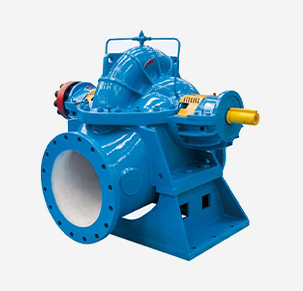
split case centrifugal pump Performance Analysis
Introduction
The split case centrifugal pump is a dynamic machine designed to convert rotational kinetic energy to the hydrodynamic energy of fluid flow. Distinguished by its horizontally split casing, this pump design facilitates ease of maintenance and internal component access without disturbing pipework. Within the broader centrifugal pump classification, split case pumps occupy a significant niche, particularly in applications demanding high flow rates and moderate heads. They are integral to industries including water supply, irrigation, power generation, chemical processing, and HVAC systems. Core performance characteristics—flow rate, head, and efficiency—are fundamentally governed by impeller geometry, rotational speed, and fluid properties. A key advantage lies in its ability to handle fluids with some degree of suspended solids, although its suitability diminishes with increasing solid concentration. The industry consistently faces challenges related to cavitation, corrosion, and mechanical seal failure, driving ongoing refinements in materials, design, and operational practices. The pump's reliance on standardized components creates interoperability while requiring diligence in selecting materials suitable for the specific fluid being pumped.
Material Science & Manufacturing
Split case centrifugal pumps commonly employ materials selected based on fluid compatibility, pressure requirements, and cost considerations. Casing materials frequently include cast iron (ASTM A48 Class 30), ductile iron (ASTM A536 65-45-12), or stainless steel (304, 316, or duplex stainless steels like 2205). The choice hinges on the corrosiveness of the fluid. For highly corrosive environments, specialized alloys like Hastelloy or titanium may be required. Impeller materials mirror casing selection, with bronze (C83600) often used for its corrosion resistance and lower cost in non-abrasive applications. Shafts are typically constructed from high-strength carbon steel (e.g., AISI 1045) and hardened for wear resistance. Manufacturing processes begin with patternmaking for the casing and impeller. Casing production utilizes sand casting, while impellers may be investment cast or machined from solid bar stock. Critical dimensions are maintained through precision machining and quality control checks, including non-destructive testing (NDT) like radiographic inspection for weld integrity. Mechanical seals, a crucial component, demand tight tolerances and are often manufactured using silicon carbide or tungsten carbide faces, sealed with elastomers like Viton or EPDM. The split casing is achieved through a precisely machined mating surface, requiring careful gasket selection (e.g., spiral wound gaskets with graphite or PTFE fillers) to prevent leakage. Welding processes, if employed for repairs or custom fabrication, must adhere to ASME Section IX standards.
Performance & Engineering
Performance analysis of split case pumps hinges on understanding pump affinity laws. These laws dictate the relationships between flow rate (Q), head (H), power (P), and impeller diameter (D), and speed (N). Specifically, Q is proportional to N and D, H is proportional to N2 and D2, and P is proportional to N3 and D3. This allows engineers to predict performance changes with alterations to impeller diameter or motor speed. Force analysis focuses on radial loads imposed by the impeller on the shaft and bearings, necessitating robust bearing selection (typically deep-groove ball bearings or roller bearings). Axial thrust, though generally lower in split case designs due to balancing vanes, must be accounted for via thrust bearings. Environmental resistance is critical. Pumps operating in harsh environments require protective coatings (e.g., epoxy coatings) to mitigate corrosion and abrasion. Suction and discharge piping design significantly impact performance, necessitating adherence to Hydraulic Institute (HI) standards for pipe sizing and NPSH (Net Positive Suction Head) calculation to prevent cavitation. Compliance requirements include adherence to ANSI/ASME B73.1 standards for centrifugal pumps, which cover dimensional standards, testing procedures, and performance reporting. Furthermore, pumps intended for potable water applications must comply with NSF/ANSI 61 standards regarding materials safety and leachability. Understanding system curves and pump curves is paramount for optimal system performance. Variable Frequency Drives (VFDs) are frequently employed to optimize energy consumption by adjusting pump speed to match varying demand.
Technical Specifications
| Parameter | Typical Range (Metric) | Typical Range (Imperial) | Standard |
|---|---|---|---|
| Flow Rate | 50 - 2000 m3/hr | 220 - 8800 GPM | HI 1.6 |
| Head | 20 - 200 m | 65 - 656 ft | HI 1.6 |
| Power | 5.5 - 500 kW | 7.5 - 670 HP | IEC 60034-1 |
| Operating Temperature | -20°C to +120°C | -4°F to +248°F | Material Dependent |
| Maximum Solid Handling Size | Up to 25 mm | Up to 1 inch | Application Specific |
| Casing Material | Cast Iron, Ductile Iron, Stainless Steel | Cast Iron, Ductile Iron, Stainless Steel | ASTM A48, A536, A743 |
Failure Mode & Maintenance
Split case centrifugal pumps are susceptible to several failure modes. Cavitation, caused by insufficient NPSH, leads to impeller erosion and reduced performance. Corrosion, dependent on fluid composition, degrades casing and impeller materials, resulting in leakage and reduced mechanical integrity. Mechanical seal failure, often due to abrasion, chemical incompatibility, or improper installation, results in leakage. Bearing failure, manifested as increased noise and vibration, typically stems from inadequate lubrication, misalignment, or overload. Fatigue cracking can occur in the casing or impeller due to cyclic loading, particularly in systems with pressure pulsations. Delamination of coatings, if applied, can accelerate corrosion. Oxide formation on shaft and impeller surfaces can lead to imbalance and vibration. Preventative maintenance is crucial. Regular visual inspections for leaks, vibration, and unusual noise are essential. Lubrication schedules must be strictly adhered to, utilizing appropriate greases or oils. Mechanical seals should be inspected and replaced proactively based on operating hours and fluid conditions. Periodic vibration analysis can detect bearing wear and misalignment. Internal component inspection during scheduled shutdowns allows for early detection of corrosion or erosion. Proper alignment of the pump and motor is critical to minimize bearing stress. Flushing the pump during periods of inactivity can prevent corrosion and scaling. Finally, maintaining accurate records of maintenance activities and performance data facilitates predictive maintenance strategies.
Industry FAQ
Q: What is the primary advantage of a split case pump over other centrifugal pump designs?
A: The primary advantage lies in its ease of maintenance. The horizontally split casing allows for internal component access—impeller, wear rings, and seals—without disturbing piping connections, minimizing downtime and maintenance costs. This is particularly beneficial in applications where routine inspection and repair are frequent.
Q: How does fluid temperature affect the selection of materials for a split case pump?
A: Higher fluid temperatures generally necessitate the use of more corrosion-resistant materials, such as stainless steel or specialized alloys. Increased temperature accelerates corrosion rates and can compromise the mechanical strength of standard materials like cast iron. Furthermore, thermal expansion must be considered in the design and sealing arrangements.
Q: What is NPSH and why is it critical for split case pump operation?
A: NPSH (Net Positive Suction Head) is the absolute pressure at the pump suction, minus the vapor pressure of the liquid. It’s critical because insufficient NPSH leads to cavitation, the formation and collapse of vapor bubbles within the pump. Cavitation causes impeller erosion, noise, vibration, and reduced performance. Proper system design must ensure adequate NPSH available to prevent cavitation.
Q: What are the key considerations when selecting a mechanical seal for a split case pump?
A: Key considerations include fluid compatibility, temperature, pressure, and the presence of abrasives. Seal face materials (silicon carbide, tungsten carbide) and elastomer selection (Viton, EPDM) must be compatible with the pumped fluid. Abrasive fluids require hardened seal faces and potentially flushing systems to remove abrasive particles. Correct seal installation and lubrication are also crucial.
Q: How can vibration analysis be used to diagnose problems with a split case pump?
A: Vibration analysis can identify bearing wear, misalignment, impeller imbalance, and cavitation. Specific vibration frequencies correlate to different fault conditions. For example, bearing defects often manifest as characteristic frequency spikes, while misalignment produces vibrations at running speed. Trending vibration data allows for early detection of developing problems before catastrophic failure occurs.
Conclusion
The split case centrifugal pump remains a cornerstone of fluid handling across a diverse range of industrial applications. Its robust design, relative ease of maintenance, and ability to handle moderate solids content continue to make it a preferred choice for high-flow, moderate-head scenarios. Understanding the intricacies of material selection, manufacturing processes, and performance characteristics is crucial for ensuring optimal operation and longevity. Proactive maintenance, incorporating regular inspections, lubrication, and vibration analysis, is paramount for mitigating common failure modes and minimizing downtime.
Future advancements are likely to focus on enhancing pump efficiency through improved impeller designs, optimizing hydraulic performance via computational fluid dynamics (CFD), and integrating smart sensors for real-time performance monitoring and predictive maintenance. The increasing demand for energy efficiency and reduced environmental impact will drive innovation in pump technology, solidifying the split case centrifugal pump’s role in sustainable industrial practices.
-
Effluent vs Sump Pump Performance Analysis
News2026-05-22
-
effluent septic pump Performance Engineering
News2026-05-22
-
best sewer pumps Performance Engineering
News2026-05-22
-
best sewer pump Performance Analysis
News2026-05-22
-
best sewage pumps Performance Engineering
News2026-05-22
-
basement bathroom sewage pump Material Science Manufacturing
News2026-05-21
-
wastewater treatment plant pumps Material Science Manufacturing
News2026-05-21
-
waste water pump for basement Material Science Manufacturing
News2026-05-21
-
sump pump sewage Performance Analysis
News2026-05-21
-
sump pump for sewage Material Science and Manufacturing
News2026-05-21
-
sump pump for septic systems Material Science Manufacturing
News2026-05-20
-
sump pump and ejector pump Material Science Manufacturing
News2026-05-20
-
sewage treatment plant pumps Performance Analysis
News2026-05-20
-
sewage tank pump Material Science and Manufacturing
News2026-05-20
-
sewage pump for septic tank Performance Analysis
News2026-05-20




