English
- Afrikaans
- Albanian
- Amharic
- Arabic
- Armenian
- Azerbaijani
- Basque
- Belarusian
- Bengali
- Bosnian
- Bulgarian
- Catalan
- Cebuano
- Corsican
- Croatian
- Czech
- Danish
- Dutch
- English
- Esperanto
- Estonian
- Finnish
- French
- Frisian
- Galician
- Georgian
- German
- Greek
- Gujarati
- Haitian Creole
- hausa
- hawaiian
- Hebrew
- Hindi
- Miao
- Hungarian
- Icelandic
- igbo
- Indonesian
- irish
- Italian
- Japanese
- Javanese
- Kannada
- kazakh
- Khmer
- Rwandese
- Korean
- Kurdish
- Kyrgyz
- Lao
- Latin
- Latvian
- Lithuanian
- Luxembourgish
- Macedonian
- Malgashi
- Malay
- Malayalam
- Maltese
- Maori
- Marathi
- Mongolian
- Myanmar
- Nepali
- Norwegian
- Norwegian
- Occitan
- Pashto
- Persian
- Polish
- Portuguese
- Punjabi
- Romanian
- Russian
- Samoan
- Scottish Gaelic
- Serbian
- Sesotho
- Shona
- Sindhi
- Sinhala
- Slovak
- Slovenian
- Somali
- Spanish
- Sundanese
- Swahili
- Swedish
- Tagalog
- Tajik
- Tamil
- Tatar
- Telugu
- Thai
- Turkish
- Turkmen
- Ukrainian
- Urdu
- Uighur
- Uzbek
- Vietnamese
- Welsh
- Bantu
- Yiddish
- Yoruba
- Zulu

Telephone: +86 13120555503
Email: frank@cypump.com


Apr . 01, 2024 17:55 Back to list
single stage double suction pump Performance Analysis
Introduction
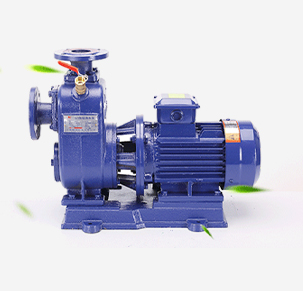
The single stage double suction pump is a centrifugal pump designed to move fluids by converting rotational kinetic energy to the hydrodynamic energy of the fluid flow. Positioned as a critical component in diverse industrial applications – from water supply and irrigation to chemical processing and power generation – it facilitates large-volume fluid transfer. Unlike single-entry pumps, the double suction design utilizes flow entering from both sides of the impeller, enhancing axial balance and increasing flow capacity for a given impeller diameter. Core performance characteristics revolve around achieving high volumetric flow rates, maintaining consistent pressure, and ensuring reliable operation with minimal vibration. The pump’s efficiency and suitability are determined by factors like impeller design, casing configuration, and the specific fluid properties being handled. Addressing common industry challenges such as cavitation, corrosion, and mechanical seal failure are paramount in the selection and maintenance of these pumps.
Material Science & Manufacturing
The construction of a single stage double suction pump necessitates careful material selection based on fluid compatibility, operating pressure, and temperature. Commonly, pump casings are manufactured from cast iron (ASTM A126 Class 30 or equivalent), ductile iron (ASTM A536 65-45-12), or stainless steel (304, 316, or duplex stainless steel for corrosive fluids). Impellers are typically produced using cast iron, bronze (ASTM B584), or stainless steel, chosen for their erosion resistance and ability to withstand centrifugal forces. Shafts are manufactured from high-strength alloy steel (e.g., 4140, 4340) and subjected to heat treatment to enhance tensile strength and fatigue resistance. Mechanical seals commonly utilize silicon carbide or tungsten carbide faces coupled with elastomers like Viton, EPDM, or PTFE depending on fluid compatibility.
Manufacturing processes involve several key stages. Casting forms the basis for the casing and impeller, followed by machining to achieve precise dimensions and surface finishes. Impellers undergo dynamic balancing to minimize vibration during operation. Welding is used to assemble complex casing components, requiring strict adherence to welding procedures (AWS D1.1) to ensure structural integrity. The shaft is machined and polished to tight tolerances, critical for seal performance. Finally, assembly incorporates meticulous quality control checks, including hydrostatic testing to verify leak-free operation and performance testing to confirm adherence to design specifications. Parameter control during casting, machining, and welding are crucial; deviations can lead to reduced efficiency, premature failure, and increased maintenance costs.
Performance & Engineering
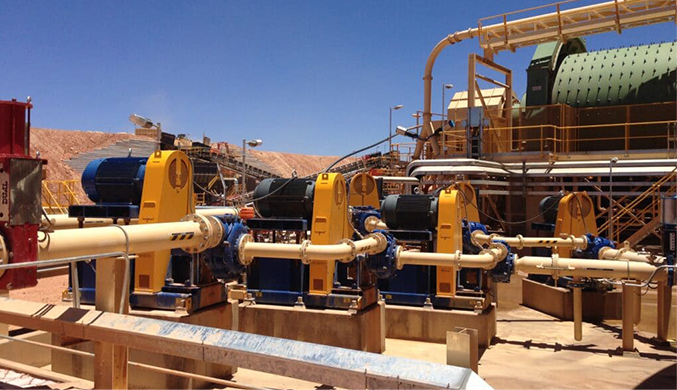
The performance of a single stage double suction pump is dictated by fundamental principles of fluid mechanics. Force analysis centers around balancing radial thrust generated by the impeller’s asymmetric flow and axial thrust caused by pressure differences. Double suction design significantly reduces radial thrust, improving bearing life and pump stability. Hydraulic Institute standards dictate pump performance testing and curve development, which demonstrate the relationship between flow rate, head (pressure), and efficiency. Environmental resistance is critical; pumps operating outdoors must withstand temperature fluctuations, precipitation, and potential exposure to corrosive atmospheres. Coatings, such as epoxy or polyurethane, are applied to casings to protect against corrosion. Compliance with API 610 (Centrifugal Pumps) dictates design, manufacturing, and testing requirements for pumps used in the petroleum, petrochemical, and chemical industries. Specific attention is given to materials selection for hazardous area applications, ensuring compatibility with relevant ATEX or IECEx standards. Furthermore, net positive suction head required (NPSHr) is a crucial engineering consideration, preventing cavitation which can severely damage the impeller. Proper system design must ensure NPSHa (Net Positive Suction Head Available) exceeds NPSHr under all operating conditions.
Technical Specifications
| Parameter | Unit | Typical Value (Range) | Standard/Reference |
|---|---|---|---|
| Flow Rate | m³/h | 50 - 2000 | ISO 9906 |
| Head (Pressure) | m | 10 - 150 | ISO 9906 |
| Impeller Diameter | mm | 200 - 800 | API 610 |
| Power | kW | 4 - 300 | IEC 60034 |
| Suction Pipe Diameter | mm | 100 - 400 | DIN EN 1062-1 |
| Discharge Pipe Diameter | mm | 80 - 300 | DIN EN 1062-1 |
Failure Mode & Maintenance
Single stage double suction pumps are susceptible to several failure modes. Cavitation, caused by insufficient NPSHa, leads to impeller erosion and reduced performance. Corrosion, particularly in aggressive fluid environments, degrades casing and impeller materials. Mechanical seal failure results in leakage and potential pump damage. Bearing failure, often due to misalignment, improper lubrication, or excessive loading, manifests as increased vibration and noise. Fatigue cracking, driven by cyclical loading, can occur in the casing or impeller, especially around stress concentration points. Delamination of coatings exposes underlying metal to corrosion. Oxidation of shaft surfaces can lead to seal wear.
Preventive maintenance is crucial. Regular visual inspections should check for leaks, vibration, and unusual noise. Lubrication schedules must be strictly followed using appropriate greases (NLGI Grade 2 lithium complex). Vibration analysis can detect early signs of bearing wear or imbalance. Periodic impeller inspection for erosion or corrosion is recommended. Mechanical seal replacement should be performed at designated intervals based on fluid characteristics and operating conditions. Alignment checks and corrections minimize bearing stress. For corrosion mitigation, proper material selection and protective coatings are essential. In case of failure, root cause analysis (RCA) using techniques like failure modes and effects analysis (FMEA) is vital to prevent recurrence. Consider implementing a condition monitoring system for critical applications.
Industry FAQ
Q: What are the key differences between a single-suction and a double-suction pump, and when would I choose one over the other?
A: Single-suction pumps are simpler and generally more cost-effective for lower flow rate applications. They draw fluid from one side of the impeller. Double-suction pumps, with intake from both sides, offer higher flow capacity for a given impeller size and significantly reduce radial thrust, leading to improved bearing life and pump stability. Choose a double-suction pump when high flow rates are required or when dealing with fluids that may induce significant radial load on the impeller.
Q: How does fluid viscosity affect the performance of a double suction pump?
A: Increased fluid viscosity reduces pump efficiency and flow rate. Higher viscosity fluids generate greater frictional losses within the pump, requiring more power to achieve the same head. Pump curves are typically based on water; performance corrections are necessary when handling viscous fluids. Consider using a larger pump or adjusting operating speed to compensate for the viscosity effect.
Q: What is NPSHr and NPSHa, and why is maintaining a sufficient margin between them critical?
A: NPSHr (Net Positive Suction Head Required) is the minimum absolute pressure required at the pump suction to prevent cavitation. NPSHa (Net Positive Suction Head Available) is the actual absolute pressure available at the pump suction. Maintaining a sufficient margin (typically 0.5-1 meter) between NPSHa and NPSHr ensures that the fluid pressure remains above the vapor pressure, preventing bubble formation and subsequent implosion, which can damage the impeller and reduce pump performance.
Q: What materials are best suited for handling corrosive fluids in a double suction pump application?
A: For corrosive fluids, stainless steel alloys (316, duplex stainless steel) and specialized polymers (e.g., PTFE, PVDF) are commonly used for wetted parts – casing, impeller, and seals. The specific material selection depends on the fluid’s chemical composition, concentration, temperature, and flow velocity. Consult a corrosion resistance chart and consider performing material compatibility testing.
Q: How often should the mechanical seals in a double suction pump be inspected and replaced?
A: The inspection and replacement frequency of mechanical seals depends on the fluid handled, operating conditions (pressure, temperature, speed), and seal material. Generally, seals should be inspected annually, and replaced every 2-5 years as a preventative measure. However, applications with abrasive or corrosive fluids may require more frequent replacement. Monitoring seal leakage is a critical indicator of seal health.
Conclusion
The single stage double suction pump remains a cornerstone of fluid transfer across numerous industries due to its efficiency, reliability, and versatility. Understanding the underlying principles of fluid mechanics, material science, and manufacturing processes is crucial for optimal pump selection and operation. Careful consideration of factors such as NPSH requirements, fluid compatibility, and preventive maintenance significantly contribute to extending pump lifespan and minimizing downtime.
Future developments will likely focus on enhanced materials with improved corrosion resistance, optimized impeller designs for increased efficiency, and the integration of advanced condition monitoring systems for predictive maintenance. The implementation of smart pumps with remote monitoring capabilities will further streamline operations and improve overall system reliability. Continued adherence to industry standards like API 610 and ISO 9906 is vital for ensuring consistent performance and safety.
-
Comprehensive Guide to Waterproof ORings for Optimal Sealing Solutions
News2026-06-09
-
Septic Pump System Performance Analysis
News2026-06-08
-
pump for septic Material Science
News2026-06-08
-
basement sewer pump Performance Analysis
News2026-06-08
-
submerged pump Performance Engineering
News2026-06-08
-
Septic System Pumps Performance Analysis
News2026-06-08
-
septic system pump Material Science and Manufacturing
News2026-06-07
-
pump for septic tank Material Science Manufacturing
News2026-06-07
-
submersible sewage pump Material Science
News2026-06-07
-
Sewage Ejector Material Science and Manufacturing
News2026-06-07
-
Ejection Pump Material Science
News2026-06-07
-
pump submersible Performance Analysis
News2026-06-06
-
ejector pumps Performance Engineering
News2026-06-06
-
basement ejector pump Material Science Manufacturing
News2026-06-06
-
Septic Tanks Pumping Performance Analysis
News2026-06-06




