English
- Afrikaans
- Albanian
- Amharic
- Arabic
- Armenian
- Azerbaijani
- Basque
- Belarusian
- Bengali
- Bosnian
- Bulgarian
- Catalan
- Cebuano
- Corsican
- Croatian
- Czech
- Danish
- Dutch
- English
- Esperanto
- Estonian
- Finnish
- French
- Frisian
- Galician
- Georgian
- German
- Greek
- Gujarati
- Haitian Creole
- hausa
- hawaiian
- Hebrew
- Hindi
- Miao
- Hungarian
- Icelandic
- igbo
- Indonesian
- irish
- Italian
- Japanese
- Javanese
- Kannada
- kazakh
- Khmer
- Rwandese
- Korean
- Kurdish
- Kyrgyz
- Lao
- Latin
- Latvian
- Lithuanian
- Luxembourgish
- Macedonian
- Malgashi
- Malay
- Malayalam
- Maltese
- Maori
- Marathi
- Mongolian
- Myanmar
- Nepali
- Norwegian
- Norwegian
- Occitan
- Pashto
- Persian
- Polish
- Portuguese
- Punjabi
- Romanian
- Russian
- Samoan
- Scottish Gaelic
- Serbian
- Sesotho
- Shona
- Sindhi
- Sinhala
- Slovak
- Slovenian
- Somali
- Spanish
- Sundanese
- Swahili
- Swedish
- Tagalog
- Tajik
- Tamil
- Tatar
- Telugu
- Thai
- Turkish
- Turkmen
- Ukrainian
- Urdu
- Uighur
- Uzbek
- Vietnamese
- Welsh
- Bantu
- Yiddish
- Yoruba
- Zulu

Telephone: +86 13120555503
Email: frank@cypump.com


Apr . 01, 2024 17:55 Back to list
sewer water pump Material Science and Manufacturing
Introduction
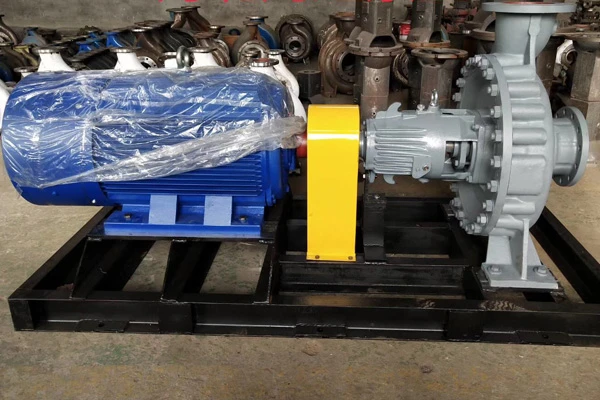
Submersible sewer water pumps are centrifugal pumps designed to be fully submerged in the sewage they are pumping. Positioned within the wastewater stream, they efficiently transfer effluent from collection points to treatment facilities. Their technical position in the wastewater treatment chain is critical, functioning as the initial stage of solids handling and conveyance. Core performance characteristics are defined by flow rate (typically measured in gallons per minute or cubic meters per hour), total dynamic head (TDH – the maximum height the pump can lift the fluid, measured in feet or meters), solids handling capability (diameter and percentage), and pump efficiency. A key industry pain point is abrasion resistance due to the high solids content of sewage, and preventing pump clogging due to fibrous materials. Reliable operation minimizes downtime, reduces maintenance costs, and safeguards the overall wastewater treatment process.
Material Science & Manufacturing
The construction of submersible sewer water pumps necessitates materials resistant to corrosive environments and abrasive wear. Pump casings are commonly manufactured from gray cast iron (ASTM A48 Class 30) for its cost-effectiveness and damping properties, although ductile iron (ASTM A536-89) is increasingly preferred for improved impact resistance and tensile strength. Impellers, subjected to the highest stresses and erosion, utilize high-chrome cast iron (typically 19-28% chrome content) or stainless steel (304, 316, or duplex stainless steel – ASTM A992) for enhanced hardness and corrosion resistance. Shafts are generally produced from 4140 alloy steel, heat treated for high tensile strength and fatigue resistance. Pump seals employ silicon carbide faces (versus tungsten carbide) for superior wear resistance against abrasive particles. Manufacturing processes include sand casting for the casing and impeller, precision machining for critical dimensions, and welding (SMAW or GMAW) for joining components. Key parameter control during manufacturing centers on impeller balancing to minimize vibration, concentricity of rotating components to prevent bearing failure, and seal surface finish to ensure effective sealing. Epoxy coatings are often applied to exterior surfaces to protect against corrosion. Fiber reinforcement (e.g., glass fiber) may be incorporated into the epoxy to enhance its mechanical properties.
Performance & Engineering
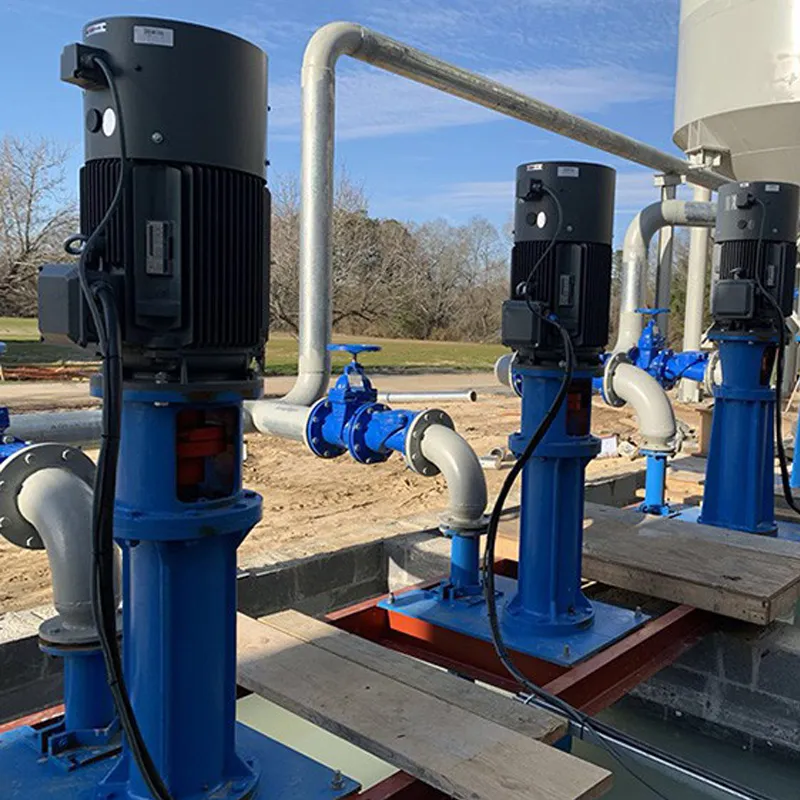
Performance is dictated by pump affinity laws, relating flow, head, and power. Hydraulic design focuses on minimizing energy losses due to friction and turbulence within the volute casing and impeller passages. Impeller geometry (vane angle, number of vanes, and impeller diameter) is optimized for specific hydraulic conditions. Motor selection is crucial; submersible pumps typically utilize squirrel-cage induction motors, encapsulated and cooled by the surrounding fluid. Motor insulation must meet stringent standards (e.g., Class H insulation) to withstand continuous immersion and temperature fluctuations. Force analysis considers hydrostatic pressure, centrifugal forces generated by impeller rotation, and dynamic loads due to fluid inertia. Environmental resistance is critical; pumps must operate reliably in highly corrosive sewage environments containing sulfides, chlorides, and organic compounds. Compliance with standards like Hydraulic Institute (HI) standards for pump performance testing and National Electrical Manufacturers Association (NEMA) standards for motor enclosures is essential. Cable entry points require robust sealing to prevent water ingress. Furthermore, consideration must be given to the potential for gas buildup within the pump station and implementation of appropriate venting systems.
Technical Specifications
| Parameter | Units | Typical Value (Small Pump) | Typical Value (Large Pump) |
|---|---|---|---|
| Flow Rate | GPM (US) | 50-150 | 500-2000 |
| Total Dynamic Head | ft | 20-60 | 80-200 |
| Motor Horsepower | HP | 1-5 | 10-50 |
| Solids Handling | inches | Up to 2 | Up to 4 |
| Impeller Material | - | High-Chrome Cast Iron | Stainless Steel (316) |
| Casing Material | - | Ductile Iron (65-45-12) | Ductile Iron (65-45-12) with Epoxy Coating |
Failure Mode & Maintenance
Common failure modes include impeller wear due to abrasive solids, seal failure leading to water ingress and motor damage, bearing failure caused by overloading or improper lubrication, and motor winding failure due to overheating or insulation breakdown. Fatigue cracking in the pump casing can occur due to cyclic loading. Delamination of epoxy coatings exposes the underlying metal to corrosion. Maintenance involves regular inspection of seals and bearings, lubrication according to manufacturer's recommendations, monitoring motor winding temperature, and periodic cleaning to remove accumulated solids. Failure analysis should include examination of the impeller for wear patterns, seal faces for damage, and motor windings for signs of overheating. Vibration analysis can detect bearing wear or impeller imbalance. Preventive maintenance programs, including scheduled inspections and component replacement, significantly extend pump life. Proper pump station design, including inlet screens and vortex-inducing devices, minimizes the risk of clogging and reduces wear. Consideration should also be given to the proper sizing of the pump to avoid overloading and cavitation.
Industry FAQ
Q: What is the impact of solids concentration on pump selection?
A: Higher solids concentration necessitates pumps with larger solids handling capabilities and more abrasion-resistant impeller materials (e.g., high-chrome cast iron or stainless steel). Furthermore, the pump's hydraulic design should minimize the risk of clogging, often achieved through open impeller designs and large passage sizes. Increased solids content also accelerates impeller wear, requiring more frequent inspection and replacement.
Q: How does the specific gravity of the sewage affect pump performance?
A: Higher specific gravity increases the fluid's density, resulting in a higher hydraulic head requirement for the pump. This may necessitate a more powerful motor or a pump with a higher head capability. The pump's efficiency may also be slightly reduced due to the increased fluid density.
Q: What are the key considerations for cable selection and installation?
A: Submersible pump cables must be specifically designed for continuous immersion in sewage and resistant to chemical degradation. Cable size must be adequate to handle the pump's current draw, and the cable should be securely fastened to the pump and discharge pipe to prevent strain and damage. A watertight cable entry point is critical to prevent water ingress and short circuits.
Q: What maintenance procedures are critical for extending pump life?
A: Regular inspection of seals and bearings, lubrication according to the manufacturer's recommendations, monitoring motor winding temperature, and periodic cleaning to remove accumulated solids are all critical. Vibration analysis can detect early signs of bearing wear or impeller imbalance. Scheduled preventive maintenance programs are highly recommended.
Q: How does the operating environment (temperature, pH) affect pump material selection?
A: Extreme temperatures and highly acidic or alkaline sewage can accelerate corrosion. Stainless steel (316 or duplex) is generally preferred for highly corrosive environments. Temperature also affects the properties of elastomers used in seals, requiring careful selection of seal materials suitable for the operating temperature range.
Conclusion
The selection and maintenance of submersible sewer water pumps are critical components of efficient wastewater treatment. Understanding the interplay between material science, hydraulic performance, and potential failure modes is paramount for ensuring reliable operation and minimizing lifecycle costs. The increasing emphasis on environmental regulations and resource recovery necessitates pumps designed for high efficiency and durability, capable of handling increasingly complex wastewater streams.
Future trends in sewer water pump technology include the integration of smart sensors for predictive maintenance, variable frequency drives (VFDs) for energy optimization, and advanced impeller designs for improved solids handling. Furthermore, the development of more corrosion-resistant materials and coatings will continue to extend pump life and reduce maintenance requirements, enhancing the sustainability of wastewater treatment infrastructure.
-
Precision at the Pump: How Better Machining Protects Flow and Uptime
News2026-11-20
-
Why Pump Reliability Begins Before the First Drop of Fluid
News2026-11-20
-
Beyond the Pump: Designing Safer Access Around Critical Water Infrastructure
News2026-11-20
-
Why Pumping Stations Depend on the Infrastructure Beneath the Pumps
News2026-11-20
-
Beyond the Pump Room: How Smarter Loading Protects Industrial Equipment
News2026-11-19
-
When Pumps Stop: Designing More Resilient Power for Critical Pumping Systems
News2026-11-19
-
The Hidden Role of Dust and Gas Monitoring in Reliable Pump Operations
News2026-11-19
-
The Hidden Role of Mineral Compounds in Extending Industrial Pump Lifespan
News2026-10-12
-
Why Pump System Reliability Depends on Precision Hose Assembly Methods
News2026-09-15
-
How Advanced Imaging Films Are Transforming Pump Component Quality Control
News2026-08-25
-
How Advanced Filtration Protects Pump Systems from Premature Wear and Costly Downtime
News2026-08-25
-
How Steel Material Selection Drives Pump Reliability in Heavy-Duty Systems
News2026-08-25
-
Ensuring Pump System Efficiency: The Role of High-Quality Pipe Fittings and Tubing
News2026-08-24
-
Optimizing Fluid Dynamics and Material Consistency in Industrial Processing
News2026-08-18
-
Innovations and Challenges in Hydraulic Systems for Heavy Machinery
News2026-08-13




