English
- Afrikaans
- Albanian
- Amharic
- Arabic
- Armenian
- Azerbaijani
- Basque
- Belarusian
- Bengali
- Bosnian
- Bulgarian
- Catalan
- Cebuano
- Corsican
- Croatian
- Czech
- Danish
- Dutch
- English
- Esperanto
- Estonian
- Finnish
- French
- Frisian
- Galician
- Georgian
- German
- Greek
- Gujarati
- Haitian Creole
- hausa
- hawaiian
- Hebrew
- Hindi
- Miao
- Hungarian
- Icelandic
- igbo
- Indonesian
- irish
- Italian
- Japanese
- Javanese
- Kannada
- kazakh
- Khmer
- Rwandese
- Korean
- Kurdish
- Kyrgyz
- Lao
- Latin
- Latvian
- Lithuanian
- Luxembourgish
- Macedonian
- Malgashi
- Malay
- Malayalam
- Maltese
- Maori
- Marathi
- Mongolian
- Myanmar
- Nepali
- Norwegian
- Norwegian
- Occitan
- Pashto
- Persian
- Polish
- Portuguese
- Punjabi
- Romanian
- Russian
- Samoan
- Scottish Gaelic
- Serbian
- Sesotho
- Shona
- Sindhi
- Sinhala
- Slovak
- Slovenian
- Somali
- Spanish
- Sundanese
- Swahili
- Swedish
- Tagalog
- Tajik
- Tamil
- Tatar
- Telugu
- Thai
- Turkish
- Turkmen
- Ukrainian
- Urdu
- Uighur
- Uzbek
- Vietnamese
- Welsh
- Bantu
- Yiddish
- Yoruba
- Zulu

Telephone: +86 13120555503
Email: frank@cypump.com


Apr . 01, 2024 17:55 Back to list
Sewer Pumper Material Science and Manufacturing
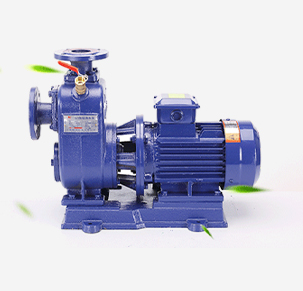
Introduction
Sewer pumpers, also known as sewage ejectors or lift stations, are engineered systems critical for wastewater management in residential, commercial, and industrial applications. Positioned within the broader wastewater infrastructure, they address the challenge of conveying sewage from below the gravity-fed sewer line to a higher elevation or over long distances. These systems typically consist of a holding tank, submersible pump(s), control panel, and discharge piping. Their core performance revolves around reliably and efficiently transferring wastewater, preventing backups, and ensuring compliance with environmental regulations. The prevalence of basements, challenging topography, and increasing urbanization have driven demand for robust and dependable sewer pumping solutions. Current industry pain points include pump failure due to solids handling limitations, energy inefficiency, corrosion issues, and the lack of predictive maintenance capabilities.
Material Science & Manufacturing
The construction of a sewer pumper relies on a combination of materials chosen for their durability, corrosion resistance, and mechanical strength. Pump housings are frequently manufactured from cast iron (ASTM A48, Class 30) due to its cost-effectiveness and resistance to abrasion, often coated with epoxy or polyurethane for enhanced corrosion protection. Impellers and diffusers are typically made from high-grade stainless steel (304 or 316, conforming to ASTM A240) to withstand the abrasive nature of sewage and resist chemical attack. Holding tanks are often constructed from polyethylene (HDPE, meeting ASTM D3350) for its chemical inertness, lightweight properties, and ease of fabrication through rotational molding. Piping connections utilize materials like polypropylene (PP, meeting ASTM D2466) or PVC (ASTM D1785) dependent on pressure and chemical exposure requirements. Shaft seals commonly employ materials like silicon carbide against silicon carbide mechanical seals to minimize leakage and wear. Manufacturing processes include sand casting for iron housings, investment casting or machining for stainless steel components, and rotational molding for HDPE tanks. Critical parameter control during manufacturing includes ensuring dimensional accuracy of impellers to optimize hydraulic efficiency, proper coating thickness for corrosion protection, and weld quality (meeting AWS D1.1 standards) for structural integrity.
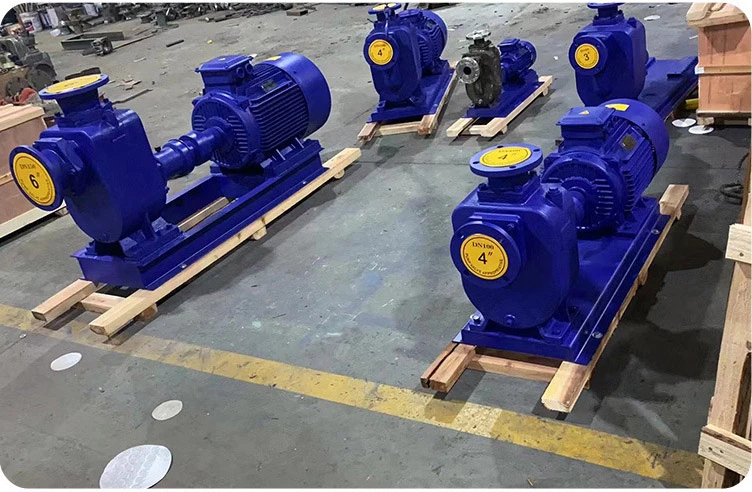
Performance & Engineering
The performance of a sewer pumper is governed by several key engineering principles. Hydraulic design focuses on maximizing pump efficiency (typically 60-85%) and solids handling capability. This necessitates careful consideration of impeller geometry, volute design, and discharge piping diameter. Force analysis addresses both static and dynamic loads on the pump and tank structure, ensuring resistance to hydrostatic pressure, surge forces, and external loads. Environmental resistance is crucial, requiring consideration of temperature fluctuations, humidity, and potential chemical exposure from the sewage stream. Compliance requirements, such as those mandated by the EPA (Clean Water Act) and local authorities, dictate standards for discharge quality and noise levels. The pump's motor must be appropriately sized to deliver the required head (vertical lift) and flow rate. Motor selection considers power requirements, voltage, and enclosure type (TEFC, submersible) to ensure safe and reliable operation. Control systems often incorporate level sensors (float switches, pressure transducers) to automatically activate and deactivate the pump based on liquid level in the holding tank, preventing overflow or dry-running. Pump curves, derived from rigorous testing, detail the pump's head-flow characteristics and efficiency across its operating range.
Technical Specifications
| Pump Capacity (GPM) | Total Dynamic Head (ft) | Motor Horsepower (HP) | Solids Handling (in) |
|---|---|---|---|
| 50-100 | 20-40 | 1-2 | 2 |
| 100-200 | 40-60 | 3-5 | 3 |
| 200-400 | 60-100 | 5-10 | 4 |
| 400-600 | 100-150 | 10-15 | 4 |
| 600-800 | 150-200 | 15-20 | 6 |
| 800-1000 | 200-250 | 20-25 | 6 |
Failure Mode & Maintenance
Sewer pumpers are susceptible to several failure modes. Fatigue cracking can occur in the pump housing or impeller due to cyclical loading and stress concentration. Corrosion, particularly pitting corrosion in stainless steel components, is exacerbated by the corrosive nature of sewage. Delamination of epoxy coatings can expose the underlying metal to corrosion. Bearing failure in the motor is common due to contamination and overloading. Seal failure leads to leakage and reduced pump efficiency. Clogging by rags, debris, and solids can cause pump seizure. Oxidation of electrical connections can lead to intermittent operation or complete failure. Preventive maintenance is critical. Regular inspection of seals, bearings, and electrical connections is essential. Periodic cleaning of the holding tank to remove accumulated solids minimizes clogging. Monitoring pump runtime and power consumption can detect early signs of degradation. Vibration analysis can identify bearing wear or impeller imbalance. Corrosion inhibitors can be added to the sewage stream to mitigate corrosion rates. Replacement of worn components and proactive seal replacements are standard maintenance practices. Implementing a predictive maintenance program utilizing sensor data and machine learning algorithms can optimize maintenance schedules and minimize downtime.
Industry FAQ
Q: What is the typical lifespan of a submersible sewer pump?
A: The typical lifespan of a submersible sewer pump ranges from 5 to 15 years, heavily dependent on operating conditions, maintenance practices, and the quality of the pump. Pumps operating in abrasive environments or subjected to frequent start/stop cycles will likely have a shorter lifespan.
Q: How do you select the correct pump size for a specific application?
A: Pump selection requires careful consideration of the total dynamic head (TDH), flow rate, and solids content of the sewage. The TDH includes static lift, friction losses in the piping, and pressure requirements at the discharge point. Accurate calculation of these parameters is crucial for optimal pump performance.
Q: What are the advantages of using a duplex (dual-pump) system?
A: A duplex system provides redundancy, ensuring continued operation even if one pump fails. It also allows for alternating pump operation, distributing wear and extending the overall system lifespan. Furthermore, it can handle peak flow demands more effectively.
Q: How can I prevent clogging in a sewer pumping system?
A: Implement a screening system upstream of the pump to remove large debris. Regularly inspect and clean the holding tank to prevent solids buildup. Consider using a pump designed for solids handling with a vortex impeller. Avoid discharging materials that are not biodegradable into the system.
Q: What are the key considerations for corrosion prevention?
A: Utilize corrosion-resistant materials like stainless steel and epoxy-coated cast iron. Implement a cathodic protection system in aggressive environments. Regularly inspect for signs of corrosion and address them promptly. Consider adding corrosion inhibitors to the sewage stream.
Conclusion
Sewer pumping systems represent a vital component of modern wastewater infrastructure. Their effectiveness is predicated on a confluence of robust material selection, precise manufacturing processes, and astute engineering design. The inherent challenges associated with solids handling, corrosion, and reliability necessitate a proactive approach to maintenance and a commitment to utilizing high-quality components.
Future developments will likely focus on incorporating smart technologies, such as remote monitoring and predictive maintenance algorithms, to enhance system performance and minimize operational costs. Further research into advanced materials and pump designs will drive improvements in efficiency, durability, and environmental sustainability, ensuring these critical systems continue to meet the evolving demands of wastewater management.
-
Precision at the Pump: How Better Machining Protects Flow and Uptime
News2026-11-20
-
Why Pump Reliability Begins Before the First Drop of Fluid
News2026-11-20
-
Beyond the Pump: Designing Safer Access Around Critical Water Infrastructure
News2026-11-20
-
Why Pumping Stations Depend on the Infrastructure Beneath the Pumps
News2026-11-20
-
Beyond the Pump Room: How Smarter Loading Protects Industrial Equipment
News2026-11-19
-
When Pumps Stop: Designing More Resilient Power for Critical Pumping Systems
News2026-11-19
-
The Hidden Role of Dust and Gas Monitoring in Reliable Pump Operations
News2026-11-19
-
The Hidden Role of Mineral Compounds in Extending Industrial Pump Lifespan
News2026-10-12
-
Why Pump System Reliability Depends on Precision Hose Assembly Methods
News2026-09-15
-
How Advanced Imaging Films Are Transforming Pump Component Quality Control
News2026-08-25
-
How Advanced Filtration Protects Pump Systems from Premature Wear and Costly Downtime
News2026-08-25
-
How Steel Material Selection Drives Pump Reliability in Heavy-Duty Systems
News2026-08-25
-
Ensuring Pump System Efficiency: The Role of High-Quality Pipe Fittings and Tubing
News2026-08-24
-
Optimizing Fluid Dynamics and Material Consistency in Industrial Processing
News2026-08-18
-
Innovations and Challenges in Hydraulic Systems for Heavy Machinery
News2026-08-13




