English
- Afrikaans
- Albanian
- Amharic
- Arabic
- Armenian
- Azerbaijani
- Basque
- Belarusian
- Bengali
- Bosnian
- Bulgarian
- Catalan
- Cebuano
- Corsican
- Croatian
- Czech
- Danish
- Dutch
- English
- Esperanto
- Estonian
- Finnish
- French
- Frisian
- Galician
- Georgian
- German
- Greek
- Gujarati
- Haitian Creole
- hausa
- hawaiian
- Hebrew
- Hindi
- Miao
- Hungarian
- Icelandic
- igbo
- Indonesian
- irish
- Italian
- Japanese
- Javanese
- Kannada
- kazakh
- Khmer
- Rwandese
- Korean
- Kurdish
- Kyrgyz
- Lao
- Latin
- Latvian
- Lithuanian
- Luxembourgish
- Macedonian
- Malgashi
- Malay
- Malayalam
- Maltese
- Maori
- Marathi
- Mongolian
- Myanmar
- Nepali
- Norwegian
- Norwegian
- Occitan
- Pashto
- Persian
- Polish
- Portuguese
- Punjabi
- Romanian
- Russian
- Samoan
- Scottish Gaelic
- Serbian
- Sesotho
- Shona
- Sindhi
- Sinhala
- Slovak
- Slovenian
- Somali
- Spanish
- Sundanese
- Swahili
- Swedish
- Tagalog
- Tajik
- Tamil
- Tatar
- Telugu
- Thai
- Turkish
- Turkmen
- Ukrainian
- Urdu
- Uighur
- Uzbek
- Vietnamese
- Welsh
- Bantu
- Yiddish
- Yoruba
- Zulu

Telephone: +86 13120555503
Email: frank@cypump.com


Apr . 01, 2024 17:55 Back to list
sewer pump systems Performance Engineering
Introduction
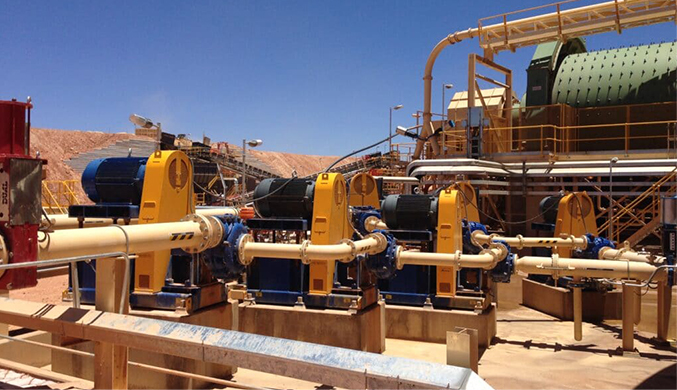
Sewer pump systems, crucial components of wastewater management infrastructure, are engineered to efficiently transport sewage and other liquid waste from lower elevations to treatment facilities. These systems operate on the principle of positive displacement, utilizing pumps specifically designed to handle solids and abrasive materials commonly found in wastewater. Their technical position within the industry chain encompasses hydraulic design, mechanical engineering, electrical control systems, and materials science. Core performance characteristics center on flow rate (gallons per minute or liters per second), total dynamic head (TDH – the vertical distance the pump can lift the liquid plus friction losses), pump efficiency, and solids handling capability. A prevalent industry pain point revolves around pump failure due to solids buildup, corrosion, and inadequate maintenance schedules, leading to costly downtime and environmental concerns. Proper system design and component selection, alongside proactive monitoring, are essential for reliable operation and minimized lifecycle costs.
Material Science & Manufacturing
The construction of sewer pumps necessitates careful material selection to withstand the corrosive environment and abrasive nature of wastewater. Pump casings are frequently manufactured from cast iron (ASTM A48 Class 30) for its cost-effectiveness and durability, often with an epoxy coating for enhanced corrosion resistance. Impeller materials commonly include stainless steel (304 or 316 – ASTM A743) due to its superior resistance to chemical attack and erosion. Shafts typically utilize alloy steel (AISI 4140) heat treated for high tensile strength and wear resistance. Seals are predominantly composed of materials like silicon carbide or tungsten carbide, paired with elastomers such as Viton or EPDM to ensure a robust, leak-proof barrier. Manufacturing processes vary based on component complexity. Casings are produced via sand casting or investment casting, followed by machining to precise tolerances. Impellers are often manufactured using centrifugal casting or forged from billet stock, subsequently undergoing precision machining and balancing. Welding processes (SMAW, GTAW) are critical for joining casing components, requiring qualified welders adhering to AWS D1.1 standards. Parameter control during manufacturing includes rigorous dimensional inspections, non-destructive testing (NDT) like radiographic inspection and ultrasonic testing, and hydrostatic testing to verify structural integrity. The quality of the epoxy coating is paramount; adherence to SSPC-SP10 surface preparation standards and a DFT (Dry Film Thickness) exceeding 8 mils are critical for longevity.
Performance & Engineering
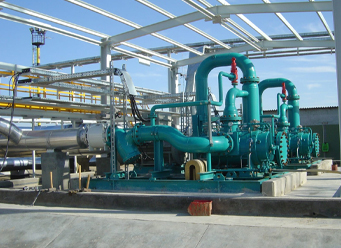
Sewer pump performance is fundamentally governed by hydraulic principles. The pump’s ability to generate sufficient head (TDH) depends on impeller design (blade angle, diameter), rotational speed (RPM), and the fluid’s properties (density, viscosity). Force analysis involves calculating the radial and axial forces exerted on the impeller and shaft due to fluid pressure, ensuring sufficient structural support to prevent deflection and fatigue failure. Environmental resistance is a key consideration; pumps operating in outdoor environments must withstand temperature fluctuations, UV exposure, and potential flooding. Compliance requirements, such as those mandated by the EPA (Environmental Protection Agency) regarding effluent discharge limits, necessitate careful pump selection and system design to prevent solids carryover and minimize environmental impact. Functional implementation involves integrating the pump with a control system, often incorporating level sensors, variable frequency drives (VFDs), and alarm systems for automated operation and fault detection. Pump curves, generated through hydraulic testing according to ANSI/HI standards, are essential for matching pump performance to specific application requirements. The Net Positive Suction Head Required (NPSHr) must be carefully calculated to prevent cavitation, a phenomenon that can severely damage the impeller and reduce pump efficiency. Motor selection must also account for the duty cycle and ambient temperature, adhering to NEMA standards for motor performance and enclosure ratings.
Technical Specifications
| Pump Type | Maximum Flow Rate (GPM) | Maximum Head (ft) | Motor Horsepower (HP) |
|---|---|---|---|
| Submersible Centrifugal | 500 | 120 | 10 |
| Dry-Pit Centrifugal | 800 | 150 | 15 |
| Positive Displacement (Progressive Cavity) | 150 | 200 | 7.5 |
| Submersible Chopper | 600 | 100 | 12 |
| Air-Operated Diaphragm | 200 | 80 | 2 (Air Supply PSI) |
| Vertical Turbine | 1000 | 300 | 25 |
Failure Mode & Maintenance
Sewer pump failures commonly stem from several distinct modes. Fatigue cracking in the impeller or casing can occur due to cyclical loading and stress concentrations, particularly in areas with poor weld quality or inadequate material thickness. Solids buildup within the pump can lead to impeller blockage, reduced efficiency, and increased motor load, ultimately causing overheating and failure. Corrosion, particularly in chloride-rich environments, can degrade casing and impeller materials, leading to leaks and structural weakening. Bearing failure, often attributed to inadequate lubrication or contamination, results in increased friction, noise, and eventual seizure. Seal failure allows for leakage and ingress of abrasive particles, accelerating wear. Preventative maintenance is crucial. Regular inspections should include visual checks for leaks, corrosion, and unusual noise or vibration. Scheduled impeller cleaning to remove solids buildup is essential. Bearing lubrication should be performed according to manufacturer’s recommendations. Seal replacement is typically recommended on an annual basis or based on operational monitoring. Motor windings should be tested for insulation resistance to detect early signs of degradation. Implementing a condition monitoring program utilizing vibration analysis and oil analysis can provide early warning of potential failures. When replacing components, it’s vital to use OEM-approved parts to ensure compatibility and maintain performance warranties.
Industry FAQ
Q: What is the primary difference between submersible and dry-pit pump installations, and what are the implications for maintenance?
A: Submersible pumps are fully immersed in the wastewater, eliminating the need for priming and reducing noise. Dry-pit pumps are located above the wastewater level and require a suction lift. Maintenance on submersible pumps often involves hauling the entire unit for inspection and repair, while dry-pit pumps allow for more component-level servicing without complete removal. Submersible pumps are generally more compact, but dry-pit pumps offer easier access to mechanical seals and bearings.
Q: How do you mitigate the risk of cavitation in a sewer pump system?
A: Cavitation occurs when the liquid pressure drops below its vapor pressure, forming bubbles that collapse and damage the impeller. Mitigating this risk requires ensuring sufficient Net Positive Suction Head Available (NPSHa) exceeds the pump’s NPSHr. This can be achieved by reducing suction lift, increasing pipe diameter, lowering liquid temperature, or selecting a pump with a lower NPSHr.
Q: What role does a variable frequency drive (VFD) play in optimizing sewer pump system performance?
A: A VFD allows for precise control of the pump’s motor speed, enabling flow rate adjustment to match demand. This reduces energy consumption, minimizes pump wear, and prevents overflow events. VFDs also offer soft starting, reducing stress on the motor and mechanical components during startup.
Q: What material is best suited for a pump handling highly abrasive wastewater with a high solids content?
A: For highly abrasive applications, a pump with a hardened iron impeller (e.g., high chrome iron) and a stainless steel (316) casing is recommended. A chopper pump, which macerates solids before they enter the impeller, can also significantly reduce wear and clogging.
Q: How often should thermal imaging be used to inspect sewer pump motors and what are we looking for?
A: Thermal imaging should be performed at least annually, or more frequently if the pump operates under heavy load or in a harsh environment. Thermal imaging can detect hotspots indicative of winding insulation degradation, bearing failure, or imbalances in the motor. Early detection allows for preventative maintenance before catastrophic failure occurs.
Conclusion
Sewer pump systems represent a critical element in maintaining public health and environmental safety. The effective operation of these systems hinges upon a thorough understanding of materials science, hydraulic principles, and mechanical engineering. Proper material selection, informed by anticipated wastewater composition and operating conditions, is paramount to ensure long-term durability and resistance to corrosion and abrasion. Regular preventative maintenance, incorporating visual inspections, performance monitoring, and component replacement, is essential to mitigate the risk of failure and optimize system efficiency.
Moving forward, advancements in pump technology, such as the integration of smart sensors and predictive maintenance algorithms, will further enhance the reliability and cost-effectiveness of sewer pump systems. Increased focus on energy efficiency, driven by stringent environmental regulations, will continue to spur innovation in pump design and control strategies. Furthermore, the adoption of standardized communication protocols will enable seamless integration of pump systems into broader smart city infrastructure.
-
Comprehensive Guide to Waterproof ORings for Optimal Sealing Solutions
News2026-06-09
-
septic system sump pump Performance Analysis
News2026-06-26
-
septic pump company Performance Analysis
News2026-06-26
-
pumps water treatment Performance Analysis
News2026-06-26
-
pumps for septic tanks Material Science and Manufacturing
News2026-06-26
-
pump for septic system Material Science Manufacturing
News2026-06-26
-
heavy duty submersible pump Performance Analysis
News2026-06-25
-
best submersible pump for septic tank Performance Analysis
News2026-06-25
-
basement sewer ejector pump Performance Analysis
News2026-06-25
-
basement pumps ejector pumps Performance Analysis
News2026-06-25
-
basement lift pump Performance and Engineering
News2026-06-25
-
basement bathroom pump systems Performance Analysis
News2026-06-24
-
basement bathroom ejector pump system Performance Engineering
News2026-06-24
-
2 hp sewage pump Performance Engineering
News2026-06-24
-
1 hp septic pump Performance Engineering
News2026-06-24




