English
- Afrikaans
- Albanian
- Amharic
- Arabic
- Armenian
- Azerbaijani
- Basque
- Belarusian
- Bengali
- Bosnian
- Bulgarian
- Catalan
- Cebuano
- Corsican
- Croatian
- Czech
- Danish
- Dutch
- English
- Esperanto
- Estonian
- Finnish
- French
- Frisian
- Galician
- Georgian
- German
- Greek
- Gujarati
- Haitian Creole
- hausa
- hawaiian
- Hebrew
- Hindi
- Miao
- Hungarian
- Icelandic
- igbo
- Indonesian
- irish
- Italian
- Japanese
- Javanese
- Kannada
- kazakh
- Khmer
- Rwandese
- Korean
- Kurdish
- Kyrgyz
- Lao
- Latin
- Latvian
- Lithuanian
- Luxembourgish
- Macedonian
- Malgashi
- Malay
- Malayalam
- Maltese
- Maori
- Marathi
- Mongolian
- Myanmar
- Nepali
- Norwegian
- Norwegian
- Occitan
- Pashto
- Persian
- Polish
- Portuguese
- Punjabi
- Romanian
- Russian
- Samoan
- Scottish Gaelic
- Serbian
- Sesotho
- Shona
- Sindhi
- Sinhala
- Slovak
- Slovenian
- Somali
- Spanish
- Sundanese
- Swahili
- Swedish
- Tagalog
- Tajik
- Tamil
- Tatar
- Telugu
- Thai
- Turkish
- Turkmen
- Ukrainian
- Urdu
- Uighur
- Uzbek
- Vietnamese
- Welsh
- Bantu
- Yiddish
- Yoruba
- Zulu

Telephone: +86 13120555503
Email: frank@cypump.com


Apr . 01, 2024 17:55 Back to list
Sewage Pump Manufacturers Performance Engineering
Introduction
Sewage pumps are critical components in wastewater treatment and conveyance systems, designed to efficiently move wastewater, solids, and slurries. Positioned within the broader industrial pump market, which includes centrifugal, positive displacement, and submersible pump types, sewage pumps specifically address the challenges presented by abrasive and potentially corrosive wastewater environments. Their technical position in the industry chain involves integration into municipal wastewater treatment plants, industrial effluent handling systems, and commercial building drainage infrastructure. Core performance characteristics center around hydraulic efficiency, solids handling capability, corrosion resistance, and long-term reliability. This guide provides an in-depth technical overview of sewage pumps, covering material science, manufacturing processes, performance engineering, failure modes, and relevant industry standards. A key industry pain point is balancing initial cost with lifecycle cost, including maintenance and potential downtime resulting from premature failure due to materials selection and design limitations.
Material Science & Manufacturing
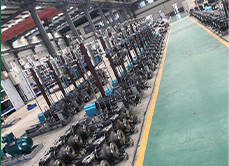
The construction of sewage pumps heavily relies on materials selected for their durability and resistance to the aggressive nature of wastewater. Pump casings are commonly manufactured from cast iron (ASTM A48 Class 30), ductile iron (ASTM A536 65-45-12), or stainless steel (304, 316, or duplex stainless steel – ASTM A240). Cast iron offers cost-effectiveness but requires protective coatings (epoxy or fusion-bonded epoxy) to mitigate corrosion. Ductile iron provides enhanced tensile strength and impact resistance. Stainless steel, particularly 316 and duplex grades, offers superior corrosion resistance, crucial for handling highly corrosive effluents. Impellers, the rotating components responsible for generating flow, are often made from high-chrome cast iron or stainless steel to resist abrasion from solids. Shafts are typically manufactured from stainless steel (410 or 420) for strength and corrosion resistance. Seals are commonly mechanical seals utilizing silicon carbide faces and Viton elastomers, selected for their chemical compatibility with various wastewater compositions. Manufacturing processes include sand casting for casings and impellers, investment casting for complex impeller geometries, and CNC machining for precision shaft and seal components. Critical parameters during manufacturing include dimensional accuracy of impellers to optimize hydraulic performance, surface finish of casings to minimize friction losses, and proper heat treatment of metallic components to enhance strength and ductility. Welding processes, when employed, must adhere to AWS D1.1 standards for structural welding.
Performance & Engineering
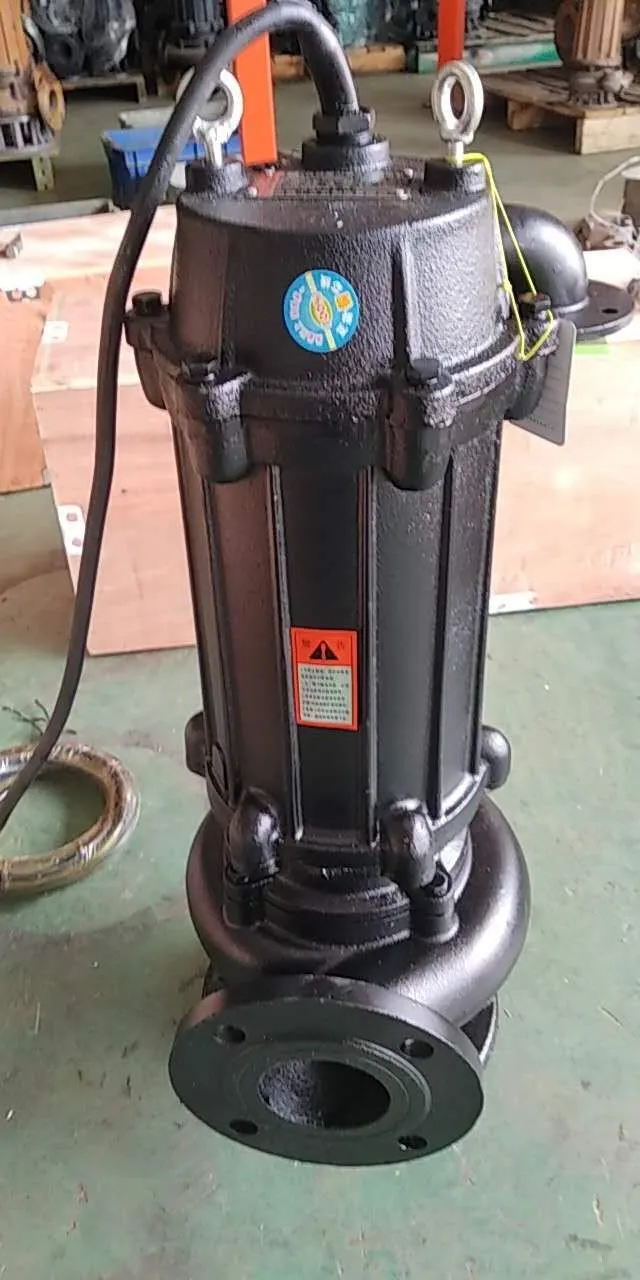
Sewage pump performance is governed by hydraulic principles and engineering considerations relating to solids handling and system compatibility. Force analysis focuses on impeller dynamics, bearing loads, and shaft stresses. Impeller design must account for radial forces generated by unbalanced hydraulic pressures and axial thrust. Bearing selection (typically deep groove ball bearings or tapered roller bearings) is critical to withstand these loads and ensure long-term reliability. Environmental resistance is paramount; pumps must operate reliably in submerged conditions, potentially exposed to fluctuating temperatures and corrosive substances. Compliance requirements include adherence to hydraulic institute standards (HI) for pump testing and performance evaluation, as well as electrical safety standards (IEC 60034-1). The pump curve, a graphical representation of head (pressure) versus flow rate, is a key performance indicator. Net Positive Suction Head Required (NPSHr) is a critical parameter that must be carefully considered during system design to prevent cavitation. Solids handling capability is assessed based on impeller design (open or semi-open) and passage size. Pump efficiency is influenced by impeller geometry, casing volute design, and internal clearances. The selection of pump materials must also consider the potential for galvanic corrosion when dissimilar metals are used in contact.
Technical Specifications
| Parameter | Unit | Typical Range (Small Sewage Pump) | Typical Range (Large Sewage Pump) |
|---|---|---|---|
| Flow Rate | m³/h | 0.5 - 5 | 50 - 500 |
| Total Head | m | 5 - 20 | 20 - 100 |
| Motor Power | kW | 0.75 - 2.2 | 15 - 150 |
| Solids Handling | mm | Up to 50 | Up to 100+ |
| Impeller Type | - | Vortex or Recessed | Vortex, Recessed, or Cutter |
| Casing Material | - | Cast Iron (Epoxy Coated) | Ductile Iron or Stainless Steel |
Failure Mode & Maintenance
Sewage pumps are susceptible to various failure modes. Fatigue cracking can occur in impellers and shafts due to cyclical loading. Corrosion, particularly pitting corrosion in stainless steel, can lead to component degradation. Cavitation, caused by low NPSH, can erode impeller surfaces. Bearing failure can result from overloading, lubrication issues, or contamination. Mechanical seal failure is common due to abrasive particles, chemical attack, or improper installation. Delamination of epoxy coatings on cast iron casings can accelerate corrosion. Oxidation of metallic components can reduce material strength. Preventative maintenance is crucial. Regular inspection of seals, bearings, and impellers is recommended. Lubrication schedules must be strictly followed. Monitoring vibration levels can detect early signs of bearing failure. Periodic cleaning of pump casings can remove accumulated solids and prevent clogging. Coating repairs should be performed promptly to prevent corrosion. When replacing components, it is essential to use materials that are compatible with the wastewater composition. For example, using a different elastomer for a mechanical seal may reduce its lifespan if the elastomer is incompatible. Implementing a condition monitoring system can provide early warnings of potential failures and optimize maintenance schedules.
Industry FAQ
Q: What is the impact of wastewater composition on pump material selection?
A: Wastewater composition dictates material selection. High sulfide content necessitates stainless steel (316 or duplex) due to its superior resistance to sulfide stress cracking. Aggressive chemicals require chemically resistant elastomers for seals and coatings for casings. High solids content demands abrasion-resistant materials like high-chrome cast iron for impellers.
Q: How does impeller design affect pump efficiency and solids handling?
A: Impeller design is a trade-off between efficiency and solids handling. Open impellers excel at solids handling but are less efficient. Closed impellers are more efficient but prone to clogging. Vortex impellers offer good solids handling with moderate efficiency. The impeller’s blade angle and number of blades are key parameters influencing performance.
Q: What are the critical considerations for mechanical seal selection?
A: Mechanical seal selection requires considering fluid compatibility, temperature, pressure, and solids content. Silicon carbide faces are preferred for abrasive fluids. Viton or EPDM elastomers are commonly used, but compatibility with specific chemicals must be verified. Proper seal installation and lubrication are crucial for long-term reliability.
Q: How important is NPSH in preventing pump damage?
A: NPSH is critically important. Insufficient NPSH leads to cavitation, causing impeller erosion and reduced pump performance. System design must ensure that the available NPSH (NPSHa) exceeds the required NPSH (NPSHr) by a safe margin, typically 1-2 meters.
Q: What are the benefits of using a variable frequency drive (VFD) with a sewage pump?
A: VFDs allow for precise control of pump speed, optimizing energy consumption and reducing mechanical stress. They can also prevent pump cycling and extend pump life. VFDs are particularly beneficial in systems with fluctuating flow demands.
Conclusion
Sewage pumps represent a critical element in maintaining public health and environmental safety. Effective design and material selection are paramount for ensuring long-term reliability, minimizing lifecycle costs, and complying with stringent regulatory requirements. Understanding the interplay between hydraulic performance, solids handling capability, and corrosion resistance is essential for optimal pump selection and system integration.
Future advancements in sewage pump technology are likely to focus on improved impeller designs for enhanced efficiency and solids handling, the development of more durable and corrosion-resistant materials, and the integration of smart monitoring systems for predictive maintenance. Continued research and development are crucial to address the evolving challenges presented by increasingly complex wastewater compositions and stricter environmental regulations.
-
sewer pump for basement Material Science Manufacturing
News2026-05-29
-
sewage sump pumps Performance and Engineering
News2026-05-29
-
sewage pumps for septic tanks Material Science and Manufacturing
News2026-05-29
-
Sewage Pumping Companies Performance Analysis
News2026-05-29
-
Sewage Pump Manufacturers Performance Engineering
News2026-05-29
-
sewage pump for basement Performance and Engineering
News2026-05-28
-
Sewage Pump Companies Performance Analysis
News2026-05-28
-
Sewage Pit and Pump Performance Analysis
News2026-05-28
-
Sewage Lift Pumps Material Science
News2026-05-28
-
Sewage Ejector Tank Material Science and Manufacturing
News2026-05-28
-
sewage effluent pumps Material Science Manufacturing
News2026-05-27
-
septic tank effluent pump Performance Analysis
News2026-05-27
-
Septic Sewer Pump Performance Analysis
News2026-05-27
-
septic sewage pumps Performance Analysis
News2026-05-27
-
septic sewage pump Material Science and Manufacturing
News2026-05-27




