English
- Afrikaans
- Albanian
- Amharic
- Arabic
- Armenian
- Azerbaijani
- Basque
- Belarusian
- Bengali
- Bosnian
- Bulgarian
- Catalan
- Cebuano
- Corsican
- Croatian
- Czech
- Danish
- Dutch
- English
- Esperanto
- Estonian
- Finnish
- French
- Frisian
- Galician
- Georgian
- German
- Greek
- Gujarati
- Haitian Creole
- hausa
- hawaiian
- Hebrew
- Hindi
- Miao
- Hungarian
- Icelandic
- igbo
- Indonesian
- irish
- Italian
- Japanese
- Javanese
- Kannada
- kazakh
- Khmer
- Rwandese
- Korean
- Kurdish
- Kyrgyz
- Lao
- Latin
- Latvian
- Lithuanian
- Luxembourgish
- Macedonian
- Malgashi
- Malay
- Malayalam
- Maltese
- Maori
- Marathi
- Mongolian
- Myanmar
- Nepali
- Norwegian
- Norwegian
- Occitan
- Pashto
- Persian
- Polish
- Portuguese
- Punjabi
- Romanian
- Russian
- Samoan
- Scottish Gaelic
- Serbian
- Sesotho
- Shona
- Sindhi
- Sinhala
- Slovak
- Slovenian
- Somali
- Spanish
- Sundanese
- Swahili
- Swedish
- Tagalog
- Tajik
- Tamil
- Tatar
- Telugu
- Thai
- Turkish
- Turkmen
- Ukrainian
- Urdu
- Uighur
- Uzbek
- Vietnamese
- Welsh
- Bantu
- Yiddish
- Yoruba
- Zulu

Telephone: +86 13120555503
Email: frank@cypump.com


Apr . 01, 2024 17:55 Back to list
Screw Pump Centrifugal Chemical Pump Quotes Performance Analysis
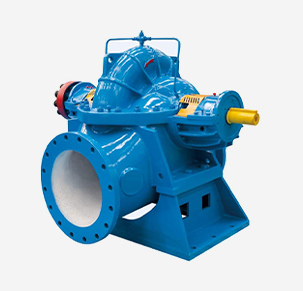
Introduction
Screw pump centrifugal chemical pump systems represent a critical component in numerous industrial processes, serving as the core of fluid transfer for corrosive, viscous, and shear-sensitive materials. These systems, often selected based on quoted specifications, necessitate a thorough understanding of their technical capabilities and limitations. This guide details the fundamental principles, material considerations, performance parameters, failure modes, and relevant industry standards governing screw pump and centrifugal chemical pump applications. A precise understanding of these elements is paramount for procurement managers, engineers, and maintenance personnel to optimize system longevity, efficiency, and safety. The selection process is often driven by quoting based on flow rate, head pressure, fluid characteristics, and material compatibility, demanding careful evaluation to prevent premature failures and costly downtime. This document aims to provide a comprehensive technical foundation for informed decision-making related to such pump systems.
Material Science & Manufacturing
The construction of chemical pumps demands stringent material selection to withstand aggressive chemical environments. Centrifugal pumps commonly utilize castings of 316 stainless steel, Alloy 20, or Hastelloy C-276 for wetted parts—the impeller, volute casing, and shaft—due to their superior corrosion resistance compared to standard 304 stainless steel. Screw pumps frequently employ materials like PTFE (Polytetrafluoroethylene) or other fluoropolymers for the screw itself, coupled with stainless steel or alloy housings. Manufacturing processes vary significantly. Centrifugal pump impellers are typically investment cast, ensuring precise geometries necessary for efficient fluid transfer. Volute casings are often produced through sand casting or centrifugal casting, followed by machining for dimensional accuracy. Screw pumps involve precision machining of the screw elements, demanding tight tolerances to maintain positive displacement characteristics. Welding processes, particularly TIG (Tungsten Inert Gas) welding, are crucial for joining components, requiring qualified welders and post-weld heat treatment to prevent sensitization and maintain corrosion resistance. Material certifications (e.g., ASTM A351 for stainless steel castings) are vital to verify compliance with chemical composition and mechanical property requirements. Furthermore, surface finishing, such as electropolishing, is employed to reduce surface roughness and enhance corrosion resistance. The choice of gasket materials (e.g., PTFE, Viton) is also critical to ensure chemical compatibility and prevent leakage.
Performance & Engineering
The performance of chemical pumps is dictated by a complex interplay of hydraulic principles and material properties. Centrifugal pumps operate on the principle of imparting kinetic energy to the fluid via a rotating impeller. The resulting head pressure is proportional to the square of the impeller’s rotational speed. Cavitation, a significant concern, occurs when the absolute pressure at the impeller inlet falls below the vapor pressure of the fluid, forming vapor bubbles that collapse and damage the impeller. Net Positive Suction Head Required (NPSHr) is a critical parameter that must be met by the system design to prevent cavitation. Screw pumps, conversely, operate on positive displacement principles, delivering a constant flow rate regardless of discharge pressure (within limits). They excel in handling viscous fluids where centrifugal pumps struggle. Force analysis is crucial in pump design, accounting for radial and axial thrusts generated by the impeller or screw. Bearings must be appropriately sized and lubricated to handle these loads. Environmental resistance, particularly to temperature fluctuations and external corrosion, necessitates careful selection of materials and protective coatings. Compliance requirements, such as those outlined in ANSI/ASME B73.1 for centrifugal pumps and API 674 for positive displacement pumps, mandate specific design features and testing procedures to ensure safe and reliable operation.
Technical Specifications
| Parameter | Centrifugal Pump (Typical) | Screw Pump (Typical) | Units |
|---|---|---|---|
| Flow Rate | 50 - 5000 | 1 - 500 | GPM |
| Head Pressure | 50 - 300 | 100 - 1000 | PSI |
| Viscosity Range | 1 - 100 | 100 - 30,000 | cP |
| Temperature Range | -80 to 350 | -40 to 400 | °F |
| Solids Handling | Limited | Up to 25% by volume | % |
| Materials of Construction (Wetted Parts) | 316 SS, Alloy 20, Hastelloy C-276 | PTFE, Stainless Steel, Alloy 20 | - |
Failure Mode & Maintenance
Chemical pump failures stem from a variety of factors. Centrifugal pumps are prone to impeller erosion due to abrasive particles in the fluid, shaft seal failures leading to leakage, and bearing failures resulting from inadequate lubrication or excessive loading. Cavitation causes significant impeller damage. Screw pumps can experience wear on the screw elements due to abrasive fluids or improper alignment. Seal failures are also common. Failure analysis typically involves visual inspection, dimensional measurements, and metallurgical examination to determine the root cause. Preventive maintenance is crucial, encompassing regular lubrication of bearings, inspection and replacement of seals, monitoring of vibration levels, and performance testing to detect degradation. Periodic impeller balancing (for centrifugal pumps) and screw alignment checks (for screw pumps) are essential. Scheduled overhauls, typically every 1-3 years depending on service conditions, involve complete disassembly, inspection, repair or replacement of components, and reassembly with new seals and gaskets. Proper record-keeping of maintenance activities is vital for tracking pump performance and identifying recurring failure patterns. The use of predictive maintenance techniques, such as vibration analysis and oil analysis, can further enhance reliability and minimize downtime.
Industry FAQ
Q: What are the key differences in NPSH requirements between centrifugal and screw pumps for a highly viscous fluid?
A: Centrifugal pumps generally require a higher NPSHr, particularly with increasing viscosity, as the fluid flow becomes more turbulent and pressure drops are greater. Screw pumps, being positive displacement, are less sensitive to viscosity and typically have lower NPSHr values. However, the viscosity itself can affect suction line losses, which need to be accounted for in the overall NPSHa (Net Positive Suction Head Available) calculation.
Q: How does material selection impact the lifespan of a chemical pump handling concentrated sulfuric acid?
A: Sulfuric acid is highly corrosive, and material selection is paramount. While 316 stainless steel offers some resistance, Alloy 20 or Hastelloy C-276 are typically preferred due to their superior corrosion resistance, especially at elevated temperatures and concentrations. PTFE is a suitable material for seals and screw elements where contact with the acid is unavoidable. Regular inspection is crucial to detect early signs of corrosion.
Q: What are the implications of exceeding the maximum allowable solids content for a screw pump?
A: Exceeding the maximum solids content can lead to abrasive wear of the screw elements, increased internal friction, reduced flow rate, and potential jamming of the pump. It can also accelerate seal wear and potentially damage the pump housing. Proper filtration or settling of solids prior to pumping is crucial.
Q: How often should mechanical seals be replaced in a centrifugal pump handling a solvent with high vapor pressure?
A: Solvents with high vapor pressure increase the risk of seal dry-run and premature failure. Replacement frequency depends on the solvent’s properties, operating temperature, and pump duty cycle, but a preventative replacement every 6-12 months is recommended. Utilizing a dual mechanical seal arrangement with a barrier fluid can significantly extend seal life.
Q: What are the common causes of vibration in screw pumps, and how can they be mitigated?
A: Common causes include misalignment of the pump and motor, bearing wear, cavitation (even in screw pumps, due to suction issues), and imbalance of the screw rotor. Mitigation strategies include precision alignment, regular bearing inspection and lubrication, verifying adequate suction pressure, and performing dynamic balancing of the screw rotor.
Conclusion
The selection and maintenance of screw pump and centrifugal chemical pump systems require a nuanced understanding of material science, hydraulic principles, and failure modes. Effective quoting necessitates considering not just initial cost but also long-term operational expenses, including maintenance, repair, and potential downtime. A rigorous evaluation of fluid characteristics, operating conditions, and compliance requirements is essential.
Investing in high-quality materials, adhering to established manufacturing standards, and implementing a robust preventive maintenance program are critical for maximizing system reliability and minimizing life-cycle costs. Continued advancements in pump design and monitoring technologies offer opportunities for further optimization and improved performance in challenging chemical processing applications.
-
Precision at the Pump: How Better Machining Protects Flow and Uptime
News2026-11-20
-
Why Pump Reliability Begins Before the First Drop of Fluid
News2026-11-20
-
Beyond the Pump: Designing Safer Access Around Critical Water Infrastructure
News2026-11-20
-
Why Pumping Stations Depend on the Infrastructure Beneath the Pumps
News2026-11-20
-
Beyond the Pump Room: How Smarter Loading Protects Industrial Equipment
News2026-11-19
-
When Pumps Stop: Designing More Resilient Power for Critical Pumping Systems
News2026-11-19
-
The Hidden Role of Dust and Gas Monitoring in Reliable Pump Operations
News2026-11-19
-
The Hidden Role of Mineral Compounds in Extending Industrial Pump Lifespan
News2026-10-12
-
Why Pump System Reliability Depends on Precision Hose Assembly Methods
News2026-09-15
-
How Advanced Imaging Films Are Transforming Pump Component Quality Control
News2026-08-25
-
How Advanced Filtration Protects Pump Systems from Premature Wear and Costly Downtime
News2026-08-25
-
How Steel Material Selection Drives Pump Reliability in Heavy-Duty Systems
News2026-08-25
-
Ensuring Pump System Efficiency: The Role of High-Quality Pipe Fittings and Tubing
News2026-08-24
-
Optimizing Fluid Dynamics and Material Consistency in Industrial Processing
News2026-08-18
-
Innovations and Challenges in Hydraulic Systems for Heavy Machinery
News2026-08-13




