English
- Afrikaans
- Albanian
- Amharic
- Arabic
- Armenian
- Azerbaijani
- Basque
- Belarusian
- Bengali
- Bosnian
- Bulgarian
- Catalan
- Cebuano
- Corsican
- Croatian
- Czech
- Danish
- Dutch
- English
- Esperanto
- Estonian
- Finnish
- French
- Frisian
- Galician
- Georgian
- German
- Greek
- Gujarati
- Haitian Creole
- hausa
- hawaiian
- Hebrew
- Hindi
- Miao
- Hungarian
- Icelandic
- igbo
- Indonesian
- irish
- Italian
- Japanese
- Javanese
- Kannada
- kazakh
- Khmer
- Rwandese
- Korean
- Kurdish
- Kyrgyz
- Lao
- Latin
- Latvian
- Lithuanian
- Luxembourgish
- Macedonian
- Malgashi
- Malay
- Malayalam
- Maltese
- Maori
- Marathi
- Mongolian
- Myanmar
- Nepali
- Norwegian
- Norwegian
- Occitan
- Pashto
- Persian
- Polish
- Portuguese
- Punjabi
- Romanian
- Russian
- Samoan
- Scottish Gaelic
- Serbian
- Sesotho
- Shona
- Sindhi
- Sinhala
- Slovak
- Slovenian
- Somali
- Spanish
- Sundanese
- Swahili
- Swedish
- Tagalog
- Tajik
- Tamil
- Tatar
- Telugu
- Thai
- Turkish
- Turkmen
- Ukrainian
- Urdu
- Uighur
- Uzbek
- Vietnamese
- Welsh
- Bantu
- Yiddish
- Yoruba
- Zulu

Telephone: +86 13120555503
Email: frank@cypump.com


Apr . 01, 2024 17:55 Back to list
sand gravel pump Performance Analysis
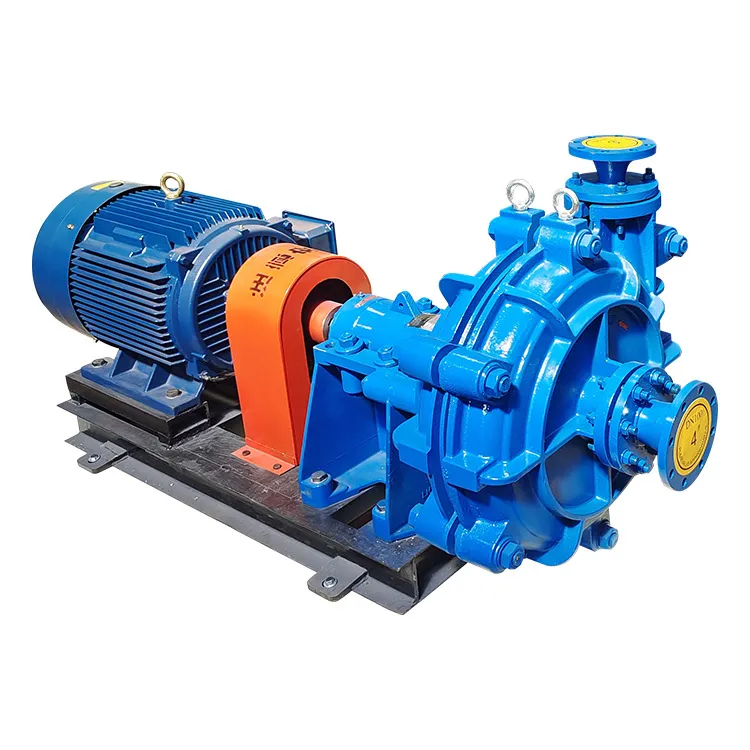
Introduction
Sand gravel pumps, also known as slurry pumps, are robust centrifugal pumps specifically engineered to handle abrasive and highly concentrated mixtures of sand, gravel, and other solid particles suspended in liquids. Their position in the industrial chain is critical to industries like dredging, mining, aggregate production, wastewater treatment, and hydraulic transport. Unlike standard centrifugal pumps which are quickly damaged by abrasive solids, sand gravel pumps are designed with high wear resistance and are capable of continuous operation in demanding environments. Core performance characteristics center around high solids handling capacity (percentage by weight), abrasion resistance, and the ability to maintain efficiency even with fluctuating solids concentrations. The pump's internal design and material selection directly impact its longevity, flow rate, head pressure, and overall system efficiency. A critical pain point for industry is balancing pump life with operational cost – frequent replacement of worn parts drives up expenses, while insufficient performance leads to process bottlenecks.
Material Science & Manufacturing
The construction of a sand gravel pump relies heavily on material science to withstand the erosive nature of the slurries it handles. Pump casings are commonly manufactured from high-chrome cast iron (typically 27% Cr), offering excellent abrasion resistance due to the formation of hard chromium carbides. Alternatively, white iron alloys (high chromium and nickel content) are used where even greater resistance to impact and abrasion is required, although they possess lower tensile strength. Impellers are also frequently constructed from high-chrome iron, but in applications demanding extreme longevity, hardened stainless steels like duplex stainless steel (e.g., 2205) or high-silicon cast iron are employed. Elastomeric liners made from natural rubber, synthetic rubber (e.g., EPDM, NR), or polyurethane are often incorporated into the casing and impeller to further protect metal components from wear. The manufacturing process typically involves sand casting for the main casing and impeller components, followed by machining to precise tolerances. Welding is used for joining sections and attaching wear plates. Key parameter control during manufacturing includes: alloy composition verification via spectroscopy, hardness testing (Rockwell C scale), dimensional accuracy inspection using coordinate measuring machines (CMM), and non-destructive testing (NDT) like radiographic inspection to detect internal flaws in castings. Proper heat treatment is crucial for optimizing the mechanical properties of the cast iron components, ensuring sufficient toughness and resistance to cracking.
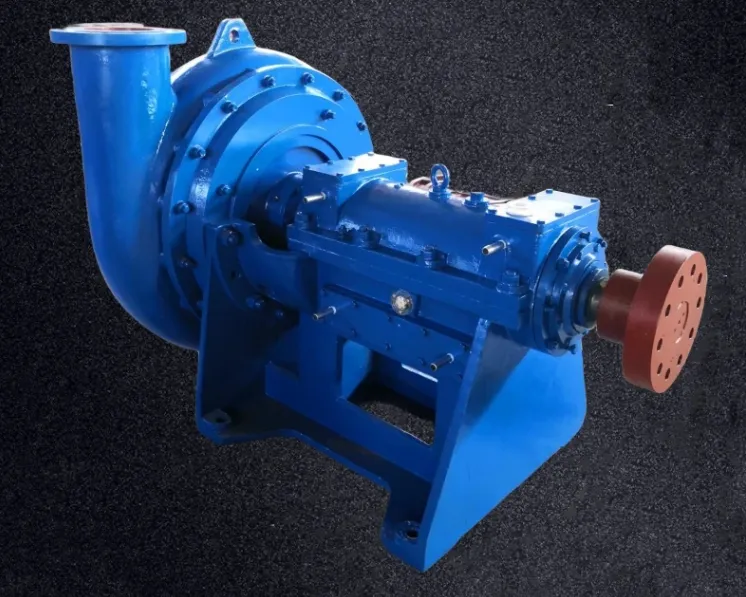
Performance & Engineering
Performance analysis of sand gravel pumps focuses on several critical engineering parameters. Force analysis considers the impact force of solid particles on the impeller and casing, particularly at high slurry velocities. This impact force contributes directly to abrasive wear. Hydraulic design aims to minimize turbulence and localized high-velocity zones within the pump, reducing erosion. Pump curves, depicting head vs. flow rate at varying impeller diameters and speeds, are essential for selecting the appropriate pump size for a specific application. Environmental resistance is paramount; pumps operating in corrosive environments require appropriate material selection (e.g., stainless steel, specialized coatings) to prevent chemical attack. Compliance requirements vary by region but commonly include adherence to safety standards like those outlined by the Hydraulic Institute (HI) and environmental regulations regarding effluent discharge. The pump's net positive suction head required (NPSHr) must be carefully considered to avoid cavitation, which can severely damage the impeller. Impeller design – radial, axial, or mixed flow – significantly impacts pump performance and solids handling capabilities. Abrasive wear modeling, often employing computational fluid dynamics (CFD) coupled with wear prediction algorithms, is increasingly used to optimize pump designs and predict component life. Proper selection of shaft seals (mechanical seals or packing) is critical to prevent leakage and maintain pump efficiency.
Technical Specifications
| Parameter | Unit | Typical Range (Small Pump) | Typical Range (Large Pump) |
|---|---|---|---|
| Flow Rate | m³/hr | 5 – 50 | 200 – 1000 |
| Total Head | m | 10 – 30 | 40 – 120 |
| Solids Handling Capacity (by weight) | % | 20 – 40 | 40 – 70 |
| Maximum Particle Size | mm | 25 | 100 |
| Pump Speed | rpm | 500 – 1500 | 500 – 1800 |
| Casing Material | - | High Chrome Iron (27%Cr) | High Chrome Iron (27%Cr) / White Iron Alloy |
Failure Mode & Maintenance
Sand gravel pumps are susceptible to several failure modes due to the abrasive nature of the handled media. The most common is abrasive wear, manifesting as erosion of the impeller vanes, casing walls, and volute tongue. This leads to reduced pump efficiency and eventually, catastrophic failure. Fatigue cracking can occur in the impeller due to cyclical loading from solid particle impact, particularly if the impeller is subjected to resonance. Corrosion, particularly in saline or acidic environments, can weaken pump components and accelerate wear. Cavitation, resulting from insufficient NPSH, creates localized high pressures that pit and erode the impeller surface. Delamination can occur in rubber liners due to bond failure between the rubber and metal substrate. Maintenance strategies include regular inspection of wear parts (impeller, casing, liners), replacement of worn components based on pre-determined intervals or performance monitoring (e.g., flow rate decline), proper lubrication of bearings, and periodic checks of shaft seals. Preventive maintenance programs incorporating vibration analysis and thermal imaging can detect early signs of bearing failure or impeller imbalance. When replacing components, ensuring correct impeller clearance is critical to avoid premature wear and maintain pump efficiency. Implementing a robust slurry management system to minimize solids concentration and particle size can significantly extend pump life.
Industry FAQ
Q: What is the primary difference between a sand gravel pump and a standard centrifugal pump?
A: The primary difference lies in the materials of construction and internal design. Sand gravel pumps utilize abrasion-resistant materials like high-chrome iron and often incorporate hardened liners, while standard centrifugal pumps typically use less wear-resistant materials. Sand gravel pumps also have larger internal clearances and impeller designs optimized for handling solids without clogging.
Q: How do I select the correct impeller material for my application?
A: Impeller material selection depends on the abrasiveness and corrosivity of the slurry. High-chrome iron is suitable for most abrasive slurries. White iron alloys offer enhanced impact resistance. For highly corrosive environments, stainless steel or specialized coatings are recommended. The solids concentration and particle size also influence material choice.
Q: What is NPSHr and why is it important?
A: NPSHr (Net Positive Suction Head Required) is the minimum pressure required at the pump suction to prevent cavitation. Insufficient NPSH leads to vapor bubble formation, which collapses violently, eroding the impeller and reducing pump efficiency. It’s crucial to ensure the available NPSH (NPSHa) in the system exceeds the pump’s NPSHr.
Q: What are the key indicators of wear in a sand gravel pump?
A: Key indicators include a decrease in flow rate or head pressure, increased power consumption, unusual noise or vibration, and visible wear on the impeller and casing during inspection. Regular monitoring of these parameters can help identify wear before it leads to failure.
Q: What maintenance practices can extend the life of a sand gravel pump?
A: Regular inspection and replacement of wear parts, proper lubrication, accurate impeller clearance adjustment, monitoring of vibration and temperature, and implementing a slurry management system to minimize solids concentration are crucial maintenance practices.
Conclusion
Sand gravel pumps represent a specialized class of centrifugal pumps engineered for the demanding task of handling abrasive slurries. Their performance and longevity are heavily reliant on material science, robust manufacturing processes, and careful engineering considerations. Understanding the critical parameters such as solids handling capacity, NPSHr, and abrasive wear mechanisms is paramount for selecting the right pump for a specific application and implementing effective maintenance strategies.
The industry trend leans towards more sophisticated pump designs incorporating CFD modeling for wear prediction, advanced materials like duplex stainless steel for extended service life, and condition monitoring systems for proactive maintenance. Optimizing slurry management practices – reducing solids concentration and particle size – remains the most cost-effective method for maximizing pump life and minimizing downtime. Continued innovation in wear-resistant materials and pump design will further enhance the performance and reliability of sand gravel pumps in diverse industrial applications.
-
sand gravel pump Performance Analysis
News2026-06-02
-
sand and gravel dredge pumps Performance Analysis
News2026-06-02
-
terapump aquarium gravel sand bpafree pump Performance Analysis
News2026-06-02
-
sand and gravel pump Material Science Manufacturing
News2026-06-02
-
air pump sand and gravel Performance Analysis
News2026-06-02
-
submersible pump for sewage treatment plant Performance Analysis
News2026-06-01
-
single phase sewage submersible pump Material Science Manufacturing
News2026-06-01
-
sewage water submersible pump Material Science Manufacturing
News2026-06-01
-
Sewage Submersible Pump Price List Performance Analysis
News2026-06-01
-
sewage submersible pump 3hp Performance Analysis
News2026-06-01
-
submersible effluent sewage pump Performance Analysis
News2026-05-31
-
stainless steel submersible sewage pumps Performance Engineering
News2026-05-31
-
stainless steel submersible sewage pump Material Science Manufacturing
News2026-05-31
-
Sewage Submersible Pump Installation Performance Analysis
News2026-05-31
-
sewage submersible pump 2hp Performance Analysis
News2026-05-31




