English
- Afrikaans
- Albanian
- Amharic
- Arabic
- Armenian
- Azerbaijani
- Basque
- Belarusian
- Bengali
- Bosnian
- Bulgarian
- Catalan
- Cebuano
- Corsican
- Croatian
- Czech
- Danish
- Dutch
- English
- Esperanto
- Estonian
- Finnish
- French
- Frisian
- Galician
- Georgian
- German
- Greek
- Gujarati
- Haitian Creole
- hausa
- hawaiian
- Hebrew
- Hindi
- Miao
- Hungarian
- Icelandic
- igbo
- Indonesian
- irish
- Italian
- Japanese
- Javanese
- Kannada
- kazakh
- Khmer
- Rwandese
- Korean
- Kurdish
- Kyrgyz
- Lao
- Latin
- Latvian
- Lithuanian
- Luxembourgish
- Macedonian
- Malgashi
- Malay
- Malayalam
- Maltese
- Maori
- Marathi
- Mongolian
- Myanmar
- Nepali
- Norwegian
- Norwegian
- Occitan
- Pashto
- Persian
- Polish
- Portuguese
- Punjabi
- Romanian
- Russian
- Samoan
- Scottish Gaelic
- Serbian
- Sesotho
- Shona
- Sindhi
- Sinhala
- Slovak
- Slovenian
- Somali
- Spanish
- Sundanese
- Swahili
- Swedish
- Tagalog
- Tajik
- Tamil
- Tatar
- Telugu
- Thai
- Turkish
- Turkmen
- Ukrainian
- Urdu
- Uighur
- Uzbek
- Vietnamese
- Welsh
- Bantu
- Yiddish
- Yoruba
- Zulu

Telephone: +86 13120555503
Email: frank@cypump.com


Apr . 01, 2024 17:55 Back to list
pump submersible Performance Analysis
Introduction
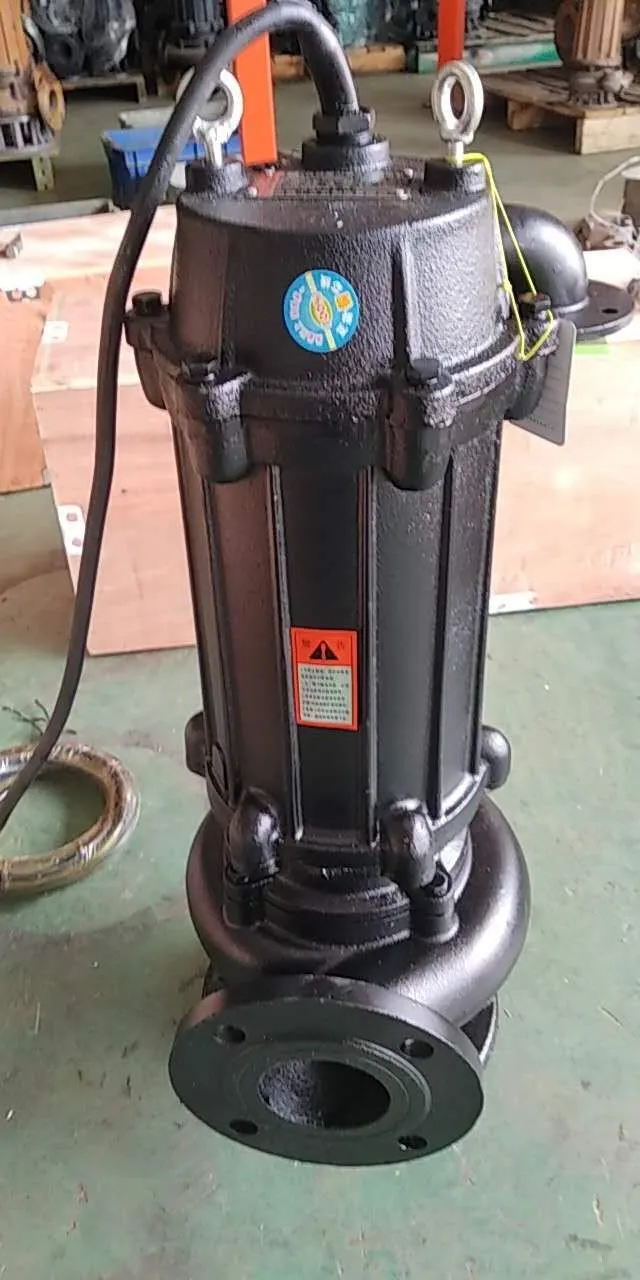
Submersible pumps are centrifugal pumps specifically designed to operate when fully submerged in the fluid they are pumping. Unlike surface pumps that rely on suction, submersible pumps push fluid to the surface. Their application spans diverse industries including wastewater treatment, oil & gas, mining, agriculture, and dewatering. The technical position of a submersible pump within the industrial chain is critical – it functions as the final mechanical element in fluid transfer, directly impacting system efficiency and operational costs. Core performance characteristics include head (the maximum height the pump can lift the fluid), flow rate (volume of fluid discharged per unit time), power consumption, and overall system reliability, with considerations for abrasive solids handling and corrosive fluid compatibility being paramount. Modern designs incorporate advanced sealing systems, motor protection, and control features for enhanced performance and longevity in challenging environments. Understanding these aspects is crucial for optimal pump selection and performance.
Material Science & Manufacturing
The construction of a submersible pump demands careful material selection based on the fluid being pumped and the operating environment. Pump casings are frequently manufactured from cast iron (ASTM A48 Class 30) for its robustness and cost-effectiveness, or stainless steel (316L or Duplex stainless steel - ASTM A966) for corrosion resistance in aggressive fluids. Impellers, crucial for generating kinetic energy, are commonly made from high-chrome cast iron or stainless steel alloys to withstand abrasive wear. Diffusers, guiding fluid flow and converting velocity to pressure, utilize similar materials. Shafts are typically constructed from high-strength alloy steel (4140 or 4340) and undergo heat treatment (hardening and tempering) for optimal tensile strength and fatigue resistance. Seals play a vital role; mechanical seals utilizing silicon carbide faces (according to ISO 21064-1) are standard for abrasion resistance and chemical compatibility. Manufacturing processes involve precision casting, machining, welding (SMAW, GTAW, adhering to AWS D1.1 standards), and assembly. Key parameter control during manufacturing includes dimensional accuracy of impellers and casings (verified with Coordinate Measuring Machines - CMMs), weld integrity (using Non-Destructive Testing - NDT methods like radiographic testing - RT, and ultrasonic testing – UT, conforming to ASME Section V), and proper heat treatment to achieve specified material properties. Motor housings often utilize cast iron or stainless steel, and the motor windings are insulated with epoxy resins (meeting IEC 60034-18-41 standards) to prevent electrical breakdown when submerged.
Performance & Engineering
Submersible pump performance is governed by hydraulic principles and engineering considerations. Force analysis involves evaluating radial and axial thrust loads on the impeller and shaft, influencing bearing selection (typically deep groove ball bearings or roller bearings conforming to ISO 2811-1). Cavitation, a significant concern, occurs when the pressure within the pump drops below the liquid’s vapor pressure, forming vapor bubbles that collapse, causing erosion of impeller blades. Net Positive Suction Head Required (NPSHr) calculations (according to Hydraulic Institute standards) are vital to prevent cavitation. Environmental resistance is achieved through robust sealing systems (using elastomers like Viton or EPDM, adhering to ASTM D2000 standards) and corrosion-resistant materials. Electrical compliance, critical for submerged operation, necessitates adherence to IEC 60079 standards for explosion-proof designs in hazardous environments. Functional implementation includes incorporating variable frequency drives (VFDs) for flow control and energy optimization, and level sensors for automatic pump start/stop operation. Pump curves, generated through hydraulic testing (following ISO 9906 standards), define the relationship between head, flow rate, and efficiency, guiding pump selection for specific applications. Proper cable selection (using thermoplastic elastomer (TPE) jackets, conforming to IEC 60502 standards) is crucial to withstand submersion and prevent electrical hazards.
Technical Specifications
| Parameter | Unit | Typical Value (Small Submersible Pump) | Typical Value (Large Submersible Pump) |
|---|---|---|---|
| Flow Rate | m³/hr | 5 - 20 | 100 - 500 |
| Head | m | 10 - 50 | 100 - 300 |
| Power Consumption | kW | 0.75 - 2.2 | 11 - 75 |
| Maximum Solid Size | mm | 5 - 10 | 50 - 100 |
| Operating Temperature | °C | 0 - 40 | 0 - 60 |
| Cable Length | m | 10 - 30 | 50 - 1000 |
Failure Mode & Maintenance
Submersible pumps are susceptible to several failure modes. Fatigue cracking in the impeller or casing can occur due to cyclical stress, particularly in abrasive applications. Delamination of the impeller coatings, if present, reduces efficiency and increases erosion. Degradation of seals leads to leakage and potential motor failure. Oxidation of metallic components, especially in corrosive environments, reduces material strength. Abrasion from solids causes wear on impellers, diffusers, and seals. A common failure is motor winding insulation breakdown due to moisture ingress or overheating. Preventive maintenance is critical. Regular inspection of seals and bearings is vital. Monitoring motor current and temperature can detect early signs of winding degradation. Periodic oil analysis (for oil-filled pumps) identifies wear debris. Flushing the pump with clean water after use minimizes abrasive buildup. Scheduled replacement of wear parts (impellers, seals) based on operating hours extends pump life. Proper cable inspection is crucial to detect damage and prevent electrical failure. Repair typically involves replacing damaged components, rewinding motors, or resealing the pump. A detailed failure analysis (Root Cause Analysis – RCA) is crucial to address the underlying cause of the failure.
Industry FAQ
Q: What is the impact of fluid viscosity on submersible pump performance?
A: Increased fluid viscosity directly reduces pump flow rate and efficiency. Higher viscosity increases frictional losses within the pump, requiring more power to achieve the same head. Pump selection should account for the fluid’s viscosity, and derating factors may be necessary to ensure optimal performance. A more powerful motor and potentially a different impeller design might be required for highly viscous fluids.
Q: How does the specific gravity of the pumped fluid affect motor loading?
A: Higher specific gravity fluids increase the weight of the fluid column the pump must lift, directly increasing the motor’s load. This can lead to overheating and reduced pump life if the motor is not sized appropriately. Motor selection must consider the fluid's specific gravity to ensure adequate torque and power output.
Q: What are the key considerations for selecting a submersible pump for abrasive slurries?
A: For abrasive slurries, material selection is paramount. High-chrome cast iron or hardened stainless steel are essential for impeller and casing construction. Impeller design should incorporate wear-resistant coatings. Seal selection must also consider abrasion resistance. Regular inspection and replacement of wear parts are critical to maintain pump performance.
Q: How do you prevent corrosion in a submersible pump operating in a corrosive environment?
A: Using corrosion-resistant materials like 316L or duplex stainless steel is crucial. Protective coatings (epoxy or polyurethane) can also be applied to metallic surfaces. Regular inspection for signs of corrosion and prompt repair or replacement of affected components are essential. Cathodic protection may also be considered in severe environments.
Q: What are the best practices for submersible pump cable management?
A: Proper cable support and strain relief are vital to prevent damage. Cables should be securely clamped at intervals and protected from abrasion. Avoid sharp bends in the cable. Regularly inspect the cable for signs of wear or damage. Use a properly sized cable for the voltage and current requirements. Ensure the cable is compatible with the fluid being pumped.
Conclusion
Submersible pumps represent a critical component in numerous industrial fluid handling systems. Their performance is inextricably linked to material science, meticulous manufacturing processes, and a thorough understanding of hydraulic principles. Careful consideration of fluid properties, environmental conditions, and potential failure modes is vital for selecting the optimal pump for a given application, ensuring reliability, efficiency, and longevity.
The ongoing evolution of submersible pump technology is focused on enhancing efficiency, reducing maintenance requirements, and improving performance in challenging environments. Advancements in materials, motor design, and control systems will continue to drive innovation in this field. Implementing proactive maintenance programs, adhering to relevant industry standards, and performing comprehensive failure analyses are key to maximizing the return on investment and minimizing operational downtime.
-
Comprehensive Guide to Waterproof ORings for Optimal Sealing Solutions
News2026-06-09
-
Septic Pump Replacement Performance Analysis
News2026-06-10
-
Septic Pump Price Performance Analysis
News2026-06-10
-
pumps for septic systems Material Science Manufacturing
News2026-06-10
-
ejector pumps for basement bathrooms Performance Analysis
News2026-06-10
-
Ejector Pump Cost Analysis
News2026-06-10
-
drainage pumps Performance and Engineering
News2026-06-09
-
basement bathroom ejector pump Material Science
News2026-06-09
-
Sewer Ejector Pump Cost Performance Analysis
News2026-06-09
-
Septic Tank Pump Replacement Performance Analysis
News2026-06-09
-
septic sump pump Performance and Engineering
News2026-06-09
-
Septic Pump System Performance Analysis
News2026-06-08
-
pump for septic Material Science
News2026-06-08
-
basement sewer pump Performance Analysis
News2026-06-08
-
submerged pump Performance Engineering
News2026-06-08




