English
- Afrikaans
- Albanian
- Amharic
- Arabic
- Armenian
- Azerbaijani
- Basque
- Belarusian
- Bengali
- Bosnian
- Bulgarian
- Catalan
- Cebuano
- Corsican
- Croatian
- Czech
- Danish
- Dutch
- English
- Esperanto
- Estonian
- Finnish
- French
- Frisian
- Galician
- Georgian
- German
- Greek
- Gujarati
- Haitian Creole
- hausa
- hawaiian
- Hebrew
- Hindi
- Miao
- Hungarian
- Icelandic
- igbo
- Indonesian
- irish
- Italian
- Japanese
- Javanese
- Kannada
- kazakh
- Khmer
- Rwandese
- Korean
- Kurdish
- Kyrgyz
- Lao
- Latin
- Latvian
- Lithuanian
- Luxembourgish
- Macedonian
- Malgashi
- Malay
- Malayalam
- Maltese
- Maori
- Marathi
- Mongolian
- Myanmar
- Nepali
- Norwegian
- Norwegian
- Occitan
- Pashto
- Persian
- Polish
- Portuguese
- Punjabi
- Romanian
- Russian
- Samoan
- Scottish Gaelic
- Serbian
- Sesotho
- Shona
- Sindhi
- Sinhala
- Slovak
- Slovenian
- Somali
- Spanish
- Sundanese
- Swahili
- Swedish
- Tagalog
- Tajik
- Tamil
- Tatar
- Telugu
- Thai
- Turkish
- Turkmen
- Ukrainian
- Urdu
- Uighur
- Uzbek
- Vietnamese
- Welsh
- Bantu
- Yiddish
- Yoruba
- Zulu

Telephone: +86 13120555503
Email: frank@cypump.com


Apr . 01, 2024 17:55 Back to list
oem rubberlined slurry pump manufacturers industrial pump Performance Analysis
Introduction
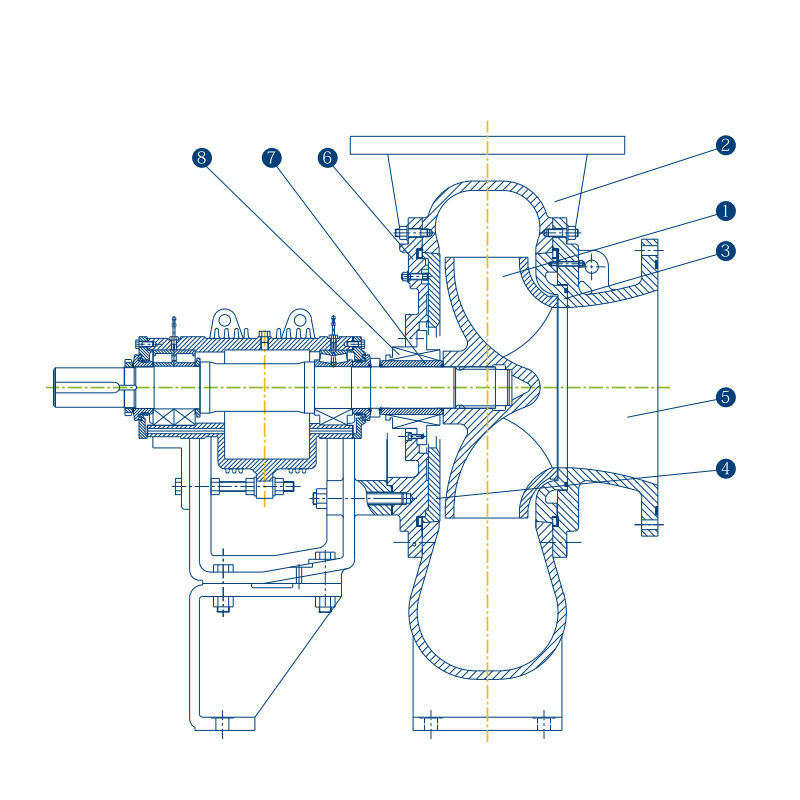
OEM rubber-lined slurry pumps represent a critical component within the broader industrial pump market, specifically engineered for the aggressive handling of abrasive and corrosive fluids. These pumps occupy a key technical position in industries such as mining, mineral processing, wastewater treatment, and chemical processing, serving as a vital link between material extraction/processing and downstream operations. Unlike standard centrifugal pumps, rubber lining provides a sacrificial wear layer protecting the pump casing and impeller from erosion and chemical attack. Core performance characteristics – volumetric flow rate, head pressure, and solids handling capacity – are dictated by impeller design, pump speed, and liner composition. A primary industry pain point centers on liner degradation, leading to reduced pump efficiency, increased maintenance costs, and potential process downtime. Optimizing liner material selection, thickness, and bonding processes are therefore paramount to achieving extended service life and minimizing total cost of ownership. This guide provides an in-depth technical analysis of these pumps, covering material science, manufacturing processes, performance parameters, failure modes, and relevant industry standards.
Material Science & Manufacturing
The core material selection for rubber-lined slurry pumps revolves around the pump casing (typically cast iron or steel) and the rubber lining itself. Common rubber elastomers include natural rubber, styrene-butadiene rubber (SBR), chloroprene rubber (CR, Neoprene), ethylene propylene diene monomer (EPDM), and nitrile rubber (NBR). Natural rubber offers excellent resilience and abrasion resistance but limited chemical resistance. SBR provides a cost-effective alternative with good abrasion resistance. CR excels in resistance to oils, ozone, and weathering. EPDM is preferred for its exceptional resistance to acids, alkalis, and heat. NBR demonstrates superior resistance to petroleum-based products. The steel or cast iron casing undergoes rigorous surface preparation – typically grit blasting to a specific SA 2.5 standard – to ensure optimal adhesion. The rubber lining is then applied using a vulcanization process. This involves applying a rubber compound to the prepared surface and curing it under heat and pressure, forming a strong chemical bond. Key parameters in this process include rubber compound viscosity, curing temperature (typically between 140-180°C), curing pressure (typically 7-10 bar), and curing time. Inconsistent curing can lead to delamination and premature failure. Impeller materials also vary; high-chrome cast iron is common for abrasion resistance, while stainless steel grades are utilized for corrosive environments. Manufacturing quality control involves dimensional inspections, non-destructive testing (NDT) like ultrasonic testing to verify liner thickness and bonding integrity, and hardness testing of the rubber lining to ensure the correct compound has been used.
Performance & Engineering
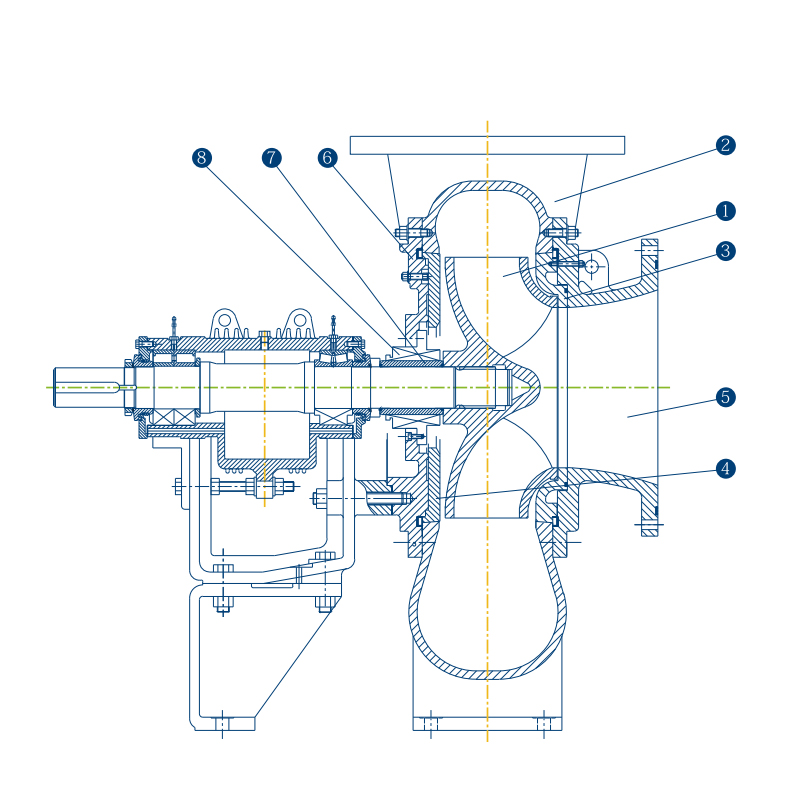
Slurry pump performance is fundamentally governed by the principles of fluid dynamics and impeller design. The pump’s head-capacity curve dictates the relationship between the discharge pressure (head) and the volumetric flow rate. Engineering analysis involves calculating the hydraulic power requirement, net positive suction head (NPSH) available, and the forces exerted on the impeller and casing. Force analysis must account for both hydrodynamic forces from the slurry and the mechanical stresses induced by the pump’s rotation. Environmental resistance is a critical consideration; temperature extremes can affect rubber elasticity and bonding strength. Exposure to UV radiation can degrade rubber polymers over time. Chemical compatibility is also paramount; the rubber lining must withstand the corrosive effects of the conveyed slurry. Compliance requirements vary by region and application. For example, pumps used in food processing applications must adhere to FDA regulations. In explosion-prone environments, ATEX certification is often required. The impeller's geometry (vane angle, width, and number) directly influences the pump's solids handling capability and efficiency. Proper impeller design minimizes wear and prevents clogging. Finite Element Analysis (FEA) is frequently employed to optimize impeller geometry and predict stress distribution under various operating conditions.
Technical Specifications
| Parameter | Unit | Typical Range (OEM Specification) | Testing Standard |
|---|---|---|---|
| Flow Rate | m³/h | 10 – 1500 | ISO 9906 |
| Head | m | 5 – 100 | ISO 9906 |
| Solids Handling Size | mm | Up to 75 | Internal Testing |
| Rubber Lining Thickness | mm | 6 – 12 | ASTM D149 |
| Rubber Hardness (Shore A) | - | 60 – 90 | ASTM D2240 |
| Maximum Operating Temperature | °C | -40 to +120 (depending on rubber type) | Internal Testing |
Failure Mode & Maintenance
Rubber-lined slurry pumps are susceptible to several failure modes. Liner degradation, including cracking, crazing, and swelling, is a common issue caused by chemical attack, abrasion, or thermal stress. Delamination, the separation of the rubber lining from the metal substrate, results from inadequate surface preparation, improper vulcanization, or excessive mechanical stress. Fatigue cracking can occur in the pump casing due to cyclic loading and stress concentration. Impeller erosion is prevalent in highly abrasive slurries, leading to reduced pump efficiency. Oxidation of the rubber lining, particularly when exposed to elevated temperatures and oxygen, causes hardening and loss of elasticity. Maintenance strategies should include regular visual inspections for liner wear and damage. Non-destructive testing (NDT), such as ultrasonic thickness gauging, can assess liner thickness without dismantling the pump. Preventative maintenance involves lubricating bearings, checking seals, and tightening bolts. When liner replacement is necessary, proper surface preparation and vulcanization procedures are crucial for ensuring long-term performance. Implementing a pump performance monitoring system, tracking flow rate, head pressure, and power consumption, can help identify early signs of degradation and schedule maintenance proactively. Regular slurry analysis is vital to understanding the abrasive and corrosive characteristics of the fluid being pumped, enabling optimized liner material selection.
Industry FAQ
Q: What is the optimal rubber lining thickness for handling highly abrasive silica slurries?
A: For highly abrasive silica slurries, a rubber lining thickness of 8-12mm is typically recommended. Thicker linings provide increased wear resistance, extending the service life of the pump. However, excessively thick linings can increase the pump's weight and potentially reduce its hydraulic efficiency. The specific thickness should be determined based on the slurry's particle size distribution, concentration, and flow velocity.
Q: How does temperature affect the performance of EPDM rubber linings?
A: EPDM rubber linings exhibit good temperature resistance, generally performing well between -40°C and +120°C. However, prolonged exposure to temperatures exceeding 120°C can cause thermal degradation, leading to reduced elasticity and increased hardness. At low temperatures, EPDM can become less flexible, potentially increasing the risk of cracking.
Q: What NDT methods are used to evaluate the integrity of the rubber lining bond?
A: Ultrasonic testing (UT) is the primary NDT method used to assess the bond integrity of rubber linings. UT can detect delamination and voids within the rubber layer. Other methods, such as impact-echo testing, can also be employed, although UT is generally considered more reliable. Visual inspection after disassembly can also reveal bonding issues, but this is a destructive method.
Q: What are the key considerations when selecting a rubber lining for a slurry containing strong acids?
A: When handling strong acids, EPDM rubber linings are generally preferred due to their excellent chemical resistance. However, the specific acid concentration and temperature must be considered. For highly concentrated acids or elevated temperatures, specialized fluoropolymer linings (e.g., PTFE) may be necessary. Compatibility charts should always be consulted to verify the suitability of the rubber material.
Q: What is the typical service life of a rubber-lined slurry pump in a mineral processing application?
A: The service life of a rubber-lined slurry pump in a mineral processing application varies significantly depending on the slurry's abrasiveness, corrosivity, and the pump's operating conditions. Typically, a well-maintained pump with a properly selected liner can operate for 12-24 months before requiring liner replacement. However, in highly abrasive applications, the service life may be as short as 6-12 months.
Conclusion
OEM rubber-lined slurry pumps are indispensable for industries dealing with challenging fluid handling requirements. Their robust construction, coupled with the protective properties of rubber linings, enables reliable operation in abrasive and corrosive environments. The selection of appropriate rubber materials, meticulous manufacturing processes (particularly vulcanization), and proactive maintenance strategies are crucial to maximizing pump lifespan and minimizing operational costs. Understanding the nuances of material science, hydraulic performance, and potential failure modes is essential for engineers and procurement professionals alike.
Future advancements in rubber lining technology will likely focus on developing new elastomers with enhanced chemical resistance and abrasion resistance, as well as improving bonding techniques to enhance liner adhesion. The integration of smart sensors and predictive maintenance algorithms will also play an increasingly important role in optimizing pump performance and preventing unexpected failures. Continued research into novel impeller designs and coating technologies will further enhance the efficiency and longevity of these critical industrial components.
-
Precision at the Pump: How Better Machining Protects Flow and Uptime
News2026-11-20
-
Why Pump Reliability Begins Before the First Drop of Fluid
News2026-11-20
-
Beyond the Pump: Designing Safer Access Around Critical Water Infrastructure
News2026-11-20
-
Why Pumping Stations Depend on the Infrastructure Beneath the Pumps
News2026-11-20
-
Beyond the Pump Room: How Smarter Loading Protects Industrial Equipment
News2026-11-19
-
When Pumps Stop: Designing More Resilient Power for Critical Pumping Systems
News2026-11-19
-
The Hidden Role of Dust and Gas Monitoring in Reliable Pump Operations
News2026-11-19
-
The Hidden Role of Mineral Compounds in Extending Industrial Pump Lifespan
News2026-10-12
-
Why Pump System Reliability Depends on Precision Hose Assembly Methods
News2026-09-15
-
How Advanced Imaging Films Are Transforming Pump Component Quality Control
News2026-08-25
-
How Advanced Filtration Protects Pump Systems from Premature Wear and Costly Downtime
News2026-08-25
-
How Steel Material Selection Drives Pump Reliability in Heavy-Duty Systems
News2026-08-25
-
Ensuring Pump System Efficiency: The Role of High-Quality Pipe Fittings and Tubing
News2026-08-24
-
Optimizing Fluid Dynamics and Material Consistency in Industrial Processing
News2026-08-18
-
Innovations and Challenges in Hydraulic Systems for Heavy Machinery
News2026-08-13




