English
- Afrikaans
- Albanian
- Amharic
- Arabic
- Armenian
- Azerbaijani
- Basque
- Belarusian
- Bengali
- Bosnian
- Bulgarian
- Catalan
- Cebuano
- Corsican
- Croatian
- Czech
- Danish
- Dutch
- English
- Esperanto
- Estonian
- Finnish
- French
- Frisian
- Galician
- Georgian
- German
- Greek
- Gujarati
- Haitian Creole
- hausa
- hawaiian
- Hebrew
- Hindi
- Miao
- Hungarian
- Icelandic
- igbo
- Indonesian
- irish
- Italian
- Japanese
- Javanese
- Kannada
- kazakh
- Khmer
- Rwandese
- Korean
- Kurdish
- Kyrgyz
- Lao
- Latin
- Latvian
- Lithuanian
- Luxembourgish
- Macedonian
- Malgashi
- Malay
- Malayalam
- Maltese
- Maori
- Marathi
- Mongolian
- Myanmar
- Nepali
- Norwegian
- Norwegian
- Occitan
- Pashto
- Persian
- Polish
- Portuguese
- Punjabi
- Romanian
- Russian
- Samoan
- Scottish Gaelic
- Serbian
- Sesotho
- Shona
- Sindhi
- Sinhala
- Slovak
- Slovenian
- Somali
- Spanish
- Sundanese
- Swahili
- Swedish
- Tagalog
- Tajik
- Tamil
- Tatar
- Telugu
- Thai
- Turkish
- Turkmen
- Ukrainian
- Urdu
- Uighur
- Uzbek
- Vietnamese
- Welsh
- Bantu
- Yiddish
- Yoruba
- Zulu

Telephone: +86 13120555503
Email: frank@cypump.com


Apr . 01, 2024 17:55 Back to list
non submersible sewage pump Performance Analysis
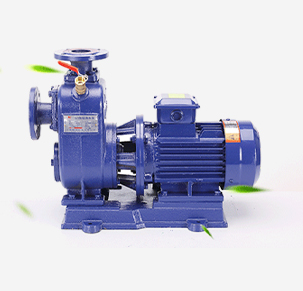
Introduction
Non-submersible sewage pumps represent a critical component in wastewater management across diverse industrial, commercial, and municipal applications. Unlike their submersible counterparts, these pumps are positioned above the liquid level, employing suction lift to transfer sewage and other wastewater. Their technical position within the wastewater treatment chain lies upstream of primary treatment, responsible for initial conveyance and solids handling. Core performance characteristics are defined by flow rate (typically measured in gallons per minute or liters per second), total dynamic head (TDH – the maximum height the pump can lift the fluid), solids handling capability (expressed in particle size and concentration), and pump efficiency. These pumps address a significant industry pain point: the need for accessible maintenance and inspection without the complexities and costs associated with confined space entry and pump removal from the wastewater source. They are frequently selected for applications where frequent maintenance is anticipated, or where tank access is simplified. Selection considerations also include noise levels, motor enclosure types (TEFC, explosion-proof), and materials of construction based on the composition of the wastewater being handled.
Material Science & Manufacturing
The construction of non-submersible sewage pumps relies on a combination of materials selected for their corrosion resistance, abrasion resistance, and structural integrity. Pump casings are commonly constructed from cast iron (ASTM A48 Class 30 or higher), ductile iron (ASTM A536-89), or stainless steel (304, 316, or duplex stainless steel for highly corrosive environments). Impeller materials are similarly dictated by the wastewater composition, utilizing materials such as high-chrome cast iron, bronze, or stainless steel. Shafts are typically made from 4140 alloy steel, heat-treated for increased strength and durability. Seals are critical, often employing mechanical seals with silicon carbide faces for robust performance against abrasive particles.
Manufacturing processes begin with the casting or forging of the pump casing and impeller. Cast iron components undergo sand casting, while impellers may be investment cast for complex geometries. Machining operations, including turning, milling, and drilling, are then performed to achieve precise dimensions and surface finishes. Welding is employed for joining various components, requiring qualified welders and adherence to AWS D1.1 standards. Critical parameters during manufacturing include impeller balancing to minimize vibration, concentricity of the shaft within the casing, and the precision of the mechanical seal installation. Coating processes, such as epoxy coating or powder coating, are frequently applied to the exterior surfaces for corrosion protection. Quality control measures include non-destructive testing (NDT) – radiography, ultrasonic testing, and liquid penetrant inspection – to detect internal flaws and ensure structural integrity. The impeller hydrodynamics are verified through Computational Fluid Dynamics (CFD) analysis to optimize pump efficiency and prevent cavitation.
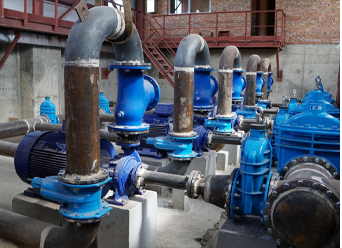
Performance & Engineering
Performance analysis of non-submersible sewage pumps centers around hydraulic design and motor selection. The pump's performance curve, depicting flow rate versus total dynamic head, is a critical engineering parameter. Force analysis involves assessing the stresses on the pump casing, impeller, and shaft due to fluid pressure, centrifugal forces, and potential shock loads from solids passage. Cavitation, a destructive phenomenon caused by vapor bubble formation and collapse, is a major concern; engineers mitigate this through proper impeller design, NPSH (Net Positive Suction Head) calculations, and operating the pump within its specified range. Environmental resistance is addressed through material selection and protective coatings to withstand exposure to corrosive chemicals, UV radiation, and temperature fluctuations.
Compliance requirements dictate adherence to standards like Hydraulic Institute (HI) standards for pump performance testing and API 610 for centrifugal pumps, though API 610 is more frequently applied to larger pumps. Electrical safety standards (UL, CSA, CE) govern motor design and wiring. Noise levels are managed through impeller balancing, acoustic enclosures, and vibration isolation mounts. Furthermore, many applications require pumps to meet stringent efficiency standards set by regulatory bodies like the Department of Energy (DOE) in the United States or equivalent agencies internationally. The pump’s suction lift capacity is a critical engineering consideration, impacted by atmospheric pressure, fluid temperature, and the height difference between the pump and the fluid level. Proper piping design, minimizing bends and restrictions, is essential to maximize pump efficiency and prevent air binding.
Technical Specifications
| Parameter | Unit | Typical Range (Small Sewage Pumps) | Typical Range (Large Sewage Pumps) |
|---|---|---|---|
| Flow Rate | GPM (Gallons Per Minute) | 20-150 | 200-1000+ |
| Total Dynamic Head (TDH) | ft (Feet) | 10-80 | 80-200+ |
| Solids Handling | inches | Up to 2 | Up to 4+ |
| Motor Power | HP (Horsepower) | 0.5-5 | 5-50+ |
| Impeller Type | - | Vortex or Recessed | Vortex, Recessed, or Open |
| Casing Material | - | Cast Iron, Ductile Iron | Ductile Iron, Stainless Steel |
Failure Mode & Maintenance
Non-submersible sewage pumps are susceptible to several failure modes. Fatigue cracking can occur in the pump casing and impeller due to cyclic stresses. Corrosion, particularly in harsh chemical environments, leads to material degradation and reduced structural integrity. Abrasion from solids causes wear on the impeller and casing, diminishing pump efficiency. Seal failure results in leakage and potential motor damage. Bearing failure, often caused by inadequate lubrication or contamination, leads to increased vibration and eventual pump seizure. Cavitation, as previously discussed, erodes the impeller surface. Electrical failures, including motor winding burnout and wiring issues, are also common.
Preventive maintenance is crucial. Regular inspection of the mechanical seal is essential, replacing it proactively before failure. Lubrication of bearings should follow manufacturer’s recommendations. Periodic cleaning of the pump casing and impeller removes accumulated debris. Vibration analysis identifies potential bearing failures or impeller imbalances. Electrical inspections ensure proper wiring connections and motor insulation integrity. For corrosion-related failures, consider upgrading to more corrosion-resistant materials or applying protective coatings. In case of impeller wear, consider replacement or refurbishment. Routine monitoring of pump performance parameters – flow rate, pressure, and power consumption – provides early warning signs of degradation. Implementing a scheduled maintenance program based on operating hours and wastewater characteristics optimizes pump life and minimizes downtime.
Industry FAQ
Q: What is the primary difference between a non-submersible and submersible sewage pump in terms of maintenance?
A: Non-submersible pumps offer significantly easier access for maintenance. The motor and pump components are readily accessible without the need for tank draining or confined space entry. This allows for quicker inspections, seal replacements, and bearing lubrication, reducing downtime and maintenance costs compared to submersible units which require removal from the wastewater.
Q: How do you determine the appropriate pump size (flow rate and head) for a specific application?
A: Pump sizing requires careful calculation of the total dynamic head (TDH), considering static lift, friction losses in the piping system, and pressure at the discharge point. Flow rate is determined by the volume of wastewater to be pumped over a given period. Performing a system curve analysis, matching the pump performance curve to the system requirements, is critical to optimal selection.
Q: What material is best suited for a pump handling highly abrasive wastewater with high solids content?
A: For highly abrasive wastewater, a high-chrome cast iron impeller and a ductile iron casing are generally recommended. High-chrome cast iron offers exceptional abrasion resistance. Alternatively, hardened stainless steel impellers and casings can be utilized for superior corrosion and abrasion resistance, albeit at a higher cost.
Q: How does impeller design impact pump efficiency and solids handling capability?
A: Impeller design is paramount. Vortex impellers excel at handling large solids with minimal clogging, but generally offer lower efficiency. Recessed impellers provide a balance between solids handling and efficiency. Open impellers are suitable for clean liquids but are prone to clogging with solids. The impeller blade angle and number of blades are also crucial parameters influencing pump performance.
Q: What are the key considerations when selecting a motor for a non-submersible sewage pump?
A: Motor selection hinges on horsepower requirements, voltage, enclosure type (TEFC being common for general environments, explosion-proof for hazardous locations), and efficiency. The motor must be adequately sized to handle the pump’s load without overheating. Consider the duty cycle and starting torque requirements. Motor insulation class (e.g., Class H) should be appropriate for the operating temperature and humidity.
Conclusion
Non-submersible sewage pumps represent a vital technology within wastewater conveyance systems, offering advantages in maintenance accessibility and operational flexibility. Their selection and application demand a thorough understanding of material science, hydraulic principles, and compliance standards. The ongoing evolution of pump designs, coupled with advancements in materials and manufacturing processes, continues to enhance their efficiency, reliability, and longevity.
Future development will likely focus on incorporating smart technologies – such as remote monitoring, predictive maintenance algorithms, and variable frequency drives (VFDs) – to optimize pump performance and reduce energy consumption. A continued emphasis on corrosion-resistant materials and robust sealing solutions will be crucial for addressing the challenges posed by increasingly complex wastewater compositions. Proactive implementation of comprehensive maintenance programs remains essential for maximizing the service life and minimizing the total cost of ownership of these critical components.
-
Precision at the Pump: How Better Machining Protects Flow and Uptime
News2026-11-20
-
Why Pump Reliability Begins Before the First Drop of Fluid
News2026-11-20
-
Beyond the Pump: Designing Safer Access Around Critical Water Infrastructure
News2026-11-20
-
Why Pumping Stations Depend on the Infrastructure Beneath the Pumps
News2026-11-20
-
Beyond the Pump Room: How Smarter Loading Protects Industrial Equipment
News2026-11-19
-
When Pumps Stop: Designing More Resilient Power for Critical Pumping Systems
News2026-11-19
-
The Hidden Role of Dust and Gas Monitoring in Reliable Pump Operations
News2026-11-19
-
The Hidden Role of Mineral Compounds in Extending Industrial Pump Lifespan
News2026-10-12
-
Why Pump System Reliability Depends on Precision Hose Assembly Methods
News2026-09-15
-
How Advanced Imaging Films Are Transforming Pump Component Quality Control
News2026-08-25
-
How Advanced Filtration Protects Pump Systems from Premature Wear and Costly Downtime
News2026-08-25
-
How Steel Material Selection Drives Pump Reliability in Heavy-Duty Systems
News2026-08-25
-
Ensuring Pump System Efficiency: The Role of High-Quality Pipe Fittings and Tubing
News2026-08-24
-
Optimizing Fluid Dynamics and Material Consistency in Industrial Processing
News2026-08-18
-
Innovations and Challenges in Hydraulic Systems for Heavy Machinery
News2026-08-13




