English
- Afrikaans
- Albanian
- Amharic
- Arabic
- Armenian
- Azerbaijani
- Basque
- Belarusian
- Bengali
- Bosnian
- Bulgarian
- Catalan
- Cebuano
- Corsican
- Croatian
- Czech
- Danish
- Dutch
- English
- Esperanto
- Estonian
- Finnish
- French
- Frisian
- Galician
- Georgian
- German
- Greek
- Gujarati
- Haitian Creole
- hausa
- hawaiian
- Hebrew
- Hindi
- Miao
- Hungarian
- Icelandic
- igbo
- Indonesian
- irish
- Italian
- Japanese
- Javanese
- Kannada
- kazakh
- Khmer
- Rwandese
- Korean
- Kurdish
- Kyrgyz
- Lao
- Latin
- Latvian
- Lithuanian
- Luxembourgish
- Macedonian
- Malgashi
- Malay
- Malayalam
- Maltese
- Maori
- Marathi
- Mongolian
- Myanmar
- Nepali
- Norwegian
- Norwegian
- Occitan
- Pashto
- Persian
- Polish
- Portuguese
- Punjabi
- Romanian
- Russian
- Samoan
- Scottish Gaelic
- Serbian
- Sesotho
- Shona
- Sindhi
- Sinhala
- Slovak
- Slovenian
- Somali
- Spanish
- Sundanese
- Swahili
- Swedish
- Tagalog
- Tajik
- Tamil
- Tatar
- Telugu
- Thai
- Turkish
- Turkmen
- Ukrainian
- Urdu
- Uighur
- Uzbek
- Vietnamese
- Welsh
- Bantu
- Yiddish
- Yoruba
- Zulu

Telephone: +86 13120555503
Email: frank@cypump.com


Apr . 01, 2024 17:55 Back to list
mixed flow centrifugal pump Performance Analysis
Introduction
Mixed flow centrifugal pumps represent a critical component in a diverse range of industrial applications, bridging the gap between radial and axial flow pump designs. These pumps are characterized by their ability to deliver a compromise between high head and high flow rate, making them particularly suitable for applications involving large volumes of fluid at moderate heads. Positioned within the broader pump industry chain, they serve as a vital link in water management, irrigation, power generation, and process industries. Their core performance characteristics – volumetric flow rate, head, efficiency, and Net Positive Suction Head Required (NPSHr) – are dictated by impeller geometry, rotational speed, and fluid properties. A key industry pain point lies in optimizing pump selection to balance energy efficiency with operational reliability, considering the specific fluid characteristics and system requirements. Improper selection can lead to cavitation, erosion, and premature failure, resulting in significant downtime and maintenance costs.
Material Science & Manufacturing
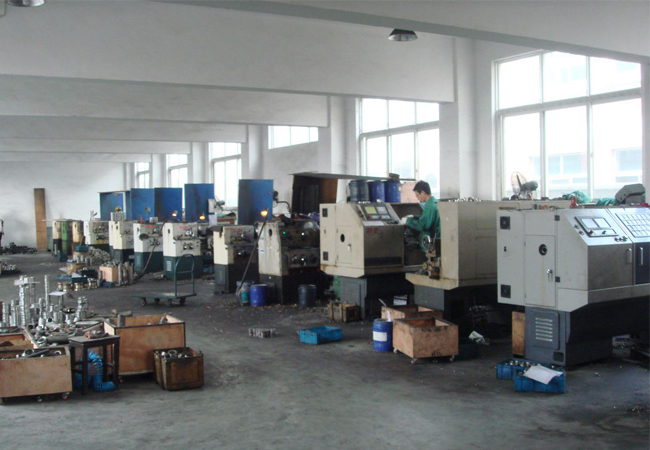
The selection of materials for mixed flow centrifugal pumps is dictated by the fluid being handled and the operating environment. Pump casings are frequently manufactured from cast iron (ASTM A48 Class 30) due to its cost-effectiveness and machinability, but stainless steel (304, 316 – ASTM A743) is preferred for corrosive fluids or hygienic applications. Impellers, subject to high stress and erosion, are typically cast from bronze (ASTM B148) or stainless steel. Shafts require high tensile strength and fatigue resistance; AISI 4140 alloy steel, heat-treated for enhanced hardness, is a common choice. Seals rely on materials like Viton (fluoroelastomer) or PTFE (polytetrafluoroethylene) for chemical compatibility. Manufacturing processes involve several key stages: casting the casing and impeller, machining critical surfaces to precise tolerances, welding of components (requiring stringent quality control – AWS D1.1), and assembly with appropriate sealing and bearing arrangements. Critical parameter control includes impeller balancing (ISO 1940-1) to minimize vibration and casing dimensional accuracy to ensure proper hydraulic performance. Surface finishing (sandblasting, painting) is crucial for corrosion protection. Non-destructive testing (NDT) methods like liquid penetrant inspection (ASTM E165) and ultrasonic testing (ASTM E797) are employed to detect internal flaws.
Performance & Engineering
The performance of a mixed flow pump is governed by principles of fluid mechanics and hydraulic design. Force analysis considers impeller loading, casing stresses, and shaft bending moments. Impeller blade angles, number of blades, and the volute casing geometry significantly influence the pump's head-flow curve and efficiency. Environmental resistance necessitates consideration of temperature extremes, humidity, and potential exposure to corrosive substances. Cavitation, a major performance limitation, occurs when the local pressure drops below the fluid's vapor pressure, forming bubbles that collapse and damage the impeller. NPSHr calculations (ISO 9906) are essential to prevent cavitation. Pump efficiency is a function of hydraulic losses (friction, turbulence) and mechanical losses (bearing friction, seal leakage). Compliance requirements vary by region and application. For potable water applications, pumps must comply with NSF/ANSI 61 standards. For hazardous environments, ATEX certification (EN 60079) may be required. Functional implementation involves selecting a pump with appropriate characteristics for the system's required flow rate, head, and fluid properties, and integrating it with appropriate piping, valves, and control systems. Vibration analysis (ISO 10816) is critical for ongoing monitoring and preventing premature failure.
Technical Specifications
| Parameter | Unit | Typical Range | Industry Standard |
|---|---|---|---|
| Flow Rate | m³/h | 10 - 1000 | ISO 9906 |
| Head | m | 5 - 50 | ISO 9906 |
| Pump Efficiency | % | 65 - 85 | ISO 9906 |
| NPSHr | m | 2 - 10 | ISO 9906 |
| Operating Temperature | °C | -20 to 120 | ASTM A743 |
| Maximum Solid Handling Size | mm | Up to 25 (depending on impeller design) | DIN EN 2525 |
Failure Mode & Maintenance
Mixed flow pumps are susceptible to several failure modes. Fatigue cracking of the impeller, particularly at blade roots, can occur due to cyclic loading. Erosion, caused by abrasive particles in the fluid, can wear down impeller blades and casing surfaces. Corrosion, especially in aggressive fluid environments, can lead to material degradation. Seal failure results in leakage and loss of efficiency. Bearing failure, often due to inadequate lubrication or contamination, can cause excessive vibration and eventual pump seizure. Delamination of coatings (if applied) can occur due to poor adhesion or environmental exposure. Oxidation of metallic components can occur at high temperatures. Preventive maintenance includes regular visual inspections for leaks and corrosion, vibration analysis to detect bearing wear, lubrication of bearings according to manufacturer's specifications (ISO 287), and periodic inspection and replacement of seals. Impeller balancing should be rechecked after repairs. Casing inspections should include ultrasonic thickness testing to monitor corrosion rates. In the event of failure, root cause analysis (RCA) is crucial to identify the underlying problem and prevent recurrence. Component replacement should adhere to original equipment manufacturer (OEM) specifications.
Industry FAQ
Q: What is the primary difference between a mixed flow pump and a radial flow pump in terms of application?
A: Radial flow pumps excel at high head, low flow applications, typically used for high-pressure systems. Mixed flow pumps are optimized for moderate head and higher flow rates, making them ideal for irrigation, water circulation, and drainage where significant volume is required but pressure demands are less extreme. The impeller design is the key differentiator; radial impellers discharge fluid perpendicularly to the shaft, while mixed flow impellers discharge at an angle, combining radial and axial components.
Q: How does fluid viscosity affect the performance of a mixed flow pump?
A: Increased fluid viscosity leads to higher frictional losses within the pump, reducing both flow rate and efficiency. The pump's head-flow curve will shift downwards. Selecting a pump with a larger impeller and motor may be necessary to compensate for the increased viscosity, but this also impacts energy consumption. Pump manufacturers provide performance curves adjusted for various viscosity levels.
Q: What are the key considerations when selecting a material for a pump handling seawater?
A: Seawater is highly corrosive due to its chloride content. Materials like duplex stainless steel (ASTM A928) or high-nickel alloys (e.g., Alloy 20) are recommended for pump casings and impellers to resist pitting and crevice corrosion. Elastomeric seals should be made from materials compatible with seawater, such as EPDM or Viton. Sacrificial anodes may be required to protect against galvanic corrosion.
Q: How critical is NPSH margin, and what happens if it’s insufficient?
A: NPSH margin is critically important. Insufficient NPSH leads to cavitation, which causes noise, vibration, reduced pump efficiency, and ultimately, impeller damage. A minimum NPSH margin of 0.5-1 meter is generally recommended, but this depends on the specific pump design and fluid properties. System design must ensure adequate suction head and minimize pressure losses in the suction piping.
Q: What are some common causes of pump vibration, and how are they addressed?
A: Common causes include impeller imbalance, misalignment between the pump and motor, bearing wear, cavitation, and resonance in the piping system. Imbalance is corrected through impeller balancing. Misalignment is addressed through proper coupling alignment. Bearing wear requires bearing replacement. Cavitation needs NPSH correction. Resonance requires modifying the piping support structure or operating speed.
Conclusion
Mixed flow centrifugal pumps represent a versatile and efficient solution for a wide array of fluid handling applications, offering a balanced performance profile between high flow and moderate head. Successful implementation necessitates a comprehensive understanding of material science, manufacturing processes, hydraulic principles, and potential failure modes. Careful consideration of fluid properties, operating conditions, and applicable industry standards is paramount for selecting the optimal pump for a given application and ensuring long-term reliability and cost-effectiveness.
Future trends in mixed flow pump technology are focused on enhancing efficiency through improved impeller designs and materials, incorporating advanced monitoring and control systems for predictive maintenance, and developing pumps specifically tailored for challenging applications such as handling highly viscous fluids or operating in extreme environments. The integration of variable frequency drives (VFDs) will continue to optimize energy consumption and improve process control.
-
Precision at the Pump: How Better Machining Protects Flow and Uptime
News2026-11-20
-
Why Pump Reliability Begins Before the First Drop of Fluid
News2026-11-20
-
Beyond the Pump: Designing Safer Access Around Critical Water Infrastructure
News2026-11-20
-
Why Pumping Stations Depend on the Infrastructure Beneath the Pumps
News2026-11-20
-
Beyond the Pump Room: How Smarter Loading Protects Industrial Equipment
News2026-11-19
-
When Pumps Stop: Designing More Resilient Power for Critical Pumping Systems
News2026-11-19
-
The Hidden Role of Dust and Gas Monitoring in Reliable Pump Operations
News2026-11-19
-
The Hidden Role of Mineral Compounds in Extending Industrial Pump Lifespan
News2026-10-12
-
Why Pump System Reliability Depends on Precision Hose Assembly Methods
News2026-09-15
-
How Advanced Imaging Films Are Transforming Pump Component Quality Control
News2026-08-25
-
How Advanced Filtration Protects Pump Systems from Premature Wear and Costly Downtime
News2026-08-25
-
How Steel Material Selection Drives Pump Reliability in Heavy-Duty Systems
News2026-08-25
-
Ensuring Pump System Efficiency: The Role of High-Quality Pipe Fittings and Tubing
News2026-08-24
-
Optimizing Fluid Dynamics and Material Consistency in Industrial Processing
News2026-08-18
-
Innovations and Challenges in Hydraulic Systems for Heavy Machinery
News2026-08-13




