


Deploying an efficient mobile fire pump ensures rapid pressure stabilization across remote fluid transfer networks. Industrial emergency response requires fluid movement systems that balance high discharge pressures, structural durability, and rapid field maneuverability, particularly when access to primary municipal water mains is compromised.
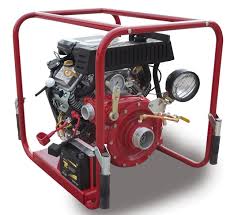
Modern industrial facilities—ranging from chemical processing plants to vast forestry reserves—present unique fluid dynamics challenges. When unexpected pressure drops or catastrophic containment failures occur, temporary pumping units must take over main lines seamlessly. Achieving uninterrupted volumetric flow under adverse field conditions requires sophisticated hydraulic impeller design, cavitation-resistant housing alloys, and lightweight internal combustion drives.
Advanced Cavitation Control and Impeller Metallurgy
Pumping abrasive or heated fluids at high discharge pressures exposes mechanical impellers to intense micro-jet erosion caused by cavitation bubble collapse. Standard iron castings degrade quickly under these conditions, leading to seal failure, shaft imbalance, and catastrophic loss of head pressure. Modern hydraulic pump engineering relies on corrosion-resistant bronze alloys, high-chromium steels, and precision-machined stainless steel impellers to maintain hydrodynamic efficiency over extended duty cycles.
Furthermore, internal flow-path smoothing minimizes turbulent drag within the pump casing. Reducing friction losses allows compact drive units to achieve optimal power-to-weight ratios. Working with a premium manufacturer gives system designers access to advanced hydraulic testing documentation and custom flange configurations tailored to specialized industrial setups.

Operational Agility in High-Risk Terrain
In municipal fire protection and wildland safety management, the speed of pump deployment directly determines containment success. Heavy, trailer-mounted pump skids often struggle to navigate narrow access roads, unpaved terrain, or dense forest trails. To overcome these logistical bottlenecks, engineering teams favor modular, highly portable pumping systems that can be manually positioned near natural water sources like rivers or retention ponds.
Utilizing a specialized lightweight portable pump allows first responders to draft water rapidly from raw environmental sites without priming delays. Automatic exhaust-priming mechanisms and vibration-isolated tubular steel cages protect internal engine linkages, ensuring that the pump starts reliably under extreme outdoor temperatures.
Ensuring Reliability in Emergency Supply Chains
High-capacity fluid transfer networks demand rigorous quality governance across all manufacturing stages. Small engineering defects in shaft seals or discharge valves can trigger pressure loss during crucial operational windows. Sourcing emergency equipment from an advanced supplier ensures that every pump unit undergoes rigorous hydrostatic testing and flow-meter verification before entering active field service.




