


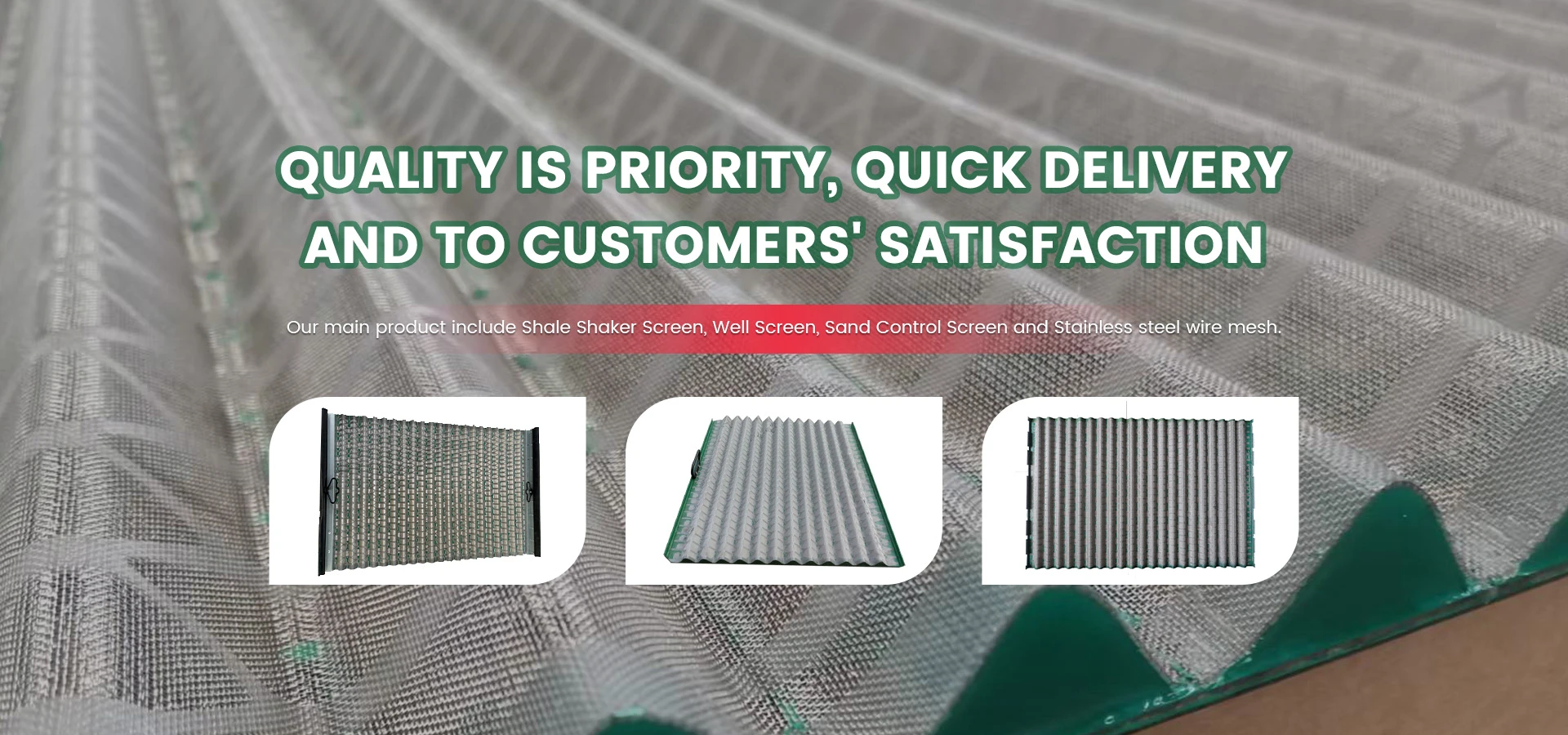
Swaco Replacement Shale Shaker Screens are fundamental to protecting downstream pump equipment from abrasive wear in drilling fluid circulation systems. When solids control fails at the shaker stage, fines and coarse particles travel directly into pump chambers, accelerating erosion on impellers, volutes, and mechanical seals. This degradation not only reduces pump efficiency but also leads to unscheduled maintenance events that can halt an entire operation. For any facility relying on continuous fluid movement — from oilfield mud pumps to industrial water transfer systems — the quality of upstream filtration directly determines the lifespan and reliability of downstream pumping assets.
The Hidden Cost of Inadequate Solids Control in Pumping Circuits
Pump systems are engineered to move fluids, not to handle abrasive solids. Yet in many industrial applications — drilling, mining slurry transport, and process water reuse — the fluid entering the pump contains a significant load of suspended particles. Without effective screening upstream, these particles act as grinding media inside the pump. Over time, clearances between rotating and stationary components widen, volumetric efficiency drops, and energy consumption rises. A pump that loses just 5% efficiency due to erosion can cost thousands of dollars annually in excess power usage alone, not counting the labour and parts for rebuilds.
Beyond efficiency loss, particle-induced wear compromises the mechanical seal environment. When abrasives penetrate the seal face, leakage follows, leading to environmental risks and fluid loss. In drilling operations, where the circulating fluid is a costly engineered mud, losing even a small volume to seal leakage has direct economic impact. The first line of defence against these failure modes is a robust screening stage that removes particles greater than the pump’s tolerance threshold — typically above 75 microns for most centrifugal pumps used in oil and gas service.
Why Screen Quality Directly Affects Pump Reliability
Not all wire mesh screens deliver the same level of protection. The performance of a shale shaker screen depends on several metallurgical and design factors: wire diameter, weave pattern, aperture uniformity, and the bonding method between layers. A screen with inconsistent openings allows oversized particles to pass through, while a screen that blinds easily forces operators to bypass the shaker altogether — a dangerous practice that exposes pumps to the full solids load. Premium screens are manufactured with tight tolerances and use high-grade stainless steel alloys such as 304 and 316L, which resist corrosion and maintain aperture geometry under cyclic loading.
For pump operators, the practical implication is clear: investing in high-quality replacement screens reduces the frequency of pump overhauls and extends the mean time between failures (MTBF) of the entire fluid handling system. This is especially critical in remote drilling locations where spare parts are not readily available and every hour of pump downtime translates directly into lost rig time. The relationship between screen quality and pump longevity is not theoretical — it is measurable in reduced maintenance logs and improved operational uptime.
Material Selection for Demanding Pump Protection Applications
The material used in screen construction determines how well it performs under thermal, chemical, and mechanical stress. In drilling fluid systems, the circulating mud can reach temperatures above 80°C and contain chlorides, sulphides, and hydrocarbon residues. Standard carbon steel mesh degrades rapidly in such environments, introducing rust particles into the fluid that further damage pump internals. Stainless steel grades 304 and 316 offer superior corrosion resistance, while specialized alloys provide additional hardness for extremely abrasive conditions. The bonding between the mesh layers and the backing plate must also withstand the G-force of the shaker without delaminating — a common failure mode in lower-quality screens that leads to bypass and pump contamination.
For operations that process large volumes of fluid with variable solids loading, the choice of screen becomes a balancing act between flow capacity and cut point. A finer mesh retains more solids but may reduce throughput, while a coarser mesh increases flow at the expense of pump protection. The optimal screen specification is determined by the pump manufacturer’s recommended maximum particle size and the solids removal efficiency required by the process. This is where experienced screen manufacturers add value — by engineering the weave pattern and layer configuration to match the specific pump and fluid characteristics of each application.
Extending Pump Life Through Strategic Screen Replacement
Screen replacement is not merely a consumable cost — it is a strategic decision that affects total cost of ownership for the entire fluid system. Operators who defer screen changes to save short-term expense often incur higher pump repair bills later. A worn or torn screen with a single 2 mm opening can allow enough solids through to damage a pump impeller within hours. The economics of screen replacement are straightforward: the cost of a quality screen is a fraction of the cost of a pump rebuild, and the labour involved in changing a screen is measured in minutes compared to the hours or days required for pump overhaul.
In the upstream oil and gas sector, where drilling rigs operate around the clock, the reliability of the mud circulation system is paramount. Brandt Composite Replacement Shaker Screens China Suppliers have become a key resource for rig operators seeking high-performance screening solutions that balance cost and durability. Composite screens, which combine a metal support layer with a fine mesh top layer, offer excellent flow characteristics and resistance to blinding, making them well-suited for high-volume drilling operations where maintaining pump protection without sacrificing fluid processing speed is critical.
How Filtration Integration Reduces Pump Maintenance Burden
When pump systems are designed or retrofitted with integrated solids control in mind, maintenance teams see a measurable reduction in unscheduled work. The key is to treat the pump and the screen as a paired system rather than separate components. By selecting the right screen cut point for the pump’s tolerance, operators can virtually eliminate abrasive wear as a failure mode. This approach also reduces secondary damage: when pump seals and bearings last longer, lubricant contamination from process fluid ingress is minimized, and the overall cleanliness of the pump environment improves.
In water handling and industrial pump stations, the same principles apply. Municipal wastewater pumps that handle grit-laden flow benefit from upstream screening that removes particles above 500 microns. Mining slurry pumps, which face some of the most aggressive wear conditions in industry, require robust screening that can handle high solids loading without structural failure. In every case, the fundamental relationship holds: better screening equals longer pump life. The data from maintenance records across multiple industries consistently shows that facilities with proactive screen management programs report 30-50% fewer pump failures compared to those with reactive approaches.
Quality Assurance Standards for Pump-Protection Screens
The reliability of any screening product depends on the manufacturing processes behind it. Facilities that operate under ISO-certified quality management systems follow documented procedures for raw material inspection, weave consistency testing, and final product verification. Each batch of screen material should be tested for aperture size distribution, tensile strength, and corrosion resistance before it is released for use. In the field, a screen that passes quality assurance delivers predictable performance, allowing pump operators to plan maintenance intervals with confidence. When screens fail prematurely due to manufacturing defects, the consequences cascade through the entire fluid system, often taking pumps offline unexpectedly.
Advanced manufacturing facilities now use automated inspection systems that scan every square inch of screen material for defects. This level of quality control, combined with the use of certified raw materials, produces screens that consistently meet or exceed the API specifications for solids control equipment. For pump operators, the difference between a certified screen and a generic alternative is the difference between predictable pump performance and constant firefighting.
Best Practices for Integrating Screen Selection with Pump System Design
Engineers designing new pump systems or upgrading existing installations should consider the screening stage as an integral part of the pump protection strategy, not an afterthought. The first step is to characterize the solids present in the fluid: particle size distribution, shape, hardness, and concentration. This data informs the selection of screen aperture, mesh type, and the number of screening stages required. For fluids with a wide particle size distribution, a two-stage screening approach — coarse removal followed by fine polishing — offers the best balance between flow capacity and pump protection.
The installation location of the screen relative to the pump also matters. Ideally, the screen should be placed as close to the suction source as possible, with minimal piping between the screen and the pump to reduce the risk of particle re-entrainment. The screen housing should be designed for easy access and quick change-out, because a screen that is difficult to replace is more likely to be run past its useful life. Finally, operators should establish clear screen change-out criteria based on differential pressure, flow rate, or visual inspection, and integrate these triggers into the preventive maintenance schedule for the pump system.
Conclusion: Screening as a Pump Reliability Investment
The relationship between screen quality and pump longevity is one of the most cost-effective reliability improvements available to fluid handling operations. By prioritizing high-performance screens and treating them as strategic assets rather than disposable commodities, operators can significantly reduce pump wear, extend maintenance intervals, and lower total cost of ownership. Whether in drilling, mining, or industrial processing, the principle remains the same: protect the pump upstream, and it will return the investment through years of reliable service. The data from field operations across multiple continents confirms that facilities with disciplined solids control programs consistently outperform their peers in pump reliability and operational efficiency.




