English
- Afrikaans
- Albanian
- Amharic
- Arabic
- Armenian
- Azerbaijani
- Basque
- Belarusian
- Bengali
- Bosnian
- Bulgarian
- Catalan
- Cebuano
- Corsican
- Croatian
- Czech
- Danish
- Dutch
- English
- Esperanto
- Estonian
- Finnish
- French
- Frisian
- Galician
- Georgian
- German
- Greek
- Gujarati
- Haitian Creole
- hausa
- hawaiian
- Hebrew
- Hindi
- Miao
- Hungarian
- Icelandic
- igbo
- Indonesian
- irish
- Italian
- Japanese
- Javanese
- Kannada
- kazakh
- Khmer
- Rwandese
- Korean
- Kurdish
- Kyrgyz
- Lao
- Latin
- Latvian
- Lithuanian
- Luxembourgish
- Macedonian
- Malgashi
- Malay
- Malayalam
- Maltese
- Maori
- Marathi
- Mongolian
- Myanmar
- Nepali
- Norwegian
- Norwegian
- Occitan
- Pashto
- Persian
- Polish
- Portuguese
- Punjabi
- Romanian
- Russian
- Samoan
- Scottish Gaelic
- Serbian
- Sesotho
- Shona
- Sindhi
- Sinhala
- Slovak
- Slovenian
- Somali
- Spanish
- Sundanese
- Swahili
- Swedish
- Tagalog
- Tajik
- Tamil
- Tatar
- Telugu
- Thai
- Turkish
- Turkmen
- Ukrainian
- Urdu
- Uighur
- Uzbek
- Vietnamese
- Welsh
- Bantu
- Yiddish
- Yoruba
- Zulu

Telephone: +86 13120555503
Email: frank@cypump.com


Apr . 01, 2024 17:55 Back to list
hot sale pipeline centrifugal pump Performance Analysis
Introduction
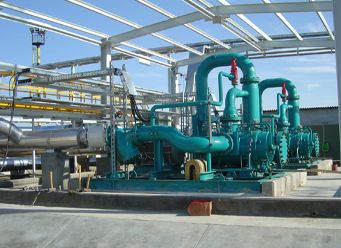
Pipeline centrifugal pumps represent a critical component in fluid transfer systems across numerous industries, including oil and gas, water and wastewater treatment, chemical processing, and agriculture. Unlike submersible or positive displacement pumps, centrifugal pumps utilize a rotating impeller to increase the velocity and pressure of a fluid, making them particularly suited for high-flow, low-to-medium head applications commonly found in pipeline transmission. Their inherent simplicity, relatively low cost, and broad operational range contribute to their widespread adoption. This guide provides a comprehensive technical overview of pipeline centrifugal pumps, encompassing material science, manufacturing processes, performance characteristics, failure modes, and relevant industry standards. A key pain point in the industry lies in optimizing pump efficiency while mitigating corrosion and erosion, especially when handling abrasive or corrosive fluids. This analysis will address these challenges and outline best practices for selection, operation, and maintenance.
Material Science & Manufacturing
The construction of a pipeline centrifugal pump typically involves several key materials, each selected for specific properties. The pump casing is commonly fabricated from cast iron (ASTM A48 Class 30), ductile iron (ASTM A536 65-45-12), or stainless steel (304, 316 – ASTM A743). Cast iron provides cost-effectiveness and good machinability, but exhibits limited corrosion resistance. Ductile iron offers improved strength and ductility compared to cast iron. Stainless steel provides superior corrosion resistance, essential for handling aggressive fluids, but at a higher cost. Impellers are often manufactured from cast iron, bronze (ASTM B584), or stainless steel, with the choice dictated by fluid properties and abrasion levels. Shafts are generally made from high-strength alloy steel (AISI 4140) and undergo heat treatment to enhance hardness and tensile strength. Seals typically utilize materials like Viton (fluoroelastomer), EPDM (ethylene propylene diene monomer), or PTFE (polytetrafluoroethylene) depending on the chemical compatibility requirements.
Manufacturing processes include sand casting for casings and impellers, precision machining for shafts and impellers, and investment casting for complex impeller geometries. Welding processes (SMAW, GMAW – AWS D1.1) are utilized for casing assembly and repair. Critical parameters during manufacturing include dimensional accuracy (ISO 2768), surface finish (ISO 4287), and heat treatment control to ensure material properties meet design specifications. Impeller balancing is crucial to minimize vibration and ensure smooth operation (ISO 1940-1). Non-destructive testing (NDT) methods, such as liquid penetrant inspection (ASTM E165) and ultrasonic testing (ASTM E797), are employed to detect flaws and ensure structural integrity.
Performance & Engineering
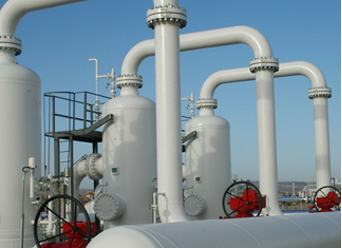
The performance of a pipeline centrifugal pump is governed by several key engineering principles. The pump's head (H) – the height the pump can lift the fluid – is related to the impeller diameter (D), rotational speed (N), and fluid velocity (V) by the affinity laws. Flow rate (Q) is directly proportional to the impeller diameter and rotational speed. Pump efficiency (η) is a crucial parameter, representing the ratio of hydraulic power output to shaft power input. Efficiency is affected by factors such as impeller design, internal clearances, and fluid viscosity. Cavitation, the formation and collapse of vapor bubbles within the pump, is a significant concern. It occurs when the net positive suction head available (NPSHa) is less than the net positive suction head required (NPSHr), leading to impeller damage and reduced performance. Proper suction piping design and pump selection are vital to prevent cavitation.
Force analysis involves evaluating stresses on pump components due to fluid pressure, impeller forces, and external loads. Finite element analysis (FEA) is often used to optimize component design and ensure structural integrity (ASME Section VIII Div. 1). Environmental resistance is crucial, particularly in corrosive environments. Material selection, protective coatings (epoxy, polyurethane – ASTM D478), and cathodic protection are employed to mitigate corrosion. Compliance requirements vary by region and application. For example, pumps used in potable water systems must meet NSF/ANSI 61 standards, while pumps used in hazardous locations must comply with ATEX or IECEx directives.
Technical Specifications
| Parameter | Unit | Typical Value (Example) | Testing Standard |
|---|---|---|---|
| Flow Rate | m³/h | 50 – 500 | ISO 9906 |
| Total Head | m | 20 – 150 | ISO 9906 |
| Pump Efficiency | % | 70 – 85 | ISO 9906 |
| Suction Pressure | MPa | -0.05 – 0.5 | Manufacturer Specification |
| Discharge Pressure | MPa | 0.5 – 2.0 | Manufacturer Specification |
| Operating Temperature | °C | -20 – 120 | Material Dependent |
Failure Mode & Maintenance
Pipeline centrifugal pumps are susceptible to several failure modes. Mechanical seals can fail due to wear, erosion, or chemical incompatibility, leading to leakage. Impeller damage can occur due to cavitation, erosion from abrasive particles, or fatigue cracking. Bearing failure can result from inadequate lubrication, overload, or contamination. Casing cracks can develop due to stress corrosion cracking or thermal stress. Corrosion and erosion are common failure mechanisms, especially when handling corrosive or abrasive fluids. Failure analysis techniques, such as visual inspection, metallography, and non-destructive testing, are employed to identify the root cause of failures.
Preventive maintenance is crucial to extend pump life and minimize downtime. Regular lubrication of bearings is essential. Seal inspection and replacement should be performed according to manufacturer recommendations. Monitoring vibration levels can detect early signs of mechanical problems (ISO 10816). Regular inspection of piping for corrosion and erosion is also important. Flushing the pump with clean fluid before startup and shutdown can prevent sediment buildup. For pumps handling abrasive fluids, wear-resistant liners and impellers should be used. Implementing a condition monitoring program, utilizing techniques like oil analysis and thermography, can provide valuable insights into pump health and predict potential failures.
Industry FAQ
Q: What is the impact of fluid viscosity on pump performance?
A: Increased fluid viscosity leads to reduced pump head and efficiency. The higher resistance to flow requires more energy input, decreasing the overall efficiency. Higher viscosity fluids also increase frictional losses within the pump and piping system.
Q: How can I prevent cavitation in a pipeline centrifugal pump?
A: Ensure adequate NPSHa. This involves optimizing suction piping design (minimizing length, elbows, and elevation changes), maintaining sufficient suction tank liquid level, and controlling fluid temperature to reduce vapor pressure. Select a pump with a lower NPSHr.
Q: What type of pump is best suited for handling abrasive slurries?
A: Pumps with hardened impeller materials (e.g., high-chrome cast iron) and wear-resistant liners are essential. Consider pumps specifically designed for slurry applications, often featuring a recessed impeller design to improve solids handling capability.
Q: What are the benefits of using variable frequency drives (VFDs) with centrifugal pumps?
A: VFDs allow for precise control of pump speed, enabling flow rate adjustment to match system demand. This results in energy savings, reduced wear and tear, and improved process control. They also provide soft starting capabilities, reducing stress on the pump and motor.
Q: What is the typical lifespan of a pipeline centrifugal pump?
A: Lifespan varies greatly depending on operating conditions, fluid properties, and maintenance practices. With proper maintenance, a well-selected pump can last 10-20 years or more. Pumps handling abrasive or corrosive fluids will generally have a shorter lifespan.
Conclusion
Pipeline centrifugal pumps remain a cornerstone of fluid transfer operations due to their adaptability and cost-effectiveness. Understanding the interplay between material science, manufacturing precision, and performance engineering is paramount for selecting and deploying these pumps successfully. Mitigation of common failure modes, such as cavitation, corrosion, and erosion, through diligent maintenance practices and proactive condition monitoring, is essential for maximizing operational lifespan and minimizing costly downtime.
Future advancements in centrifugal pump technology are likely to focus on improved impeller designs for enhanced efficiency, the integration of smart sensors for real-time performance monitoring, and the development of more durable materials resistant to harsh environments. Optimizing pump performance through innovative designs and predictive maintenance strategies will be crucial for meeting the evolving demands of various industries and achieving sustainable operational practices.
-
Comprehensive Guide to Waterproof ORings for Optimal Sealing Solutions
News2026-06-09
-
Septic Pump System Performance Analysis
News2026-06-08
-
pump for septic Material Science
News2026-06-08
-
basement sewer pump Performance Analysis
News2026-06-08
-
submerged pump Performance Engineering
News2026-06-08
-
Septic System Pumps Performance Analysis
News2026-06-08
-
septic system pump Material Science and Manufacturing
News2026-06-07
-
pump for septic tank Material Science Manufacturing
News2026-06-07
-
submersible sewage pump Material Science
News2026-06-07
-
Sewage Ejector Material Science and Manufacturing
News2026-06-07
-
Ejection Pump Material Science
News2026-06-07
-
pump submersible Performance Analysis
News2026-06-06
-
ejector pumps Performance Engineering
News2026-06-06
-
basement ejector pump Material Science Manufacturing
News2026-06-06
-
Septic Tanks Pumping Performance Analysis
News2026-06-06




