English
- Afrikaans
- Albanian
- Amharic
- Arabic
- Armenian
- Azerbaijani
- Basque
- Belarusian
- Bengali
- Bosnian
- Bulgarian
- Catalan
- Cebuano
- Corsican
- Croatian
- Czech
- Danish
- Dutch
- English
- Esperanto
- Estonian
- Finnish
- French
- Frisian
- Galician
- Georgian
- German
- Greek
- Gujarati
- Haitian Creole
- hausa
- hawaiian
- Hebrew
- Hindi
- Miao
- Hungarian
- Icelandic
- igbo
- Indonesian
- irish
- Italian
- Japanese
- Javanese
- Kannada
- kazakh
- Khmer
- Rwandese
- Korean
- Kurdish
- Kyrgyz
- Lao
- Latin
- Latvian
- Lithuanian
- Luxembourgish
- Macedonian
- Malgashi
- Malay
- Malayalam
- Maltese
- Maori
- Marathi
- Mongolian
- Myanmar
- Nepali
- Norwegian
- Norwegian
- Occitan
- Pashto
- Persian
- Polish
- Portuguese
- Punjabi
- Romanian
- Russian
- Samoan
- Scottish Gaelic
- Serbian
- Sesotho
- Shona
- Sindhi
- Sinhala
- Slovak
- Slovenian
- Somali
- Spanish
- Sundanese
- Swahili
- Swedish
- Tagalog
- Tajik
- Tamil
- Tatar
- Telugu
- Thai
- Turkish
- Turkmen
- Ukrainian
- Urdu
- Uighur
- Uzbek
- Vietnamese
- Welsh
- Bantu
- Yiddish
- Yoruba
- Zulu

Telephone: +86 13120555503
Email: frank@cypump.com


Apr . 01, 2024 17:55 Back to list
horizontal slurry pumps definition types and use
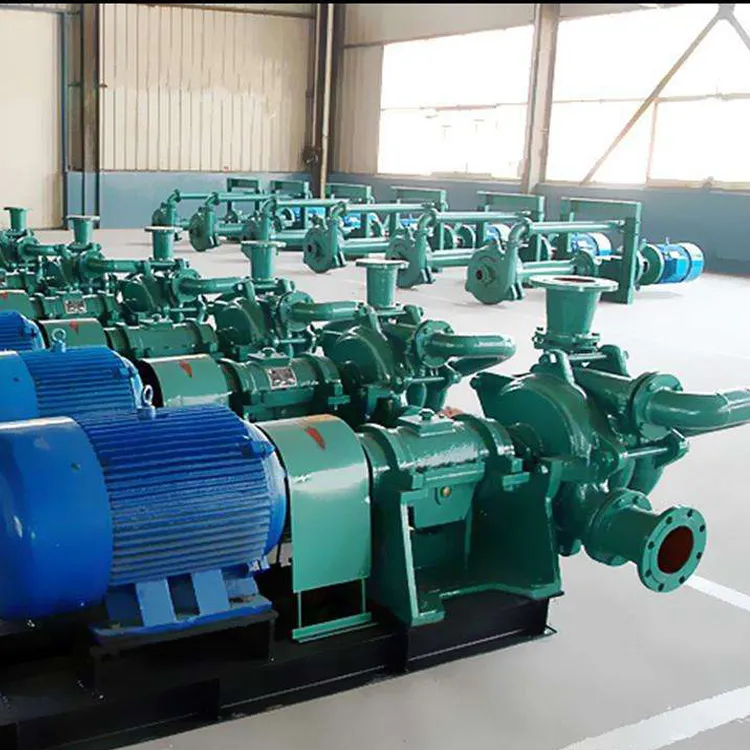
Introduction
Horizontal slurry pumps are centrifugal pumps specifically designed for the transportation of abrasive, erosive, and corrosive fluids – collectively known as slurries. They represent a significant component within numerous industrial processes including mining, wastewater treatment, chemical processing, and dredging. Unlike standard centrifugal pumps, slurry pumps are engineered to handle high solids content, ranging from a few percent to upwards of 70% by weight, while maintaining acceptable efficiency and longevity. Their horizontal configuration simplifies maintenance and accessibility compared to vertical designs. The performance of a slurry pump is defined by its flow rate (typically measured in gallons per minute or cubic meters per hour), head (pressure developed, measured in feet or meters), and solids handling capability (particle size and concentration). Key performance indicators include pump efficiency, wear life, and mean time between failures (MTBF). This guide will provide a comprehensive overview of the materials, manufacturing processes, performance characteristics, potential failure modes, and relevant industry standards associated with horizontal slurry pumps.
Material Science & Manufacturing
The robust construction of horizontal slurry pumps necessitates the use of materials resistant to both abrasion and corrosion. Common materials of construction include high-chromium cast irons (e.g., 19% Cr alloy, 27% Cr alloy) offering excellent abrasive resistance, stainless steels (e.g., 304, 316, duplex stainless steels) providing superior corrosion resistance, and specialized alloys such as Hastelloy and nickel-based alloys for highly corrosive environments. Pump casings are typically manufactured using sand casting, investment casting, or centrifugal casting techniques. Sand casting is cost-effective for large components but offers lower dimensional accuracy. Investment casting (lost-wax casting) delivers intricate geometries and excellent surface finish but is more expensive. Centrifugal casting is optimal for producing cylindrical components like pump liners, providing a dense, homogeneous microstructure. Impellers are commonly manufactured using investment casting, though some designs utilize sand casting with appropriate core designs. Shafts are typically forged from alloy steel and hardened to resist bending and torsional stresses. Seals are critical components, often employing mechanical seals with various face materials (e.g., silicon carbide, tungsten carbide, ceramic) to prevent leakage and contamination. Liners, replaceable wear parts within the pump casing, are frequently rubber-lined or ceramic-lined to extend service life. Welding processes, such as shielded metal arc welding (SMAW) and gas tungsten arc welding (GTAW), are crucial for joining pump components, requiring qualified welders and stringent quality control to ensure weld integrity and prevent defects like porosity and cracking. Parameter control during manufacturing – including casting temperature, cooling rate, heat treatment, and welding parameters – is paramount for achieving desired material properties and performance.

Performance & Engineering
The performance of a horizontal slurry pump is heavily influenced by several engineering factors. Force analysis considers the hydraulic forces exerted by the slurry on the impeller and casing, as well as the mechanical stresses induced by the shaft and bearings. Cavitation, a primary concern in slurry pump operation, occurs when the pressure at the impeller inlet drops below the vapor pressure of the liquid, forming vapor bubbles that collapse and cause localized erosion. Adequate Net Positive Suction Head Required (NPSHr) must be ensured to prevent cavitation. Slurry velocity plays a critical role; excessive velocity leads to increased abrasion and erosion, while insufficient velocity can cause solids to settle and clog the pump. Pump curves, depicting the relationship between flow rate, head, and efficiency, are essential for pump selection and system design. Environmental resistance is another key factor. External coatings (e.g., epoxy coatings, polyurethane coatings) are often applied to pump casings to protect against corrosion and atmospheric exposure. In applications involving extreme temperatures, specialized materials and cooling systems may be required. Compliance requirements vary depending on the application and region. For example, pumps used in the food and beverage industry must meet stringent sanitary standards (e.g., 3-A Sanitary Standards). Pumps used in hazardous environments must comply with ATEX or IECEx standards for explosion protection. Functional implementation requires careful consideration of system layout, piping design, and control systems to optimize pump performance and minimize wear. Pump speed, impeller diameter, and volute design are all critical parameters that influence pump performance.
Technical Specifications
| Parameter | Unit | Typical Range (Small Pump) | Typical Range (Large Pump) |
|---|---|---|---|
| Flow Rate | GPM | 50 - 250 | 500 - 2000+ |
| Head | ft | 20 - 80 | 100 - 300+ |
| Solids Handling Size | in | 0.25 - 1.5 | 2 - 6+ |
| Slurry Concentration (by weight) | % | 5 - 30 | 20 - 70 |
| Pump Speed | RPM | 800 - 1800 | 600 - 1200 |
| Power | HP | 5 - 20 | 50 - 200+ |
Failure Mode & Maintenance
Horizontal slurry pumps are susceptible to several failure modes. Fatigue cracking can occur in the impeller and casing due to cyclical stresses induced by slurry flow and pressure fluctuations. Erosion, particularly at the impeller leading edge and volute tongue, is a common failure mechanism caused by abrasive particles impacting the pump components. Corrosion, especially in acidic or alkaline slurries, can lead to material degradation and pump failure. Mechanical seal failure, often resulting from abrasive particles or improper installation, leads to leakage and potential pump damage. Bearing failure, due to inadequate lubrication or excessive loads, can cause pump misalignment and vibration. Delamination of rubber liners is a frequent issue, reducing their protective capacity. Oxidation and corrosion of shaft sleeves can lead to wear and eventual failure. Preventive maintenance is critical for extending pump life. Regular inspections should be conducted to identify signs of wear, corrosion, and leakage. Lubrication schedules must be strictly adhered to. Impellers, liners, and seals should be replaced at scheduled intervals based on operating conditions and wear rates. Vibration analysis can detect bearing problems and misalignment. Proper pump alignment is essential to minimize bearing loads and prevent shaft fatigue. Filtration or screening of the slurry can reduce the concentration of abrasive particles and extend pump life. Regular monitoring of pump performance parameters (e.g., flow rate, head, power consumption) can identify deviations from normal operation and potential problems.
Industry FAQ
Q: What is the impact of slurry composition on pump selection?
A: Slurry composition (particle size distribution, solids concentration, slurry density, pH, and chemical composition) dictates the required materials of construction and pump design. Highly abrasive slurries necessitate high-chromium cast irons or ceramic liners. Corrosive slurries require stainless steel or specialized alloys. Higher solids concentrations demand pumps with larger impeller passages and robust construction.
Q: How do I mitigate cavitation in a slurry pump?
A: Cavitation can be minimized by ensuring adequate NPSHa (Net Positive Suction Head Available), optimizing suction piping design, and reducing pump speed. Increasing the suction pipe diameter and shortening its length can reduce pressure drop. Maintaining a sufficient liquid level in the suction tank is also crucial.
Q: What are the advantages of using a rubber liner in a slurry pump?
A: Rubber liners provide excellent resistance to abrasion and corrosion, particularly in applications involving low to medium velocity slurries. They also dampen noise and vibration. However, rubber liners have limited temperature resistance and can degrade over time due to chemical attack.
Q: What is the best method for monitoring the wear of pump components?
A: Regular visual inspections, dimensional measurements, and vibration analysis are effective methods for monitoring wear. Tracking pump performance parameters (e.g., flow rate, head, power consumption) can also provide insights into component wear. Wear rate can be estimated based on historical data and operating conditions.
Q: How does impeller design impact pump performance in abrasive slurries?
A: Impeller design significantly impacts pump performance and wear life. Impellers with larger flow passages and rounded edges are less susceptible to clogging and erosion. Hardened impeller materials (e.g., high-chromium cast iron) are essential for abrasive slurries. Impeller geometry affects pump efficiency and solids handling capability.
Conclusion
Horizontal slurry pumps are indispensable components in numerous industrial applications requiring the efficient and reliable transport of abrasive and corrosive fluids. Proper material selection, meticulous manufacturing processes, and a thorough understanding of pump performance characteristics are paramount for ensuring optimal operation and longevity. Careful attention to failure modes and implementation of a robust preventive maintenance program are essential for minimizing downtime and maximizing return on investment.
The continuing advancement of materials science and pump design will lead to even more durable and efficient slurry pump technologies. Future trends include the development of new wear-resistant alloys, improved impeller geometries optimized for solids handling, and the integration of advanced monitoring and control systems for predictive maintenance. A comprehensive understanding of the factors discussed in this guide is crucial for engineers, procurement managers, and maintenance personnel involved in the specification, operation, and maintenance of horizontal slurry pumps.
-
Precision at the Pump: How Better Machining Protects Flow and Uptime
News2026-11-20
-
Why Pump Reliability Begins Before the First Drop of Fluid
News2026-11-20
-
Beyond the Pump: Designing Safer Access Around Critical Water Infrastructure
News2026-11-20
-
Why Pumping Stations Depend on the Infrastructure Beneath the Pumps
News2026-11-20
-
Beyond the Pump Room: How Smarter Loading Protects Industrial Equipment
News2026-11-19
-
When Pumps Stop: Designing More Resilient Power for Critical Pumping Systems
News2026-11-19
-
The Hidden Role of Dust and Gas Monitoring in Reliable Pump Operations
News2026-11-19
-
The Hidden Role of Mineral Compounds in Extending Industrial Pump Lifespan
News2026-10-12
-
Why Pump System Reliability Depends on Precision Hose Assembly Methods
News2026-09-15
-
How Advanced Imaging Films Are Transforming Pump Component Quality Control
News2026-08-25
-
How Advanced Filtration Protects Pump Systems from Premature Wear and Costly Downtime
News2026-08-25
-
How Steel Material Selection Drives Pump Reliability in Heavy-Duty Systems
News2026-08-25
-
Ensuring Pump System Efficiency: The Role of High-Quality Pipe Fittings and Tubing
News2026-08-24
-
Optimizing Fluid Dynamics and Material Consistency in Industrial Processing
News2026-08-18
-
Innovations and Challenges in Hydraulic Systems for Heavy Machinery
News2026-08-13




