English
- Afrikaans
- Albanian
- Amharic
- Arabic
- Armenian
- Azerbaijani
- Basque
- Belarusian
- Bengali
- Bosnian
- Bulgarian
- Catalan
- Cebuano
- Corsican
- Croatian
- Czech
- Danish
- Dutch
- English
- Esperanto
- Estonian
- Finnish
- French
- Frisian
- Galician
- Georgian
- German
- Greek
- Gujarati
- Haitian Creole
- hausa
- hawaiian
- Hebrew
- Hindi
- Miao
- Hungarian
- Icelandic
- igbo
- Indonesian
- irish
- Italian
- Japanese
- Javanese
- Kannada
- kazakh
- Khmer
- Rwandese
- Korean
- Kurdish
- Kyrgyz
- Lao
- Latin
- Latvian
- Lithuanian
- Luxembourgish
- Macedonian
- Malgashi
- Malay
- Malayalam
- Maltese
- Maori
- Marathi
- Mongolian
- Myanmar
- Nepali
- Norwegian
- Norwegian
- Occitan
- Pashto
- Persian
- Polish
- Portuguese
- Punjabi
- Romanian
- Russian
- Samoan
- Scottish Gaelic
- Serbian
- Sesotho
- Shona
- Sindhi
- Sinhala
- Slovak
- Slovenian
- Somali
- Spanish
- Sundanese
- Swahili
- Swedish
- Tagalog
- Tajik
- Tamil
- Tatar
- Telugu
- Thai
- Turkish
- Turkmen
- Ukrainian
- Urdu
- Uighur
- Uzbek
- Vietnamese
- Welsh
- Bantu
- Yiddish
- Yoruba
- Zulu

Telephone: +86 13120555503
Email: frank@cypump.com


Apr . 01, 2024 17:55 Back to list
highperformance oem medium head heavy duty slurry pump for industrial applications
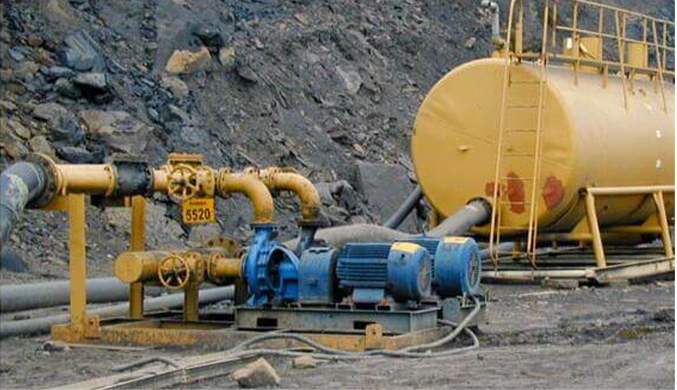
Introduction
High-performance OEM medium head heavy duty slurry pumps are critical components in numerous industrial processes, facilitating the transport of abrasive and corrosive fluids. This guide details the technical aspects of these pumps, their construction, performance characteristics, failure modes, and maintenance protocols. These pumps occupy a pivotal position in industries like mining, wastewater treatment, dredging, and chemical processing, serving as the workhorse for moving high-solids content slurries. Core performance revolves around volumetric flow rate, discharge pressure (head), and solids handling capability, all while maintaining acceptable levels of wear and operational efficiency. A key industry pain point is balancing these performance parameters with cost-effectiveness and longevity, particularly in aggressive environments. Selecting the appropriate pump involves careful consideration of the slurry's characteristics, operational demands, and the total cost of ownership.
Material Science & Manufacturing
The core materials in a high-performance slurry pump are selected for their resistance to abrasion, corrosion, and erosion. Pump casings are commonly constructed from high-chrome cast iron (typically 27-30% chromium content) due to its exceptional wear resistance, particularly in handling abrasive slurries containing hard particles. Impellers are often manufactured from similar high-chrome alloys, or alternative materials like ceramic or polyurethane depending on the slurry composition. Shafts are typically forged from alloy steel (e.g., 4140 or 4340) and hardened to provide high tensile strength and resistance to torsional stresses. Seals, a critical wear component, utilize materials like tungsten carbide, silicon carbide, or specialized elastomers (e.g., Viton, EPDM) based on the chemical compatibility requirements. Manufacturing processes include sand casting for the casing, investment casting or centrifugal casting for impellers, and precision machining for all rotating components. Welding is employed for joining casing sections and applying wear-resistant coatings. Critical parameter control focuses on the hardness of wear surfaces (measured by Rockwell C scale), chemical composition verification through spectroscopic analysis, and dimensional accuracy of components to ensure proper fit and alignment. Heat treatment processes (quenching and tempering) are vital for achieving desired material properties. Non-destructive testing (NDT) methods, such as radiographic inspection and ultrasonic testing, are employed to detect internal flaws and ensure structural integrity.
Performance & Engineering
Performance of slurry pumps is fundamentally governed by hydraulic principles. The pump's head (discharge pressure) is determined by the impeller's diameter, rotational speed, and the fluid's velocity. Flow rate is proportional to the impeller's speed and width. However, the presence of solids significantly alters these relationships. The solids concentration, particle size distribution, and shape influence the slurry's viscosity and density, affecting pump performance. Force analysis involves calculating the radial and axial loads on the impeller and shaft, considering the weight of the slurry, hydraulic forces, and inertial forces. These loads dictate bearing selection and shaft design to prevent failure. Environmental resistance is critical; pumps operating in corrosive environments require appropriate material selection and protective coatings. Compliance requirements include adherence to standards for pump efficiency (e.g., Hydraulic Institute standards), safety (e.g., OSHA regulations), and environmental emissions. Functional implementation involves proper pump sizing to match the system requirements, ensuring adequate suction lift, and implementing appropriate wear protection strategies, such as replaceable liners and hardfacing. Cavitation, a major concern, occurs when the absolute pressure at the impeller inlet drops below the vapor pressure of the fluid, leading to bubble formation and subsequent collapse, causing erosion damage. Net Positive Suction Head Required (NPSHr) must be carefully considered during pump selection and system design.
Technical Specifications
| Parameter | Unit | Typical Value (Medium Head, Heavy Duty) | Tolerance |
|---|---|---|---|
| Maximum Flow Rate | m³/hr | 250 - 750 | ±10% |
| Maximum Head | m | 30 - 60 | ±5% |
| Maximum Solids Size | mm | 50 - 100 | - |
| Maximum Solids Concentration (by weight) | % | Up to 70 | - |
| Impeller Diameter | mm | 200 - 400 | ±2mm |
| Motor Power | kW | 15 - 75 | ±5% |
Failure Mode & Maintenance
Common failure modes in slurry pumps include impeller wear (erosion and abrasion), casing wear, seal failure, bearing failure, and shaft breakage. Impeller wear is accelerated by high solids concentrations, large particle sizes, and sharp particle shapes. Casing wear occurs primarily in areas with high flow velocities, such as the volute and discharge nozzle. Seal failures are often caused by abrasive particles, chemical attack, or improper installation. Bearing failures result from excessive loads, lubrication issues, or contamination. Shaft breakage typically occurs due to fatigue cracking or torsional overload. Preventive maintenance is crucial. This includes regular inspection of wear components, lubrication of bearings, monitoring vibration levels, and checking seal integrity. Wear liners should be replaced when they reach a predetermined thickness. Impellers and casings may require hardfacing or replacement based on wear rates. Seals should be inspected and replaced periodically. Vibration analysis can detect early signs of bearing wear or imbalance. Proper lubrication is essential for extending bearing life. Root cause analysis should be performed on any unexpected failures to identify and correct underlying issues. Implementing a condition-based maintenance program, utilizing sensors and data analytics, can optimize maintenance schedules and minimize downtime.
Industry FAQ
Q: What is the impact of slurry composition on pump selection?
A: Slurry composition is paramount. The particle size distribution, shape, hardness, and concentration directly impact wear rates and pump performance. Highly abrasive slurries require materials with exceptional wear resistance, like high-chrome cast iron or ceramic. Corrosive slurries necessitate chemically resistant materials, such as stainless steel or specialized polymers. Higher solids concentrations demand pumps with larger passageways and higher power ratings.
Q: How do you mitigate cavitation damage in slurry pumps?
A: Mitigating cavitation involves ensuring adequate Net Positive Suction Head Available (NPSHa) exceeds the Net Positive Suction Head Required (NPSHr). This can be achieved by lowering the pump, increasing the suction pipe diameter, reducing the suction lift, or cooling the slurry. Impeller design also plays a role; low-energy impellers are less prone to cavitation.
Q: What are the advantages of using a variable frequency drive (VFD) with a slurry pump?
A: VFDs allow for precise control of pump speed, optimizing flow rate and energy consumption. They can also reduce water hammer effects and extend pump life by reducing stress on components. VFDs are particularly beneficial in applications with fluctuating flow requirements.
Q: How does impeller design impact pump efficiency and solids handling capability?
A: Impeller design significantly affects both. Open impellers are generally preferred for handling slurries with high solids content, as they are less prone to clogging. However, they typically have lower efficiency compared to closed impellers. Impeller vane angle and width influence flow rate and head. Hardfacing or ceramic coatings can enhance impeller wear resistance.
Q: What are the key considerations for selecting a mechanical seal for a slurry pump?
A: Key considerations include the slurry's abrasiveness, corrosiveness, and temperature. The seal material must be compatible with the slurry and resistant to wear. Seal flushing is often necessary to prevent abrasive particles from building up and damaging the seal faces. Double mechanical seals with a barrier fluid are used in particularly demanding applications.
Conclusion
High-performance OEM medium head heavy duty slurry pumps are complex systems requiring careful selection, operation, and maintenance. Optimizing pump performance necessitates a thorough understanding of the slurry’s characteristics, hydraulic principles, and material science. Proper material selection, coupled with robust manufacturing processes and meticulous maintenance programs, are essential for maximizing pump life and minimizing downtime.
Effective slurry pump operation hinges on a holistic approach, encompassing careful system design, proactive maintenance strategies, and adherence to industry best practices. Advancements in materials, impeller design, and monitoring technologies continue to improve pump efficiency, reliability, and overall cost-effectiveness, making these pumps indispensable in a wide range of industrial applications.
-
Precision at the Pump: How Better Machining Protects Flow and Uptime
News2026-11-20
-
Why Pump Reliability Begins Before the First Drop of Fluid
News2026-11-20
-
Beyond the Pump: Designing Safer Access Around Critical Water Infrastructure
News2026-11-20
-
Why Pumping Stations Depend on the Infrastructure Beneath the Pumps
News2026-11-20
-
Beyond the Pump Room: How Smarter Loading Protects Industrial Equipment
News2026-11-19
-
When Pumps Stop: Designing More Resilient Power for Critical Pumping Systems
News2026-11-19
-
The Hidden Role of Dust and Gas Monitoring in Reliable Pump Operations
News2026-11-19
-
The Hidden Role of Mineral Compounds in Extending Industrial Pump Lifespan
News2026-10-12
-
Why Pump System Reliability Depends on Precision Hose Assembly Methods
News2026-09-15
-
How Advanced Imaging Films Are Transforming Pump Component Quality Control
News2026-08-25
-
How Advanced Filtration Protects Pump Systems from Premature Wear and Costly Downtime
News2026-08-25
-
How Steel Material Selection Drives Pump Reliability in Heavy-Duty Systems
News2026-08-25
-
Ensuring Pump System Efficiency: The Role of High-Quality Pipe Fittings and Tubing
News2026-08-24
-
Optimizing Fluid Dynamics and Material Consistency in Industrial Processing
News2026-08-18
-
Innovations and Challenges in Hydraulic Systems for Heavy Machinery
News2026-08-13




