English
- Afrikaans
- Albanian
- Amharic
- Arabic
- Armenian
- Azerbaijani
- Basque
- Belarusian
- Bengali
- Bosnian
- Bulgarian
- Catalan
- Cebuano
- Corsican
- Croatian
- Czech
- Danish
- Dutch
- English
- Esperanto
- Estonian
- Finnish
- French
- Frisian
- Galician
- Georgian
- German
- Greek
- Gujarati
- Haitian Creole
- hausa
- hawaiian
- Hebrew
- Hindi
- Miao
- Hungarian
- Icelandic
- igbo
- Indonesian
- irish
- Italian
- Japanese
- Javanese
- Kannada
- kazakh
- Khmer
- Rwandese
- Korean
- Kurdish
- Kyrgyz
- Lao
- Latin
- Latvian
- Lithuanian
- Luxembourgish
- Macedonian
- Malgashi
- Malay
- Malayalam
- Maltese
- Maori
- Marathi
- Mongolian
- Myanmar
- Nepali
- Norwegian
- Norwegian
- Occitan
- Pashto
- Persian
- Polish
- Portuguese
- Punjabi
- Romanian
- Russian
- Samoan
- Scottish Gaelic
- Serbian
- Sesotho
- Shona
- Sindhi
- Sinhala
- Slovak
- Slovenian
- Somali
- Spanish
- Sundanese
- Swahili
- Swedish
- Tagalog
- Tajik
- Tamil
- Tatar
- Telugu
- Thai
- Turkish
- Turkmen
- Ukrainian
- Urdu
- Uighur
- Uzbek
- Vietnamese
- Welsh
- Bantu
- Yiddish
- Yoruba
- Zulu

Telephone: +86 13120555503
Email: frank@cypump.com


Apr . 01, 2024 17:55 Back to list
high pressure sump pump Performance Analysis
Introduction
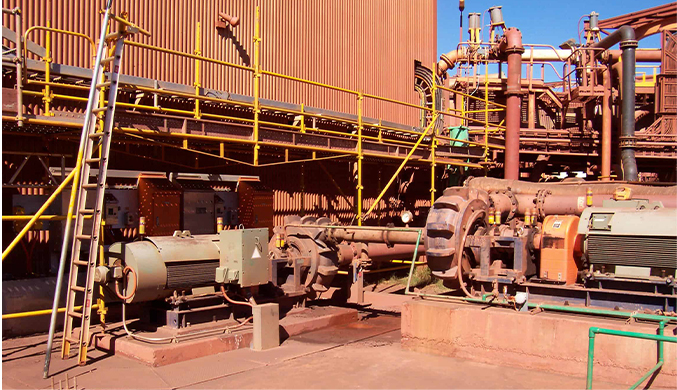
High pressure sump pumps are critical components in fluid transfer systems across numerous industries, including wastewater treatment, mining, construction, and agriculture. Distinct from standard sump pumps designed for low-lift, high-volume drainage, these pumps excel at delivering fluids against substantial static head and over significant distances. Their technical position within the industry chain involves receiving process fluids from collection points (sumps), boosting pressure to overcome frictional losses in piping, and discharging to subsequent processing stages, storage, or disposal locations. Core performance characteristics are defined by maximum head (measured in feet or meters), flow rate (gallons per minute or liters per second), and the ability to handle abrasive or viscous fluids without compromising efficiency or longevity. The increasing demands for remote fluid management and stringent environmental regulations are driving advancements in pump design, materials, and control systems for high-pressure sump applications. This guide provides an in-depth technical overview of high-pressure sump pumps, covering material science, manufacturing processes, performance engineering, failure modes, and relevant industry standards.
Material Science & Manufacturing
The performance and lifespan of a high-pressure sump pump are intrinsically linked to the materials used in its construction. Pump housings are commonly manufactured from cast iron (ASTM A48 Class 30), stainless steel (304, 316 – ASTM A743), or engineered polymers (Polypropylene, HDPE) depending on the fluid composition and operating environment. Cast iron provides cost-effectiveness and good wear resistance for clean water applications. Stainless steel is essential when handling corrosive fluids, such as those containing chlorides or acids, preventing galvanic corrosion and ensuring structural integrity. Polymer housings offer chemical inertness but are limited in temperature and pressure capabilities. Impellers, the rotating components that generate flow, are frequently made from bronze (ASTM B148), duplex stainless steel, or high-chromium iron alloys, chosen for their resistance to erosion and cavitation. Shafts typically utilize alloy steel (AISI 4140) hardened and tempered for high tensile strength and torsional rigidity. Seals are a critical element; mechanical seals employing silicon carbide or tungsten carbide faces (ISO 3520) are prevalent to minimize leakage and maximize seal life under high pressure. Manufacturing processes include sand casting for housings, investment casting for impellers (yielding finer tolerances), and CNC machining for shafts and wear rings. Key parameter control during manufacturing focuses on dimensional accuracy, surface finish (Ra values), and heat treatment parameters to achieve desired material properties. Welding procedures (AWS D1.1) must be rigorously controlled to prevent defects like porosity or cracking in joined components. Non-destructive testing (NDT) methods like ultrasonic testing and radiographic inspection are employed to verify weld quality and identify subsurface flaws.
Performance & Engineering
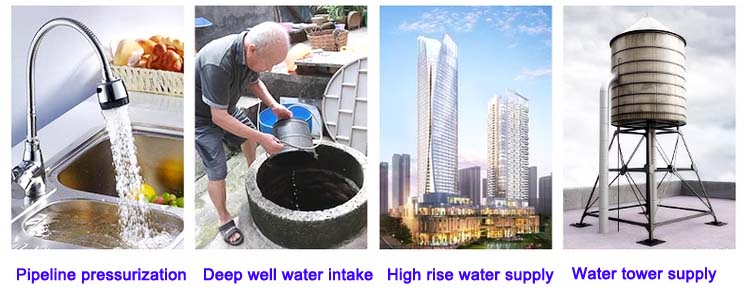
The engineering of high-pressure sump pumps necessitates a comprehensive understanding of fluid dynamics and mechanical stress analysis. Force analysis considers hydrostatic pressure, dynamic pressure from fluid flow, and inertial forces generated by impeller rotation. Pump curves, generated through hydraulic testing (ANSI/HI standards), depict the relationship between head, flow rate, and efficiency. These curves are essential for selecting a pump that optimally matches the system requirements. Environmental resistance is a major consideration. Exposure to extreme temperatures, UV radiation, or corrosive atmospheres can degrade materials and compromise performance. Coatings, such as epoxy or polyurethane, are often applied to protect pump components from corrosion and abrasion. Compliance requirements vary depending on the application. For example, pumps used in potable water systems must comply with NSF/ANSI 61 standards for lead content and material safety. Pumps operating in hazardous locations require ATEX or IECEx certification to prevent ignition of flammable gases or vapors. Functional implementation often involves integrating variable frequency drives (VFDs) to control pump speed and flow rate, optimizing energy consumption and reducing wear. Cavitation, the formation and implosion of vapor bubbles, is a common concern in high-pressure pumps. Proper net positive suction head available (NPSHA) calculation is crucial to prevent cavitation damage to the impeller. Finite element analysis (FEA) is employed to optimize pump designs, minimize stress concentrations, and predict fatigue life under cyclic loading.
Technical Specifications
| Parameter | Unit | Typical Range | Industry Standard |
|---|---|---|---|
| Maximum Head | ft (m) | 100-1000 (30-305) | ANSI/HI 1.5 |
| Flow Rate | GPM (L/s) | 50-500 (1.9-18.9) | ANSI/HI 1.1 |
| Impeller Diameter | in (mm) | 4-12 (100-305) | ISO 9906 |
| Motor Power | HP (kW) | 5-100 (3.7-75) | NEMA MG 1 |
| Suction Pressure | PSI (Bar) | -30 to 50 (-2.1 to 3.4) | ISO 2858 |
| Discharge Pressure | PSI (Bar) | 100-500 (6.9 to 34.5) | ASME B31.3 |
Failure Mode & Maintenance
High-pressure sump pumps are susceptible to several failure modes. Fatigue cracking, particularly in the pump housing and impeller, can occur due to cyclic loading and stress concentrations. Delamination of coatings can expose underlying materials to corrosion. Degradation of seals leads to leakage and reduced pump efficiency. Oxidation of metallic components accelerates corrosion processes. Cavitation erosion damages impeller vanes, reducing pump performance. Abrasive wear, caused by suspended solids in the fluid, erodes pump components. Common maintenance solutions include regular inspection of seals and bearings, lubrication of moving parts, and monitoring of vibration levels. Preventive maintenance schedules should be established based on operating conditions and pump usage. Impeller replacement is often necessary after prolonged exposure to abrasive fluids. Periodic analysis of oil samples can detect wear debris and indicate potential bearing failures. For stainless steel components, passivation treatments can restore the protective oxide layer and prevent corrosion. In cases of cavitation damage, impeller repair or replacement is required. Proper alignment of the pump and motor is crucial to prevent premature bearing failure. Regular cleaning of the sump intake is essential to minimize the ingress of debris.
Industry FAQ
Q: What are the primary factors influencing the selection of a high-pressure sump pump for a mining application handling abrasive slurry?
A: The primary factors include the slurry's solids concentration, particle size distribution, specific gravity, and chemical composition. Pump selection should prioritize materials resistant to abrasive wear, such as high-chromium iron alloys or hardened stainless steels. Impeller design (e.g., recessed or vortex) should minimize wear and clogging. The pump's maximum head and flow rate must be sufficient to overcome pipeline friction losses and deliver the slurry to the processing location. Furthermore, consider the pump's seal design to prevent slurry leakage and maintain efficient operation.
Q: How does NPSH affect the performance and longevity of a high-pressure sump pump?
A: Insufficient Net Positive Suction Head Available (NPSHA) relative to the pump's Net Positive Suction Head Required (NPSHR) leads to cavitation. Cavitation causes noise, vibration, reduced pump efficiency, and ultimately, impeller damage. Maintaining adequate NPSHA ensures that the pump inlet remains flooded with liquid, preventing vapor bubble formation. Correct NPSHA calculation requires accurate determination of suction lift, fluid temperature, and vapor pressure.
Q: What are the advantages of utilizing a variable frequency drive (VFD) with a high-pressure sump pump?
A: A VFD allows precise control of pump speed and flow rate, enabling optimization of energy consumption and reduced mechanical stress on the pump. It allows the pump to match the system demand, reducing wear and tear during periods of low flow. Soft starting and stopping capabilities of VFDs further minimize stress on the motor and piping system. VFDs also facilitate automated control and remote monitoring of pump performance.
Q: What are the key considerations when selecting materials for a high-pressure sump pump used in a chemically aggressive environment?
A: Material selection should focus on chemical resistance to the specific fluids being handled. Stainless steel alloys (316, duplex stainless steel) are often preferred for their corrosion resistance. However, the specific alloy must be compatible with the chemical composition of the fluid. Polymer housings and seals may be suitable for certain applications but have temperature and pressure limitations. Galvanic corrosion potential should be assessed when using dissimilar metals.
Q: How do you diagnose bearing failure in a high-pressure sump pump and what preventative measures can be taken?
A: Symptoms of bearing failure include increased vibration, excessive noise, elevated bearing temperature, and lubricant contamination. Diagnostic techniques include vibration analysis, infrared thermography, and oil analysis. Preventative measures include proper lubrication, regular bearing inspection, ensuring correct pump-motor alignment, and protecting bearings from contamination (dirt, moisture, abrasive particles). Selecting bearings with appropriate load ratings and seals is also crucial.
Conclusion
High-pressure sump pumps represent a specialized category of fluid handling equipment crucial for a wide range of industrial applications. Their effective operation hinges on careful consideration of material science, precise manufacturing controls, and diligent performance engineering. Understanding the potential failure modes and implementing proactive maintenance strategies are paramount to ensuring long-term reliability and minimizing downtime. The selection process requires a thorough assessment of system requirements, fluid characteristics, and environmental conditions to optimize pump performance and maximize return on investment.
Looking forward, advancements in pump design, such as the incorporation of advanced sealing technologies and predictive maintenance algorithms, will further enhance the efficiency and reliability of high-pressure sump pumps. Continued focus on energy efficiency and environmental sustainability will drive the development of more optimized pump systems and control strategies. The integration of IoT sensors and data analytics will enable real-time monitoring of pump performance, facilitating proactive maintenance and minimizing the risk of catastrophic failures.
-
pump for sewage water Performance Analysis
News2026-05-23
-
plumbing sewage ejector pump Performance Engineering
News2026-05-23
-
home sewer pump station Performance and Engineering
News2026-05-23
-
high pressure sump pump Performance Analysis
News2026-05-23
-
high head effluent pump Performance Analysis
News2026-05-23
-
Effluent vs Sump Pump Performance Analysis
News2026-05-22
-
effluent septic pump Performance Engineering
News2026-05-22
-
best sewer pumps Performance Engineering
News2026-05-22
-
best sewer pump Performance Analysis
News2026-05-22
-
best sewage pumps Performance Engineering
News2026-05-22
-
basement bathroom sewage pump Material Science Manufacturing
News2026-05-21
-
wastewater treatment plant pumps Material Science Manufacturing
News2026-05-21
-
waste water pump for basement Material Science Manufacturing
News2026-05-21
-
sump pump sewage Performance Analysis
News2026-05-21
-
sump pump for sewage Material Science and Manufacturing
News2026-05-21




