English
- Afrikaans
- Albanian
- Amharic
- Arabic
- Armenian
- Azerbaijani
- Basque
- Belarusian
- Bengali
- Bosnian
- Bulgarian
- Catalan
- Cebuano
- Corsican
- Croatian
- Czech
- Danish
- Dutch
- English
- Esperanto
- Estonian
- Finnish
- French
- Frisian
- Galician
- Georgian
- German
- Greek
- Gujarati
- Haitian Creole
- hausa
- hawaiian
- Hebrew
- Hindi
- Miao
- Hungarian
- Icelandic
- igbo
- Indonesian
- irish
- Italian
- Japanese
- Javanese
- Kannada
- kazakh
- Khmer
- Rwandese
- Korean
- Kurdish
- Kyrgyz
- Lao
- Latin
- Latvian
- Lithuanian
- Luxembourgish
- Macedonian
- Malgashi
- Malay
- Malayalam
- Maltese
- Maori
- Marathi
- Mongolian
- Myanmar
- Nepali
- Norwegian
- Norwegian
- Occitan
- Pashto
- Persian
- Polish
- Portuguese
- Punjabi
- Romanian
- Russian
- Samoan
- Scottish Gaelic
- Serbian
- Sesotho
- Shona
- Sindhi
- Sinhala
- Slovak
- Slovenian
- Somali
- Spanish
- Sundanese
- Swahili
- Swedish
- Tagalog
- Tajik
- Tamil
- Tatar
- Telugu
- Thai
- Turkish
- Turkmen
- Ukrainian
- Urdu
- Uighur
- Uzbek
- Vietnamese
- Welsh
- Bantu
- Yiddish
- Yoruba
- Zulu

Telephone: +86 13120555503
Email: frank@cypump.com


Apr . 01, 2024 17:55 Back to list
high head slurry pump for wholesale purchase ideal for mining and wastewater treatment
Introduction
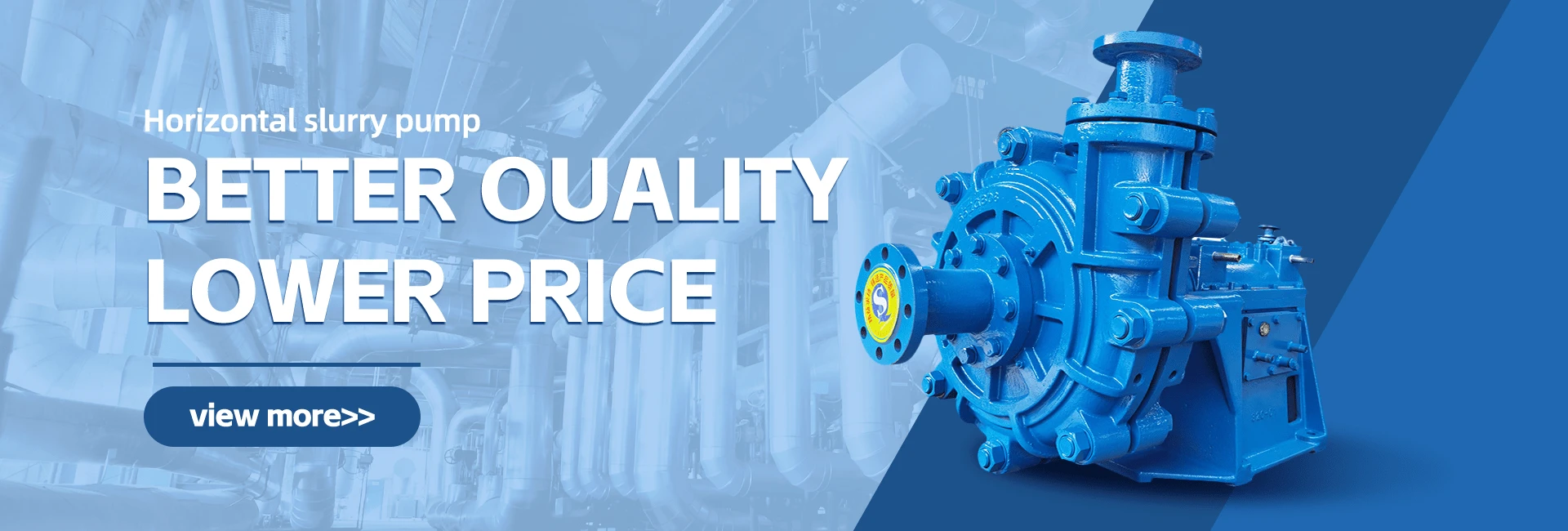
High head slurry pumps are critical components in industries dealing with abrasive and highly concentrated slurries requiring lift to significant elevations. These pumps are distinguished by their capacity to generate substantial hydraulic head, differentiating them from standard slurry pumps used for horizontal conveyance. This technical guide focuses on the design, material science, performance characteristics, failure modes, and maintenance of high head slurry pumps intended for wholesale purchase, primarily serving applications in mining, mineral processing, dredging, and heavy industrial wastewater treatment. The demand stems from increasing operational depths in mining, stricter environmental regulations regarding tailings management, and the need for efficient, reliable solids handling in complex process circuits. Proper specification and maintenance are paramount to ensuring long service life and minimizing total cost of ownership, given the harsh operating environments these pumps are subjected to. This guide aims to provide a comprehensive overview for procurement managers and engineers involved in the selection and maintenance of these essential pieces of equipment.
Material Science & Manufacturing
The construction of high head slurry pumps necessitates careful material selection to withstand both the abrasive nature of the slurry and the high stresses induced by elevated pressures. Pump casings are typically constructed from high-chromium cast iron (e.g., 27% Cr) for exceptional abrasion resistance, though duplex stainless steels (e.g., UNS S31803, S32205) are increasingly employed in corrosive environments. Impeller materials vary based on slurry composition; high-chromium iron is common for general abrasive service, while hardened stainless steels or ceramic materials (e.g., alumina, silicon carbide) are used for exceptionally abrasive or corrosive slurries. Shaft materials are generally alloy steels (e.g., 4140, 4340) heat-treated for high tensile strength and fatigue resistance. Manufacturing processes involve several key steps: casing casting and machining, impeller casting and balancing, shaft forging and machining, and precision assembly. Welding, used in casing fabrication and repair, requires qualified procedures and post-weld heat treatment to maintain material properties and prevent cracking. Key parameter control during manufacturing focuses on impeller hydraulic efficiency (achieved through precise casting and balancing), casing dimensional accuracy to maintain tight clearances, and proper surface finish to minimize friction and wear. The hardness of the wear parts is critically monitored using Rockwell hardness testing (HRC) to ensure compliance with design specifications. Liners, often rubber or polyurethane, are frequently used in casings and impellers to provide additional protection against abrasion and corrosion, and are vulcanized or bonded to the metallic substrate.
Performance & Engineering
High head slurry pumps operate on the principle of centrifugal force, converting rotational kinetic energy into hydraulic energy. Engineering design focuses on maximizing head generation while maintaining acceptable efficiency and minimizing wear. Key performance parameters include head (measured in meters or feet), flow rate (measured in m³/hr or GPM), power consumption (measured in kW or HP), and Net Positive Suction Head Required (NPSHr). The pump’s specific speed (Ns) is a dimensionless parameter that classifies pump type and influences its hydraulic characteristics. High head pumps typically have lower specific speeds. Force analysis considers the hydrostatic pressure from the slurry column, the dynamic pressure generated by the impeller, and the mechanical stresses within the pump components. Finite Element Analysis (FEA) is commonly employed to optimize casing geometry and impeller design for stress distribution and fatigue life. Environmental resistance is crucial, particularly in corrosive environments. Material compatibility charts are consulted to ensure that pump materials can withstand the chemical composition of the slurry. Pump selection must also consider the solids content and particle size distribution of the slurry, as these factors significantly affect pump performance and wear rates. Compliance requirements vary by region and application. Pumps destined for use in hazardous locations must comply with ATEX or IECEx standards. Pumps handling potable water require certifications like NSF/ANSI 61.
Technical Specifications
| Parameter | Unit | Range (Typical) | Notes |
|---|---|---|---|
| Maximum Head | m | 50-500 | Dependent on impeller diameter and pump speed |
| Flow Rate | m³/hr | 10-500 | Flow rate decreases with increasing head |
| Maximum Solids Size | mm | 10-75 | Influences impeller design and casing passage size |
| Maximum Solids Concentration (by weight) | % | 20-60 | Higher concentrations increase wear rates |
| Pump Speed | RPM | 500-3600 | Determines head and flow characteristics |
| Power Consumption | kW | 5-500 | Varies with head, flow rate, and pump efficiency |
Failure Mode & Maintenance
High head slurry pumps are susceptible to several failure modes. Abrasion is a primary concern, leading to impeller and casing wear, reducing pump efficiency and head. Corrosion can occur, particularly in acidic or saline slurries, weakening pump components and causing leaks. Cavitation, resulting from insufficient NPSH, can erode impeller vanes and casing surfaces. Mechanical failures include bearing failures due to inadequate lubrication or excessive loading, shaft fatigue cracking due to cyclic stress, and seal failures leading to leakage. Regular maintenance is crucial to prevent these failures. This includes: routine visual inspections for wear and corrosion; monitoring bearing temperatures and lubrication levels; impeller balancing to reduce vibration; seal replacement as needed; and performance monitoring (head, flow, power consumption) to detect early signs of degradation. Non-destructive testing (NDT) methods, such as ultrasonic testing (UT) and radiographic testing (RT), can be employed to detect cracks or flaws in critical components. When replacing worn parts, it is essential to use materials that meet or exceed original specifications. Preventive maintenance schedules should be tailored to the specific slurry composition, operating conditions, and pump duty cycle.
Industry FAQ
Q: What is the impact of slurry particle size on pump selection and lifespan?
A: Larger particle sizes and broader particle size distributions significantly increase abrasive wear rates, necessitating the selection of pumps with hardened impeller and casing materials, and potentially reducing the allowable flow rate to minimize erosion. Increased monitoring and more frequent replacement of wear parts are also required.
Q: How does NPSHr relate to pump performance and avoiding cavitation?
A: NPSHr is the minimum pressure required at the pump suction to prevent cavitation. If the available NPSH (NPSHa) is less than the NPSHr, cavitation will occur, damaging the impeller and reducing pump performance. Proper system design, including suction line sizing and elevation, is crucial to ensure adequate NPSHa.
Q: What materials are best suited for handling highly corrosive slurries (e.g., sulfuric acid)?
A: Duplex stainless steels (S31803, S32205) and high-alloy nickel-based alloys (e.g., Hastelloy) offer excellent corrosion resistance to sulfuric acid. Polymer linings, such as rubber or fluoropolymers, can also provide a protective barrier. Material selection should be based on detailed slurry analysis and corrosion testing.
Q: What are the key considerations when specifying a pump for variable flow rate applications?
A: Variable frequency drives (VFDs) are typically used to control pump speed and flow rate. The pump’s hydraulic design should be suitable for operation across a wide range of speeds without significant efficiency losses. Consideration should be given to the impact of reduced flow rates on minimum flow requirements to avoid pump instability.
Q: What is the role of mechanical seals in high head slurry pumps, and what are the common failure mechanisms?
A: Mechanical seals prevent leakage between the pump shaft and casing. Common failure mechanisms include abrasion from solids, corrosion from the slurry, and thermal distortion from heat generated by friction. Seal selection should be based on slurry composition, operating pressure, and shaft speed. Double mechanical seals with a barrier fluid are often used for critical applications.
Conclusion
High head slurry pumps represent a specialized category of fluid handling equipment requiring careful consideration of material science, hydraulic design, and operating conditions. Wholesale purchasers must prioritize a detailed understanding of the application’s specific slurry characteristics, head requirements, and environmental factors to ensure optimal pump selection and long-term reliability. A proactive maintenance program, incorporating regular inspections, performance monitoring, and timely replacement of wear parts, is essential to minimize downtime and maximize the return on investment.
The increasing demands of modern industrial processes, coupled with stringent environmental regulations, necessitate continuous advancements in high head slurry pump technology. Future developments will likely focus on improved wear resistance materials, enhanced hydraulic efficiency, and the integration of smart monitoring systems for predictive maintenance and remote diagnostics. By embracing these advancements, purchasers can ensure that their slurry pumping systems remain efficient, reliable, and compliant with evolving industry standards.
-
Precision at the Pump: How Better Machining Protects Flow and Uptime
News2026-11-20
-
Why Pump Reliability Begins Before the First Drop of Fluid
News2026-11-20
-
Beyond the Pump: Designing Safer Access Around Critical Water Infrastructure
News2026-11-20
-
Why Pumping Stations Depend on the Infrastructure Beneath the Pumps
News2026-11-20
-
Beyond the Pump Room: How Smarter Loading Protects Industrial Equipment
News2026-11-19
-
When Pumps Stop: Designing More Resilient Power for Critical Pumping Systems
News2026-11-19
-
The Hidden Role of Dust and Gas Monitoring in Reliable Pump Operations
News2026-11-19
-
The Hidden Role of Mineral Compounds in Extending Industrial Pump Lifespan
News2026-10-12
-
Why Pump System Reliability Depends on Precision Hose Assembly Methods
News2026-09-15
-
How Advanced Imaging Films Are Transforming Pump Component Quality Control
News2026-08-25
-
How Advanced Filtration Protects Pump Systems from Premature Wear and Costly Downtime
News2026-08-25
-
How Steel Material Selection Drives Pump Reliability in Heavy-Duty Systems
News2026-08-25
-
Ensuring Pump System Efficiency: The Role of High-Quality Pipe Fittings and Tubing
News2026-08-24
-
Optimizing Fluid Dynamics and Material Consistency in Industrial Processing
News2026-08-18
-
Innovations and Challenges in Hydraulic Systems for Heavy Machinery
News2026-08-13




