English
- Afrikaans
- Albanian
- Amharic
- Arabic
- Armenian
- Azerbaijani
- Basque
- Belarusian
- Bengali
- Bosnian
- Bulgarian
- Catalan
- Cebuano
- Corsican
- Croatian
- Czech
- Danish
- Dutch
- English
- Esperanto
- Estonian
- Finnish
- French
- Frisian
- Galician
- Georgian
- German
- Greek
- Gujarati
- Haitian Creole
- hausa
- hawaiian
- Hebrew
- Hindi
- Miao
- Hungarian
- Icelandic
- igbo
- Indonesian
- irish
- Italian
- Japanese
- Javanese
- Kannada
- kazakh
- Khmer
- Rwandese
- Korean
- Kurdish
- Kyrgyz
- Lao
- Latin
- Latvian
- Lithuanian
- Luxembourgish
- Macedonian
- Malgashi
- Malay
- Malayalam
- Maltese
- Maori
- Marathi
- Mongolian
- Myanmar
- Nepali
- Norwegian
- Norwegian
- Occitan
- Pashto
- Persian
- Polish
- Portuguese
- Punjabi
- Romanian
- Russian
- Samoan
- Scottish Gaelic
- Serbian
- Sesotho
- Shona
- Sindhi
- Sinhala
- Slovak
- Slovenian
- Somali
- Spanish
- Sundanese
- Swahili
- Swedish
- Tagalog
- Tajik
- Tamil
- Tatar
- Telugu
- Thai
- Turkish
- Turkmen
- Ukrainian
- Urdu
- Uighur
- Uzbek
- Vietnamese
- Welsh
- Bantu
- Yiddish
- Yoruba
- Zulu

Telephone: +86 13120555503
Email: frank@cypump.com


Apr . 01, 2024 17:55 Back to list
high head pumps Performance Engineering
Introduction
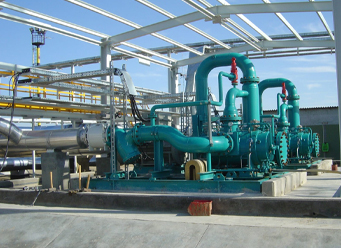
High head pumps are a critical component in numerous industrial applications requiring the lifting of fluids to significant elevations or against substantial static head. Distinct from centrifugal pumps optimized for high flow rates at low head, these pumps are engineered to deliver fluids efficiently against high-pressure differentials. Their primary position in the industrial chain lies within water supply networks (municipal and industrial), pipeline transport, boiler feed systems, deep well pumping, and hydroelectric power generation. Core performance characteristics are defined by the total dynamic head (TDH) achieved, flow rate, pump efficiency, and net positive suction head required (NPSHr). A key pain point in the industry revolves around balancing operational efficiency with long-term reliability and minimizing life-cycle costs, particularly concerning wear and corrosion in harsh operating environments. Selection depends heavily on fluid properties, system head curves, and the required operational parameters. Improper selection leads to cavitation, premature wear, and costly downtime.
Material Science & Manufacturing
The construction of high head pumps demands materials capable of withstanding extreme pressures and potential corrosive attack. Impellers and casings are frequently manufactured from high-grade cast iron (ASTM A48 Class 30), ductile iron (ASTM A536-89 Grade 65-45-12), stainless steel alloys (304, 316, duplex stainless steels), or specialized bronze alloys (e.g., CDA 903). Shafts are typically forged from alloy steels (e.g., 4140, 4340) and undergo heat treatment (quenching and tempering) to maximize tensile strength and fatigue resistance. Seals are commonly composed of elastomers (e.g., Viton, EPDM) or mechanical seals featuring materials like silicon carbide or tungsten carbide for abrasion resistance. The manufacturing process for high head pumps often involves precision casting, CNC machining, and stringent quality control. Welding procedures, particularly for casings and impellers, must adhere to ASME Section IX standards to ensure structural integrity. Key parameter control includes maintaining dimensional tolerances (typically within +/- 0.025mm), surface finish (Ra < 0.8μm for critical surfaces), and ensuring proper heat treatment cycles to achieve desired material properties. Impeller balancing is crucial to minimize vibration and prolong bearing life, adhering to ISO 1940-1 standards. Corrosion resistance is enhanced through the application of protective coatings such as epoxy resins, ceramic coatings, or galvanization depending on the fluid being pumped.
Performance & Engineering
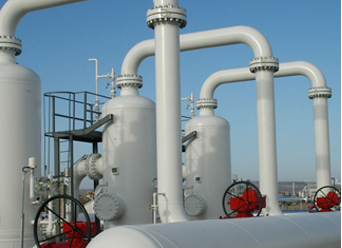
Performance of high head pumps is dictated by several engineering principles. Force analysis involves calculating stresses within the pump components due to internal pressure, fluid forces, and mechanical loads. Finite element analysis (FEA) is routinely employed to optimize component design and ensure structural integrity. Environmental resistance is a critical consideration. Pumps operating in corrosive environments require careful material selection and the application of protective coatings. Pumps operating in extreme temperatures require thermal stress analysis and appropriate material choices to prevent distortion or failure. Compliance requirements are stringent, often necessitating adherence to API 610 (Centrifugal Pumps) and Hydraulic Institute standards. Functional implementation relies on accurately matching the pump’s performance curve to the system’s head-capacity curve. Cavitation is a significant concern; NPSHr must be significantly lower than NPSHa (Net Positive Suction Head Available) to prevent vapor bubble formation and subsequent damage to the impeller. Hydraulic design focuses on minimizing energy losses through optimized impeller geometry and casing volute design. Pump efficiency is maximized by reducing frictional losses and minimizing recirculation within the pump. Vibration analysis, conforming to ISO 10816 standards, is essential for identifying potential mechanical issues and preventing premature failure.
Technical Specifications
| Parameter | Typical Range (Small Pump) | Typical Range (Medium Pump) | Typical Range (Large Pump) |
|---|---|---|---|
| Flow Rate (m³/hr) | 1 – 10 | 10 – 100 | 100 – 500+ |
| Total Dynamic Head (TDH) (m) | 50 – 200 | 200 – 500 | 500 – 1500+ |
| Pump Efficiency (%) | 65 – 75 | 75 – 85 | 80 – 90 |
| NPSHr (m) | 2 – 5 | 5 – 10 | 10 – 20+ |
| Maximum Operating Pressure (bar) | 10 – 25 | 25 – 50 | 50 – 200+ |
| Power Requirement (kW) | 1.5 – 7.5 | 7.5 – 55 | 55 – 500+ |
Failure Mode & Maintenance
High head pumps are susceptible to several failure modes. Fatigue cracking, particularly in the impeller and casing, can occur due to cyclic stresses. Corrosion, especially in aggressive fluid environments, leads to material degradation and reduced component thickness. Erosion, caused by abrasive particles within the fluid, damages impeller vanes and casing surfaces. Cavitation, as previously discussed, causes pitting and erosion of the impeller. Bearing failure, often stemming from inadequate lubrication or excessive load, results in vibration and potential pump seizure. Seal failure leads to leakage and reduced pump efficiency. Preventative maintenance is crucial. This includes regular vibration analysis (ISO 10816), oil analysis, impeller inspection for cavitation damage, bearing lubrication and replacement, and seal replacement. Non-destructive testing (NDT) methods such as ultrasonic testing (UT) and radiographic testing (RT) can detect internal cracks or flaws. Periodic disassembly and inspection allow for the identification of wear patterns and potential issues before catastrophic failure occurs. Proper alignment between the pump and driver is vital to minimize vibration and bearing loads. Filtering the fluid being pumped is essential to reduce erosion damage. Regular monitoring of pump performance parameters (pressure, flow rate, power consumption) can provide early warning signs of developing problems.
Industry FAQ
Q: What is the primary difference between a centrifugal pump and a positive displacement pump for high-head applications?
A: Centrifugal pumps generate head through kinetic energy imparted to the fluid, making them suitable for high flow, low to medium head applications. Positive displacement pumps, conversely, deliver a fixed volume of fluid per revolution. For extremely high heads and relatively low flows, positive displacement pumps (e.g., reciprocating pumps) are generally more efficient. However, centrifugal pumps are often preferred for their simpler design, lower maintenance requirements, and ability to handle fluids with solids content.
Q: How do I calculate the Net Positive Suction Head Available (NPSHa) for my system?
A: NPSHa is calculated using the formula: NPSHa = Ha + Hs - Hf - Hvp, where Ha is the absolute pressure on the liquid surface, Hs is the static head, Hf is the friction head loss in the suction piping, and Hvp is the vapor pressure of the liquid. Accurate calculation of Hf is crucial, and consideration must be given to pipe diameter, length, and fluid viscosity. NPSHa must always exceed the pump's NPSHr.
Q: What are the implications of operating a pump outside its BEP (Best Efficiency Point)?
A: Operating a pump significantly outside its BEP leads to reduced efficiency, increased energy consumption, and potentially damaging vibrations. Flow rates significantly above BEP can cause recirculation and impeller damage, while flow rates significantly below BEP can lead to increased turbulence and instability.
Q: What material selection considerations are critical when pumping abrasive fluids?
A: When pumping abrasive fluids, materials with high hardness and abrasion resistance are essential. Hardened alloys, ceramic coatings, and tungsten carbide components are frequently employed. Impeller design should also minimize areas where abrasive particles can accumulate. Regular inspection and replacement of worn components are critical.
Q: How can I mitigate the risk of cavitation in a high-head pumping system?
A: Mitigating cavitation involves ensuring adequate NPSHa, minimizing friction losses in the suction piping, maintaining proper pump speed, and selecting a pump with a lower NPSHr. Raising the liquid level in the suction tank, reducing suction pipe length, and increasing pipe diameter can all improve NPSHa. Regular inspection of the impeller for cavitation damage is also important.
Conclusion
High head pumps represent a sophisticated engineering solution for applications demanding substantial fluid lift. Proper selection hinges on a thorough understanding of system requirements, fluid properties, and pump performance characteristics. Materials science plays a paramount role in ensuring longevity and resistance to corrosive or abrasive environments, dictating the choice between cast iron, stainless steel, and specialized alloys. Ongoing maintenance, encompassing vibration analysis, lubrication, and component inspection, is vital to prevent premature failure and optimize operational efficiency.
Future trends in high head pump technology are focused on improved hydraulic designs, variable speed drives for energy optimization, and the implementation of predictive maintenance strategies leveraging sensor data and machine learning algorithms. The increasing demand for efficient water management and resource recovery will continue to drive innovation in this critical area of industrial pumping technology. A commitment to adhering to established industry standards (API, ISO, Hydraulic Institute) remains essential for ensuring reliable and safe operation.
-
Comprehensive Guide to Waterproof ORings for Optimal Sealing Solutions
News2026-06-09
-
submergable pump Material Science
News2026-06-23
-
sewer injection pump Performance Engineering
News2026-06-23
-
Sewer Ejector Pump System Performance Analysis
News2026-06-23
-
septic tank pump for sale Performance Engineering
News2026-06-23
-
septic pump for sale Performance Engineering
News2026-06-23
-
septic ejector system Performance Analysis
News2026-06-22
-
replace septic pump Performance Analysis
News2026-06-22
-
pump system septic tank Performance Analysis
News2026-06-22
-
lift pump for sewer Performance and Engineering
News2026-06-22
-
industrial submersible water pump Material Science
News2026-06-22
-
industrial submersible pumps Material Science and Manufacturing
News2026-06-21
-
best sewer ejector pump Performance Analysis
News2026-06-21
-
best septic pump Performance Analysis
News2026-06-21
-
1 2 hp septic pump Performance Engineering
News2026-06-21




