English
- Afrikaans
- Albanian
- Amharic
- Arabic
- Armenian
- Azerbaijani
- Basque
- Belarusian
- Bengali
- Bosnian
- Bulgarian
- Catalan
- Cebuano
- Corsican
- Croatian
- Czech
- Danish
- Dutch
- English
- Esperanto
- Estonian
- Finnish
- French
- Frisian
- Galician
- Georgian
- German
- Greek
- Gujarati
- Haitian Creole
- hausa
- hawaiian
- Hebrew
- Hindi
- Miao
- Hungarian
- Icelandic
- igbo
- Indonesian
- irish
- Italian
- Japanese
- Javanese
- Kannada
- kazakh
- Khmer
- Rwandese
- Korean
- Kurdish
- Kyrgyz
- Lao
- Latin
- Latvian
- Lithuanian
- Luxembourgish
- Macedonian
- Malgashi
- Malay
- Malayalam
- Maltese
- Maori
- Marathi
- Mongolian
- Myanmar
- Nepali
- Norwegian
- Norwegian
- Occitan
- Pashto
- Persian
- Polish
- Portuguese
- Punjabi
- Romanian
- Russian
- Samoan
- Scottish Gaelic
- Serbian
- Sesotho
- Shona
- Sindhi
- Sinhala
- Slovak
- Slovenian
- Somali
- Spanish
- Sundanese
- Swahili
- Swedish
- Tagalog
- Tajik
- Tamil
- Tatar
- Telugu
- Thai
- Turkish
- Turkmen
- Ukrainian
- Urdu
- Uighur
- Uzbek
- Vietnamese
- Welsh
- Bantu
- Yiddish
- Yoruba
- Zulu

Telephone: +86 13120555503
Email: frank@cypump.com


Apr . 01, 2024 17:55 Back to list
flow pumps Performance Engineering
Introduction
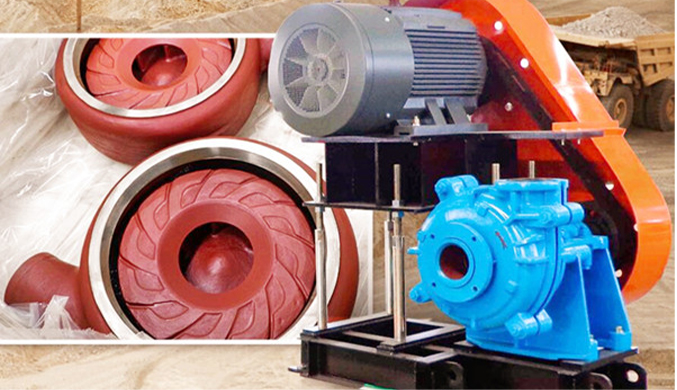
Flow pumps, integral components in numerous industrial processes, are mechanical devices designed to transfer fluids – liquids, gases, or slurries – through a system by imparting momentum. Their technical position within the industrial chain is foundational, directly impacting process efficiency, product quality, and operational cost across sectors like chemical processing, water treatment, oil and gas, power generation, and food & beverage. Fundamentally, a flow pump converts rotational energy (typically from an electric motor or turbine) into kinetic energy of the fluid, then into pressure energy, enabling fluid movement against resistance. Core performance characteristics defining pump suitability include volumetric flow rate (capacity, measured in gallons per minute or cubic meters per hour), differential pressure (head, measured in feet or meters), fluid viscosity, and overall system efficiency. The selection process is critical; improper pump selection leads to cavitation, reduced efficiency, increased maintenance, and potential system failure. Modern pump technology emphasizes variable frequency drives (VFDs) for precise flow control, advanced sealing technologies to minimize leakage and environmental impact, and predictive maintenance strategies leveraging sensor data.
Material Science & Manufacturing
The materials employed in flow pump construction are dictated by the fluid being handled and the operating environment. For pump casings, common materials include cast iron (ASTM A48 Class 30), stainless steel (304, 316 – ASTM A743), and ductile iron (ASTM A536). Cast iron offers cost-effectiveness and good machinability, but is susceptible to corrosion. Stainless steel provides superior corrosion resistance, essential for handling aggressive chemicals or saline solutions. Ductile iron combines strength and ductility, enhancing resistance to cracking under pressure. Impellers, the rotating components that impart energy to the fluid, are frequently manufactured from bronze (Babbitt alloys), stainless steel, or engineered polymers like Polyvinylidene Fluoride (PVDF) for highly corrosive applications. Shafts require high tensile strength and fatigue resistance; typically constructed from alloy steels (4140, 4340 – ASTM A29/A29M). Seals are critical, and materials like Viton (fluoroelastomer), PTFE (polytetrafluoroethylene), and ceramic are selected for their chemical inertness and sealing capabilities. Manufacturing processes vary depending on component complexity. Casings are often produced via sand casting, investment casting (for complex geometries), or centrifugal casting. Impellers are typically investment cast or manufactured using progressive cavity molding. Shafts are machined from bar stock and undergo heat treatment for hardening. Critical parameter control during manufacturing includes dimensional accuracy (to ensure tight clearances between rotating and stationary parts), surface finish (to minimize friction and cavitation), and material composition verification (to meet specified mechanical properties). Welding processes, when used, require strict adherence to AWS D1.1 standards to maintain structural integrity.
Performance & Engineering
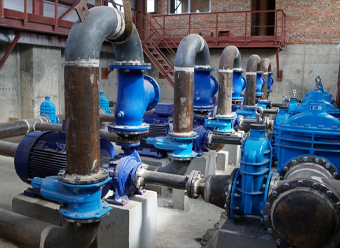
Pump performance is fundamentally governed by fluid dynamics principles, specifically Bernoulli's equation and the Navier-Stokes equations. Force analysis considers hydraulic forces exerted by the fluid on the impeller and casing, as well as inertial forces associated with rotating components. Cavitation, a primary concern, occurs when the absolute pressure within the pump drops below the vapor pressure of the fluid, forming vapor bubbles that implode, causing noise, vibration, and impeller damage. Net Positive Suction Head Required (NPSHr) is a crucial parameter; the system must provide sufficient NPSH Available (NPSHa) to prevent cavitation. Environmental resistance is a significant design consideration. Pumps operating in corrosive environments require specialized materials and coatings to prevent degradation. Pumps exposed to extreme temperatures necessitate materials with appropriate thermal expansion coefficients and resistance to thermal shock. Compliance requirements vary by application and region. For potable water systems, pumps must meet NSF/ANSI 61 standards for lead content and material safety. For handling hazardous materials, pumps must comply with ATEX directives (Europe) or Class I, Division 1/2 requirements (North America) regarding explosion-proof construction. Functional implementation includes careful selection of pump curves to match system requirements, proper piping design to minimize head loss, and integration with control systems for automated operation and monitoring. Pump efficiency is maximized through optimized impeller geometry, minimized internal clearances, and the use of high-efficiency motors.
Technical Specifications
| Parameter | Centrifugal Pump | Positive Displacement Pump | Diaphragm Pump |
|---|---|---|---|
| Flow Rate (GPM) | 50 - 10,000 | 1 - 500 | 1 - 100 |
| Head (Feet) | 20 - 500 | 50 - 250 | 0 - 100 |
| Viscosity Range (cP) | 1 - 1000 | 1 - 10,000 | 1 - 50,000 |
| Solids Handling (Inch) | 0 - 0.5 | 0 - 1 | 0 - 1.5 |
| Efficiency (%) | 65 - 85 | 70 - 90 | 50-70 |
| Typical Applications | Water supply, HVAC, general industrial | Chemical dosing, oil transfer, viscous fluids | Sampling, chemical transfer, abrasive slurries |
Failure Mode & Maintenance
Flow pump failures commonly stem from several sources. Fatigue cracking in impellers or casings is often initiated by cyclical stress and exacerbated by cavitation. Delamination of pump linings or coatings occurs due to inadequate adhesion or exposure to harsh chemicals. Mechanical seal failures, manifest as leakage, arise from wear, corrosion, or improper installation. Bearing failures, indicated by noise and vibration, are frequently caused by lubrication issues or misalignment. Corrosion, particularly in cast iron components, leads to material loss and structural weakness. Oxidation of metal components at high temperatures can also degrade performance. Preventive maintenance is paramount. Regular vibration analysis identifies bearing wear and misalignment. Leak detection programs pinpoint seal failures. Oil analysis monitors lubricant condition and detects wear debris. Impeller inspection using non-destructive testing (NDT) methods like ultrasonic testing or dye penetrant inspection reveals cracks. Scheduled lubrication, seal replacement, and coating repair extend pump life. For centrifugal pumps, maintaining proper NPSHa is critical to avoid cavitation damage. For positive displacement pumps, regular inspection of internal components and relief valve functionality is essential. Record keeping of maintenance activities and performance data facilitates predictive maintenance and optimizes component replacement schedules.
Industry FAQ
Q: What are the key considerations when selecting a pump for a highly viscous fluid?
A: For highly viscous fluids, positive displacement pumps – specifically gear pumps or screw pumps – are generally preferred over centrifugal pumps. Centrifugal pumps experience a significant drop in efficiency with increasing viscosity. Positive displacement pumps maintain a more consistent flow rate regardless of viscosity, but require careful sizing to prevent overpressure. Consider the fluid’s temperature, shear sensitivity, and potential for solids content when making the final selection.
Q: How does cavitation impact pump performance and longevity?
A: Cavitation dramatically reduces pump efficiency, increases noise and vibration, and causes significant damage to impellers and casings due to the implosion of vapor bubbles. This damage manifests as pitting, erosion, and ultimately, structural failure. Preventing cavitation requires ensuring sufficient NPSHa, optimizing pump suction piping, and minimizing fluid vapor pressure.
Q: What materials are best suited for handling corrosive chemicals?
A: The choice of materials depends on the specific chemical being handled. Stainless steel alloys (316, Hastelloy) offer broad chemical resistance. For highly aggressive chemicals, engineered polymers like PTFE, PVDF, or polypropylene are often employed. Ceramic components provide excellent corrosion resistance but are brittle and susceptible to thermal shock.
Q: What are the benefits of using a variable frequency drive (VFD) with a flow pump?
A: VFDs enable precise control of pump speed and flow rate, optimizing energy consumption and reducing wear and tear. They eliminate the need for throttling valves, which waste energy. VFDs also allow for soft starting and stopping, reducing mechanical stress on the pump and motor.
Q: What are the typical maintenance intervals for mechanical seals?
A: Mechanical seal maintenance intervals vary depending on the application and fluid being handled. A general guideline is to inspect seals every 6-12 months, replacing them as needed. Signs of seal failure include leakage, increased power consumption, and abnormal noise. Maintaining proper lubrication and ensuring proper seal alignment are crucial for extending seal life.
Conclusion
Flow pumps are fundamental to modern industrial operations, and their effective selection, implementation, and maintenance are critical for process reliability and efficiency. Understanding the interplay between material science, fluid dynamics, and mechanical engineering principles is paramount to achieving optimal pump performance and minimizing operational costs. The ongoing development of advanced sealing technologies, predictive maintenance strategies, and energy-efficient designs continues to refine pump technology, addressing the evolving demands of diverse industrial applications.
Looking forward, advancements in pump technology are likely to focus on further optimizing efficiency through computational fluid dynamics (CFD) modeling, integrating smart sensors for real-time monitoring, and developing more robust and corrosion-resistant materials. A proactive approach to maintenance, leveraging data analytics and predictive algorithms, will be essential for maximizing pump uptime and reducing lifecycle costs. Proper selection based on a holistic evaluation of system requirements remains the cornerstone of successful pump implementation.
-
Precision at the Pump: How Better Machining Protects Flow and Uptime
News2026-11-20
-
Why Pump Reliability Begins Before the First Drop of Fluid
News2026-11-20
-
Beyond the Pump: Designing Safer Access Around Critical Water Infrastructure
News2026-11-20
-
Why Pumping Stations Depend on the Infrastructure Beneath the Pumps
News2026-11-20
-
Beyond the Pump Room: How Smarter Loading Protects Industrial Equipment
News2026-11-19
-
When Pumps Stop: Designing More Resilient Power for Critical Pumping Systems
News2026-11-19
-
The Hidden Role of Dust and Gas Monitoring in Reliable Pump Operations
News2026-11-19
-
The Hidden Role of Mineral Compounds in Extending Industrial Pump Lifespan
News2026-10-12
-
Why Pump System Reliability Depends on Precision Hose Assembly Methods
News2026-09-15
-
How Advanced Imaging Films Are Transforming Pump Component Quality Control
News2026-08-25
-
How Advanced Filtration Protects Pump Systems from Premature Wear and Costly Downtime
News2026-08-25
-
How Steel Material Selection Drives Pump Reliability in Heavy-Duty Systems
News2026-08-25
-
Ensuring Pump System Efficiency: The Role of High-Quality Pipe Fittings and Tubing
News2026-08-24
-
Optimizing Fluid Dynamics and Material Consistency in Industrial Processing
News2026-08-18
-
Innovations and Challenges in Hydraulic Systems for Heavy Machinery
News2026-08-13




